

 Freedom Index
Listen to the article
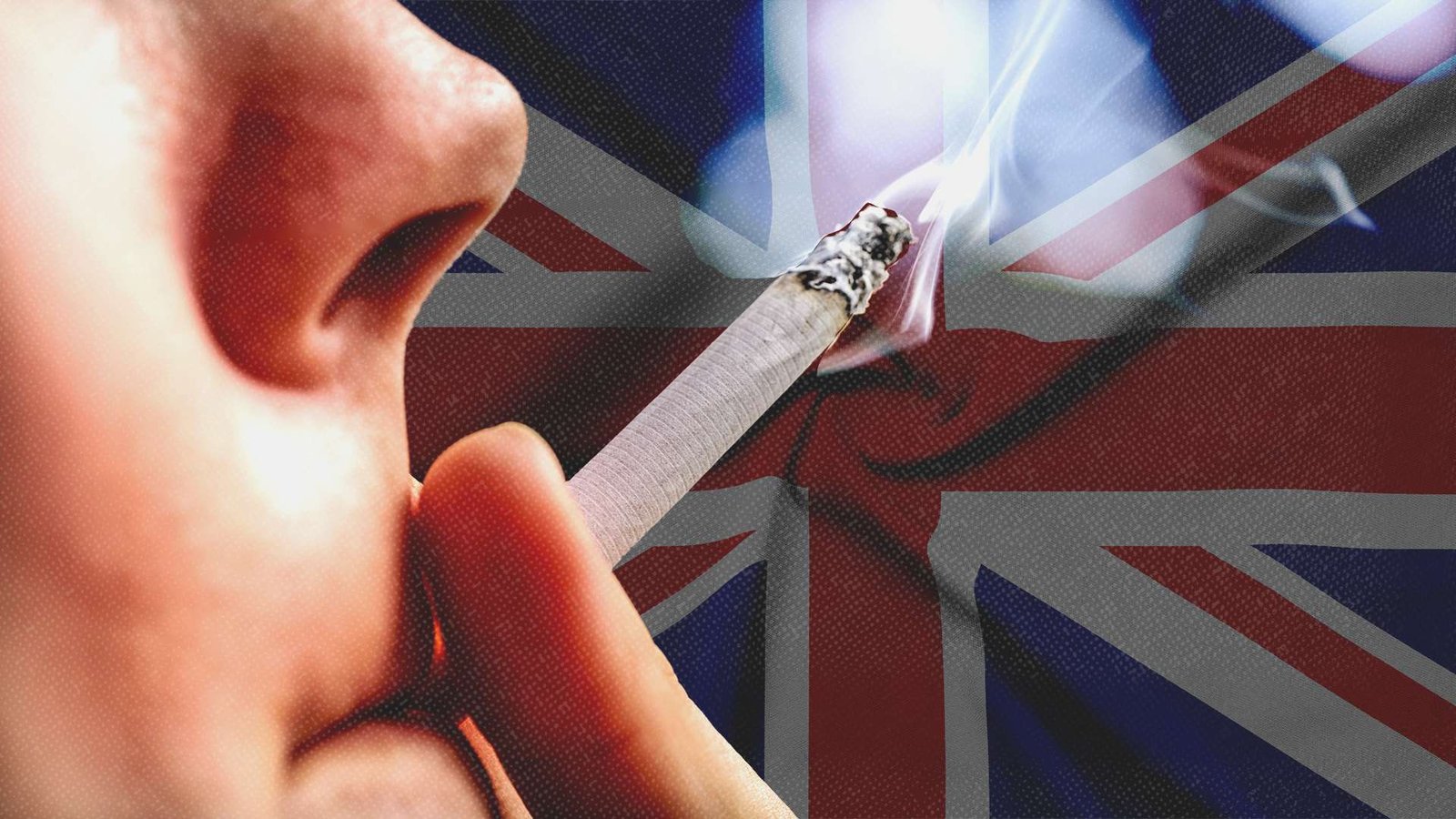
Britain, which has long restricted what people eat and consume, has now banned tobacco for future generations.
On Tuesday, Parliament passed the Tobacco and Vapes Bill. The law, first proposed by then-Prime Minister Rishi Sunak in 2023, bans anyone born on or after January 1, 2009, from legally buying tobacco products.
“[This] is a landmark bill,” Health Minister Gillian Merron told the House of Lords on Monday. “It will create a smoke-free generation.” However, if the goal truly is better public health, a government ban is unnecessary.
Like most of the Western world, the smoking rate in Britain has declined significantly. In 2023, the proportion of the population who never smoked reached 63.2 percent (up from 46.7 percent in 2011), according to Action on Smoking and Health. Meanwhile, the adult smoking rate hit 10.6 percent in 2024, according to government data, and the smoking rate among young adults plummeted from 25.7 percent in 2011 to 8.1 percent in 2024.
While there are several reasons for this decline, one of the most prominent is the market-led invention of safer nicotine products, such as vapes, which the British government says are about 95 percent less harmful than smoking.
Unfortunately, the recently passed law would also restrict these safer devices. As Christopher Snowdon, head of lifestyle economics at the Institute of Economic Affairs, tells Reason, “it allows the government to do anything it wants to vapes and pouches without any parliamentary oversight.”
Specifically, it gives government ministers sweeping new powers to regulate flavors, packaging, and advertising through secondary legislation, meaning they wouldn’t need Parliamentary scrutiny. Additionally, it bans vaping in cars with children, certain outdoor spaces like playgrounds, and in schools and hospitals.
While the tobacco ban may discourage some use, it is unlikely to produce a “smoke-free generation” because many consumers will just turn to the already-thriving illegal market. From August 2025 to January 2026, tobacco sales tax revenue dropped by 10 percent, far faster than smoking rates. Between 2021 and 2024, the number of cigarettes bought on the legal market fell by 45.5 percent, while the number of smokers fell by just 5 percent. These disparities would suggest that the black market is already meeting many smokers’ needs. Indeed, as the consultancy firm KPMG found in a report commissioned by Philip Morris International last year, about one in four cigarettes smoked in the U.K. is sold illegally.
The bill is already facing legal backlash, including from British law firm Sentinel Legal, which has challenged the legality of the ban in the High Court. The firm’s challenge argues that the ban is incompatible with Article 8 (which protects one’s right to privacy), and Article 1 of Protocol 1 (protection of property) of the European Convention on Human Rights. The law firm also says the ban violates Article 14 of the Convention on Human Rights by creating two classes of adults with different rights.
Sam Ward, director of Sentinel Legal, said in a press release that they are asking a “fundamental question: does the British government have the right to permanently remove a personal choice from an entire generation of adults who have committed no offence and pose no threat to anyone but themselves?”
Smoking is harmful, but adults ought to be free to weigh risks, make decisions for themselves, and live with the consequences. The government has taken away that freedom for every adult in the future, and if history is anything to go by, it is unlikely to stop with smoking.
Read the full article here
Fact Checker
Verify the accuracy of this article using AI-powered analysis and real-time sources.