Close Menu
FSNN | Free Speech News NetworkFSNN | Free Speech News Network
  • Home
  • News
    • Politics
    • Legal & Courts
    • Tech & Big Tech
    • Campus & Education
    • Media & Culture
    • Global Free Speech
  • Opinions
    • Debates
  • Video/Live
  • Community
  • Freedom Index
  • About
    • Mission
    • Contact
    • Support
Trending

$1.6 billion Ether Machine SPAC deal collapses over unfavorable market

1 minute ago

Bitcoin Sees High Open Interest, Low Funding Rates In New Short Squeeze Cue

5 minutes ago

Bitcoin signals potential seller exhaustion as realized losses decline

1 hour ago
Facebook X (Twitter) Instagram
Facebook X (Twitter) Discord Telegram
FSNN | Free Speech News NetworkFSNN | Free Speech News Network
Market Data Newsletter
Saturday, April 11
  • Home
  • News
    • Politics
    • Legal & Courts
    • Tech & Big Tech
    • Campus & Education
    • Media & Culture
    • Global Free Speech
  • Opinions
    • Debates
  • Video/Live
  • Community
  • Freedom Index
  • About
    • Mission
    • Contact
    • Support
FSNN | Free Speech News NetworkFSNN | Free Speech News Network
Home»News»Media & Culture»Fifth Circuit Strikes Down Federal Law Banning Home Alcohol Distilleries
Media & Culture

Fifth Circuit Strikes Down Federal Law Banning Home Alcohol Distilleries

News RoomBy News Room2 hours agoNo Comments6 Mins Read1,190 Views
Share Facebook Twitter Pinterest Copy Link LinkedIn Tumblr Email VKontakte Telegram
Fifth Circuit Strikes Down Federal Law Banning Home Alcohol Distilleries
Share
Facebook Twitter Pinterest Email Copy Link

Listen to the article

0:00
0:00

Key Takeaways

Playback Speed

Select a Voice

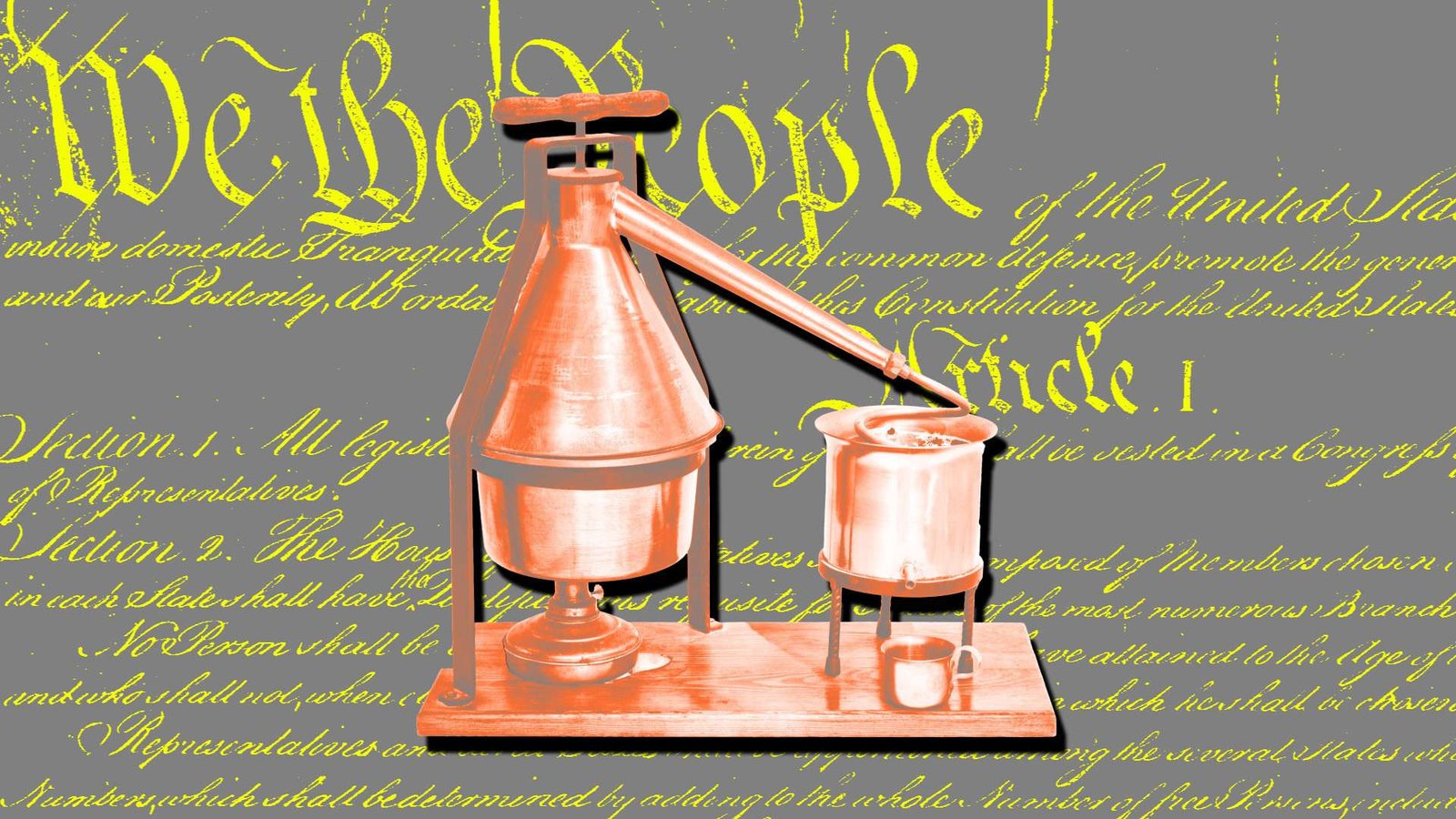
Home distilling. (NA)


Yesterday, in McNutt v. US Department of Justice, the US Court of Appeals for the Fifth Circuit struck down an 1868 federal law banning home alcohol distilleries. The court ruled that the law exceeded Congress’ authority under the taxing power, and also under the Necessary and Proper Clause. It’s an important win for constitutional federalism – as well as for home alcohol distillers! But it’s significance is limited by the fact that the court did not consider the possibility that the law is authorized by Congress’ power to regulate interstate commerce.

The decision was written by prominent conservative Judge Edith Jones. But the unanimous ruling was joined by liberal Obama appointee Judge James Graves. It’s an impressive, and somewhat unusual, cross-ideological agreement on the type of federalism issue that often splits jurists along ideological lines.

Judge Jones is, I think, undeniably right to argue that the tax power cannot justify this law:

[T]he power to “lay and collect Taxes” means Congress can charge or demand money from taxpayers. It is also obvious that the purpose of a tax is to raise revenue for the
government. Indeed, “the essential feature of any tax” is that “[i]t producesat least some revenue for the Government.”NFIB v. Sebelius, 567 U.S. 519, 564 (2012)… (emphasis added)….

Section 5178(a)(1)(B) and Section 5601(a)(6) exceed these constitutional limits. Primarily, neither provision raises revenue. Not only do they prohibit at-home distilleries, but in so doing, they amount to an anti-revenue provision that prevents distilled spirits from coming into existence. Cf. 26 U.S.C. § 5001(b) (taxation begins “as soon as [the spirit] is in existence”). The provisions operate to reduce revenue instead of raising it. This violates the Supreme Court’s explanation of how the federal power of taxation works: “[I]mposition of a tax nonetheless leaves an individual with a lawful choice to do or not do a certain act, so long as he is willing to pay a tax levied on that choice.” NFIB, 567 U.S. at 574, 132 S. Ct. at 2600 (emphasis added). These plaintiffs have only the choice not to do as they wish or risk fines and imprisonment.

Exactly so.

The Fifth Circuit also concludes that the law in question exceeds Congress’ authority under the Necessary and Proper Clause, which grants the power to makes laws “necessary and proper” for carrying into execution other federal powers. I think the court is right that the law in question is not “proper.” The Supreme Court, in NFIB v. Sebelius (2012), ruled that a “proper” power permissible under the Clause is one that is “ancillary” to the implementation of an enumerated power. It cannot be a “great, substantive and independent” power. See my analysis in this article. The power claimed here is clearly “great and independent.” As Judge Jones notes, “[u]nder the government’s logic, Congress may criminalize nearly any at-home conduct only because it has the possibility of concealing taxable activity.”

I am much less persuaded by the court’s conclusion that the law here is not “necessary.” In McCulloch v. Maryland (1819), Chief Justice John Marshall famously ruled that “necessary” includes any measures that may be “useful” or “convenient” for implementing an enumerated power. I am no fan of this formulation, and tend to believe Thomas Jefferson and James Madison were right to argue that “necessary” means something like “essential.” But Marshall’s approach is longstanding precedent, unlikely to be overturned. This formulation is so permissive that I cannot think of any other modern precedent that struck down a federal law on the grounds that it isn’t “necessary.”

Judge Jones instead relies on another passage from McCulloch, which defines “necessary” as “plainly adapted,” and thus is potentially more restrictive. But “useful” and “convenient” are the standard formulations embodied in in numerous precedents. And, on that approach, the home distillery ban probably does qualify as “necessary.” For example, it might be “useful” or “convenient” to advancing the government’s goal of increasing tax revenue, by incentivizing people to engage in activities subject to taxation, rather than home distilling.

Even if the home distillery ban is “necessary,” it still isn’t “proper.” The Fifth Circuit therefore got the bottom line right.

But I would not celebrate too much, just yet. Though this law is not authorized under the tax power or the Necessary and Proper Clause, it could pass muster under Congress’ power to regulate interstate commerce, which the Fifth Circuit did not consider, because the government chose not to argue this issue on appeal.

In Gonzales v. Raich (2005), the Supreme Court held that Congress’ power to “regulate commerce… among the several states” gives it the authority to forbid the possession and distribution of medical marijuana that had never crossed state lines or even been sold in any market within a state. I believe Raich is one of the Supreme Court’s worst-ever federalism decisions. I laid out the reasons why in a 2006 article written soon after the ruling came down. But the Supreme Court doesn’t seem inclined to overrule Raich, and indeed refused to hear a case that offered a good opportunity to reconsider it, just a few months ago.

Raich held that the Commerce Clause gives Congress almost unlimited power to regulate any “economic activity” defined as any activity involving the “production, distribution, and consumption of commodities.” Alcoholic beverages are pretty obviously commodities, and home distilling involves their production and distribution.

Thus, if the federal government is so inclined, it could potentially try to continue to enforce this law and – if challenged again – defend it under the Commerce Clause. When and if that happens, I hope the Supreme Court will take the opportunity to overrule or at least limit Raich. But I am not optimistic it will happen, at least not in the near future.

As the Fifth Circuit notes, there is at least one other case challenging this law, currently before the Sixth Circuit (the district court in that case had dismissed it on procedural grounds). We shall see what happens with it.


Read the full article here

Fact Checker

Verify the accuracy of this article using AI-powered analysis and real-time sources.

Get Your Fact Check Report

Enter your email to receive detailed fact-checking analysis

5 free reports remaining

Continue with Full Access

You've used your 5 free reports. Sign up for unlimited access!

Already have an account? Sign in here

#FreePress #NarrativeControl #OpenDebate #PoliticalNews #PublicDiscourse
Share. Facebook Twitter Pinterest LinkedIn Tumblr Email Telegram Copy Link
News Room
  • Website
  • Facebook
  • X (Twitter)
  • Instagram
  • LinkedIn

The FSNN News Room is the voice of our in-house journalists, editors, and researchers. We deliver timely, unbiased reporting at the crossroads of finance, cryptocurrency, and global politics, providing clear, fact-driven analysis free from agendas.

Related Articles

Cryptocurrency & Free Speech Finance

‘Not Going to Stop at Bitcoin’: Morgan Stanley Weighs Tokenization, Tax Solutions in Crypto Push

2 hours ago
Media & Culture

Petitioner’s Regret No Grounds for Sealing of 8-Year-Old Restraining Order Documents

3 hours ago
Cryptocurrency & Free Speech Finance

New Tools Aim to Make AI ‘Vibe Coding’ Safer for Crypto

3 hours ago
Cryptocurrency & Free Speech Finance

Economists Said AI Wouldn’t Take Jobs—Some Now Admit They Got It Wrong

5 hours ago
Media & Culture

Wisconsin Reined in Public Sector Unions. Now Those Reforms Are in Jeopardy.

6 hours ago
Media & Culture

Follow-Up to “Reproducing Controversial Tweet in News Story = Fair Use” Post

7 hours ago
Add A Comment
Leave A Reply Cancel Reply

Editors Picks

Bitcoin Sees High Open Interest, Low Funding Rates In New Short Squeeze Cue

5 minutes ago

Bitcoin signals potential seller exhaustion as realized losses decline

1 hour ago

Fifth Circuit Strikes Down Federal Law Banning Home Alcohol Distilleries

2 hours ago

The crypto honeymoon is over for now as analysts warn of a major first-quarter profit squeeze

2 hours ago
Latest Posts

‘Not Going to Stop at Bitcoin’: Morgan Stanley Weighs Tokenization, Tax Solutions in Crypto Push

2 hours ago

Petitioner’s Regret No Grounds for Sealing of 8-Year-Old Restraining Order Documents

3 hours ago

Iran war oil shock revives inflation trade and a new stablecoin play

3 hours ago

Subscribe to News

Get the latest news and updates directly to your inbox.

At FSNN – Free Speech News Network, we deliver unfiltered reporting and in-depth analysis on the stories that matter most. From breaking headlines to global perspectives, our mission is to keep you informed, empowered, and connected.

FSNN.net is owned and operated by GlobalBoost Media
, an independent media organization dedicated to advancing transparency, free expression, and factual journalism across the digital landscape.

Facebook X (Twitter) Discord Telegram
Latest News

$1.6 billion Ether Machine SPAC deal collapses over unfavorable market

1 minute ago

Bitcoin Sees High Open Interest, Low Funding Rates In New Short Squeeze Cue

5 minutes ago

Bitcoin signals potential seller exhaustion as realized losses decline

1 hour ago

Subscribe to Updates

Get the latest news and updates directly to your inbox.

© 2026 GlobalBoost Media. All Rights Reserved.
  • Privacy Policy
  • Terms of Service
  • Our Authors
  • Contact

Type above and press Enter to search. Press Esc to cancel.

🍪

Cookies

We and our selected partners wish to use cookies to collect information about you for functional purposes and statistical marketing. You may not give us your consent for certain purposes by selecting an option and you can withdraw your consent at any time via the cookie icon.

Cookie Preferences

Manage Cookies

Cookies are small text that can be used by websites to make the user experience more efficient. The law states that we may store cookies on your device if they are strictly necessary for the operation of this site. For all other types of cookies, we need your permission. This site uses various types of cookies. Some cookies are placed by third party services that appear on our pages.

Your permission applies to the following domains:

  • https://fsnn.net
Necessary
Necessary cookies help make a website usable by enabling basic functions like page navigation and access to secure areas of the website. The website cannot function properly without these cookies.
Statistic
Statistic cookies help website owners to understand how visitors interact with websites by collecting and reporting information anonymously.
Preferences
Preference cookies enable a website to remember information that changes the way the website behaves or looks, like your preferred language or the region that you are in.
Marketing
Marketing cookies are used to track visitors across websites. The intention is to display ads that are relevant and engaging for the individual user and thereby more valuable for publishers and third party advertisers.