Close Menu
FSNN | Free Speech News NetworkFSNN | Free Speech News Network
  • Home
  • News
    • Politics
    • Legal & Courts
    • Tech & Big Tech
    • Campus & Education
    • Media & Culture
    • Global Free Speech
  • Opinions
    • Debates
  • Video/Live
  • Community
  • Freedom Index
  • About
    • Mission
    • Contact
    • Support
Trending

Today in Supreme Court History: July 13, 1787

11 minutes ago

U.S.-Iran hostilities send BTC price lower even as ETF flows show demand: Crypto Daily

34 minutes ago

Bitcoin Whale Moves $188M for First Time in 7 Years

35 minutes ago
Facebook X (Twitter) Instagram
Facebook X (Twitter) Discord Telegram
FSNN | Free Speech News NetworkFSNN | Free Speech News Network
Market Data Newsletter
Monday, July 13
  • Home
  • News
    • Politics
    • Legal & Courts
    • Tech & Big Tech
    • Campus & Education
    • Media & Culture
    • Global Free Speech
  • Opinions
    • Debates
  • Video/Live
  • Community
  • Freedom Index
  • About
    • Mission
    • Contact
    • Support
FSNN | Free Speech News NetworkFSNN | Free Speech News Network
Home»Cryptocurrency & Free Speech Finance»Iran’s crypto tanker tolls are the latest step in its sanctions‑busting trade network
Cryptocurrency & Free Speech Finance

Iran’s crypto tanker tolls are the latest step in its sanctions‑busting trade network

News RoomBy News Room3 months agoNo Comments4 Mins Read592 Views
Share Facebook Twitter Pinterest Copy Link LinkedIn Tumblr Email VKontakte Telegram
Iran’s crypto tanker tolls are the latest step in its sanctions‑busting trade network
Share
Facebook Twitter Pinterest Email Copy Link

Listen to the article

0:00
0:00

Key Takeaways

Playback Speed

Select a Voice

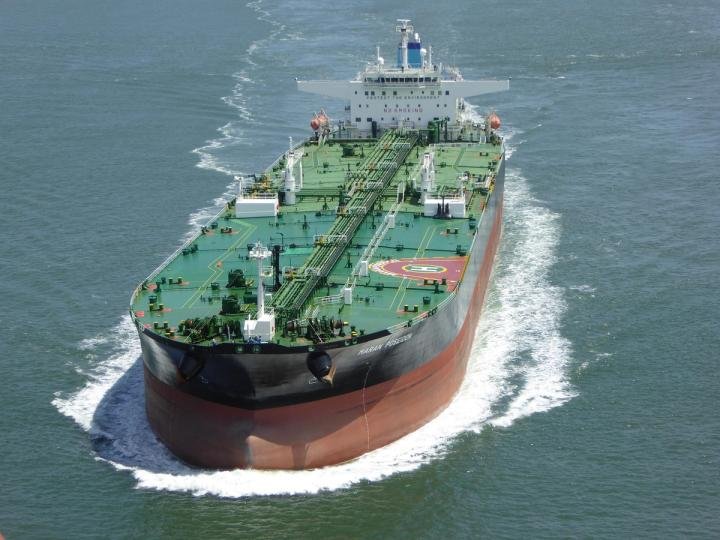
It’s no surprise that Iran is now accepting cryptocurrency payments from cargo ships passing through the Strait of Hormuz. Experts in blockchain criminality say this move fits perfectly with Tehran’s existing sanctions‑skirting trade networks.

Iran’s crypto tolls have now been confirmed via recent comments from a spokesperson for Iran’s Oil, Gas and Petrochemical Products Exporters’ Union who said bitcoin is being accepted as a payment method. A previous report suggested stablecoins were being accepted to allow a select few oil tankers to pass unharmed. Both reports stated the fee was $1 per barrel of oil, with the largest tankers carrying up to two million barrels.

The formalization of a system of shipping toll payments made using bitcoin and USD-pegged stablecoins appears to be an audacious move. However, in reality the Iranian regime, and more specifically the Islamic Revolutionary Guard Corps (IRGC), has been increasingly using cryptocurrency over the last few years to facilitate cross border commercial trade, especially with Iranian oil sales, according to data from blockchain analytics specialist Chainalysis.

“It’s highly unsurprising that this type of trade would be happening via cryptocurrency as well,” said Andrew Fierman, head of national security intelligence at Chainalysis, referring to the toll paid by ships allowed to sail through the Strait of Hormuz, a narrow sea channel where about a fifth of the world’s oil and liquefied natural gas usually passes.

A snapshot of sanctioned activity from over the last year and a half shows a growing and complex network using crypto wallets. Back in December of 2024, a U.S.-sanctioned, IRGC-affiliated financier linked to the Iran-backed Houthi regime facilitated Iranian oil sales to Yemen involving cryptocurrency addresses. This came to over $178 million in transfers in a single year.

Then, in April of 2025, a broader network of Houthi financiers were purchasing weapons and commodities from Russia. Their cryptocurrency addresses were included in a sanctions designation accounting for nearly a billion dollars in activity – again in just about the course of the year.

Interestingly, the Houthis, an Iran-backed armed group that controls much of northern Yemen, have now raised the prospect of imposing a second chokepoint on the world’s oil and gas shipping trade at the Bab-al-Mandeb channel that connects the Red Sea to the Gulf of Aden.

In any case, the picture is one of IRGC-affiliated networks using crypto at commercial scale to facilitate cross border trade, according to Fierman of Chianalysis. It’s a system that’s much more complex and established than simply a handful of wallets being used in perpetuity, he said.

“They have a network of cryptocurrency wallets that the regime is using to facilitate this cross border activity. To accept these payments in crypto would make it easier than potentially utilizing the traditional banking system and there’s enough liquidity out there that they don’t even need to really use cryptocurrency exchanges either,” Fierman said in an interview.

The way the IRGC is broadly adopting cryptocurrency, specifically stablecoins, as a payment mechanism for cross border trade, is really the inverse of the situation with North Korea, Fierman pointed out, where the main goal is stealing billions of dollars in crypto and laundering it.

The Iranian regime has been comprehensively sanctioned since 1979, including individual sanctions on almost every bank, so its inability to access U.S. dollar-pegged assets makes it a challenge for them to trade internationally.

“The reality is that most counterparts don’t want to trade in Rials or in Tomans, especially considering the hyperinflation that is regularly happening in the country as well. So this ability to get a US dollar-pegged asset creates a mechanism that allows them to trade globally with anyone who’s willing to trade with them, in an alternative mechanism that doesn’t rely on the traditional banking system,” Fierman said.

In Iran, the official currency is the Rial (IRR), but people universally use Tomans on a daily basis in shops, for instance; one Toman is equivalent to 10 Rials.

Tom Keatinge, founding director of the Centre for Finance and Security (CFS) at UK defence think tank RUSI, agreed that USD-backed stablecoins have become an increasingly important payment mechanism for the Iranian regime that avoids sanctions and western banking controls.

“Whilst the use of stablecoins might open users up to Western regulatory intervention, evidence suggests that this risk is low,” Keatinge said in an email.

Lee Reiners, a lecturing fellow at Duke University’s Financial Economics Center, suggested a novel way the Iranian regime could further its sanctions-skirting stablecoin goals.

“If Iran was thinking strategically, it might take a cue from its neighbors across the Strait in the UAE and demand payment in USD1,” Reiners said, referring to the stablecoin launched by the Trump family-affiliated World Liberty Financial in March of 2025. “Then the President of the United States would have a financial incentive to lift sanctions and allow them to charge whatever tolls they want.”

Read the full article here

Fact Checker

Verify the accuracy of this article using AI-powered analysis and real-time sources.

Get Your Fact Check Report

Enter your email to receive detailed fact-checking analysis

5 free reports remaining

Continue with Full Access

You've used your 5 free reports. Sign up for unlimited access!

Already have an account? Sign in here

Share. Facebook Twitter Pinterest LinkedIn Tumblr Email Telegram Copy Link
News Room
  • Website
  • Facebook
  • X (Twitter)
  • Instagram
  • LinkedIn

The FSNN News Room is the voice of our in-house journalists, editors, and researchers. We deliver timely, unbiased reporting at the crossroads of finance, cryptocurrency, and global politics, providing clear, fact-driven analysis free from agendas.

Related Articles

Cryptocurrency & Free Speech Finance

U.S.-Iran hostilities send BTC price lower even as ETF flows show demand: Crypto Daily

34 minutes ago
Cryptocurrency & Free Speech Finance

Bitcoin Whale Moves $188M for First Time in 7 Years

35 minutes ago
Cryptocurrency & Free Speech Finance

Chinese Prosecutors Float Treating Crypto Mixer, Privacy Coin Use as Sign of Money Laundering

36 minutes ago
Cryptocurrency & Free Speech Finance

U.S.-Iran hostilities over Strait of Hormuz drag crypto lower after positive week: Crypto Markets Today

2 hours ago
Cryptocurrency & Free Speech Finance

SBI to Debut Stablecoin Lending Service with 3% Yield in Japan

2 hours ago
Cryptocurrency & Free Speech Finance

U.S. CPI, JPMorgan, Citi earnings reports: Crypto Week Ahead

3 hours ago
Add A Comment

Comments are closed.

Editors Picks

U.S.-Iran hostilities send BTC price lower even as ETF flows show demand: Crypto Daily

34 minutes ago

Bitcoin Whale Moves $188M for First Time in 7 Years

35 minutes ago

Chinese Prosecutors Float Treating Crypto Mixer, Privacy Coin Use as Sign of Money Laundering

36 minutes ago

Photo: A New Map of the Universe

1 hour ago
Latest Posts

U.S.-Iran hostilities over Strait of Hormuz drag crypto lower after positive week: Crypto Markets Today

2 hours ago

SBI to Debut Stablecoin Lending Service with 3% Yield in Japan

2 hours ago

Contents War is brutal. During conflicts there is little time for art. Museums and theatres are flattened by bombs, a trend we have been covering in Index for some years now. On the ground, people often have more pressing concerns like finding food or repelling the enemy. But war can also inspire the most incredible artistic endeavour, as painters and poets are forced to look again at a fragile world and bear witness to the atrocities that warring parties would rather keep hidden. In this issue, Martin Bright talks to Magnum photographer and artist Nanna Heitmann about her work The Machinery of War, which presents uncomfortable truths about propaganda and the Ukraine war. As Salil Tripathi writes from the USA, writers and artists are able to discuss the Israel-Hamas war much more freely than they could during the Iraq war a quarter-century ago, and are less likely to face blanket censorship. After 9/11, Tripathi observes, George Bush essentially threw down the gauntlet. War is often talked about in stark black and white terms, but artists are able to give nuance. Maria Sorenson makes this point while highlighting work about war that has been censored in Russia, Belarus and Ukraine because it does not toe the official patriotic line. “Narrowing life into ideology, flattening human complexity into slogans, symbols and sanctioned truths is what propaganda does best. Art has always been – and still remains – one of the ways to resist that,” she writes. Enjoy the magazine. It has reports and discussions from around the world about how censorship works today, and about how brave artists continue to struggle to explain the complexity of the world Up Front The art of war: Sally GimsonArtists across the globe fight back against censors in times of war The Index: Mark StimpsonAll the latest free expression news, elections and people to watch Features Complacency, culture wars, and money troubles are killing theatre: Sally GimsonAn investigation into suppression of political theatre in the UK More haste, less free speech: Amy FallonThe phrases “globalise the intifada” is banned in Queensland Prove who you are: Sajad Hameed, Rehan Qayoom MirThe Kashmiri shawl sellers driven out of business for being Muslim AI brings the disappeared back to life: Amy BoothAI imagines the victims of Argentina’s military junta “Factually incorrect and dangerously one-sided”: how lawyers face down art: Freddie LoweHow the law is used against artists Putin’s Russia is policing women’s right to choose: Olga BorisovaRussia wants women to have children, if they want to or not The long reach of Rwanda: Martin PlautNowhere is out of reach of attacks by Kagame’s government Outwitting the censors: Mkhululi ChimoioThe artists censored in Africa for a quarter of a century The UK is a hunting ground for authoritarian regimes: Clive Stafford Smith, Roshaan KhattakTransnational repression, from Pakistan to Cambridge with love The monster unleashed Şener Özmen’s uncompleted story: Kaya Genç A profile of the Kurdish artist persecuted for his love of Tracey Emin The war in Sudan – artists and censorship: Danson KahyanaSudanese artists speak about their life in exile Ways of seeing – Iranian cinema’s struggle to reflect its country: Tara AghdashlooThe Iranian filmmakers fighting censorship, no matter the cost Art and anarchy in troubled times: Maria SorensenThe Ukrainian artists sticking it to the man Putting beauty – and brutality – in the eye of the beholder: Martin BrightThe War Is Peace? exhibition at Oslo’s Nobel Peace Centre Who gets to speak? American art and writing in times of war: Salil Tripathi Suppression of critical voices in the USA in the wake of 9/11 Comment Murdering the messenger: Oren PersicoThe reasons Israel killed more journalists than any other country last year Why can’t art be beautiful: Marc Nash A review of John Byrne’s Useful Art: How Activists Artists Can Change the World The secret world of royal finances: Norman Baker The Royal Family should be more open about money Taking a stance against the banning of books: Katie Dancey-DownsIndex investigates a Manchester school that banned twilight The wild west: Jemimah SteinfeldBanning Kanye West could be a slippery slope The power of a book: Sarah Wynn-WilliamsWynn-Williams’ acceptance speech, about fellow award-winner Virginia Giuffre Shadows called woman: Kaya Genç, Maryam RanjbariA painter detained multiple times for her paintings in Iran Culture Being queer in Ukraine – tales of citizenship and resistance: Connor O’Brien, J Lester FederWar, civic duty, and the desire of authoritarian regimes to suppress LGBTQ+ voices. Don’t forget the women of Afghanistan: Ruth Green, Marzia BabakarkhailThe author meets an exiled champion of women’s rights Unrequited love: Steve Komarnyckyj, Khrystia AlchevskaA romantic short story by poet Khrystia Alchevska More Tea?: Sophie TeaThe TikTok sensation talks about inclusivity in her art READ MORE

2 hours ago

Subscribe to News

Get the latest news and updates directly to your inbox.

At FSNN – Free Speech News Network, we deliver unfiltered reporting and in-depth analysis on the stories that matter most. From breaking headlines to global perspectives, our mission is to keep you informed, empowered, and connected.

FSNN.net is owned and operated by GlobalBoost Media
, an independent media organization dedicated to advancing transparency, free expression, and factual journalism across the digital landscape.

Facebook X (Twitter) Discord Telegram
Latest News

Today in Supreme Court History: July 13, 1787

11 minutes ago

U.S.-Iran hostilities send BTC price lower even as ETF flows show demand: Crypto Daily

34 minutes ago

Bitcoin Whale Moves $188M for First Time in 7 Years

35 minutes ago

Subscribe to Updates

Get the latest news and updates directly to your inbox.

© 2026 GlobalBoost Media. All Rights Reserved.
  • Privacy Policy
  • Terms of Service
  • Our Authors
  • Contact

Type above and press Enter to search. Press Esc to cancel.

🍪

Cookies

We and our selected partners wish to use cookies to collect information about you for functional purposes and statistical marketing. You may not give us your consent for certain purposes by selecting an option and you can withdraw your consent at any time via the cookie icon.

Cookie Preferences

Manage Cookies

Cookies are small text that can be used by websites to make the user experience more efficient. The law states that we may store cookies on your device if they are strictly necessary for the operation of this site. For all other types of cookies, we need your permission. This site uses various types of cookies. Some cookies are placed by third party services that appear on our pages.

Your permission applies to the following domains:

  • https://fsnn.net
Necessary
Necessary cookies help make a website usable by enabling basic functions like page navigation and access to secure areas of the website. The website cannot function properly without these cookies.
Statistic
Statistic cookies help website owners to understand how visitors interact with websites by collecting and reporting information anonymously.
Preferences
Preference cookies enable a website to remember information that changes the way the website behaves or looks, like your preferred language or the region that you are in.
Marketing
Marketing cookies are used to track visitors across websites. The intention is to display ads that are relevant and engaging for the individual user and thereby more valuable for publishers and third party advertisers.