

 Freedom Index
Listen to the article
OpenAI’s “New Deal” for the AI age is full of old—and failed—ideas.
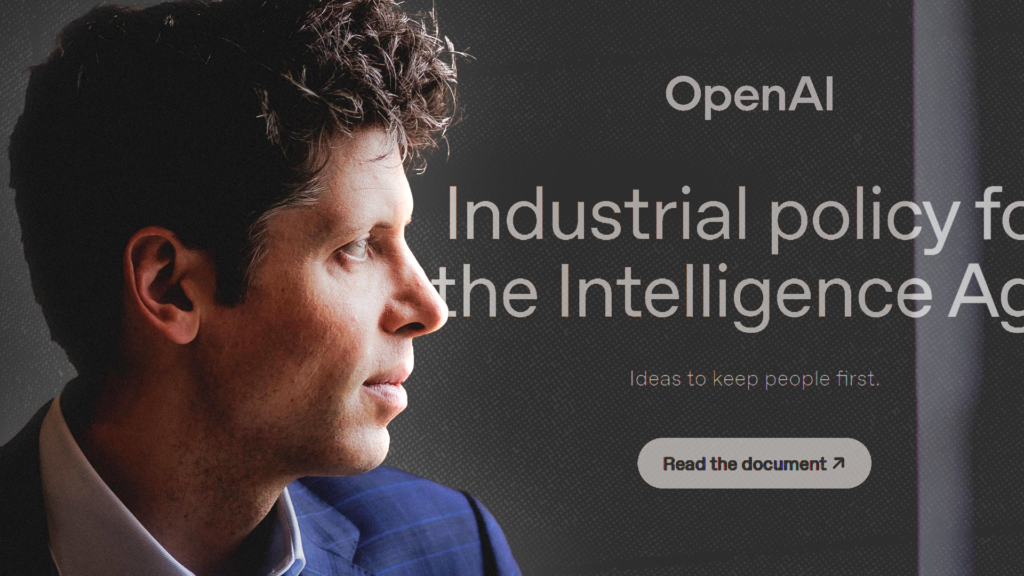
On Monday, OpenAI published Industrial Policy for the Intelligence Age: Ideas to Keep People First. The 13-page white paper presents the frontier developer’s economic and regulatory prescriptions for a world with superintelligent AI.
Starting with the positives, the paper rightly recognizes that bundling fringe benefits—health insurance and retirement plans—with employers harms workers by limiting labor market mobility. To ameliorate the problems of employer-sponsored benefits, OpenAI recommends creating “portable benefit platforms that pool contributions from multiple sources and route them into standardized accounts attached to the individual, not the job.”
The company also recommends “using AI to handle the overhead that usually blocks entrepreneurship,” including “accounting, marketing, and procurement.” Given the sheer amount of paperwork it can take to start a business, “startup-in-a-box” supports, which OpenAI defines as model contracts and shared back-office infrastructure, can be critical for helping innovators quickly translate ideas from the back of a napkin to multibillion-dollar companies, says Kevin Frazier, senior fellow at the Abundance Institute.
But as the company makes the case for easing business costs, it makes several recommendations that would stifle innovation. This includes the call to radically alter the tax code by imposing “higher taxes on capital gains at the top [and] corporate income.” OpenAI also advocates for creating a public wealth fund—whose funding source is unspecified—to allow every citizen to “invest in diversified, long-term assets that capture growth in both AI companies and the broader set of firms adopting and deploying AI.”
Research published by the Cato Institute has associated higher corporate income tax rates with less research and development investment and fewer patents filed per year. Similarly, hiking taxes on capital gains discourages investment in startups. This means less innovation and, consequently, slower economic growth. Meanwhile, the $1.48 trillion in debt amassed by state and local pension plans, as well as the Social Security trust fund’s impending insolvency, suggest that the government is an irresponsible fiduciary that should not be entrusted to oversee even more capital.
Unfortunately, this is not the only instance of OpenAI advocating for more state power; the plan also calls for the expansion of the existing safety net, which includes food stamps, unemployment insurance, “Social Security, Medicaid, and Medicare that are not just in place but fully functional, accessible, and responsive to the realities people will face during the transition [to superintelligence].”
Given the transformative economic potential of AI, it’s reasonable to believe that safety nets will likely have to be updated in response to superintelligence. But sticking to the same “tried and failed” mechanisms is the wrong approach, says Frazier. “The goal should not be to…attach AI to existing systems and assume that their flaws will immediately be remedied,” he says, but to fundamentally reevaluate these systems.
In some ways, OpenAI’s suggestions for the future of AI are better than other policies proposed by lawmakers. For example, instead of calling for a nationwide moratorium on new data center construction to reduce strain on the electric grid, the company calls for “the expansion of energy infrastructure required to power AI.” Still, OpenAI’s belief in the government’s ability to allocate billions of dollars to the benefit of all Americans is a naive one.
Read the full article here
Fact Checker
Verify the accuracy of this article using AI-powered analysis and real-time sources.