

 Freedom Index
Listen to the article
In my family, Sunday coffee was a blood sport. My grandfather, a former Wehrmacht soldier, stood on the political Right. My aunt, a passionate participant in the 1968 student movement, stood on the Left. Almost the only thing they agreed upon was their antipathy to Americans, expressed with identical certainty from opposite ends of the kitchen table. I was ten years old when I started paying attention to this. It was the late 1970s, and I watched political talk shows and Lou Grant—the American newsroom drama set at the fictional Los Angeles Tribune—with equal fascination. I tried to understand why the adults around me enthusiastically consumed American culture even as they denounced the country that produced it.
The standard narrative places the origins of European anti-Americanism somewhere around the Iraq War. The real history is older and stranger. In 1761, the French naturalist Georges-Louis Leclerc, Comte de Buffon, published his hypothesis that the New World was biologically “degenerate”—everything in America, he claimed, was smaller, weaker, and less vital than in Europe, including the people. Thomas Jefferson was so incensed that he had a stuffed moose shipped to Paris to prove Buffon wrong. The German poet Heinrich Heine, meanwhile, called America “that pig-pen of freedom, inhabited by boors living in equality.”
What interests me about these early critics is not their inaccuracy but their consistency. The specific complaints change every generation—too primitive, too powerful, too capitalist, too confident—but the underlying mechanism does not. You do not spend 276 years obsessing over something you merely dislike. That is the behaviour of someone working through a deeper anxiety.
I identified this pattern through experience. A German engineer drives a Tesla to work, uses Google for research, streams Netflix at night, and delivers a confident lecture about American cultural shallowness over dinner. A German politician tweets outrage about American climate policy from a country that had to reopen coal plants after it shut down its nuclear reactors. The pattern transcends political affiliation: during the Trump years, I watched the German Left discover a passion for criticising America that the German Right had practised for generations. The vocabulary changed—from “American vulgarity” to “threats to the liberal order”—but the emotional register was identical. My grandfather and my aunt said “damn Yanks” with the same conviction, and their political grandchildren have inherited this bipartisan reflex intact.
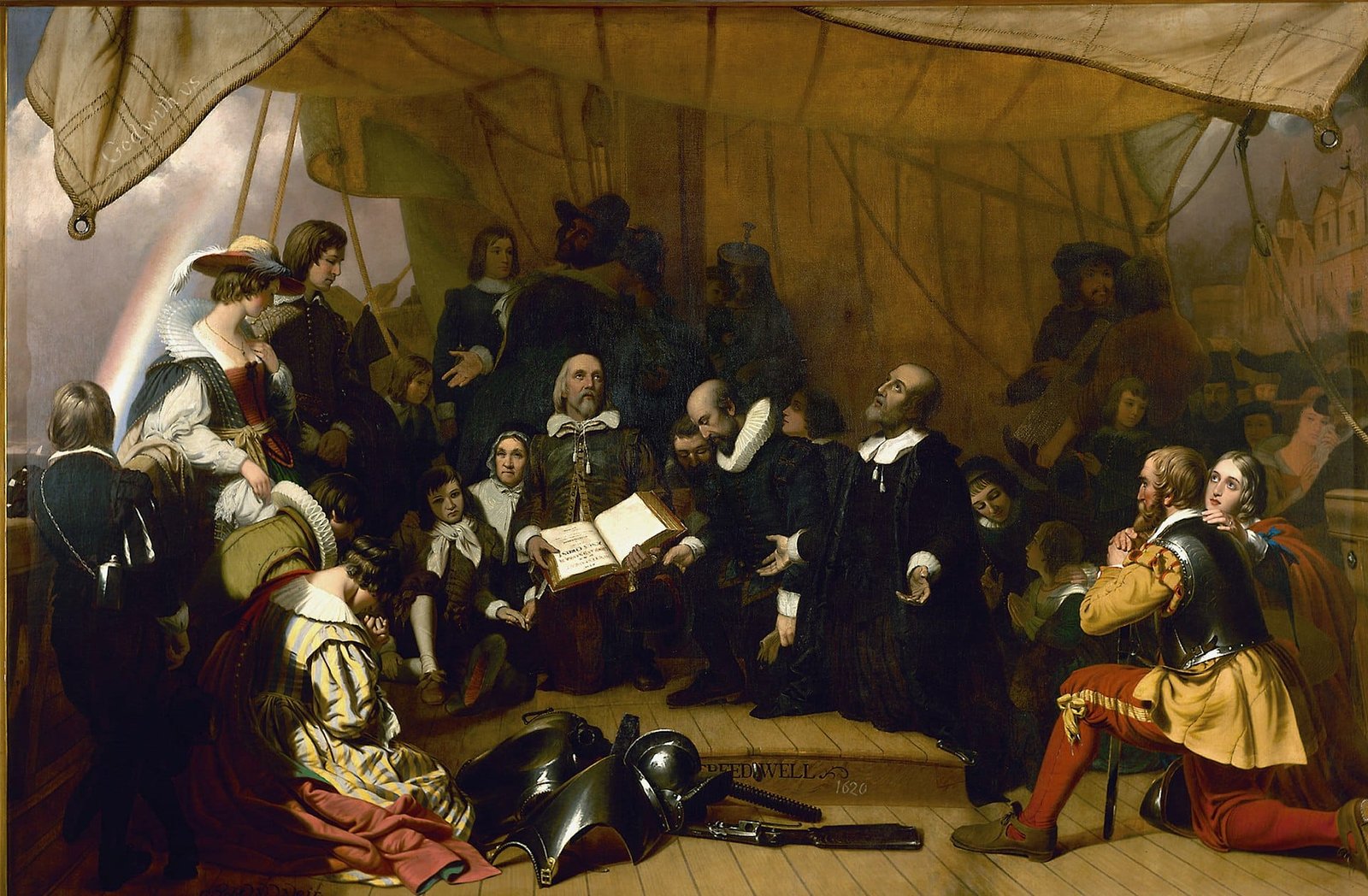
But there is one aspect that cuts deeper than debates about foreign policy or capitalism, and that is religion. When German observers confront American religiosity, something happens that goes beyond cultural criticism. It triggers genuine bewilderment that often shades into alarm. According to 2022 data, 37 percent of Americans describe religion as “very important” in their lives. In Germany, the figure is thirteen percent. For most European intellectuals, this God gap confirms a simple diagnosis: that America is backward and still awaiting the secularisation that Europe completed decades ago.
It should be noted that the gap is a lot narrower than it has been in recent years. In 2007, 56 percent of Americans described religion as “very important” in their lives. Church attendance and daily prayer have declined in parallel. On its face, this trajectory appears to confirm the European expectation that America is secularising, merely more slowly. But the character of American secularisation differs from Europe’s in ways that matter.
Read the full article here
Fact Checker
Verify the accuracy of this article using AI-powered analysis and real-time sources.