Close Menu
FSNN | Free Speech News NetworkFSNN | Free Speech News Network
  • Home
  • News
    • Politics
    • Legal & Courts
    • Tech & Big Tech
    • Campus & Education
    • Media & Culture
    • Global Free Speech
  • Opinions
    • Debates
  • Video/Live
  • Community
  • Freedom Index
  • About
    • Mission
    • Contact
    • Support
Trending

Trump-linked USD1 stablecoin wobbles as WLFI says it’s under ‘coordinated attack’

16 minutes ago

Rate Launches Crypto Mortgage Program Without Liquidation in the US

18 minutes ago

Crypto Funds Shed $4B Across Five-Week Negative Streak

21 minutes ago
Facebook X (Twitter) Instagram
Facebook X (Twitter) Discord Telegram
FSNN | Free Speech News NetworkFSNN | Free Speech News Network
Market Data Newsletter
Monday, February 23
  • Home
  • News
    • Politics
    • Legal & Courts
    • Tech & Big Tech
    • Campus & Education
    • Media & Culture
    • Global Free Speech
  • Opinions
    • Debates
  • Video/Live
  • Community
  • Freedom Index
  • About
    • Mission
    • Contact
    • Support
FSNN | Free Speech News NetworkFSNN | Free Speech News Network
Home»News»Global Free Speech»Public service broadcasting is one of the most potent tools available to champion democracy and reinforce the international rules-based order. Photo: Alexander Svensson Letter to Rt. Hon. Yvette Cooper MP, Secretary of State for Foreign, Commonwealth and Development Affairs 23 February 2026 Dear Rt. Hon. Yvette Cooper MP, We are contacting you as Foreign Secretary to call on the UK Government to ensure the BBC World Service has the funding it needs to maintain its vital work as a public service broadcaster. The undersigned organisations were alarmed by the recent comments made by the BBC Director General that the outlet’s current funding arrangements only extend to the end of March 2026. It is vitally important that FCDO immediately makes the necessary funding available to maintain the World Service’s important work, while also ensuring a sustainable funding model for the outlet’s continued viability to ensure this issue is not repeated in the future.  Speaking at a Global Media Security and Innovation event in February, Tim Davie, the BBC’s Director-General said: “the current funding arrangement with the Foreign Office runs out at the end of March” and that the BBC is “waiting to hear the outcome of the settlement.” This alarming news threatens to hasten the decline of high-quality and accessible international public interest reporting. Following the US Government’s move to defund Voice of America and Radio Free Europe (RFE/RL), while private outlets such as Washington Post have also closed a number of international bureaus, if the World Service were to similarly lose its funding, the public interest information space upon which democracy depends would surely be in significant jeopardy.  Public service broadcasting is one of the most potent tools available to champion democracy and reinforce the international rules-based order. It also helps challenge repressive regimes who seek to control or censor journalistic reporting and hinder the public’s access to information. The World Service’s recently-announced plans to establish an “emergency lifeline radio programme for Iran” to respond to the unprecedented clampdown on civil society and protected speech best demonstrates the outlet’s innovative defence of free expression in the most challenging contexts. This work must be defended not defunded.   We acknowledge the Government’s position that the World Service’s funding is to be decided “through the FCDO allocations process” and that the decision will be made in “good time before the beginning of the 2026-27 financial year.” However, considering the urgency of this situation, we call on the FCDO and all other relevant policy makers to respond in good time to ensure the World Service, as a world leading public service broadcaster, can continue its vital work. Any uncertainty and instability in the World Service’s funding will directly hinder its work and impact those across the globe who depend on its public service reporting. We are ready to support where we can and await your response. Kind regards,  Index on Censorship European Federation of Journalists (EFJ) Reporters Without Borders UK (RSF) Association of European Journalists (AEJ) Justice for Journalists Foundation (JFJ) Rory Peck Trust (RPT) European Centre for Press and Media Freedom (ECPMF) PEN International National Union of Journalists (NUJ) READ MORE
Global Free Speech

Public service broadcasting is one of the most potent tools available to champion democracy and reinforce the international rules-based order. Photo: Alexander Svensson Letter to Rt. Hon. Yvette Cooper MP, Secretary of State for Foreign, Commonwealth and Development Affairs 23 February 2026 Dear Rt. Hon. Yvette Cooper MP, We are contacting you as Foreign Secretary to call on the UK Government to ensure the BBC World Service has the funding it needs to maintain its vital work as a public service broadcaster. The undersigned organisations were alarmed by the recent comments made by the BBC Director General that the outlet’s current funding arrangements only extend to the end of March 2026. It is vitally important that FCDO immediately makes the necessary funding available to maintain the World Service’s important work, while also ensuring a sustainable funding model for the outlet’s continued viability to ensure this issue is not repeated in the future.  Speaking at a Global Media Security and Innovation event in February, Tim Davie, the BBC’s Director-General said: “the current funding arrangement with the Foreign Office runs out at the end of March” and that the BBC is “waiting to hear the outcome of the settlement.” This alarming news threatens to hasten the decline of high-quality and accessible international public interest reporting. Following the US Government’s move to defund Voice of America and Radio Free Europe (RFE/RL), while private outlets such as Washington Post have also closed a number of international bureaus, if the World Service were to similarly lose its funding, the public interest information space upon which democracy depends would surely be in significant jeopardy.  Public service broadcasting is one of the most potent tools available to champion democracy and reinforce the international rules-based order. It also helps challenge repressive regimes who seek to control or censor journalistic reporting and hinder the public’s access to information. The World Service’s recently-announced plans to establish an “emergency lifeline radio programme for Iran” to respond to the unprecedented clampdown on civil society and protected speech best demonstrates the outlet’s innovative defence of free expression in the most challenging contexts. This work must be defended not defunded.   We acknowledge the Government’s position that the World Service’s funding is to be decided “through the FCDO allocations process” and that the decision will be made in “good time before the beginning of the 2026-27 financial year.” However, considering the urgency of this situation, we call on the FCDO and all other relevant policy makers to respond in good time to ensure the World Service, as a world leading public service broadcaster, can continue its vital work. Any uncertainty and instability in the World Service’s funding will directly hinder its work and impact those across the globe who depend on its public service reporting. We are ready to support where we can and await your response. Kind regards,  Index on Censorship European Federation of Journalists (EFJ) Reporters Without Borders UK (RSF) Association of European Journalists (AEJ) Justice for Journalists Foundation (JFJ) Rory Peck Trust (RPT) European Centre for Press and Media Freedom (ECPMF) PEN International National Union of Journalists (NUJ) READ MORE

News RoomBy News Room4 hours agoNo Comments3 Mins Read1,436 Views
Share Facebook Twitter Pinterest Copy Link LinkedIn Tumblr Email VKontakte Telegram
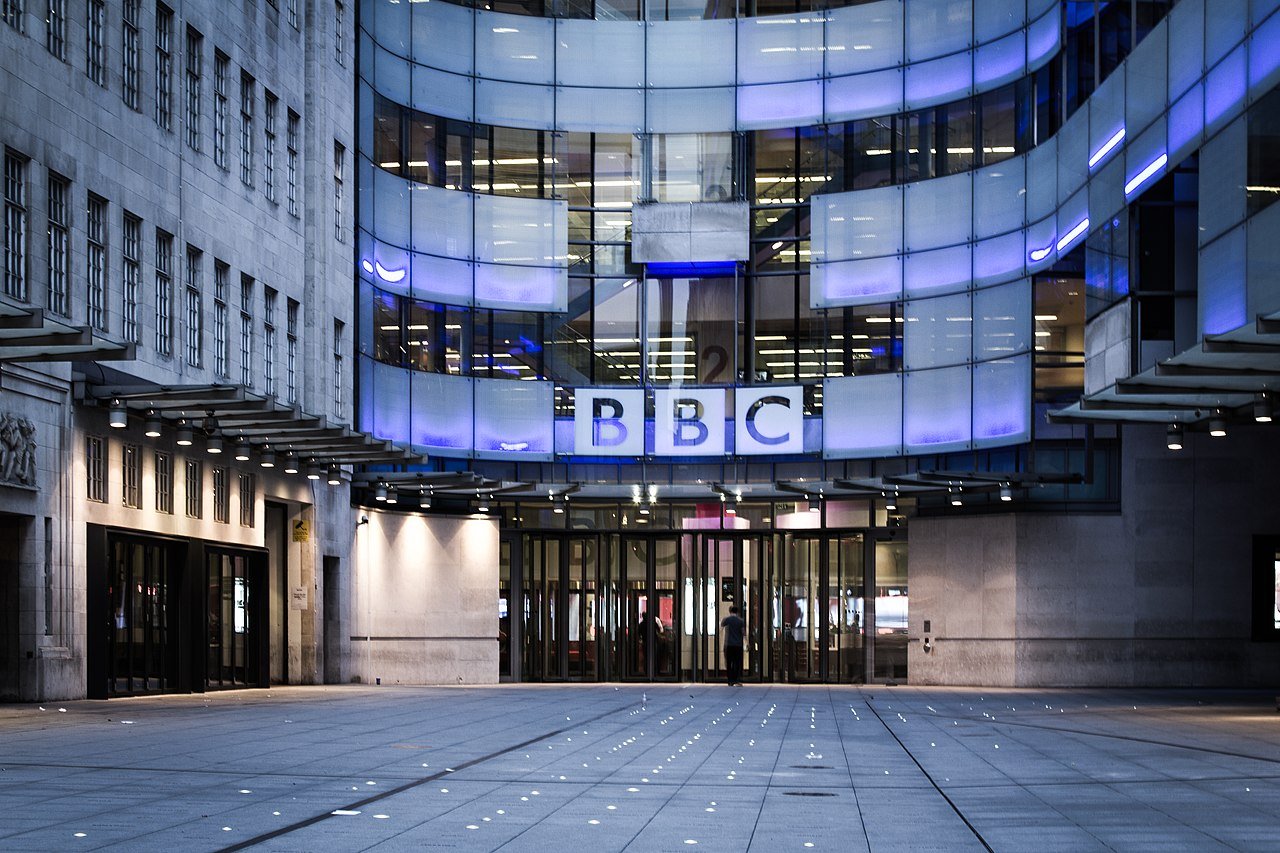
Public service broadcasting is one of the most potent tools available to champion democracy and reinforce the international rules-based order. Photo: Alexander Svensson


				Letter to Rt. Hon. Yvette Cooper MP, Secretary of State for Foreign, Commonwealth and Development Affairs
23 February 2026
Dear Rt. Hon. Yvette Cooper MP,
We are contacting you as Foreign Secretary to call on the UK Government to ensure the BBC World Service has the funding it needs to maintain its vital work as a public service broadcaster. The undersigned organisations were alarmed by the recent comments made by the BBC Director General that the outlet’s current funding arrangements only extend to the end of March 2026. It is vitally important that FCDO immediately makes the necessary funding available to maintain the World Service’s important work, while also ensuring a sustainable funding model for the outlet’s continued viability to ensure this issue is not repeated in the future. 
Speaking at a Global Media Security and Innovation event in February, Tim Davie, the BBC’s Director-General said: “the current funding arrangement with the Foreign Office runs out at the end of March” and that the BBC is “waiting to hear the outcome of the settlement.” This alarming news threatens to hasten the decline of high-quality and accessible international public interest reporting. Following the US Government’s move to defund Voice of America and Radio Free Europe (RFE/RL), while private outlets such as Washington Post have also closed a number of international bureaus, if the World Service were to similarly lose its funding, the public interest information space upon which democracy depends would surely be in significant jeopardy. 
Public service broadcasting is one of the most potent tools available to champion democracy and reinforce the international rules-based order. It also helps challenge repressive regimes who seek to control or censor journalistic reporting and hinder the public’s access to information. The World Service’s recently-announced plans to establish an “emergency lifeline radio programme for Iran” to respond to the unprecedented clampdown on civil society and protected speech best demonstrates the outlet’s innovative defence of free expression in the most challenging contexts. This work must be defended not defunded.  
We acknowledge the Government’s position that the World Service’s funding is to be decided “through the FCDO allocations process” and that the decision will be made in “good time before the beginning of the 2026-27 financial year.” However, considering the urgency of this situation, we call on the FCDO and all other relevant policy makers to respond in good time to ensure the World Service, as a world leading public service broadcaster, can continue its vital work. Any uncertainty and instability in the World Service’s funding will directly hinder its work and impact those across the globe who depend on its public service reporting.
We are ready to support where we can and await your response.
Kind regards, 
Index on Censorship
European Federation of Journalists (EFJ)
Reporters Without Borders UK (RSF)
Association of European Journalists (AEJ)
Justice for Journalists Foundation (JFJ)
Rory Peck Trust (RPT)
European Centre for Press and Media Freedom (ECPMF)
PEN International
National Union of Journalists (NUJ)


				READ MORE
Share
Facebook Twitter Pinterest Email Copy Link

Listen to the article

0:00
0:00

Key Takeaways

Playback Speed

Select a Voice

Letter to Rt. Hon. Yvette Cooper MP, Secretary of State for Foreign, Commonwealth and Development Affairs

23 February 2026

Dear Rt. Hon. Yvette Cooper MP,

We are contacting you as Foreign Secretary to call on the UK Government to ensure the BBC World Service has the funding it needs to maintain its vital work as a public service broadcaster. The undersigned organisations were alarmed by the recent comments made by the BBC Director General that the outlet’s current funding arrangements only extend to the end of March 2026. It is vitally important that FCDO immediately makes the necessary funding available to maintain the World Service’s important work, while also ensuring a sustainable funding model for the outlet’s continued viability to ensure this issue is not repeated in the future. 

Speaking at a Global Media Security and Innovation event in February, Tim Davie, the BBC’s Director-General said: “the current funding arrangement with the Foreign Office runs out at the end of March” and that the BBC is “waiting to hear the outcome of the settlement.” This alarming news threatens to hasten the decline of high-quality and accessible international public interest reporting. Following the US Government’s move to defund Voice of America and Radio Free Europe (RFE/RL), while private outlets such as Washington Post have also closed a number of international bureaus, if the World Service were to similarly lose its funding, the public interest information space upon which democracy depends would surely be in significant jeopardy. 

Public service broadcasting is one of the most potent tools available to champion democracy and reinforce the international rules-based order. It also helps challenge repressive regimes who seek to control or censor journalistic reporting and hinder the public’s access to information. The World Service’s recently-announced plans to establish an “emergency lifeline radio programme for Iran” to respond to the unprecedented clampdown on civil society and protected speech best demonstrates the outlet’s innovative defence of free expression in the most challenging contexts. This work must be defended not defunded.  

We acknowledge the Government’s position that the World Service’s funding is to be decided “through the FCDO allocations process” and that the decision will be made in “good time before the beginning of the 2026-27 financial year.” However, considering the urgency of this situation, we call on the FCDO and all other relevant policy makers to respond in good time to ensure the World Service, as a world leading public service broadcaster, can continue its vital work. Any uncertainty and instability in the World Service’s funding will directly hinder its work and impact those across the globe who depend on its public service reporting.

We are ready to support where we can and await your response.

Kind regards, 

Index on Censorship

European Federation of Journalists (EFJ)

Reporters Without Borders UK (RSF)

Association of European Journalists (AEJ)

Justice for Journalists Foundation (JFJ)

Rory Peck Trust (RPT)

European Centre for Press and Media Freedom (ECPMF)

PEN International

National Union of Journalists (NUJ)

Read the full article here

Fact Checker

Verify the accuracy of this article using AI-powered analysis and real-time sources.

Get Your Fact Check Report

Enter your email to receive detailed fact-checking analysis

5 free reports remaining

Continue with Full Access

You've used your 5 free reports. Sign up for unlimited access!

Already have an account? Sign in here

Share. Facebook Twitter Pinterest LinkedIn Tumblr Email Telegram Copy Link
News Room
  • Website
  • Facebook
  • X (Twitter)
  • Instagram
  • LinkedIn

The FSNN News Room is the voice of our in-house journalists, editors, and researchers. We deliver timely, unbiased reporting at the crossroads of finance, cryptocurrency, and global politics, providing clear, fact-driven analysis free from agendas.

Related Articles

Global Free Speech

A tribute to the murdered journalist Ján Kuciak and his fiancee Martina Kušnírová. Photo: Ing.Mgr.Jozef Kotulič The day of Ján Kuciak’s anniversary is still traumatic for this country in the heart of Europe. But neither the president, nor the head of the national parliament, nor the prime minister said a one word about Kuciak nor his fiancée, archaeologist Martina Kušnírová, nor their assassination. In eight years, the prime minister Robert Fico has not once mentioned his name publicly. He mostly talks only about “that journalist” and spreads conspiracy theories and lies about the killing. I and many others talked about Ján Kuciak on Saturday 21 February 2026, at one of the 30 commemorative demonstrations all around Slovakia. I travelled to Zlaté Moravce about 80 minutes’ drive from capital Bratislava, where local civic activists regularly organise political protests against the populist right-wing government. I knew Ján personally; I was honoured to host the only public appearance of his very short, but breathtaking career in January 2017. Almost no one knew his name at that time. Where do Slovak millionaires hide their money? was the title of his awesome speech. It was an unforgettable masterclass on innovative data journalism. Ján, an extraordinary talent of his generation, had searched for, read, processed and analysed large public datasets from ministries and government offices to uncover corruption and explain tax frauds and reported on it in his unusually complex stories. Author Michal Hvorecký speaks to a crowd on the eighth anniversary of Jan Kuciak’s murder. Photo: Milan Illik In his editorial office, he visualised the collected data in an old-school analogue way drawing with pencils on huge pieces papers spiderwebs of connections full of notorious oligarch names and their criminal networks. He acted as our very first digital-age watchdog. He put the information into context and explained how top members of the governing Party Smer and their sponsors and affiliated post-Soviet style businessmen – many still in power after all these years – stole huge sums and moved the money to tax havens like Cyprus. He also investigated the suspected theft of EU funds destined for eastern Slovakia by the members of Italian mafia. Ján Kuciak uncovered that the corruption in Slovakia doesn’t only mean petty bribes, but something much deeper and more dangerous – state capture. Corruption as a system. His stories told us how Robert Fico turned democracy into a mechanism for his own enrichment and the power. Party Smer functioned – and unfortunately still does – like a cartel. Since 2020 we have known how Ján was killed and by whom. But who ordered the assassination? Who wanted to silence him at all costs? We still do not know, and we need to know. Ján exposed a form of corruption so deeply entrenched that it threatened the rule of law and democracy. Recently, Slovakia’s Special Criminal Court reopened the murder case for the third time. Hopefully, the court will learn from its previous errors and thoroughly examine all the evidence. To this day, I am convinced that Ján Kuciak could have lived. If the state had acted. If Minister of Interior Robert Kaliňák – today a Minister of Defence – had not laughed at him and refused to demand a police investigation. Ján was openly threatened by influential oligarch and controversial media tycoon Marián Kočner. As a journalist he filed a criminal complaint. It didn’t help. Police refused to assist and protect him. A couple of months later Ján was executed with a single bullet to the heart and Martina with the shot to the head. Recently, one of the businessman Ján Kuciak was intensively reporting about, Jozef Brhel, founder and sponsor of Smer, was accused of leading an organised criminal group that laundered dirty money from state contracts for years, and in February 2026, he was finally found guilty. What Ján taught us is to never give up the fight for justice and to speak up about state capture, the most dangerous mutation of corruption. The 21 February is our annual reminder that freedom and the rule of law cannot be taken for granted. Slovakia has a strong civic society ready for widespread protest whenever necessary, and a free critical media, both also thanks to Ján. Good writing can still change the world and make it a better place, as his major work, published posthumously, proved. “One day, Slovakia will wake up,” Ján wrote. I hope this day is very near. READ MORE

1 hour ago
Global Free Speech

Cameroon police probe journalists investigating secret US migrant deportations, seize equipment

5 hours ago
Global Free Speech

CPJ to release 2025 report on killings of journalists worldwide

3 days ago
Global Free Speech

16th Feb, 2026. Hungarian Prime Minister Viktor Orban (R) and U.S. Secretary of State Marco Rubio attend a joint press conference in Budapest, Hungary on Feb. 16, 2026. Photo: David Balogh/Xinhua/Alamy Live News When I left Hungary on Sunday, the US secretary of state Marco Rubio had just arrived in Budapest for talks with the prime minister Viktor Orbán to give him the USA’s full-throttled support. Hungary has been somewhat of a touchstone for the MAGA movement and Rubio told Orbán that US Hungarian relations were entering “a golden age” and that if Orbán needed anything, the US would consider providing it. There are elections in Hungary just after Easter and it looks likely, if the polls are to be believed, that the more pro-EU opposition leader Péter Magyar will win. There is restrained optimism among many liberals in Budapest although nothing in this part of the world is a done deal. The week I was there, Magyar was going big on the theme that he had been lured into a honey trap and some Kompromat video Russian-style was going to be released. Only a grainy black and white still of a double-bed captured by a ceiling camera ever emerged. Even with a Magyar win, it will be difficult to unravel the total capture of institutions (universities, the media and the cultural centres) by billionaires and those loyal to Orbán’s Fidesz. I heard some 30-something American men in black bomber jackets in Budapest’s Jewish quarter loudly complaining in English that the “young people” in Hungary wanted to tax those billionaires, but they simply didn’t understand how the country relied on them. We are examining the implications on freedom of expression of all these Hungarian developments in the next magazine. This part of Europe, which was once the Habsburg Empire, feels in flux. People, and particularly young people, are fighting back to claim their rights to be heard. Liberal forces in Slovakia are mobilising, even while the far-right leader Robert Fico is attempting to “normalise” the cultural sector, taking money away from any arts institution considered to be too “activist”. Meanwhile in Vienna, the situation to the east is waved away in the coffee houses as being unimportant, or at least an issue which will resolve itself. A famous saying about the city is: “When the world comes to an end, move to Vienna because everything happens there 20 years later.” There are fears here about an over-dependence on an increasingly unfriendly USA, particularly when it comes to digital platforms and servers – the USA could turn them all off with a flick of a switch if Europe doesn’t toe the line – and a frustration that France and Germany are not working as one to build European solidarity against hostile forces in China and Russia. And then there is a question of the rise of the far-right parties in Europe, including in Austria itself. From the end of World War Two, it was the USA which acted as a liberal guarantor for free expression in western and then eastern Europe. The old order is breaking up, the EU is weakened and ordinary people are having to decide whether those rights are still worth fighting for. READ MORE

3 days ago
Global Free Speech

Cambodian journalists Pheap Phara and Phon Sopheap given 14-year prison sentences for treason

3 days ago
Global Free Speech

Senegalese commentator arrested for remarks about student’s death

4 days ago
Add A Comment
Leave A Reply Cancel Reply

Editors Picks

Rate Launches Crypto Mortgage Program Without Liquidation in the US

18 minutes ago

Crypto Funds Shed $4B Across Five-Week Negative Streak

21 minutes ago

Trump’s Tantrum Over the Tariff Decision Highlights His Narcissistic Authoritarianism

51 minutes ago

A tribute to the murdered journalist Ján Kuciak and his fiancee Martina Kušnírová. Photo: Ing.Mgr.Jozef Kotulič The day of Ján Kuciak’s anniversary is still traumatic for this country in the heart of Europe. But neither the president, nor the head of the national parliament, nor the prime minister said a one word about Kuciak nor his fiancée, archaeologist Martina Kušnírová, nor their assassination. In eight years, the prime minister Robert Fico has not once mentioned his name publicly. He mostly talks only about “that journalist” and spreads conspiracy theories and lies about the killing. I and many others talked about Ján Kuciak on Saturday 21 February 2026, at one of the 30 commemorative demonstrations all around Slovakia. I travelled to Zlaté Moravce about 80 minutes’ drive from capital Bratislava, where local civic activists regularly organise political protests against the populist right-wing government. I knew Ján personally; I was honoured to host the only public appearance of his very short, but breathtaking career in January 2017. Almost no one knew his name at that time. Where do Slovak millionaires hide their money? was the title of his awesome speech. It was an unforgettable masterclass on innovative data journalism. Ján, an extraordinary talent of his generation, had searched for, read, processed and analysed large public datasets from ministries and government offices to uncover corruption and explain tax frauds and reported on it in his unusually complex stories. Author Michal Hvorecký speaks to a crowd on the eighth anniversary of Jan Kuciak’s murder. Photo: Milan Illik In his editorial office, he visualised the collected data in an old-school analogue way drawing with pencils on huge pieces papers spiderwebs of connections full of notorious oligarch names and their criminal networks. He acted as our very first digital-age watchdog. He put the information into context and explained how top members of the governing Party Smer and their sponsors and affiliated post-Soviet style businessmen – many still in power after all these years – stole huge sums and moved the money to tax havens like Cyprus. He also investigated the suspected theft of EU funds destined for eastern Slovakia by the members of Italian mafia. Ján Kuciak uncovered that the corruption in Slovakia doesn’t only mean petty bribes, but something much deeper and more dangerous – state capture. Corruption as a system. His stories told us how Robert Fico turned democracy into a mechanism for his own enrichment and the power. Party Smer functioned – and unfortunately still does – like a cartel. Since 2020 we have known how Ján was killed and by whom. But who ordered the assassination? Who wanted to silence him at all costs? We still do not know, and we need to know. Ján exposed a form of corruption so deeply entrenched that it threatened the rule of law and democracy. Recently, Slovakia’s Special Criminal Court reopened the murder case for the third time. Hopefully, the court will learn from its previous errors and thoroughly examine all the evidence. To this day, I am convinced that Ján Kuciak could have lived. If the state had acted. If Minister of Interior Robert Kaliňák – today a Minister of Defence – had not laughed at him and refused to demand a police investigation. Ján was openly threatened by influential oligarch and controversial media tycoon Marián Kočner. As a journalist he filed a criminal complaint. It didn’t help. Police refused to assist and protect him. A couple of months later Ján was executed with a single bullet to the heart and Martina with the shot to the head. Recently, one of the businessman Ján Kuciak was intensively reporting about, Jozef Brhel, founder and sponsor of Smer, was accused of leading an organised criminal group that laundered dirty money from state contracts for years, and in February 2026, he was finally found guilty. What Ján taught us is to never give up the fight for justice and to speak up about state capture, the most dangerous mutation of corruption. The 21 February is our annual reminder that freedom and the rule of law cannot be taken for granted. Slovakia has a strong civic society ready for widespread protest whenever necessary, and a free critical media, both also thanks to Ján. Good writing can still change the world and make it a better place, as his major work, published posthumously, proved. “One day, Slovakia will wake up,” Ján wrote. I hope this day is very near. READ MORE

1 hour ago
Latest Posts

Elliptic flags Russia-linked crypto exchanges over sanctions exposure risks

1 hour ago

Revolut Confirms Ex-Employee Threatened to Leak KYC Data for Crypto Ransom

1 hour ago

Stablecoins Set to Scoop Up $1T in T-Bills by 2028: Standard Chartered

1 hour ago

Subscribe to News

Get the latest news and updates directly to your inbox.

At FSNN – Free Speech News Network, we deliver unfiltered reporting and in-depth analysis on the stories that matter most. From breaking headlines to global perspectives, our mission is to keep you informed, empowered, and connected.

FSNN.net is owned and operated by GlobalBoost Media
, an independent media organization dedicated to advancing transparency, free expression, and factual journalism across the digital landscape.

Facebook X (Twitter) Discord Telegram
Latest News

Trump-linked USD1 stablecoin wobbles as WLFI says it’s under ‘coordinated attack’

16 minutes ago

Rate Launches Crypto Mortgage Program Without Liquidation in the US

18 minutes ago

Crypto Funds Shed $4B Across Five-Week Negative Streak

21 minutes ago

Subscribe to Updates

Get the latest news and updates directly to your inbox.

© 2026 GlobalBoost Media. All Rights Reserved.
  • Privacy Policy
  • Terms of Service
  • Our Authors
  • Contact

Type above and press Enter to search. Press Esc to cancel.

🍪

Cookies

We and our selected partners wish to use cookies to collect information about you for functional purposes and statistical marketing. You may not give us your consent for certain purposes by selecting an option and you can withdraw your consent at any time via the cookie icon.

Cookie Preferences

Manage Cookies

Cookies are small text that can be used by websites to make the user experience more efficient. The law states that we may store cookies on your device if they are strictly necessary for the operation of this site. For all other types of cookies, we need your permission. This site uses various types of cookies. Some cookies are placed by third party services that appear on our pages.

Your permission applies to the following domains:

  • https://fsnn.net
Necessary
Necessary cookies help make a website usable by enabling basic functions like page navigation and access to secure areas of the website. The website cannot function properly without these cookies.
Statistic
Statistic cookies help website owners to understand how visitors interact with websites by collecting and reporting information anonymously.
Preferences
Preference cookies enable a website to remember information that changes the way the website behaves or looks, like your preferred language or the region that you are in.
Marketing
Marketing cookies are used to track visitors across websites. The intention is to display ads that are relevant and engaging for the individual user and thereby more valuable for publishers and third party advertisers.