

 Freedom Index
Listen to the article
The Supreme Court struck down President Donald Trump’s tariffs.
Trump responded with…more tariffs.
The president said Friday he would sign an executive order to impose a 10 percent “global tariff” under the auspices of a 1974 law that allows presidents to impose tariffs of up to 15 percent for a period of 150 days.
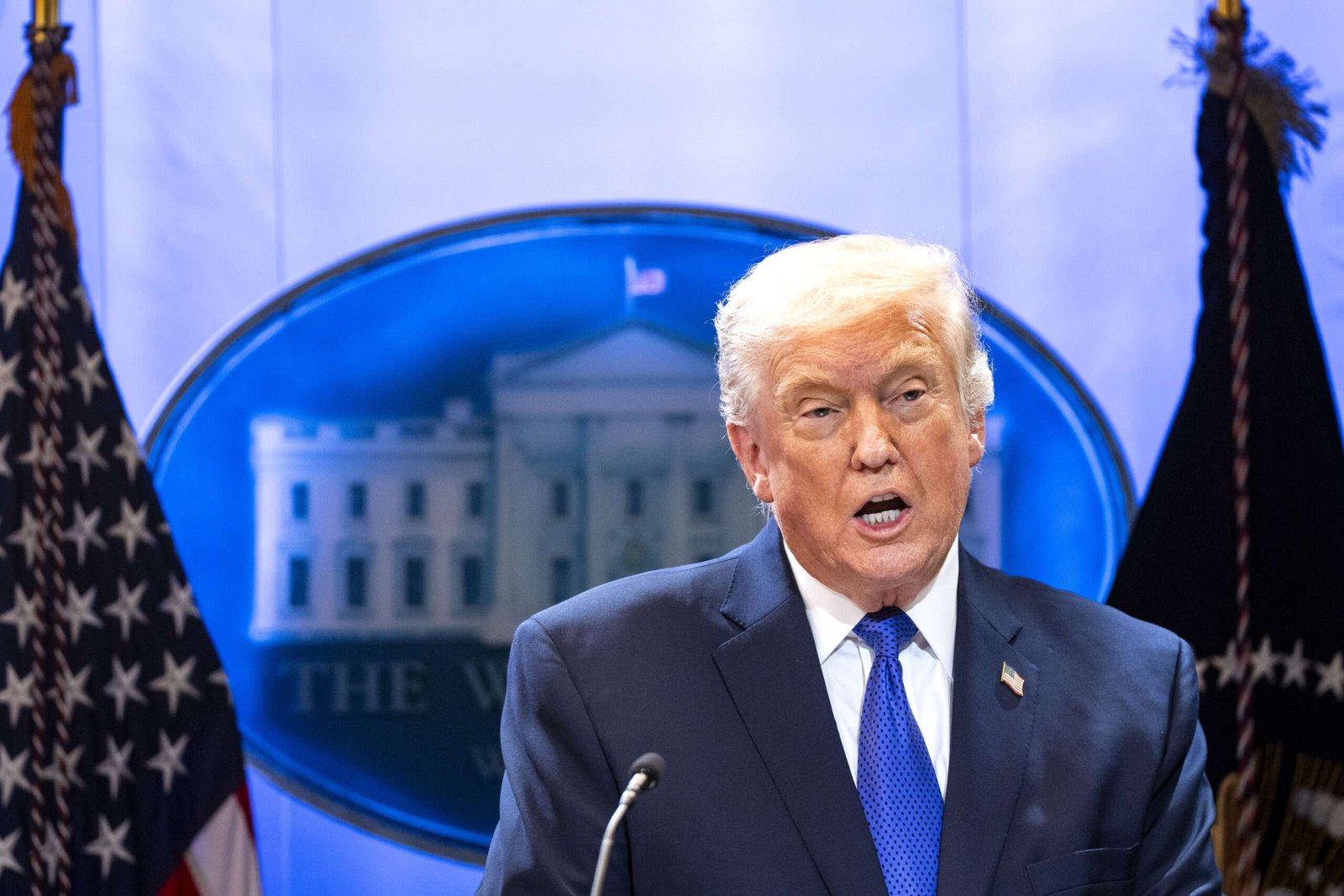
“I’m going to go in a different direction,” Trump said during a press conference at the White House, “which is even stronger than our original choice.”
The tariffs struck down Friday by the Supreme Court were imposed under the International Emergency Economic Powers Act (IEEPA). Even though Friday’s ruling seems to shut the door on Trump’s use of that law to impose sweeping tariffs on nearly all imports for vague reasons, there are a number of other laws that could allow Trump to set tariffs on certain goods or imports from specific countries, as Reason‘s Jacob Sullum explained earlier today.
The first of those alternatives that Trump is reaching for is Section 122 of the Trade Act of 1974. That law allows the president to address “large and serious” trade issues by imposing tariffs or setting other restrictions on imports.
While speaking to the media on Friday, Trump said the new tariffs would take effect within three days. U.S. Trade Representative Jamieson Greer said the executive order to implement those tariffs would be signed later on Friday.
There are some limitations on Section 122 tariffs, however. These new tariffs would expire after 150 days unless Congress votes to extend them. That flips the dynamic between the Trump administration and Congress, which, under IEEPA, was required to vote to disapprove tariffs—something that much of the Republican majority had been unwilling to do.
“How much of a constraint this is, however, remains to be seen,” notes Clark Packard, a research fellow at the Cato Institute. “If Congress declines to act, the administration could, at least in theory, allow the tariffs to lapse, declare a new balance-of-payments emergency, and restart the clock. The maneuver would raise serious separation-of-powers concerns, but nothing in the statute clearly forbids it.”
In other words, Friday’s ruling is not the end of the battle over Trump’s tariffs. It may not even be the end of the legal aspects of that fight.
During Friday’s press conference, Trump also signaled that he would begin the process of imposing more tariffs under Section 301 of the Trade Act of 1974, which Trump used during his first term to tax some Chinese imports. That law requires the Office of the U.S. Trade Representative to conduct an investigation into supposedly unfair foreign trade practices and then allows the president to impose tariffs as a remedy. Exactly which imports and what goods could be targeted by those tariffs remains unclear for now.
The Supreme Court’s ruling on Friday morning offered a reprieve to Americans who have been paying the cost of Trump’s tariffs over the past year. That relief, however, looks to be short-lived. More tariffs are on the way.
Read the full article here
Fact Checker
Verify the accuracy of this article using AI-powered analysis and real-time sources.