Close Menu
FSNN | Free Speech News NetworkFSNN | Free Speech News Network
  • Home
  • News
    • Politics
    • Legal & Courts
    • Tech & Big Tech
    • Campus & Education
    • Media & Culture
    • Global Free Speech
  • Opinions
    • Debates
  • Video/Live
  • Community
  • Freedom Index
  • About
    • Mission
    • Contact
    • Support
Trending

UK Payment Blueprint Outlines Tokenized Payments for ‘Multi-Money Ecosystem’

3 minutes ago

FBI Director Kash Patel’s Undisclosed Stock Buy in Bitcoin Giant Strategy Is Down 44%

6 minutes ago

Stop Hating America

40 minutes ago
Facebook X (Twitter) Instagram
Facebook X (Twitter) Discord Telegram
FSNN | Free Speech News NetworkFSNN | Free Speech News Network
Market Data Newsletter
Thursday, July 2
  • Home
  • News
    • Politics
    • Legal & Courts
    • Tech & Big Tech
    • Campus & Education
    • Media & Culture
    • Global Free Speech
  • Opinions
    • Debates
  • Video/Live
  • Community
  • Freedom Index
  • About
    • Mission
    • Contact
    • Support
FSNN | Free Speech News NetworkFSNN | Free Speech News Network
Home»News»Media & Culture»Trump Orders the ‘Expeditious’ Reclassification of Marijuana
Media & Culture

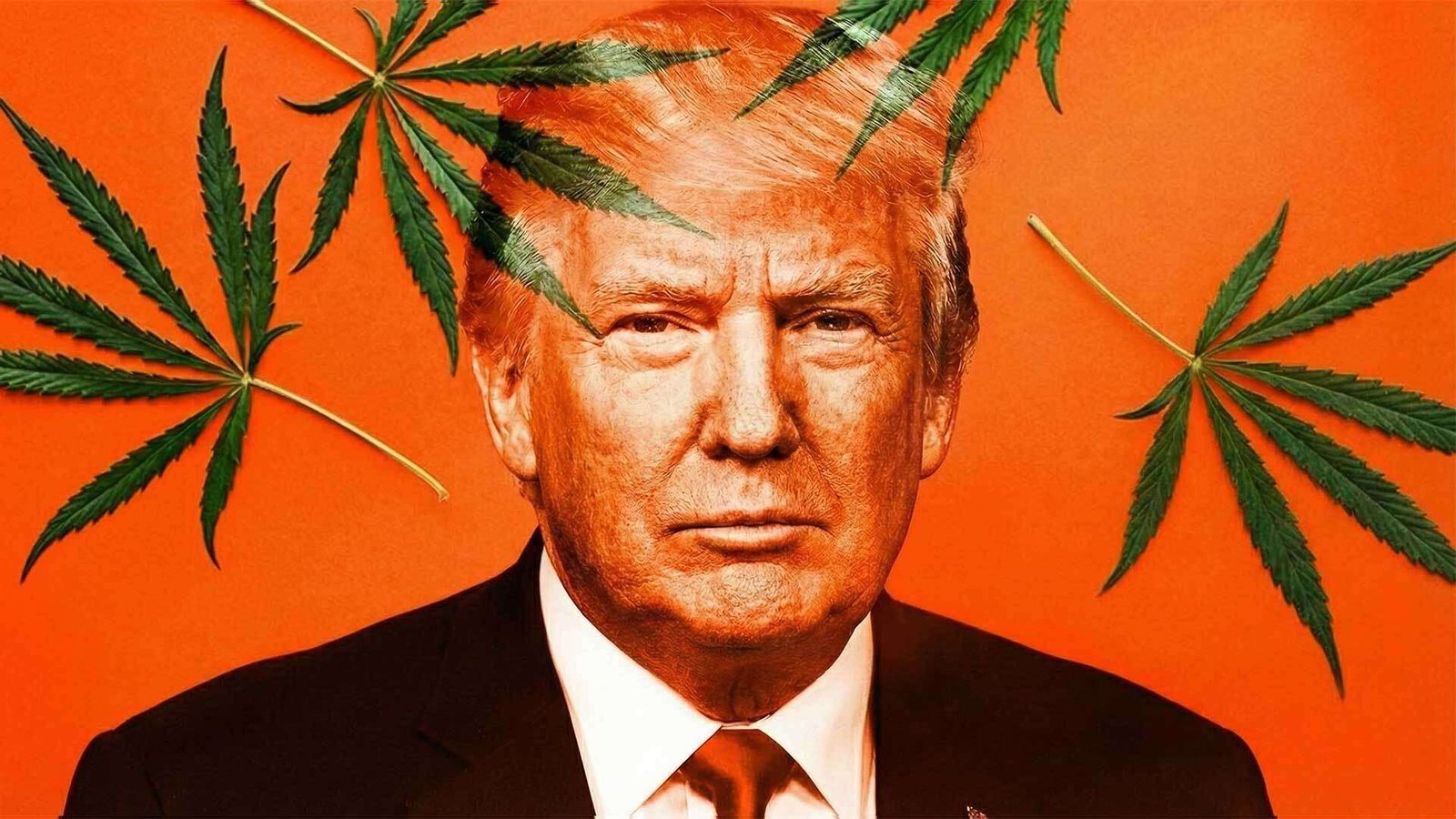
Trump Orders the ‘Expeditious’ Reclassification of Marijuana

News RoomBy News Room7 months agoNo Comments4 Mins Read1,989 Views
Share Facebook Twitter Pinterest Copy Link LinkedIn Tumblr Email VKontakte Telegram
Trump Orders the ‘Expeditious’ Reclassification of Marijuana
Share
Facebook Twitter Pinterest Email Copy Link

Listen to the article

0:00
0:00

Key Takeaways

Playback Speed

Select a Voice

On Thursday, President Donald Trump delivered on his promise to proceed with the reclassification of marijuana under the Controlled Substances Act, a long-awaited step that recognizes the drug does not meet the criteria for Schedule I, the law’s most restrictive category, where it has been listed since 1970. Instead of starting over with a new regulatory review, Trump’s executive order instructs Attorney General Pam Bondi to “complete the rulemaking process” that the Biden administration began last year “in the most expeditious manner” allowed by federal law.

Under a proposed rule that the Justice Department published in May 2024, marijuana would move from Schedule I, a category supposedly reserved for especially dangerous substances with a high abuse potential and no currently accepted medical applications, to Schedule III, which includes prescription drugs such as ketamine, anabolic steroids, and Tylenol with codeine. Trump presented that change as a boon to medical marijuana research with the ultimate aim of making cannabis-based medications legally available to patients who might benefit from them.

“We have people begging for me to do this, people that are in great pain for decades,” Trump said. “This action has been requested by American patients suffering from extreme pain, incurable diseases, aggressive cancers, seizure disorders, neurological problems and more—including numerous veterans with service-related injuries and older Americans who live with chronic medical problems that severely degrade their quality of life.”

Trump emphasized that his order “doesn’t legalize marijuana in any way, shape or form, and in no way sanctions its use as a recreational drug.” That is true, since state-licensed marijuana businesses will still be criminal enterprises under federal law. Those businesses nevertheless will benefit from marijuana’s rescheduling because it will allow them to claim standard deductions on their income tax returns. Their inability to do that, the result of a law targeting businesses that illegally supply Schedule I or Schedule II drugs, results in staggeringly high effective tax rates that impose a huge financial burden on the cannabis industry.

“This monumental change will have a massive, positive effect on thousands of state-legal cannabis businesses around the country,” cannabis lawyer Brian Vicente said in an emailed press release. “Rescheduling releases cannabis businesses from the crippling tax burden they have been shackled with and allows these businesses to grow and prosper.”

Although the tax implications of moving marijuana to Schedule III will be the biggest and most immediate effect of that change, Trump did not mention that angle. He instead focused on the promise of research that aims to “better inform patients and doctors” about marijuana’s medical benefits and risks. It is true that such studies will be easier to conduct once the special regulatory requirements that apply to Schedule I drugs are eliminated. But reclassifying marijuana will not legalize medical use unless and until the Food and Drug Administration approves specific cannabis-based products as prescription drugs—an iffier and more distant prospect.

Still, it is significant that Trump accepted the conclusions that led the Department of Health and Human Services (HHS) to recommend placing marijuana in Schedule III. His order notes that the 2023 HHS review “found scientific support for [marijuana’s] use to treat anorexia related to a medical condition, nausea and vomiting, and pain.” Based on that assessment and the practices of clinicians in states that recognize marijuana as a medicine, Trump notes, HHS concluded that it “has a currently accepted medical use,” meaning it does not belong in Schedule I.

HHS also assessed marijuana’s “potential for abuse,” noting that “the vast majority of individuals who use marijuana are doing so in a manner that does not lead to dangerous outcomes to themselves or others.” All things considered, it said, marijuana’s dangers do not justify keeping it in Schedule I, the same category as heroin, or moving it to Schedule II, which includes fentanyl, PCP, and methamphetamine. While Trump’s order does not mention that part of the HHS analysis, his endorsement of placing marijuana in Schedule III implicitly accepts the department’s assessment of the drug’s relative hazards.

Trump’s order “validates the experiences of tens of millions of Americans, as well as those of tens of thousands of physicians, who have long recognized that cannabis possesses legitimate medical utility,” said Paul Armentano, deputy director of the National Organization for the Reform of Marijuana Laws. “It wasn’t long ago that federal officials were threatening to seize doctors’ medical licenses just for discussing medical cannabis with their patients. This directive certainly marks a long overdue change in direction.”

Trump’s move, in other words, acknowledges that the federal government has been exaggerating marijuana’s dangers and ignoring its potential benefits for half a century. That concession counts as progress of a sort, although it falls far short of resolving the conflict between federal prohibition and state laws that allow medical or recreational use of marijuana.

Read the full article here

Fact Checker

Verify the accuracy of this article using AI-powered analysis and real-time sources.

Get Your Fact Check Report

Enter your email to receive detailed fact-checking analysis

5 free reports remaining

Continue with Full Access

You've used your 5 free reports. Sign up for unlimited access!

Already have an account? Sign in here

#FreePress #IndependentMedia #PoliticalDebate #PoliticalNews #PublicDiscourse
Share. Facebook Twitter Pinterest LinkedIn Tumblr Email Telegram Copy Link
News Room
  • Website
  • Facebook
  • X (Twitter)
  • Instagram
  • LinkedIn

The FSNN News Room is the voice of our in-house journalists, editors, and researchers. We deliver timely, unbiased reporting at the crossroads of finance, cryptocurrency, and global politics, providing clear, fact-driven analysis free from agendas.

Related Articles

Cryptocurrency & Free Speech Finance

FBI Director Kash Patel’s Undisclosed Stock Buy in Bitcoin Giant Strategy Is Down 44%

6 minutes ago
Media & Culture

Stop Hating America

40 minutes ago
Cryptocurrency & Free Speech Finance

Metaplanet Adds 2,823 Bitcoin in Q2 as Buying Pace Cools

1 hour ago
Media & Culture

More IPO Fluffing: Musk’s Starlink Hints At Becoming Full Wireless Phone Company

2 hours ago
Media & Culture

Today in Supreme Court History: July 2, 1908

2 hours ago
Debates

Thomas Jefferson and the True Source of Human Rights

2 hours ago
Add A Comment

Comments are closed.

Editors Picks

FBI Director Kash Patel’s Undisclosed Stock Buy in Bitcoin Giant Strategy Is Down 44%

6 minutes ago

Stop Hating America

40 minutes ago

Nasrin Sotoudeh. Photo: Hosseinronaghi/CC BY-SA 4.0 If there is any case to sum up the oppressive cruelty of the Iranian regime when it comes to clamping down on the right to free speech and human rights, it is that of Nasrin Sotoudeh. The award-winning human rights lawyer was arrested for a scarcely believable fifth time in April 2026, charged with “propaganda against the state” after criticising the actions of the Iranian government in relation to the war with the US and Israel and the state’s brutal suppression of protests. When released on bail a month later, she spoke out about the mistreatment she received at the hands of the Iranian authorities while in detention, describing being given heavy beatings, inedible food and existing in “inhumane conditions”. Sotoudeh’s arrest was greeted with outrage around the world, invoking the ire of the global human rights community, who demanded the release of one of their most accomplished members. Upon her release, Sotoudeh thanked those who had supported her. “I have gained my freedom thanks to those who have always cared about us political prisoners in Iran,” she stated in a social media post. “We have many friends all over the world, from Iranians to non-Iranians whose hearts ache for the plight of modern humans who are constantly forced to pay a price to live a normal and dignified life.” The terrible irony of the situation is that if this had happened to someone else, Sotoudeh herself would have been the first port of call when looking for help, and she would no doubt have been one of the first to offer it.  Sotoudeh began practising law in 2003, after spending some time in her early career as a newspaper journalist writing about human rights violations. She worked on cases concerning children’s rights, representing juveniles sentenced to death or children facing domestic abuse, as well as cases involving women, ethnic minorities and religious minorities. Thus began a long, impressive career in fighting for human rights in Iran. Her husband Reza Khandan, a graphic designer turned activist whom she met at a hiking group and married in 1995, confirmed that her intention was always to be on the front lines of the fight for the protection of human rights. “Even before she became a lawyer I could see how much she wanted to help everyone,” he said in the 2020 documentary Nasrin.  Sotoudeh was one of the first to join the Campaign for One Million Signatures, a movement launched by Iranian women in 2006 to collect signatures in support of changing laws that were discriminatory against women. Although the movement garnered international support and acclaim, it was heavily suppressed by the authorities in Iran, who arrested and jailed many of the activists taking part in the campaign. Sotoudeh represented several of the persecuted campaign members herself and soon found herself in the crosshairs of the state. She was arrested for the first time in June 2008 while preparing to attend a gathering in Tehran to commemorate the National Day of Solidarity of Iranian Women. After representing several of the other women who were also arrested, she was put on trial herself in February 2009 for disturbing the public and disobeying the police, although she was never sentenced.  Refusing to be cowed by the experience, Sotoudeh continued to fight for women’s rights in the country, forming the Coalition of Women’s Rights Movement in the run up to the presidential election in 2009. This once more evoked the anger of the Iranian authorities, and she was arrested for the second time in 2010 on charges of spreading propaganda and conspiring to harm state security. This time, her detention was longer and she was kept in solitary confinement and denied visits or phone calls to her family, leading her to go on hunger strike for several weeks. In January 2011, Sotoudeh was sentenced to 11 years in jail before being released in September 2013 along with ten other political prisoners.  Sotoudeh continued to speak out against human rights violations in Iran, representing political prisoners and activists including members of the Girls of Revolution Street group who publicly removed their hijabs to protest Iran’s compulsory hijab law. She appears in the 2015 film Taxi Tehran, a satirical documentary from the award-winning Iranian director Jafar Panahi, where she discusses the current political climate inside the country and the tactics used to persecute dissidents: “First they mount a political case, they beef it up with a morality charge, then they make your life hell,” she tells the filmmaker. “They make your best friends your enemies.” She was proved correct when in 2018, to the outrage of the international community, she was once again arrested and charged with espionage, dissemination of propaganda and disparaging the Supreme Leader of Iran, Ali Khamenei. She was convicted in absentia after refusing to attend the trial in protest of being unable to select her counsel and sentenced to ten years in prison. Not content with locking Sotoudeh up, Iranian authorities continued to target her family. Her daughter Mehraveh Khandan was arrested in 2020 while Sotoudeh was on hunger strike in prison, and her husband Reza had his bank accounts frozen and was himself arrested in 2024 for his work supporting women’s rights in Iran. Despite Sotoudeh’s efforts campaigning for his release, he remains there to this day.  Sotoudeh was eventually released on medical leave in 2021 with a heart problem that required an angioplasty. However, she was rearrested in 2023 while attending the funeral of teenager Armita Geravand, who went into a coma and died after allegedly being assaulted by the Islamic religious police for not wearing a hijab, before later being released. Sotoudeh’s fifth and latest arrest in April this year therefore elicited dismay and condemnation, but not surprise. The international uproar that occurs each time Sotoudeh is arrested is a testament to her standing both in Iranian civil society and the global human rights community. A letter signed by 60 members of the European Parliament demanding her release from prison in 2018 described her as “an immensely courageous and respected lawyer”, while Nobel Peace Prize-winning lawyer and writer Shirin Ebadi lauded her as an inspiration, writing in Time magazine in 2021 that “as she strives to promote human rights and human values, Nasrin Sotoudeh inspires others to follow in her footsteps.” Sotoudeh is an example of perseverance in the face of intimidation and oppression. Her case – which is unfortunately not an isolated incident – shows Iran at its worst by exemplifying the cruel and undemocratic actions of the state in their crackdown against dissidents, but also at its best through the efforts of those within the country refusing to back down, demonstrating that there are always people who are willing to fight back. Her incredible bravery has been invaluable for the human rights cause; it is now up to the rest of the world to show the same fight to secure her freedom. READ MORE

52 minutes ago

JPMorgan warns Strategy’s bitcoin (BTC) sales policy raises crypto market risk

56 minutes ago
Latest Posts

The Biggest Blockchain Upgrades Coming in 2026

1 hour ago

Metaplanet Adds 2,823 Bitcoin in Q2 as Buying Pace Cools

1 hour ago

More IPO Fluffing: Musk’s Starlink Hints At Becoming Full Wireless Phone Company

2 hours ago

Subscribe to News

Get the latest news and updates directly to your inbox.

At FSNN – Free Speech News Network, we deliver unfiltered reporting and in-depth analysis on the stories that matter most. From breaking headlines to global perspectives, our mission is to keep you informed, empowered, and connected.

FSNN.net is owned and operated by GlobalBoost Media
, an independent media organization dedicated to advancing transparency, free expression, and factual journalism across the digital landscape.

Facebook X (Twitter) Discord Telegram
Latest News

UK Payment Blueprint Outlines Tokenized Payments for ‘Multi-Money Ecosystem’

3 minutes ago

FBI Director Kash Patel’s Undisclosed Stock Buy in Bitcoin Giant Strategy Is Down 44%

6 minutes ago

Stop Hating America

40 minutes ago

Subscribe to Updates

Get the latest news and updates directly to your inbox.

© 2026 GlobalBoost Media. All Rights Reserved.
  • Privacy Policy
  • Terms of Service
  • Our Authors
  • Contact

Type above and press Enter to search. Press Esc to cancel.

🍪

Cookies

We and our selected partners wish to use cookies to collect information about you for functional purposes and statistical marketing. You may not give us your consent for certain purposes by selecting an option and you can withdraw your consent at any time via the cookie icon.

Cookie Preferences

Manage Cookies

Cookies are small text that can be used by websites to make the user experience more efficient. The law states that we may store cookies on your device if they are strictly necessary for the operation of this site. For all other types of cookies, we need your permission. This site uses various types of cookies. Some cookies are placed by third party services that appear on our pages.

Your permission applies to the following domains:

  • https://fsnn.net
Necessary
Necessary cookies help make a website usable by enabling basic functions like page navigation and access to secure areas of the website. The website cannot function properly without these cookies.
Statistic
Statistic cookies help website owners to understand how visitors interact with websites by collecting and reporting information anonymously.
Preferences
Preference cookies enable a website to remember information that changes the way the website behaves or looks, like your preferred language or the region that you are in.
Marketing
Marketing cookies are used to track visitors across websites. The intention is to display ads that are relevant and engaging for the individual user and thereby more valuable for publishers and third party advertisers.