Close Menu
FSNN | Free Speech News NetworkFSNN | Free Speech News Network
  • Home
  • News
    • Politics
    • Legal & Courts
    • Tech & Big Tech
    • Campus & Education
    • Media & Culture
    • Global Free Speech
  • Opinions
    • Debates
  • Video/Live
  • Community
  • Freedom Index
  • About
    • Mission
    • Contact
    • Support
Trending

Donald Trump and Markwayne Mullin Insist That Politics Should Prevail Over Principle

23 minutes ago

Wall Street broker Bernstein calls bitcoin (BTC) bottom, keeps $150,000 year-end target

42 minutes ago

OpenAI to Shut Down Sora After Just Six Months

44 minutes ago
Facebook X (Twitter) Instagram
Facebook X (Twitter) Discord Telegram
FSNN | Free Speech News NetworkFSNN | Free Speech News Network
Market Data Newsletter
Wednesday, March 25
  • Home
  • News
    • Politics
    • Legal & Courts
    • Tech & Big Tech
    • Campus & Education
    • Media & Culture
    • Global Free Speech
  • Opinions
    • Debates
  • Video/Live
  • Community
  • Freedom Index
  • About
    • Mission
    • Contact
    • Support
FSNN | Free Speech News NetworkFSNN | Free Speech News Network
Home»News»Media & Culture»There Is No Such Thing as Good Industrial Policy. But Republicans And Democrats Keep Trying.
Media & Culture

There Is No Such Thing as Good Industrial Policy. But Republicans And Democrats Keep Trying.

News RoomBy News Room4 months agoNo Comments4 Mins Read315 Views
Share Facebook Twitter Pinterest Copy Link LinkedIn Tumblr Email VKontakte Telegram
There Is No Such Thing as Good Industrial Policy. But Republicans And Democrats Keep Trying.
Share
Facebook Twitter Pinterest Email Copy Link

Listen to the article

0:00
0:00

Key Takeaways

Playback Speed

Select a Voice

American industry has been getting a lot of hands-on direction from Democrats and Republicans for quite some time now. Every few years, someone looks at the underwhelming results of this economic maneuvering and insists that real “industrial policy” has never been tried. The truth is that the left’s call for a “mission-oriented” state and the right’s yearning for a nationalist industrial revival may sound different, but they share the same conceit: that their own intentions can finally succeed where decades of intervention have failed.

The latest person to revive this evergreen fantasy is Mariana Mazzucato, the Italian-born economist who has made a career out of championing an assertive, big-spending state as the engine of innovation. In a new interview with Politico, she laments that President Donald Trump’s industrial policy—which includes tariffs and government equity stakes in private companies—is “an idiosyncratic hodgepodge,” not the “holistic” strategy she favors. Mazzucato wants the U.S. to have a “smart, capable” state to guide investment with purpose.

Back in the days of former President Joe Biden’s industrial policy, when subsidies, tax credits, and loans were flowing, an emerging Republican faction had a similar refrain, claiming that to revive American manufacturing, restore communities, and put men back to work, industrial policy simply had to be done right. We now know that this meant increasingly erratic tariffs, price controls, and government taking shares in companies.

Hope for both sides rests on quite a premise: that Washington can guide trillions of dollars to the right industries, produce a manufacturing boom, and maybe even heal America’s social fabric.

The problem isn’t that industrial policy has been done badly. It’s just bad economics.

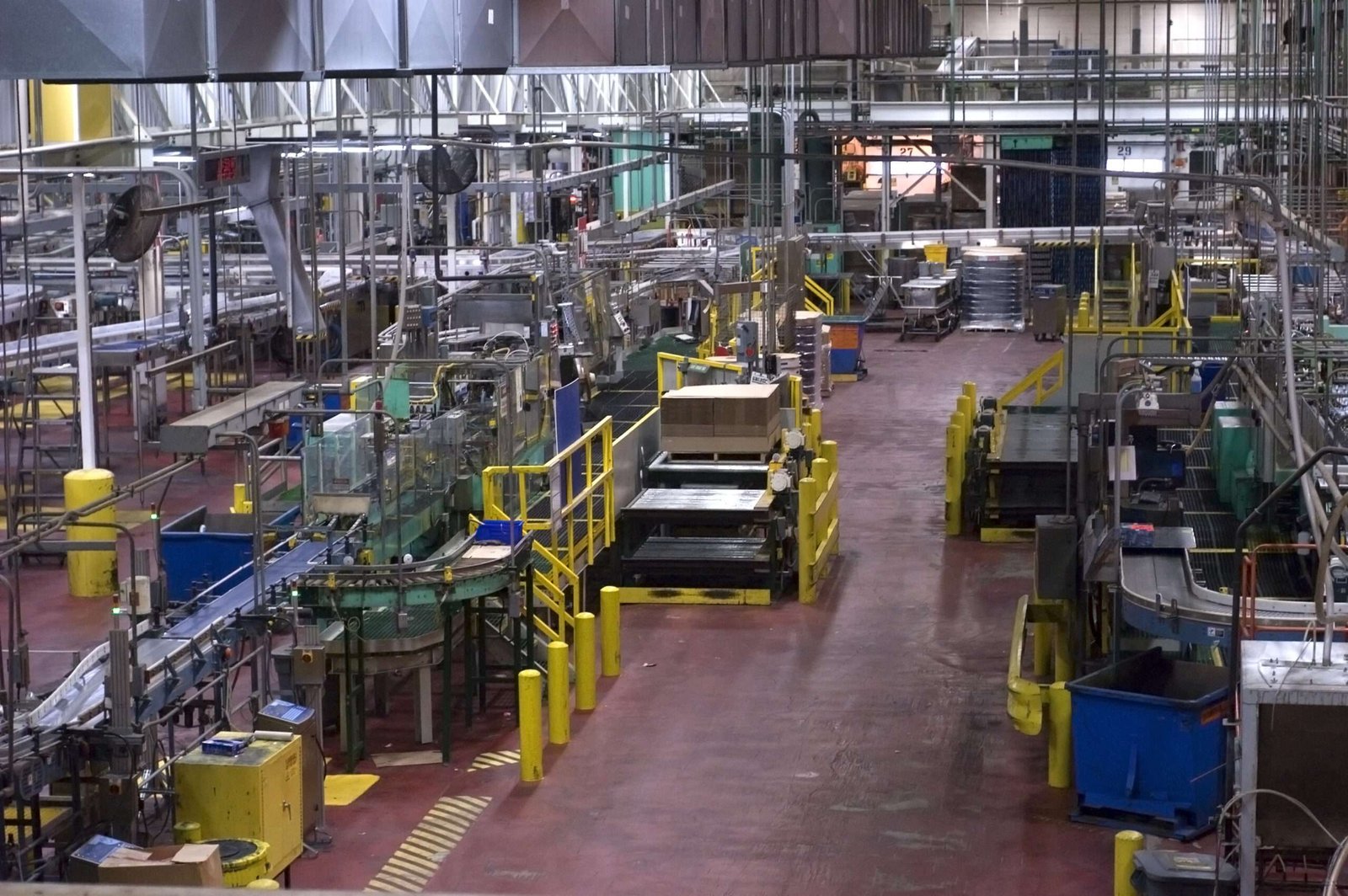
Dreams of reviving manufacturing jobs face the reality that modern manufacturing is capital-intensive and largely automated. Even if subsidies or government loan guarantees spur a factory boom—and history suggests otherwise—it won’t bring back 1950s-style armies of industrial workers unless we somehow outlaw productivity. Today’s factories run on robots and engineers.

Nor will tariffs bring a manufacturing revival. Taxing inputs and components only raises costs, weakens U.S. competitiveness, and ultimately punishes the firms protectionists claim to support. True American industrial strength rests on productivity, innovation, competition, and access to global supply chains, not on coddling producers behind walls of higher prices.

Mazzucato and her ideological opposites commit the same error. They imagine a politics-free technocracy that can “direct” the economy. In the real world, politics always dominates economics. Subsidies and tariffs are never tools of neutral expertise; they are invitations to lobby. Every “strategic investment” quickly becomes a political IOU.

Biden’s programs came loaded with child care mandates, union preferences, and “Buy American” rules. Trump’s industrial interventions are indeed erratic, but the notion that his protectionism would work if wrapped in a more “mission-oriented” narrative is even sillier. Industrial policy doesn’t fail because it’s chaotic; it fails because it’s political, and human politicians are incapable of the precision markets achieve every day.

After conducting a sweeping review of five decades of U.S. industrial policy, economists Gary Clyde Hufbauer and Euijin Jung’s conclusion was unambiguous: Subsidies and trade protections for individual firms have been politically irresistible but economically ruinous. Government protection delays economic adjustments; innovation succeeds. In the rare cases when industrial policy showed positive results, the government limited itself to supporting open, competitive research and innovation—programs like the Defense Advanced Research Projects Agency or Operation Warp Speed—rather than shielding firms from competition or subsidizing failing industries.

Without that type of openness, supposed industrial policy wins will quietly lock in yesterday’s technology rather than helping discover tomorrow’s. France’s Minitel, a government-backed precursor to the internet, looked like a national triumph in the 1980s. Millions of households were connected, citizens used it for banking, shopping and communicating, and the state could boast of digital leadership. Yet the system’s centralized, permission-based design smothered innovation and prevented France from developing the open, global internet that would soon transform the world.

The illusion of progress turned out to be technological stagnation: a product that barely evolved over three decades. This is the unseen cost of industrial policy. By insulating favored industries and technologies, it freezes innovation in place and leaves a nation paying twice: once through taxes and again through missed opportunities.

So yes, real industrial policy has been tried—in many countries, by governments of every ideology, under every rhetorical banner from “innovation” to “resilience.” It fails every time for the same reason: The visible hand of the government is clumsy, self-interested and easily bought. If that’s what passes for a “smart state,” I’ll take the invisible hand of the market any day.

COPYRIGHT 2025 CREATORS.COM

Read the full article here

Fact Checker

Verify the accuracy of this article using AI-powered analysis and real-time sources.

Get Your Fact Check Report

Enter your email to receive detailed fact-checking analysis

5 free reports remaining

Continue with Full Access

You've used your 5 free reports. Sign up for unlimited access!

Already have an account? Sign in here

Share. Facebook Twitter Pinterest LinkedIn Tumblr Email Telegram Copy Link
News Room
  • Website
  • Facebook
  • X (Twitter)
  • Instagram
  • LinkedIn

The FSNN News Room is the voice of our in-house journalists, editors, and researchers. We deliver timely, unbiased reporting at the crossroads of finance, cryptocurrency, and global politics, providing clear, fact-driven analysis free from agendas.

Related Articles

Media & Culture

Donald Trump and Markwayne Mullin Insist That Politics Should Prevail Over Principle

23 minutes ago
Cryptocurrency & Free Speech Finance

NASA Pivots Artemis Program Toward Building Permanent Base on the Moon

46 minutes ago
Media & Culture

Deep Breath: Okay, Let’s Talk About That Controversial DLSS 5 Demo

1 hour ago
Media & Culture

Felon Gun Possession Bans, the Commerce Clause, and the Second Amendment

1 hour ago
Debates

Iran War Tests Trump — and a Vulnerable China

2 hours ago
Cryptocurrency & Free Speech Finance

Delaware Moves to Establish State Framework for Stablecoin Issuers

2 hours ago
Add A Comment

Comments are closed.

Editors Picks

Wall Street broker Bernstein calls bitcoin (BTC) bottom, keeps $150,000 year-end target

42 minutes ago

OpenAI to Shut Down Sora After Just Six Months

44 minutes ago

NASA Pivots Artemis Program Toward Building Permanent Base on the Moon

46 minutes ago

Deep Breath: Okay, Let’s Talk About That Controversial DLSS 5 Demo

1 hour ago
Latest Posts

Felon Gun Possession Bans, the Commerce Clause, and the Second Amendment

1 hour ago

Iran War Tests Trump — and a Vulnerable China

2 hours ago

Coinbase says the ‘second wave’ of crypto investors are prioritizing income over price appreciation

2 hours ago

Subscribe to News

Get the latest news and updates directly to your inbox.

At FSNN – Free Speech News Network, we deliver unfiltered reporting and in-depth analysis on the stories that matter most. From breaking headlines to global perspectives, our mission is to keep you informed, empowered, and connected.

FSNN.net is owned and operated by GlobalBoost Media
, an independent media organization dedicated to advancing transparency, free expression, and factual journalism across the digital landscape.

Facebook X (Twitter) Discord Telegram
Latest News

Donald Trump and Markwayne Mullin Insist That Politics Should Prevail Over Principle

23 minutes ago

Wall Street broker Bernstein calls bitcoin (BTC) bottom, keeps $150,000 year-end target

42 minutes ago

OpenAI to Shut Down Sora After Just Six Months

44 minutes ago

Subscribe to Updates

Get the latest news and updates directly to your inbox.

© 2026 GlobalBoost Media. All Rights Reserved.
  • Privacy Policy
  • Terms of Service
  • Our Authors
  • Contact

Type above and press Enter to search. Press Esc to cancel.

🍪

Cookies

We and our selected partners wish to use cookies to collect information about you for functional purposes and statistical marketing. You may not give us your consent for certain purposes by selecting an option and you can withdraw your consent at any time via the cookie icon.

Cookie Preferences

Manage Cookies

Cookies are small text that can be used by websites to make the user experience more efficient. The law states that we may store cookies on your device if they are strictly necessary for the operation of this site. For all other types of cookies, we need your permission. This site uses various types of cookies. Some cookies are placed by third party services that appear on our pages.

Your permission applies to the following domains:

  • https://fsnn.net
Necessary
Necessary cookies help make a website usable by enabling basic functions like page navigation and access to secure areas of the website. The website cannot function properly without these cookies.
Statistic
Statistic cookies help website owners to understand how visitors interact with websites by collecting and reporting information anonymously.
Preferences
Preference cookies enable a website to remember information that changes the way the website behaves or looks, like your preferred language or the region that you are in.
Marketing
Marketing cookies are used to track visitors across websites. The intention is to display ads that are relevant and engaging for the individual user and thereby more valuable for publishers and third party advertisers.