

 Freedom Index

Listen to the article
Bitcoin (BTC) and Ether (ETH) continue to diverge, and they currently operate in different monetary universes, according to a new joint report from Glassnode and Keyrock. The study noted that Bitcoin is drifting deeper into a savings-driven, low-velocity profile, while Ether is rapidly evolving into a productive onchain asset powering staking, collateral, and institutional wrappers.
Key takeaways:
-
Bitcoin’s dormancy and turnover now resemble gold far more than fiat.
-
Ether’s long-term holders are spending coins 3 times faster than BTC holders.
-
Both assets are leaving exchanges for ETFs, DATs, and staking at accelerating rates.
Bitcoin locks up, Ether speeds up
Glassnode highlighted that 61% of Bitcoin hasn’t moved in a year, with turnover at just 0.61% of free float per day, one of the lowest-velocity profiles among major global assets. “Bitcoin sits firmly in Store-of-Value territory,” the report noted, behaving more like gold than money in motion.
However, Ether is shifting in the opposite direction. ETH long-term holders are mobilizing dormant coins three times faster than BTC holders, a pattern Keyrock explained reflects “utility-driven behavior rather than hoarding.”
ETH’s turnover sits around 1.3% per day, double Bitcoin’s, and 1 in 4 Ether is now locked in staking or ETFs, creating a massive productive float that continues to power DeFi and liquid staking systems.
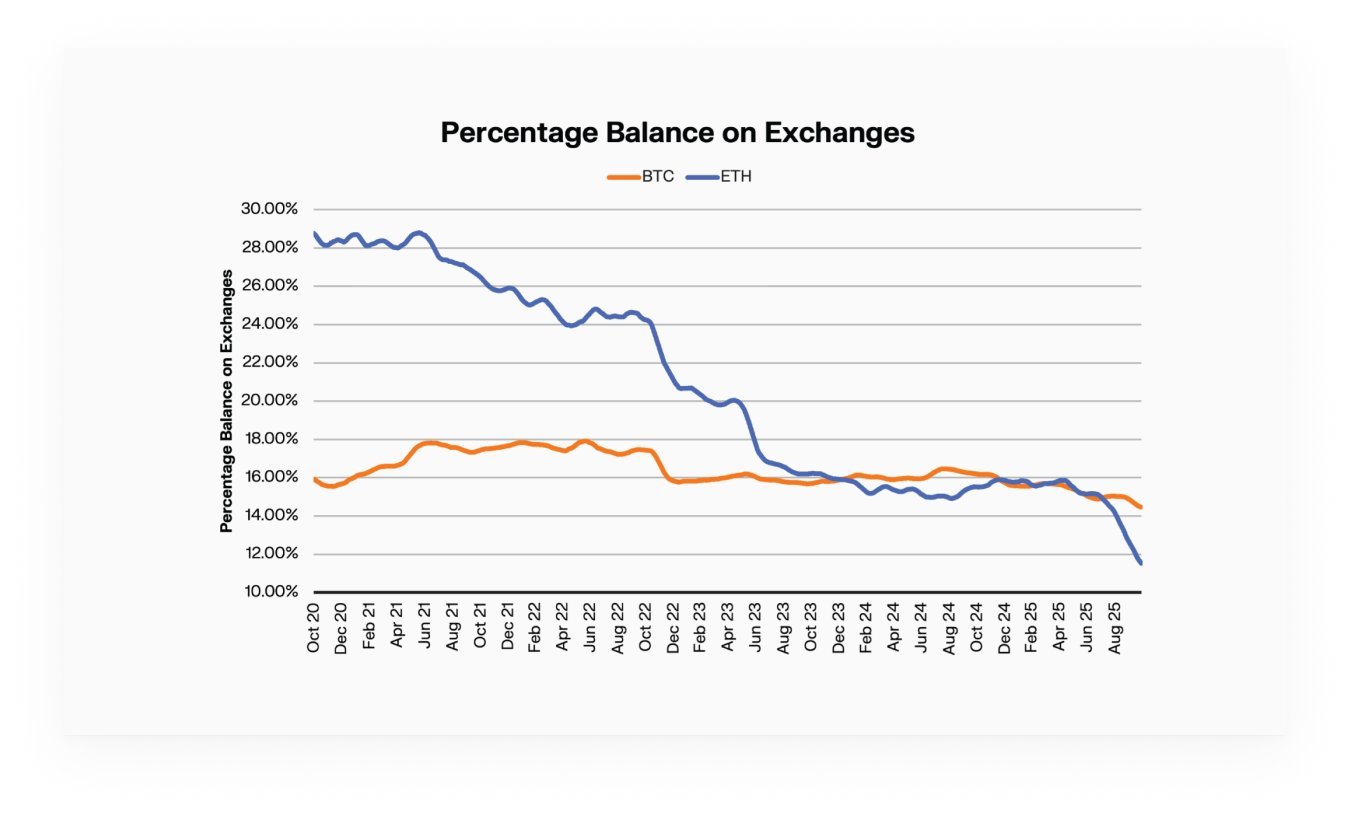
Exchange balances for both assets are collapsing—BTC by 1.5%, ETH by almost 18%, as coins flow into spot ETFs and digital asset investment vehicles. Analysts say this migration into “sticky” institutional custody may be the most important structural shift as Bitcoin is becoming more like a digital savings bond, while Ether is becoming the operational backbone of onchain activity.
Related: 3 reasons Bitcoin struggles to overcome each new overhead resistance level
Analysts see rising structural risk in ETH against BTC
Despite this widening behavioral gap, some analysts interpret the BTC–ETH dynamic in very different ways. Rather than viewing Ethereum’s high activity as a sign of strength, 10x Research argued it may reflect structural fragility, especially as Bitcoin continues to dominate institutional treasury flows.
A recent 10x report suggested that shorting ETH could serve as a hedge against Bitcoin’s rising institutional momentum. The firm claimed Ether-focused companies are running low on dry powder, weakening the “digital asset treasury” narrative that once drove accumulation.
Citing BitMine as an example, the researchers noted that certain treasury structures enabled institutions to acquire ETH at a low cost and later sell it to retail investors at a premium, a cycle they believe is now breaking down.
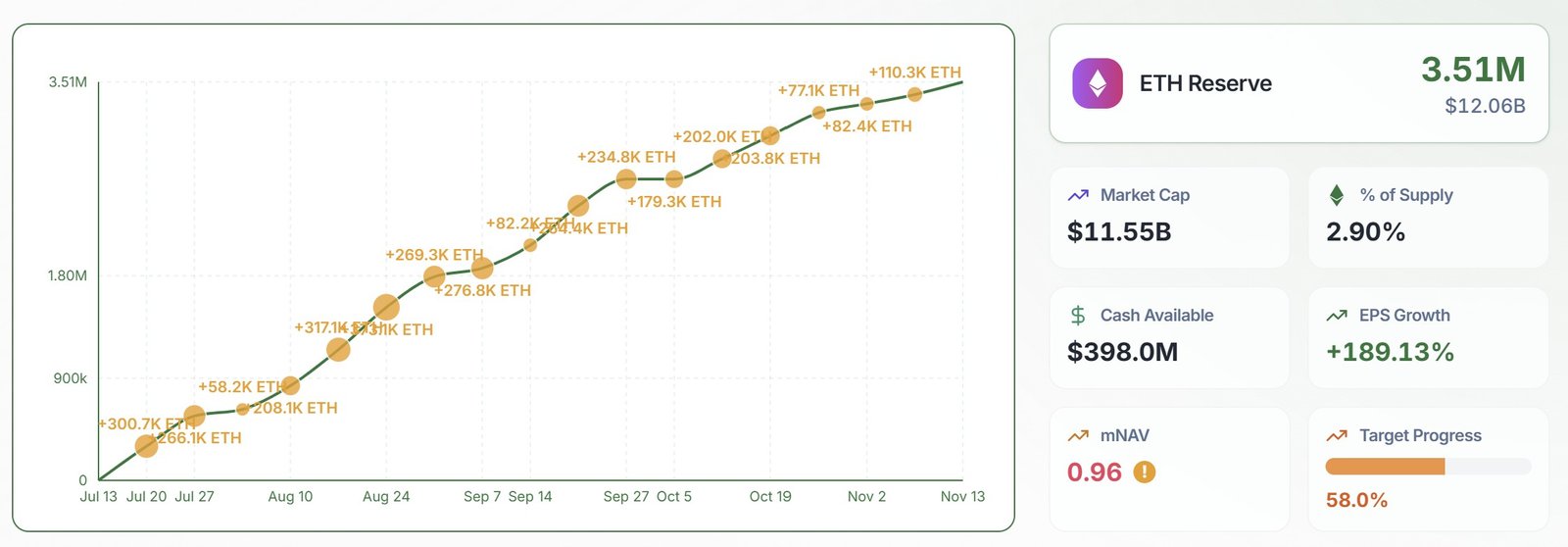
Although strong ETH inflows into Ether Treasuries held by companies have stagnated in Q4 (for context, it increased 124% in Q3), Bitmine continued to add more ETH to its allocation, increasing its total to 3,505,723 ETH, adding 110,288 ETH on Nov. 10.
Related: Altcoin index metric hints at early revival: Is the next rally close?
This article does not contain investment advice or recommendations. Every investment and trading move involves risk, and readers should conduct their own research when making a decision.
Read the full article here
Fact Checker
Verify the accuracy of this article using AI-powered analysis and real-time sources.