Close Menu
FSNN | Free Speech News NetworkFSNN | Free Speech News Network
  • Home
  • News
    • Politics
    • Legal & Courts
    • Tech & Big Tech
    • Campus & Education
    • Media & Culture
    • Global Free Speech
  • Opinions
    • Debates
  • Video/Live
  • Community
  • Freedom Index
  • About
    • Mission
    • Contact
    • Support
Trending

Court Agrees with EFF: Utah’s VPN Law Demands a Technical Impossibility

36 minutes ago

Second Federal Court Rules Against Trump’s $100,000 H-1B Visa Fee

42 minutes ago

Illinois Agrees to Delay 0.2% Crypto Tax After Industry Lawsuit

60 minutes ago
Facebook X (Twitter) Instagram
Facebook X (Twitter) Discord Telegram
FSNN | Free Speech News NetworkFSNN | Free Speech News Network
Market Data Newsletter
Thursday, October 1
  • Home
  • News
    • Politics
    • Legal & Courts
    • Tech & Big Tech
    • Campus & Education
    • Media & Culture
    • Global Free Speech
  • Opinions
    • Debates
  • Video/Live
  • Community
  • Freedom Index
  • About
    • Mission
    • Contact
    • Support
FSNN | Free Speech News NetworkFSNN | Free Speech News Network
Home»News»Global Free Speech»Leicester: city of migration
Global Free Speech

Leicester: city of migration

News RoomBy News Room11 months agoNo Comments15 Mins Read9 Views
Share Facebook Twitter Pinterest Copy Link LinkedIn Tumblr Email VKontakte Telegram
Leicester: city of migration
Share
Facebook Twitter Pinterest Email Copy Link

Listen to the article

0:00
0:00

Key Takeaways

Playback Speed

Select a Voice

This article was first published in Index on Censorship volume 32, issue 2 in 2003.

My departure early in the 1960s from Leicester, where I was born, more or less coincided with the beginning of a process of transformation that changed the city from a small town in the East Midlands grown complacent on its long prosperity to the vibrant Asian capital of Britain. In the process, it was to be physically brutalised by overzealous developers and, for a time, to suffer the reputation of the most racist city in the UK.

When I returned for an extended stay in the 1980s, the landscape of my memory had been swept away; the house where I grew up was now the city’s leading sari emporium. In repeated visits to family and friends over the past decade, I have had to relearn the city, try to fathom the complex economic, social and ethnic geography that has today earned it the title of ‘beacon city’, a place others look to for lessons in racial harmony and pointers to the achievement of that elusive target ‘cultural cohesion’, a newtake on what we once called ‘multiculturalism’.

But all that was a long way in the future in the year of my birth, 1938. Let me remember. In 1801, the population of Leicester was a modest 17,000; by 1901 it had grown to 212,489. They came for jobs from all over the UK and Ireland to work in the thriving hosiery, knitwear and boot and shoe factories, and the engineering works that provided the machines for these industries on which Leicester’s wealth was built. They lived in spreading acres of terraced houses thrown up in the latter part of the century to accommodate them.

Out of Africa

But, to all intents and purposes, Leicester remained a provincial market town, its medieval street plan and many of its timber-frame houses more or less intact. Despite the Victorian incursion with its factories, villas and teeming streets of workers’ housing, it was not a creation of the Industrial Revolution. Nor was it dependent on a single heavy industry and vulnerable to the vagaries of recession.

The population grew only another 60,000 or so in the following century. Most of the new arrivals came in the past 50 years, many of them from Africa. Their arrival in this provincial town brought changes more lasting and profound than anything since the Romans.

The town I walked with my schoolmaster grandfather was the ancient town of the Romans, with medieval streets and buildings dating from the time of the Crusades. We would stroll from the Castle Gardens at the foot of the remains of the castle by the river to the timbered Guildhall, the houses and almshouses built by city merchants, narrow streets with huddled shops smelling of tobacco and liquorice. These led, finally, into the Victorian facades of department stores and gents’ outfitters — and, of course, the vast (or so it seemed then) Leicester Co-operative Society store that dominated the high street of the modern town.

The second richest city in the Empire

Today, most of the old town has gone. The winding streets have been swept away in doubtless necessary slum clearance; much more has been sacrificed to a 1960s orgy of road-building. The Magazine stands marooned between the lanes of an urban freeway, accessible only by underpass; the castle, its gardens and the monuments of my childhood are cut off by swirling motorways and elevated roads. They have become a ‘heritage park’, no longer a living part of the city, a backwater for tourists and a throughway for students at De Montfort University. The murky waters of the Soar have been cleaned up and offer a riverside walk and, so the brochure tells me, a unique variety of river flora and fauna. Leicester is the UK’s first ecological city and is doing its best with what is left, but the destruction of the 1960s razed more than just slums. It is too late now for the once shabby but characterful seventeenth- and eighteenth-century city-centre facades, replaced with bland, anonymous reconstructions in the 1960s and 70s.

In 1936, Leicester, I was told, was the second richest city in the Empire; by 1953, it could still claim the distinction of having the second highest per capita income of any city in Europe. We grew up being told by my banker father we should be proud to live in such a city. But it didn’t translate into anything we wanted to do. Joe Orton, a local boy, said it was the most boring city in England and got away as fast as fame would carry him; JB Priestley, on a brief visit, stayed only long enough to remark that there were many worse places in which he’d rather stay. We agreed with them: it was a cultural wilderness, the result, perhaps, of the inward-looking nonconformist temperance spirit that had ruled the city council for decades and lingered still. The city fathers of the 1950s had no more time for culture entertainment than they were to show for architectural heritage. The last three commercial theatres — the Theatre Royal, the Opera House and finally the Palace of Varieties — closed, depriving us of pantomime, the Royal Ballet and other visiting delights. It was long after my day, in 1973,that the Haymarket Theatre opened and restored Leicester to the theatre circuit. We had music in De Montfort Hall, named for a long-dead earl; swimming in the open-air Lido; expeditions to the countryside, and long months spent vegetating in Lincolnshire with our grandparents. Our school was the best the city had to offer — but it was dull, provincial, and we longed to escape.

Which I did, in 1957, to university. And only then did I find out that Leicester is not what you see; at least not what I had seen. For all its complacency, Leicester had another side, invisible but discovered with shock when I delivered Christmas post in the vacations. The mean streets of working-class housing, by now down at heel and many still without bathrooms or inside lavatories, crowding up with the factories to the iron railings of our own house were familiar enough. But they hid much worse. Slums that could have come out of Dickens.

The Asian transformation

When I returned, the transformation of these places was even more dramatic than the loss of the city landscape I had once known. What I wandered through seemed nothing less than a small miracle. With the help of local council grants, whole neighbourhoods had been regenerated, houses as well as factories. Grey, depressing streets of mouldering Victorian housing had burst forth in candy colours and were once again thriving local communities — of Asians. Corner shops sold food and spices from India alongside the stock-in-trade of any neighbourhood store; the Leicester Mercury rubbed pages with publications in Gujarati and Punjabi; colourful bilingual books and wall posters for children displayed the alphabet and numbers in several languages.

It was the same with the factories and inner-city churches. Mills where the looms had long fallen silent were back in business, with the names of their new Asian owners superimposed on the ghostly letters of former household names; others had been divided into a myriad of small manufacturing units and workshops for Asian enterprise. Churches, nonconformist meeting houses, even in one case an old factory site, had become temples and mosques serving the neighbourhood.

The same was true of other old inner-city housing areas that had escaped demolition in the nick of time and had been rescued by the arrival of Asians from East Africa. The brand new Sikh gurdwara built on the site of Holy Bones, disappeared site of my ancient city, summed things up: not an appropriation, but a restoration of the city to itself. Economically and socially, the migrations of the late 1960s and early 70s — largely of Gujaratis fleeing ‘Africanisation’ in Kenya, Uganda and most recently Malawi — had, it seemed to me, saved a dying city. Along the Belgrave Road, for instance, the neglected shops of the old city centre were now Leicester’s ‘Golden Mile’, a glittering strip of shops dominated by jewellers and goldsmiths. Asians from all over the UK come here for their wedding finery, I was assured, rather than make the trip to Bombay. Diwali brings huge crowds into the area to celebrate the Hindu festival of light when this part of the city is lit up with a million lights and the explosion of fireworks. The biggest celebration outside India, it brings people into this once enclosed city. Leicester is no longer the self-regarding, inward-looking place it was, but looking out and welcoming a wider world.

Leicester is no stranger to migration. As Cynthia Brown of Leicester University’s Living History programme points out, people have been coming here since early in the nineteenth century. Then it was in pursuit of work; latterly, that went hand in hand with flight from war and persecution. Many, like the Poles who had fought in World War II and now found themselves unwelcome back in Communist Poland, settled in Leicester after the war; the late 40s saw the arrival of immigrants from the Caribbean plus the first Asians.

The flatness of the city

In 1951, the Asian population was just 624. Migration was hastened by the Commonwealth and Immigration Act of 1962: fuelled by people anxious to pre-empt its more restrictive conditions, migration had risen by 1961 to 4,624. They settled in the older inner-city areas, where cheap housing was available in the wake of the departure of English residents offered the chance to escape the decay by moving to council estates around the city. It was this early settlement that acted as the magnet, drawing dramatically increased immigration from Africa. Only a decade later, the arrival of Asians, largely Gujarati from Kenya, had swelled Leicester’s Asian population to 20,190. Despite warnings by Leicester City Council printed in Ugandan papers and inflammatory headlines speaking of disaster in the influential Leicester Mercury, it was inevitable that a ready-made community of their own kind and Leicester’s reputation as a ‘friendly’ city would draw the majority of Idi Amin’s Asian refugees to the city. The appeal of friends, family and their own community, as well as the promise of jobs, increasingly in Gujarati-owned enterprises, were not the only reasons, it seems. ‘I travelled all over the UK,’ says one African Asian, ‘and I made up my mind if I could choose anywhere I could come that I would settle in Leicester . . .I particularly liked Leicester . . . I was attracted to the flatness of the city.’

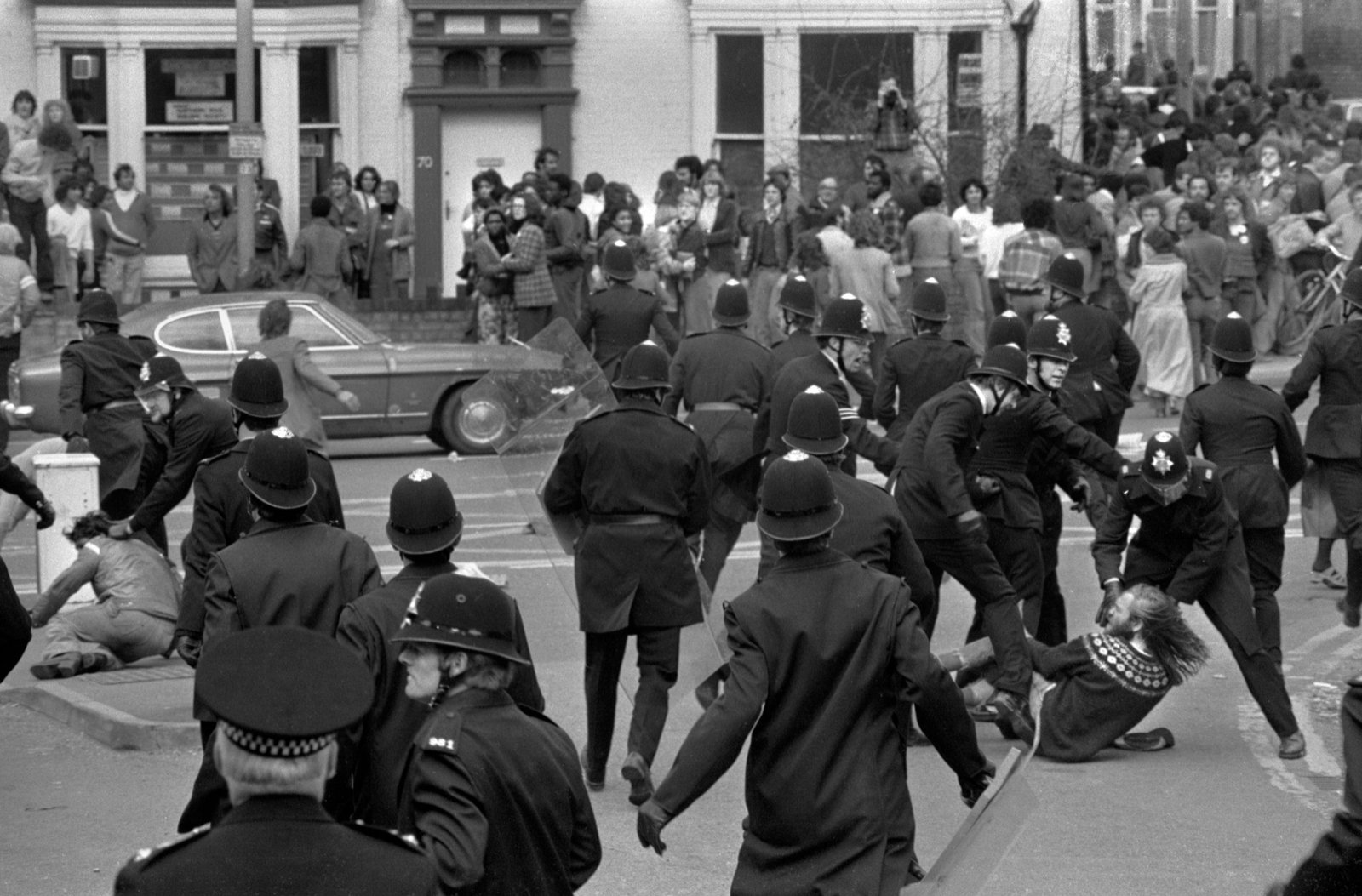
Of the 30,000 Asians expelled from Uganda in 1972, 6,000 came to the city. By 1981, the New Commonwealth population was 59,709 in a population of something over 250,000. The arrival of the new settlers in the ’70scoincided with Leicester’s first serious economic downturn. The city’s staple manufactures were being replaced by cheaper goods from abroad: factories were in decline and closing; unemployment was rising. Resentment among the white population burst into open racism and discrimination, at the workplace as well as in the streets. Bolstered by Enoch Powell’s dire warnings of the dangers of unbridled immigration, the National Front targeted Leicester and inserted itself into local politics. In 1976, it won 18 per cent of the vote in local elections; in 1979, in a climate of racial hostility fostered by the NF, Leicester witnessed one of worst racial confrontations in the country. Shocked and shamed out of complacency, it actively began to work at escaping the opprobrium of being labelled the UK’s most racist city.

Why riot when they had money?

Twenty years on, hard work, dedication and commitment from all the communities have ensured that, unlike Oldham, Burnley, Bradford, Southall, Toxteth, Brixton and other places with high immigrant populations, Leicester has not exploded again. A lot of money has been funnelled to minority community projects. Not always the answer, but as Leicester race relations policy officer Paul Winstone said with a certain realism: ‘Leicester City Council poured millions of pounds into ethnic groups. Almost every group could get something like £50,000 more or less just by asking. It wasn’t open bribery, but it most certainly was bribery — and it worked. Why should the leaders riot when they had money and an office?

‘In retrospect, Winstone describes the 1970s as the years of conflict, the 80s as the bribery years and the 90s as the decade of consolidation. But there is more to it than that. Asked why Leicester has become something of a model multiracial city, why, given that the minority population is now around 38 per cent and forecast to become the first majority ethnic community in the UK within the present decade, it doesn’t explode in racial violence, Asians themselves have another explanation. Above all, they point to the fact that they came not from India or Pakistan but from Africa, where they had occupied a privileged position as professionals, businessmen and entrepreneurs. They explode the myth still current in many places that they came with their pockets stuffed with money, but point out that they knew how to do things, did not rely on the local authority for housing or jobs but bought modest properties and eventually built businesses again from scratch. They were not like the uneducated communities of Bangladeshis or funda-mentalist Pakistanis who settled in other places.

Something else too, they say: ‘Remember, this was our second migration. In Africa we already knew what it was to be an unloved but tolerated minority. We knew how to keep our heads down, blend in and get on with people. We’d learned all that before we came here.’

The next generation

Sitting in a local pub, once a down-and-out watering hole but now Asian-owned, bright and cheery, I am struck at the convivial mix of people— Hindus and Muslims, Gujaratis, Sikhs from the Punjab, a few white Englishmen. I am struck by the lack of tension. Are there really no sectarian problems in the city? Jay, a Gujarati from Uganda, explains: ‘Most of us African Asians had never seen India. Unlike the people who came from the subcontinent, its politics and its religious hatreds were nothing to do with us, and so we didn’t carry all that baggage and perpetuate the old quarrels when we got here. The common experience of coming from Africa keeps us close; that is stronger than any religious divide.’ And that, he concludes, is something else that keeps his city, Leicester, from the sectarian extremism that divides other communities.

But this mixture of races and religions is rare. Again, Leicester is not what you see when you meet and talk to the dedicated people who work to bring communities together. The city is as segregated and zoned as it ever was in the days of the old working-class and middle-class divide. That it is largely self-segregated raises the question of how these parallel lives will settle down in the long run when the white English are in a minority, as they already are in most of the city’s schools. Maybe it’s only the next generation, now in the schools, who can answer the question. As one Asian boy put it to me: ‘If there are as many of me as there are of you, we don’t have to be afraid of anything, do we?’

Meanwhile, as people in the city admit, there are challenges to be met. Asians will say they are not yet strongly enough represented in the upper echelons of local government and industry, despite the presence of a growing number of local councillors from the minority communities. And the mix of poverty and ethnicity on local sink estates is creating tensions between black and white not evident in the city itself.

But, more than anything else, representatives on both sides of the ethnic divide fear the import of religious and political extremism from outside. The Hindu nationalist fundamentalist BJP government in India keeps close contacts in the city; following the outbreak of sectarian violence in Gujarat last year, they have been keen to put their version of events to the Gujarati community in Leicester. In much the same way, the Muslims of Leicester are disturbed by the ongoing trial in the city of alleged al-Qaida suspects. They feel a threat from the identification in the media and elsewhere of ‘terrorism’ and Islam. They have become introspective and assertive at the same time, demonstrating a sense of insecurity in a more aggressive assertion of their religion.

But all of this, I am assured more than once, is manageable as long as the city remains aware of it and is sensitive to its handling. There is optimism and a justifiable pride in Leicester’s record. ‘There are things to be done, but compared to other places we are doing well. And that’s official: it said so in the Cantle report that came out after the riots in Oldham and Burnley in 2001.’


Read the full article here

Fact Checker

Verify the accuracy of this article using AI-powered analysis and real-time sources.

Get Your Fact Check Report

Enter your email to receive detailed fact-checking analysis

5 free reports remaining

Continue with Full Access

You've used your 5 free reports. Sign up for unlimited access!

Already have an account? Sign in here

Share. Facebook Twitter Pinterest LinkedIn Tumblr Email Telegram Copy Link
News Room
  • Website
  • Facebook
  • X (Twitter)
  • Instagram
  • LinkedIn

The FSNN News Room is the voice of our in-house journalists, editors, and researchers. We deliver timely, unbiased reporting at the crossroads of finance, cryptocurrency, and global politics, providing clear, fact-driven analysis free from agendas.

Related Articles

Global Free Speech

Cuban journalist forced to flee island to Brazil following threats by state agents

2 hours ago
Global Free Speech

CPJ urges Morocco to end press surveillance following Amnesty report 

6 hours ago
Global Free Speech

          As news broke that 84,270 people, including more than 32,000 children, had been affected by Nepal’s catastrophic floods, one visual offered something the world desperately needed in the moment: hope. The video shows a little girl, buried under thick mud, being is rescued by Nepal’s emergency teams. Instinctively, the viewer roots for her as rescuers carry her to safety, wrapping her shivering body in a red shawl. But the most moving moment of the video comes towards the end. The girl is sitting motionless in a relief camp, an officer feeding her warm soup. As the camera lingers on her face, a faint smile almost begins to show. It is the kind of image that can offer the viewer respite from the horrors of a humanitarian crisis. The video rapidly spread rapidly across all social media platforms, with commentators calling it a miracle. Of sorts. In fact, it was an AI miracle. Agence France-Presse (AFP) Fact Check’s investigation led them to an India-based creator, who admitted creating the video with the help of AI-generative tools. His justification was disarmingly straightforward: emotionally engaging visuals perform well online. This was just one of the many digitally-manufactured “miracles” put into social media heavy rotation during the floods. Another clip, showing a bridge collapsing into floodwaters swallowing vehicles and human lives, seemed to have been lifted straight out of a Roland Emmerich disaster film. The video racked up more than 2 million views on X before it was debunked as AI-generated by Factly. What made this social media post stand out for me was the identity of one of the people sharing it – an experienced news editor. The post, still pinned on his X profile and with more than 2 million views, suggests that even experienced newsroom decision-makers could be fooled by synthetic disaster footage – or, worse still, be untroubled about the veracity of such videos. Both videos incorporate the visual language of short films, but were not released in cinemas or on Netflix. They surfaced on Facebook, X and Instagram, even as emergency teams continued to search for the thousands of people that went missing after a glacial collapse triggered devastating floods in Nepal and Tibet on August 26. Even as survivors photographed authentic eyewitness footage, synthetic visuals emerged alongside them. The floods became one of the first major climate disasters in South Asia where documentation and fabrication coexisted in the same visual ecosystem.     Screenshot of debunked Nepal floods footage “During earlier disasters, our primary challenge was identifying old footage, establishing where a video was recorded and determining whether it was being presented in the correct context,” Saurabh Shukla told Index. Shukla is founder and editor-in-chief of NewsMobile, an India-based independent media organisation that debunks AI-related deepfakes and focuses on verified information. “The biggest difference today is the sheer speed at which fabricated and misleading visuals entered the information ecosystem,” Shukla said. “With generative AI, we now have an additional challenge – determining whether the event depicted in a video ever happened in the first place.” This has fed into a media environment where unverified visuals are disseminated faster than the verified facts reported by journalists. “Speed without verification can amplify confusion, while verification without timely reporting can leave an information vacuum,” Shukla said. “The challenge for newsrooms is to strike the right balance between being fast and being accurate.” The first images of rescue missions in secluded mountainous regions almost always come from locals, and thus forming the spine of disaster reporting. These inevitably blurry and shaky recordings do not have the polished quality of professional news reporting, but do carry something far more consequential: the credibility that comes with eyewitness documentation. These images often shape the core of the collective memory of a tragedy. But in an age of visual manipulation and trickery, that presumption of authenticity no longer holds. Factly conducted 30 fact-checks into coverage of the Nepal floods; fully one-third involved AI-generated visuals. “Beyond checking the location, source, and context of a visual, we also had to establish whether the visual itself was authentic,” Akshay Kumar Appani, lead fact checker and researcher at Factly, told Index. “During breaking disasters, old AI-generated visuals can spread rapidly while being presented as current footage. This makes it harder for journalists to establish the truth. The visual of the miracle child perfectly captured this dilemma. It was designed to evoke an emotional reaction; but it also looked like the kind of footage that journalists hope to find during crisis reporting. The video was vertically filmed. The camera movement was wobbly. The lighting was grainy. The muffled background sound felt believable. The video presented none of the glaring distortions that once made AI interventions easy to spot. Fabricated videos, today, can be produced to mimic the aesthetics of authentic citizen journalism. It was for this precise reason that the floods presented journalists with a crisis that went beyond recognising AI-generated images: they were increasingly obliged to verify whether the footage reaching them was genuine in the first place. Screenshot of video debunked by Factly Newsmobile’s verification process increasingly involves examining individual frames, conducting reverse-image searches, analysing visual inconsistencies and using AI-detection tools where appropriate. “However, detection tools are only one part of the process. We still need corroboration,” Shukla said. “We cannot rely solely on automated detection tools,” Sumit Dubey, South Asia digital verification editor for AFP’s Fact Check vertical, told Index. Fact-checking, he explained, requires going beyond automated outputs: tracing the original source, examining context, verifying metadata, looking for corroborating evidence and, where possible, speaking to relevant sources. “Automated tools are useful indicators, but fact-checking cannot be outsourced to a button,” Dubey said. The proliferation of synthetic media output in the wake of natural disasters is not new. It’s the sophistication of the output that has changed. For years, much of the public conversation around AI manipulation centred on faces: celebrity deepfakes, altered political speeches and fabricated portraits. The Nepal floods flipped that narrative. Almost every fabricated clip featured rivers, glaciers, collapsing hillsides, dams, flooded valleys or stranded animals. “AI-generated environmental content poses a different problem: [the] tells are failures of physics rather than anatomy,” Mahsa Alimardani told Index. Alimardani is associate director for technology threats and opportunities at Witness, a global organisation helping people use video and technology to protect and defend human rights This explains why the Nepal videos were so plausible. The miracle girl video wasn’t believable just because of her facial expressions. It was convincing because the sludge moved convincingly, because the choreography resembled actual emergency rescues, because the emotional tonality seemed genuine. “Most post-hoc detection tools were designed for content featuring physical characteristics, and they currently struggle significantly with environmental and disaster content,” Bruna Martins dos Santos – policy and advocacy manager, Witness Technology Threats and Opportunities – told Index. “Journalists might also struggle because many tools have limited capabilities to identify synthetic content generated elsewhere,” she said. Another emerging trend is the increasingly complicated role of Big Tech itself in detecting and labelling fake generative-AI content. Some of the clearest AI verdicts came from detection tools built by the very same companies whose models created the same fakes. Three weeks after the US state of California and the EU mandated the requirement for greater transparency with respect to AI-generated content, Witness and Indicator tested thirteen major AI providers. They found that seven had no public detector at all. “The capability to identify synthetic content partly existed. The governance around it did not,” Alimardani said. When both authentic and synthetic content circulate in disaster situations, the biggest challenge that journalists face is that of establishing truth amidst widespread public uncertainty and doubt. According to Martins dos Santos, “Journalists and local fact-checkers can face immense time pressure, often wasting scarce resources re-detecting the same recycled disaster footage across multiple platforms and languages.” The greatest danger emerging from Nepal may not be that people believed the fake videos. It may be that they have begun to doubt the real ones. Shukla’s concern is that people may stop trusting visual evidence altogether. “Imagine a situation where genuine footage of a disaster emerges, but people dismiss it as AI-generated. Facts become secondary to perception.” Within days of the floods, even authentic CCTV footage from the Gyirong border was being perceived as AI-generated, prompting fact-checkers to establish that the scenes it depicted were real. This exposed a troubling issue: even authentic visuals can no longer be taken at face value. Martins dos Santos told Index that the phenomenon has a name: “Liar’s dividend”, whereby the mere existence of convincing synthetic content allows bad actors to dismiss genuine, damaging evidence as fake simply by claiming it was AI-generated. This means that genuine footage is no longer accorded credibility immediately; it may first be perceived with suspicion. “This means a video may look completely authentic and still be fabricated. Conversely, genuine footage can contain compression artefacts that make it appear suspicious,” Shukla warned. Appani, for his part, noted that synthetic media doesn’t merely affect verification in real time. It also reshapes collective memory. “Widely circulated synthetic or recycled footage may eventually be remembered as genuine imagery from the disaster. Generative-AI could therefore affect not only how disasters are verified in real-time, but also how they are documented and remembered in the future.”The Nepal floods left destruction in its wake, and also a warning for journalists covering climatic disaster. The defining challenge of disaster reporting is no longer capturing the first image, but establishing which image the world can trust. In Shukla’s words: “For fact-checkers, the challenge is not just determining whether a video is real. It is establishing whether it actually belongs to the event it claims to depict.” READ MORE

7 hours ago
Global Free Speech

CPJ, partners call on Malta to ensure broad consultation on draft media reform bill 

9 hours ago
Global Free Speech

Hong Kong journalist Tang Ho-wing arrested in latest sedition case

1 day ago
Global Free Speech

Taliban shut down 3rd Shiite-centered media outlet in 4 months in Afghanistan

1 day ago
Add A Comment

Comments are closed.

Editors Picks

Second Federal Court Rules Against Trump’s $100,000 H-1B Visa Fee

42 minutes ago

Illinois Agrees to Delay 0.2% Crypto Tax After Industry Lawsuit

60 minutes ago

OpenAI Says People Linked to China’s Moonshot Tried to Copy Its AI’s Hidden Reasoning

1 hour ago

Federal Contractors Responsible for ‘Biased’ Alcohol Study Should Be Punished, Oversight Committee Says

2 hours ago
Latest Posts

Cuban journalist forced to flee island to Brazil following threats by state agents

2 hours ago

Another Trump memecoin dinner advertised for token’s top investors

2 hours ago

European Crypto Advocates Challenge MiCA Stablecoin Rules

2 hours ago

Subscribe to News

Get the latest news and updates directly to your inbox.

At FSNN – Free Speech News Network, we deliver unfiltered reporting and in-depth analysis on the stories that matter most. From breaking headlines to global perspectives, our mission is to keep you informed, empowered, and connected.

FSNN.net is owned and operated by GlobalBoost Media
, an independent media organization dedicated to advancing transparency, free expression, and factual journalism across the digital landscape.

Facebook X (Twitter) Discord Telegram
Latest News

Court Agrees with EFF: Utah’s VPN Law Demands a Technical Impossibility

36 minutes ago

Second Federal Court Rules Against Trump’s $100,000 H-1B Visa Fee

42 minutes ago

Illinois Agrees to Delay 0.2% Crypto Tax After Industry Lawsuit

60 minutes ago

Subscribe to Updates

Get the latest news and updates directly to your inbox.

© 2026 GlobalBoost Media. All Rights Reserved.
  • Privacy Policy
  • Terms of Service
  • Our Authors
  • Contact

Type above and press Enter to search. Press Esc to cancel.

🍪

Cookies

We and our selected partners wish to use cookies to collect information about you for functional purposes and statistical marketing. You may not give us your consent for certain purposes by selecting an option and you can withdraw your consent at any time via the cookie icon.

Cookie Preferences

Manage Cookies

Cookies are small text that can be used by websites to make the user experience more efficient. The law states that we may store cookies on your device if they are strictly necessary for the operation of this site. For all other types of cookies, we need your permission. This site uses various types of cookies. Some cookies are placed by third party services that appear on our pages.

Your permission applies to the following domains:

  • https://fsnn.net
Necessary
Necessary cookies help make a website usable by enabling basic functions like page navigation and access to secure areas of the website. The website cannot function properly without these cookies.
Statistic
Statistic cookies help website owners to understand how visitors interact with websites by collecting and reporting information anonymously.
Preferences
Preference cookies enable a website to remember information that changes the way the website behaves or looks, like your preferred language or the region that you are in.
Marketing
Marketing cookies are used to track visitors across websites. The intention is to display ads that are relevant and engaging for the individual user and thereby more valuable for publishers and third party advertisers.