Close Menu
FSNN | Free Speech News NetworkFSNN | Free Speech News Network
  • Home
  • News
    • Politics
    • Legal & Courts
    • Tech & Big Tech
    • Campus & Education
    • Media & Culture
    • Global Free Speech
  • Opinions
    • Debates
  • Video/Live
  • Community
  • Freedom Index
  • About
    • Mission
    • Contact
    • Support
Trending

The Feds Are Investing in Wearable Health Trackers. That Could Put Your Private Data at Risk.

7 minutes ago

Stripe-led payments blockchain Tempo goes live with AI agent protocol

28 minutes ago

ECB Opens Work on ATM, Payments for Digital Euro

31 minutes ago
Facebook X (Twitter) Instagram
Facebook X (Twitter) Discord Telegram
FSNN | Free Speech News NetworkFSNN | Free Speech News Network
Market Data Newsletter
Thursday, March 19
  • Home
  • News
    • Politics
    • Legal & Courts
    • Tech & Big Tech
    • Campus & Education
    • Media & Culture
    • Global Free Speech
  • Opinions
    • Debates
  • Video/Live
  • Community
  • Freedom Index
  • About
    • Mission
    • Contact
    • Support
FSNN | Free Speech News NetworkFSNN | Free Speech News Network
Home»News»Media & Culture»What the Japanese Internment Case Teaches About Judicial Deference to Presidential Power
Media & Culture

What the Japanese Internment Case Teaches About Judicial Deference to Presidential Power

News RoomBy News Room5 months agoNo Comments4 Mins Read102 Views
Share Facebook Twitter Pinterest Copy Link LinkedIn Tumblr Email VKontakte Telegram
What the Japanese Internment Case Teaches About Judicial Deference to Presidential Power
Share
Facebook Twitter Pinterest Email Copy Link

Listen to the article

0:00
0:00

Key Takeaways

Playback Speed

Select a Voice

The basic facts of the U.S. Supreme Court’s 1944 decision in Korematsu v. United States, which upheld President Franklin Roosevelt’s wartime internment of Japanese-Americans, are well-known but still worth a sketch. That is because the case serves as an all-too-timely warning about how judicial deference to executive power has warped American law.

You’re reading Injustice System from Damon Root and Reason. Get more of Damon’s commentary on constitutional law and American history.

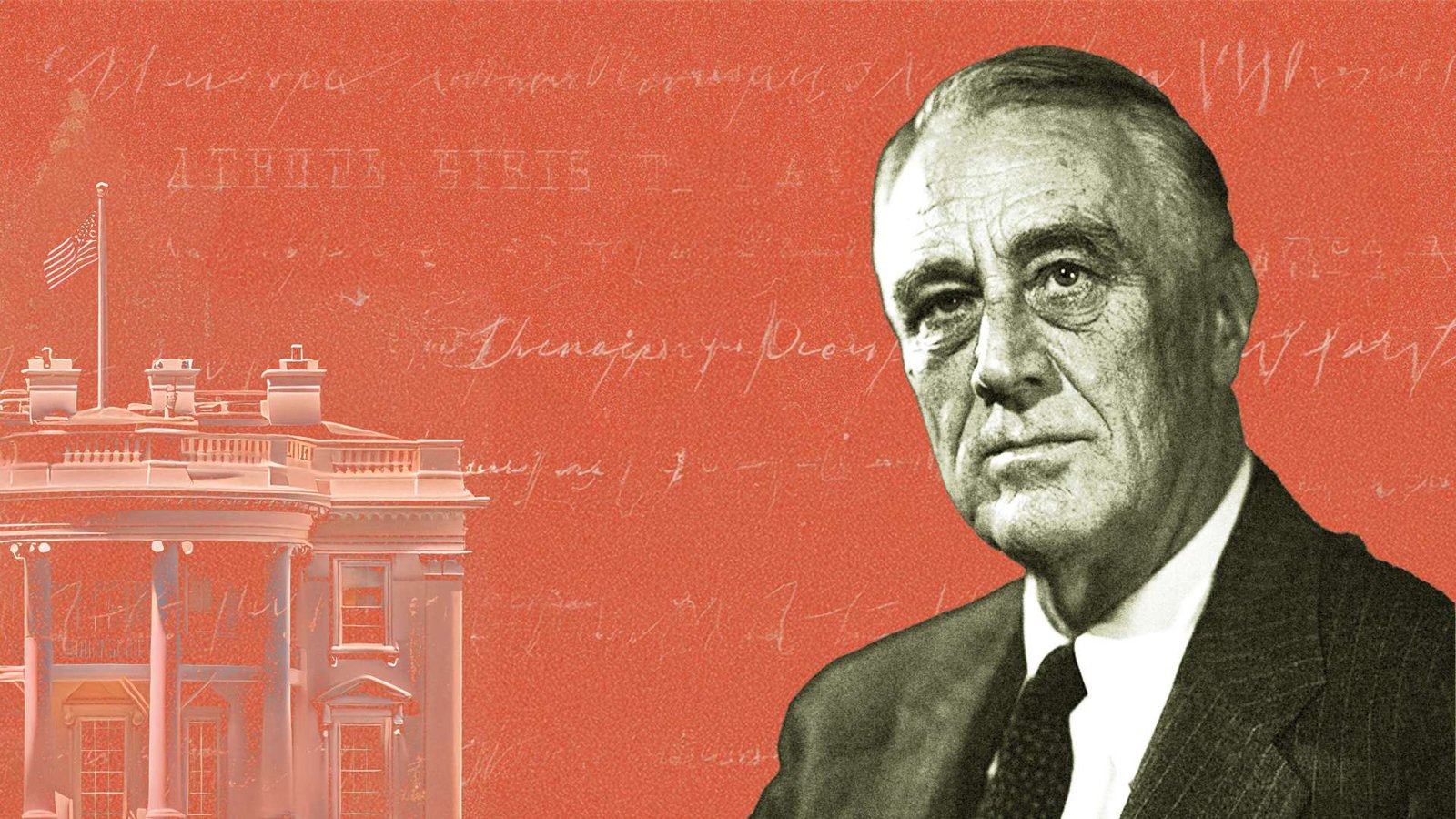
On February 12, 1942, Roosevelt issued Executive Order 9066, which authorized the forced removal of Japanese-Americans from their homes and communities on the West Coast “by virtue of the authority vested in me as President of the United States, and Commander in Chief of the Army and Navy.” Fred Korematsu, a U.S. citizen of Japanese descent, argued that Roosevelt’s actions violated his constitutional rights. But the Supreme Court took a different view, ruling 6–3 that the forced removal and internment of Japanese-Americans was a perfectly lawful exercise of the president’s powers.

The Korematsu opinion was written by Justice Hugo Black, a Roosevelt appointee and ardent New Dealer. Black is sometimes remembered today as a civil libertarian, a reputation he earned by sometimes writing forcefully in support of the First Amendment and other provisions of the Bill of Rights. “Courts must never allow this protection to be diluted or weakened in any way,” Black wrote about freedom of speech in his book A Constitutional Faith. The First Amendment must be protected by the courts “without any deviation, without exception, without any ifs, buts, or whereases.”

Yet this supposed civil libertarian also wrote the majority opinion upholding concentration camps for innocent American citizens. And Black did not even express any public regret over his Korematsu ruling in the decades to come. “It is noteworthy,” the legal scholar Stanley Kutner once observed, “that in an interview shortly before his death, Justice Black maintained that both the President and the Court had been right in their wartime actions.”

According to Black, the outcome in Korematsu was dictated by the existence of emergency conditions and the resulting judicial deference owed to the executive branch. “The military authorities considered the need for action was great, and time was short,” Black declared. “We cannot—by availing ourselves of the calm perspective of hindsight—now say that at that time these actions were unjustified.”

Writing in dissent, Justice Frank Murphy, another Roosevelt appointee and ardent New Dealer, argued that the president’s actions were, in fact, clearly unjustified at the time he took them. “It is essential that there be definite limits to military discretion, especially where martial law has not been declared,” Murphy wrote. “Individuals must not be left impoverished of their constitutional rights on a plea of military necessity that has neither substance nor support.”

These dueling opinions capture the judicial debate over executive power in a nutshell. For Black, the judicial scales had to be tipped entirely in Roosevelt’s favor because “the military authorities considered the need for action was great.” For Murphy, by contrast, judicial vigilance must be maintained in the face of the executive’s claims of “military necessity” precisely because such claims might have “neither substance nor support.”

In other words, the overriding questions are these: Should the courts defer to the president whenever military necessity or emergency conditions have been invoked? Or should the courts scrutinize the president’s actions even when—or especially when—pleas of military necessity or emergency have been made?

This clash over executive authority and its limits is still raging today, of course, as evidenced by the current legal battles over the supposed power of the president to unilaterally send military forces into U.S. cities against the objections of city and state officials; over the supposed authority of the president to summarily deport alleged criminal aliens as an exercise of his war powers; over the president’s supposed emergency power to unilaterally launch a trade war; and over the president’s supposed authority to launch military strikes against suspected drug smugglers without an accompanying declaration of war or any other form of congressional approval.

Korematsu‘s long-ago debate about the judiciary’s proper role as a check on the executive is not so distant as it might initially seem.

Read the full article here

Fact Checker

Verify the accuracy of this article using AI-powered analysis and real-time sources.

Get Your Fact Check Report

Enter your email to receive detailed fact-checking analysis

5 free reports remaining

Continue with Full Access

You've used your 5 free reports. Sign up for unlimited access!

Already have an account? Sign in here

Share. Facebook Twitter Pinterest LinkedIn Tumblr Email Telegram Copy Link
News Room
  • Website
  • Facebook
  • X (Twitter)
  • Instagram
  • LinkedIn

The FSNN News Room is the voice of our in-house journalists, editors, and researchers. We deliver timely, unbiased reporting at the crossroads of finance, cryptocurrency, and global politics, providing clear, fact-driven analysis free from agendas.

Related Articles

Media & Culture

The Feds Are Investing in Wearable Health Trackers. That Could Put Your Private Data at Risk.

7 minutes ago
Media & Culture

Harlan Virtual Supreme Court Round of 8

1 hour ago
Media & Culture

Brickbat: It’s Not Adding Up

2 hours ago
Media & Culture

Why Civilization Needs Better Manuals

3 hours ago
Cryptocurrency & Free Speech Finance

OpenClaw Developers Lured in GitHub Phishing Campaign Targeting Crypto Wallets

4 hours ago
Media & Culture

Daniel Biss Wins in Illinois Despite Student Dating Scandal

4 hours ago
Add A Comment

Comments are closed.

Editors Picks

Stripe-led payments blockchain Tempo goes live with AI agent protocol

28 minutes ago

ECB Opens Work on ATM, Payments for Digital Euro

31 minutes ago

Harlan Virtual Supreme Court Round of 8

1 hour ago

What Bitcoin’s (BTC) falling hash rate might mean for prices

2 hours ago
Latest Posts

AI Agents Get New Tools From Visa and Stripe’s Tempo

2 hours ago

Brickbat: It’s Not Adding Up

2 hours ago

Bitcoin OGs dump over $100 million in BTC after hawkish Fed dents rate cut hopes

3 hours ago

Subscribe to News

Get the latest news and updates directly to your inbox.

At FSNN – Free Speech News Network, we deliver unfiltered reporting and in-depth analysis on the stories that matter most. From breaking headlines to global perspectives, our mission is to keep you informed, empowered, and connected.

FSNN.net is owned and operated by GlobalBoost Media
, an independent media organization dedicated to advancing transparency, free expression, and factual journalism across the digital landscape.

Facebook X (Twitter) Discord Telegram
Latest News

The Feds Are Investing in Wearable Health Trackers. That Could Put Your Private Data at Risk.

7 minutes ago

Stripe-led payments blockchain Tempo goes live with AI agent protocol

28 minutes ago

ECB Opens Work on ATM, Payments for Digital Euro

31 minutes ago

Subscribe to Updates

Get the latest news and updates directly to your inbox.

© 2026 GlobalBoost Media. All Rights Reserved.
  • Privacy Policy
  • Terms of Service
  • Our Authors
  • Contact

Type above and press Enter to search. Press Esc to cancel.

🍪

Cookies

We and our selected partners wish to use cookies to collect information about you for functional purposes and statistical marketing. You may not give us your consent for certain purposes by selecting an option and you can withdraw your consent at any time via the cookie icon.

Cookie Preferences

Manage Cookies

Cookies are small text that can be used by websites to make the user experience more efficient. The law states that we may store cookies on your device if they are strictly necessary for the operation of this site. For all other types of cookies, we need your permission. This site uses various types of cookies. Some cookies are placed by third party services that appear on our pages.

Your permission applies to the following domains:

  • https://fsnn.net
Necessary
Necessary cookies help make a website usable by enabling basic functions like page navigation and access to secure areas of the website. The website cannot function properly without these cookies.
Statistic
Statistic cookies help website owners to understand how visitors interact with websites by collecting and reporting information anonymously.
Preferences
Preference cookies enable a website to remember information that changes the way the website behaves or looks, like your preferred language or the region that you are in.
Marketing
Marketing cookies are used to track visitors across websites. The intention is to display ads that are relevant and engaging for the individual user and thereby more valuable for publishers and third party advertisers.