

 Freedom Index
Listen to the article
A review of Bob Dylan: Things Have Changed by Ron Rosenbaum; 287 pages; Melville House (October 2025)
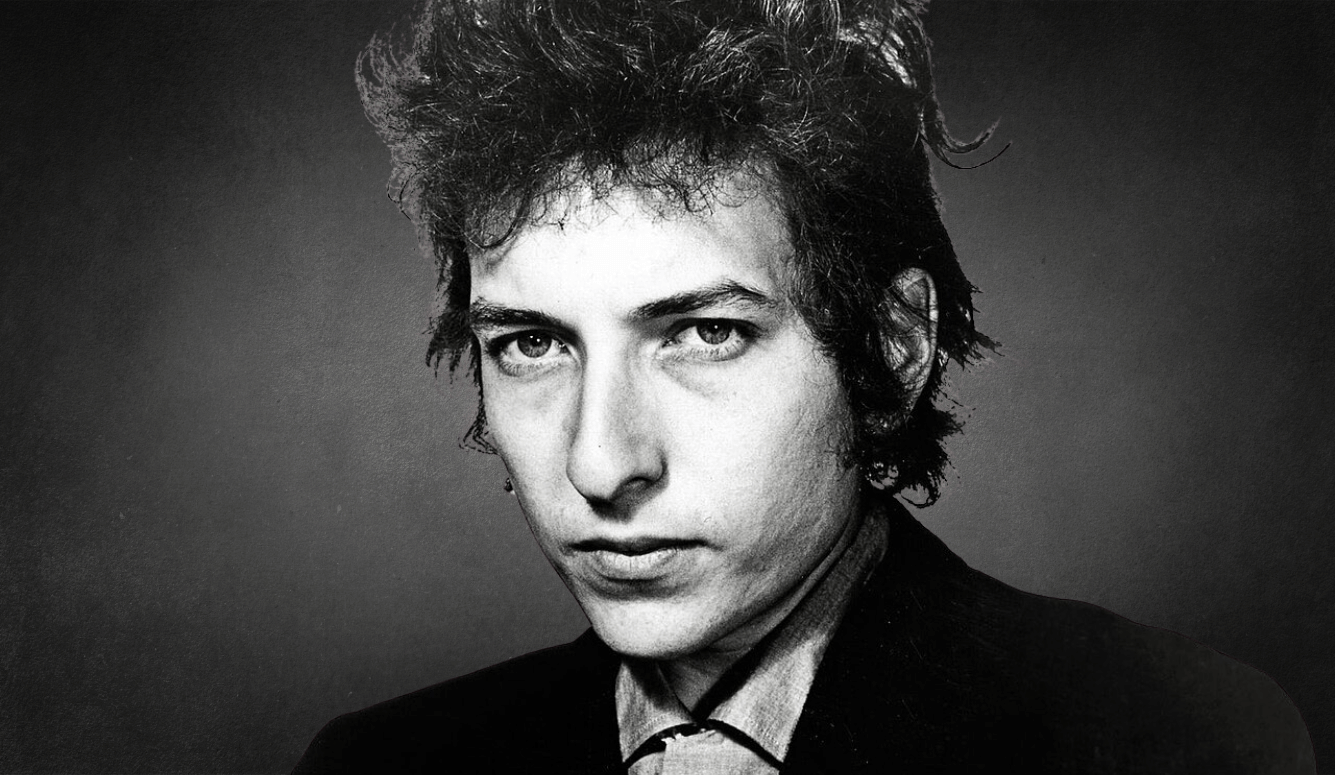
Ron Rosenbaum is one of America’s finest nonfiction authors. His bestselling book Explaining Hitler—an exploration of how and why Hitler became a monster, which I read when it was published in 1999—established its author as a master of cultural history. This time, Rosenbaum has turned his attention to Bob Dylan, a contemporary figure who might be the most influential and important songwriter in American history. He is, to date, the only one to be honoured with the Nobel Prize for literature. Rosenbaum has subtitled his book “A Kind of Biography.” This, he explains, “is less a formal biography than a biography of [Dylan’s] impact on the consciousness of the culture.”
Rosenbaum’s book is also a good deal more critical and less reverential than many of the books celebrating Dylan’s life and work. In a 2011 article for Slate, Rosenbaum expresses his frustration with those Dylan disciples he describes as “Bobolators”—“writers and cultists who still make Dylan into a plaster saint, incapable of imperfection.” Bobolators, he complains, “diminish The Bob’s genuine achievements by putting everything he’s done on the same transcendentally elevated plane. With their embarrassing obeisance, their demand for reverence, their indiscriminate flattery, they obscure the electrifying musical—and cultural—impact he’s actually had.” Rosenbaum confesses that he was once one of them until he grew out of it, but that this affords him a unique perspective on Dylan’s life and work:
I don’t regret having become a Bobolator; I would have never come close to understanding Dylan without understanding—experiencing—that which gives rise to Bobolatry. But I would have never been able to write about him without discarding Bobolatry for something more, something that incorporates the ability to make distinctions, which is the essence of “the palace of wisdom.”
I come to you with humility and dawning wisdom as a recovering Bobolator.
What we get from Rosenbaum, then, is an unorthodox meditation on the meaning of Dylan as an artist and an individual. Rosenbaum seeks to understand his subject by looking at the songs he wrote at different stages of his life and divining the subtextual meaning that may not be immediately apparent when we read the lyrics on paper or hear them on record. He invites us to reconsider Dylan’s songs in the context of what the artist was living through and experiencing when he wrote them. Rosenbaum has clearly read many of the books already written about Dylan, but he offers us his own unique take on the man and his work. The only other book that attempts something similar is Greil Marcus’s brilliant Folk Music: A Bob Dylan Biography in Seven Songs, published in 2022.
I.
Dylan grew up as one of the few Jews in Hibbing, Minnesota; a bar mitzvah boy whose father had to hire a Rabbi from Brooklyn to come to their small town and train young Bob for the occasion. Dylan could read Hebrew and went to a Zionist summer camp when he was a youngster. But as his fame grew, he became weary of fielding questions from journalists about his Jewishness and the Hasidic tales that supposedly explained his songs. What really lies at the heart of Dylan’s music, Rosenbaum argues, is an obsession with “the persistence and presence of catastrophic evil and suffering in human affairs.” Rosenbaum believes that Dylan’s “rage at the Old Testament God for His apparent indifference in the face of evil” is part of what led him to reject Judaism and convert to Christianity in the late 1970s.
In addition to this disenchantment with Judaism, Rosenbaum points out that Dylan’s conversion was motivated by the need to seek relief from the emotional turmoil and distress into which his personal life had slumped. In November 1977, Rosenbaum spent seven days interviewing Dylan as he struggled to edit miles of footage shot during the 1975–76 Rolling Thunder Revue tour into a comprehensible feature film. The upshot was a four-hour experiment (Rosenbaum calls it Dylan’s “cinematic masterpiece”) titled Renaldo and Clara starring Dylan’s wife Sara and his former lover Joan Baez. Dylan’s marriage was already falling apart while the film was being made, and after the couple divorced in June 1977, he was tormented by loneliness and despair. He would later claim to have seen a vision of Jesus in a Tucson motel room on a November night in 1978, and the following year, he announced his conversion to Christianity with the release of his first evangelical album Slow Train Coming. Born again, his new faith seemed to reinvigorate him.
But Rosenbaum argues that the effects of this conversion were almost entirely negative. They allowed Dylan to be exploited by “Jesus-freak brainwashing” fanatics who almost “killed his career, obscured his impact, and bankrupted his cultural capital.” Rosenbaum condemns the “rock critic sycophants” who “were disgracefully unwilling to come out and say what a terrible thing happened when this self-described Christian cult—the Vineyard Fellowship—got hold of a vulnerable Jewish soul” and sent Dylan into a “death spiral” of “robotic dogmaspouting.” Dylan’s conversion also offended Rosenbaum as a Jew. “[I]t just seemed so unnecessary,” he writes, “for a post-Holocaust Jew who didn’t like Jahweh to announce his enslavement to Jesus.”
Dylan began preaching during his concerts, and Rosenbaum calls these recordings “sermonizing tapes, which seemed like self-criticism sessions not unlike the dogmatic North Korean Marxism of The Manchurian Candidate. It was the Manchurian Dylan!” Watching these hectoring rants was like watching someone “mechanically, robotically mouthing apocalyptic New Testament prophecies as if in some mind-control trance.” On 26 November 1979, for example, Dylan told attendees at a gig in Tempe, Arizona:
Well, let me tell you, that the devil owns this world. He’s called the God of this world. Now we’re living in America. I like America just as much as everybody else does. I love America, I gotta say that. But America will be judged. You know, God comes against a country in three ways. First way he comes against them, he come against them in their economy. Did you know that? He messes with their economy the first time. You can check it all the way back to Babylon, and Persia and Egypt. Many of you here are college students aren’t you? Many of you are college students. You ask your teachers about this now. You see, I… uh… I know they’re gonna verify what I say. Every time God comes against a nation, first of all he comes against their economy.
The audience had to listen to more than five minutes of this before Dylan and his band finally launched into “Solid Rock,” an unreleased song from his second evangelical album Saved, which would not be available until the following year. Not everyone who had paid to hear Dylan perform his music took kindly to this sort of thing, and he began to annoy and lose his audience. Rosenbaum concedes that Dylan’s Christian period did produce “maybe three” good songs—the “sinister, serpentine” title track on Slow Train Coming; “Precious Angel” (“a genuine love song without dogma”); and “Every Grain of Sand” (a “nondenominational but emphatically spiritual” fan favourite that he still performs today). But Rosenbaum basically considers this period of Dylan’s career a dead loss, and rightly laments that “they turned him into a puppet for a New Age Christian group whose logo was a line drawing of Jesus resembling a benevolent Marin County coke dealer.”
Thankfully, Dylan’s infatuation with Christianity burned itself out within a few years. Some time in the early ’80s, I was speaking to Harold Leventhal, the music agent who represented Pete Seeger and other artists, and I asked him what he thought about Dylan’s Christian conversion. He told me that he and Seeger had just returned from visiting Dylan in California, and while they were there, Leventhal had said: “Bob, there’s one thing I don’t get, and that is your proselytising for Christ. You’re as Jewish as anyone else I know. When are you going to give up this Christian stuff?” Dylan replied, “Don’t worry, Harold, I’m through with that. You’ll soon see.” Dylan recorded just three overtly evangelical records—Slow Train Coming in 1979, Saved in 1980, and Shot of Love in 1981. After that, the religiosity subsided, the preaching at concerts ended, and he turned his attention to other things.
In the Spirit of the Lord
Menacing, exuberant, eccentric, and ambitious—Dylan’s first evangelical record turns two-score and four.
Rosenbaum believes that Dylan’s song, “Mississippi,” from his 2001 album “Love and Theft”, is a rueful reflection on his misspent evangelical years. According to this reading, the US state notorious during the pre-civil rights era as a place of “shackles and enslavement” serves as an allegory for Dylan’s “mental state of enslavement: the period when Dylan was shackled to born again dogma of the most rigorous, self-righteous, and sterile sort.”
Well, the emptiness is endless, cold as the clay
You can always come back, but you can’t come back all the way
Only one thing I did wrong
Stayed in Mississippi a day too long
II.
Rosenbaum spends some time discussing Dylan’s politics and speculates that Dylan was dismayed that his songs and persona were appropriated by the most extreme elements of the ’60s New Left. The Weather Underground (formerly the Weathermen) was a radical terrorist organisation that grew out of the collapsing Students for a Democratic Society (SDS) and took their name from a line in Dylan’s 1965 song “Subterranean Homesick Blues”: “You don’t need a weatherman to know which way the wind blows.” On 5 May 1970, an explosion on 11th Street in an exclusive section of the West Village killed three members of the group. They had been preparing bombs to be planted at a welcoming dance for new soldiers at an army base in Fort Dix, New Jersey. Instead, they blew up themselves and the building they were living in—a townhouse belonging to the rich parents of one of the Weather Underground’s members, who were on vacation at the time.
Read the full article here
Fact Checker
Verify the accuracy of this article using AI-powered analysis and real-time sources.