

 Freedom Index
Listen to the article
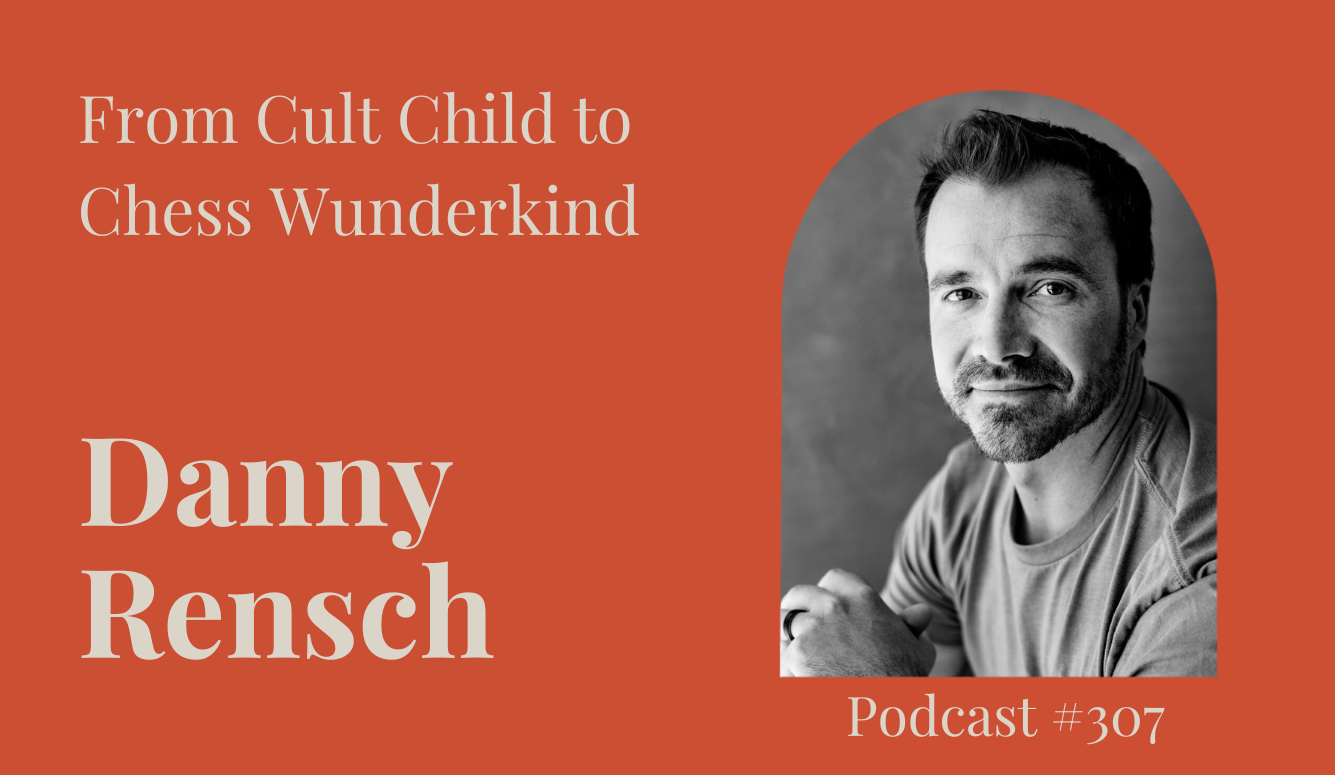
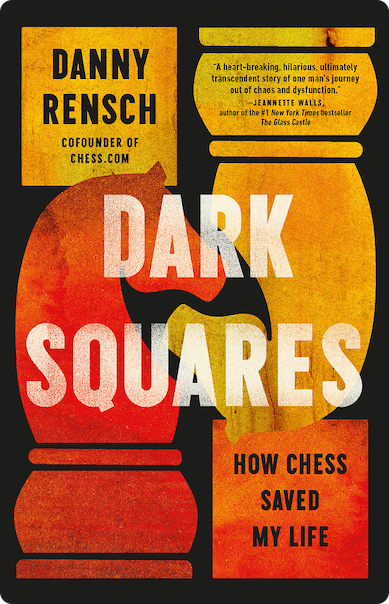
Introduction: Welcome to the Quillette Podcast. Quillette is where free thought lives. We are an independent grassroots platform for heterodox ideas and fearless commentary. And on today’s episode, I’ll be talking to Danny Rensch, the Chief Chess Officer of Chess.com, about his new book, Dark Squares: How Chess Saved My Life. Except the interview you’re about to hear actually has very little to do with chess. That’s because, as I learned from reading Dark Squares, becoming a childhood chess prodigy and co-founding a massively successful chess website weren’t even the most interesting parts of Danny’s life.
As Quillette readers who’ve seen my review of Dark Squares will know, Danny Rensch was born into an Arizona-based cult called the Church of Immortal Consciousness, which was started by a husband-and-wife couple named Steven and Trina Camp. Danny spent his childhood at the cult compound, known as the Collective, in a remote Arizona village called Tonto.
Better Than Bobby Fischer
Danny Rensch never became the world’s greatest chess player. But his improbable rise from traumatised cult child to dot-com wunderkind represents an even more impressive achievement.
There, Trina would preach to the membership by entering a trance state and channelling the supposed wisdom of a 14th-century English medicine man, whom she called Dr Duran. It was a weird and, at times, abusive milieu and one that Danny escaped successfully only because of his genius at chess. By the time he was a teenager, Danny was travelling around Arizona and then the United States, winning chess tournaments and eventually attaining the rank of International Master.
But Danny’s chess success also contributed to the breakup of the cult, as the adults around him competed to control his chess career. This included his mother—a tragic figure who was often manipulated by the men around her—and Danny’s estranged father, named Steven Rensch, who served as the cult leadership’s de facto security officer. In the Church of Immortal Consciousness, Steven Camp, Trina, and the imaginary Dr Duran would control people’s lives by instructing them on their cosmically ordained “Purpose.” That word Purpose was capitalised in cult literature to signify its supposed supernatural significance. Men and women were matched together romantically on the basis of something called their “like vibration.”
But of course, if the powers that be in the Collective decided that this like vibration had vanished, couples could be torn apart, and children could even be taken from their parents and moved from home to home. Amazingly, Danny Rensch not only survived all this, but grew up to become a world-class chess player and the co-founder of the most important chess website in the world.
Although, as he’ll discuss, it’s taken a lot of therapy to help him get over the scars he endured from his childhood in the Church of Immortal Consciousness.
Please enjoy my interview with Chess.com Chief Chess Officer, Danny Rensch.
Transcript
The following transcript has been lightly edited for readability.
Jon Kay: Danny Rensch, thanks so much for joining the Quillette Podcast. So—was this book an act of therapy that became a literary project, or was it a literary project that became an act of therapy?
Danny Rensch: Can I just start off by saying that might be the best first question I’ve gotten on a podcast? That is a great question, because I feel like sometimes I define great questions by the fact that I don’t know the answer off the top of my head. I think you’re right in observing it was probably a little bit of both.
If I may, I’ll tell a little bit of the story of how I got there, because I think it explains what I thought I was doing, to some degree, and how I came to agree to the idea that I would finally tell my story—and really do so in a way where I was committed to putting it all out there, including my own issues and my own warts, if you will.
Not just submit yet another salacious, scandalous cult story. I wanted to talk really honestly about how I feel about the good, the bad, the ugly, and all that. And I think to some degree, I did enter selfishly for those reasons, as you said—meaning I entered into the idea that I’ve been approached by a lot of people who are interested in my story. I’m going to have an opportunity to be paid to write a memoir—and even though it’s not much money in terms of what people think—I have an opportunity to really think about my life in a way that I haven’t and so, I guess, selfishly, do my own therapy to understand what I feel about my journey.
And I’m never going to have a better opportunity to connect the world that people know me in—which is as the face of Chess.com, in this made-up Chief Chess Officer title, helping to do what I do—and my backstory. I’m never going to have a better opportunity to do this.
Then I think, as I wrote the book and we committed to doing all those things I just said, the words took on a life of their own a little bit, right? And that not only showed up in terms of the through-line that I really found was the most meaningful to share about my relationship with chess, my relationship with the cult leader, my relationship with my mom, and ultimately how all those things got me where I was.
In some ways, I guess it sounds airy-fairy or like a clichéd line, but in some ways, the story kind of took on a life of its own. That is to say that, it’s obviously a true story, but in some ways, what we chose to focus on—versus a lot of other things about the Collective that don’t even go in—a lot of other examples, even abuse I went through that ultimately I didn’t feel was necessary to share.
JK: As part of my writing career. I’ve been a ghostwriter and I’ve worked on a bunch of ghost-writing projects with very successful people, but I don’t think I’ve worked on a project where a person is telling his or her life where, at one point during the editorial process, they didn’t have an emotional breakdown—because they revisited something that they didn’t want to revisit.
And sometimes that’s been with clients when we actually visit a location. I have one clear memory of a very successful corporate guy—we went back to his old high school, and I don’t think I expected it, or he expected it, but he just had a really strong emotional reaction to some of the stuff that had gone on fifty years earlier in his life.
When you were writing this, did you geographically revisit that place? I think it’s what, like two hours north of Phoenix, this little community?
DR: It was a very difficult emotional rollercoaster. And I’ve said—people think I’m joking when I say this, but I’m not—if I was told what an ordeal this would’ve been, I probably would’ve said no. Just especially given what’s been on our plate at Chess.com. It’s been such a crazy ride. And yeah, it has been very taxing.
In fact, my therapist openly told me that she hated that I was writing this book because I was revisiting traumatic memories. And therapy, in my opinion—having been in it for a long time and educated myself in a lot of ways as far as rewriting the neural synapses of my own damaged brain—I think good therapy really focuses on the present. And then you revisit as much of the past as is needed for you to be the best version of yourself now—for you to not be as triggered by things now. You’re not actively looking for more damage. You’re not actively looking for more skeletons in your closet all the time.
It’s a very delicate process, and I think good therapy should start with, “Hey, I don’t like that I still get really angry about this. So let’s review what the trigger is, how it got there. Maybe now we’re talking about my relationship with my dad, but that’s not the fundamental thing, right? It’s really about helping me.”
But this process of writing a book was fundamentally about going looking for things that were traumatic, right? To talk about them. And yeah, I just want to say that it really was an ordeal.
And as far as visiting places—yes. I went back to Tonto Village at least a couple of times during the writing process. And I would say that because I also still have an arm’s-length relationship with my dad and stepmum, Marlo, to the level that I do—which is something I share at the end of the book—and I have made peace with and healed to the best degree possible.
And I love my dad, even with all the things that we went through. It’s been hard.
So, to say that I had opportunities to revisit the place—even if that’s a metaphor—the answer is yes. There were definitely a lot of things that were directly in my face: reviewing my relationship with my father, or with Steven Camp, and then having this relationship I was revisiting.
And ultimately, of course, I shared my book with my dad as well—and that has been its own journey over the last few months.
JK: Your dad is an incredibly interesting character in the book. And one of the things that makes your story so credible is that everyone in the book—I only have your voice to go by—but it feels like you’re giving them their due.
There’s one scene I remember where I think your dad was shaving, and he had accompanied you on a chess trip. He was being very cold and distant. But in that moment, almost in an offhand way, he gave you some fantastic advice about managing this incredible chess ability you had—and about not being too high on yourself, and being a good teammate, and supporting others.
I remember reading that and stepping back and thinking: up to that point in the narrative, everything was giving me reason to dislike this character. To me, it’s a character—to you, it’s your father—but at several points, you gave him his due. And you do that with other characters too.
And the larger narrative—it’s not a salacious story in the sense that… people who come to the idea of cults, I think they come to it from sensational TV documentaries. Where the leader is running a real sex cult, where he has twenty wives, and everyone’s in robes, and it’s a compound that’s completely impenetrable to the outside world.
Is there a way you could communicate to my listeners—my viewers—how you came to understand this to be a cult?
DR: Really great question. And I just appreciate your appreciation for what I was trying to do, because as I said quickly off the top, it was not my intention to write a cult exposé.
Read the full article here
Fact Checker
Verify the accuracy of this article using AI-powered analysis and real-time sources.