Close Menu
FSNN | Free Speech News NetworkFSNN | Free Speech News Network
  • Home
  • News
    • Politics
    • Legal & Courts
    • Tech & Big Tech
    • Campus & Education
    • Media & Culture
    • Global Free Speech
  • Opinions
    • Debates
  • Video/Live
  • Community
  • Freedom Index
  • About
    • Mission
    • Contact
    • Support
Trending

Progressive Michigan

15 minutes ago

Nomura’s Laser Digital backs ZIGChain for onchain private credit push in UAE

39 minutes ago

Does the Coldcard Attack Mean All Hardware Wallets Are Now Insecure?

41 minutes ago
Facebook X (Twitter) Instagram
Facebook X (Twitter) Discord Telegram
FSNN | Free Speech News NetworkFSNN | Free Speech News Network
Market Data Newsletter
Wednesday, August 5
  • Home
  • News
    • Politics
    • Legal & Courts
    • Tech & Big Tech
    • Campus & Education
    • Media & Culture
    • Global Free Speech
  • Opinions
    • Debates
  • Video/Live
  • Community
  • Freedom Index
  • About
    • Mission
    • Contact
    • Support
FSNN | Free Speech News NetworkFSNN | Free Speech News Network
Home»News»Media & Culture»$200 Billion War? 
Media & Culture

$200 Billion War? 

News RoomBy News Room5 months agoNo Comments5 Mins Read0 Views
Share Facebook Twitter Pinterest Copy Link LinkedIn Tumblr Email VKontakte Telegram
0 Billion War? 
Share
Facebook Twitter Pinterest Email Copy Link

Listen to the article

0:00
0:00

Key Takeaways

Playback Speed

Select a Voice

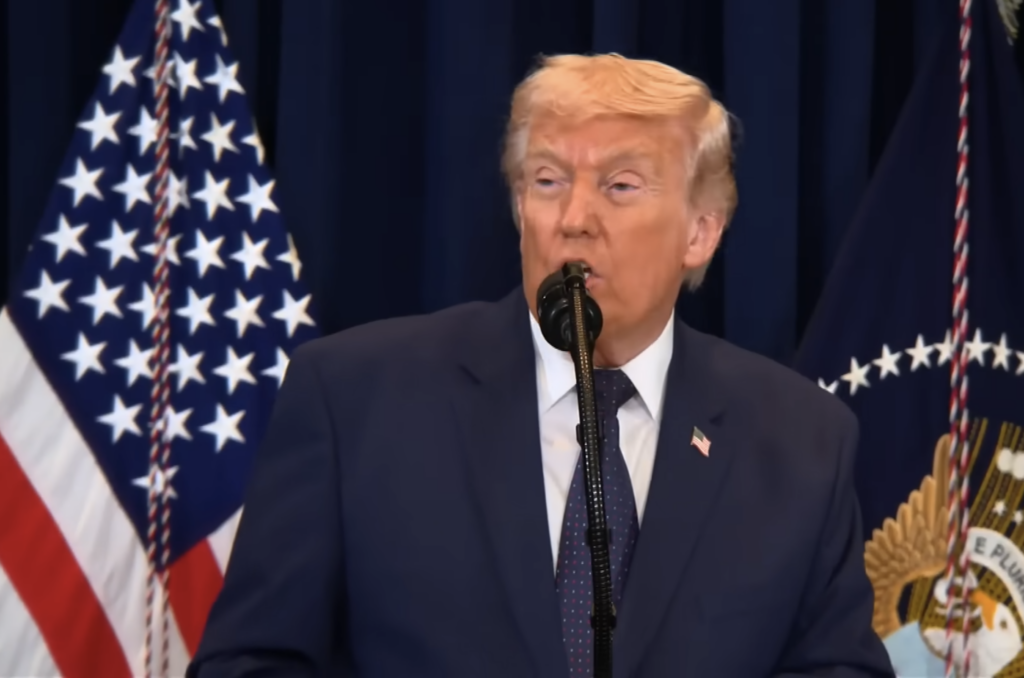
A long, expensive war? When President Donald Trump first announced the war—or, if you like, the distinctly-warlike-but-not-technically-a-war “excursion“—in Iran, he said it could be over in days or weeks. But days have passed. We are now three weeks into the conflict. And there is no sign of when it will end. 

But the costs are adding up. The first six days of the war cost $11.3 billion, according to the Pentagon, which is an undercount given that the tally doesn’t include the cost of troop and equipment movements. 

And now the Pentagon wants a $200 billion budget supplemental to further fund the war. The request has been submitted to the White House, but not Congress, and some moderate Republicans already appear to be concerned about the price tag.

The Reason Roundup Newsletter by Liz Wolfe Liz and Reason help you make sense of the day’s news every morning.

At a press conference yesterday, Defense Secretary Pete Hegseth, who presumably just wants taxpayers to continue funding lobster dinners, suggested that the figure might change. He didn’t specify whether that meant it might increase or decrease.

Trump defended the amount, saying that it was “for a lot of reasons, beyond even what we’re talking about in Iran.” That is not exactly comforting, especially given the president’s recent saber-rattling about Cuba. Is he suggesting that it’s not $200 billion for this war—rather, it’s $200 billion for this war and maybe some other wars? 

Still, the initial dollar figure alone tells you something about how long this conflict could last. 

Sen. Chuck Schumer (D–N.Y.), who is not exactly a paragon of limited government and spending control, spelled out the worrying implications. Reacting to the request, he said, “Let’s be clear: If Trump wants $200 billion, that means he believes we might be in a war with Iran for a very, very long time. Two hundred billion is more than what we spent even at the height of the war in Iraq.” 

A back-of-the-envelope calculation suggests that if six days of war consistently costs $11.3 billion, then a $200 billion supplemental would fund a little more than 106 days of war. That doesn’t necessarily mean we are in for a three and a half month fight. Some of the supplemental, if funded at that level, would go toward restocking the munitions used in this conflict. It’s also possible, of course, that the war will run for much longer than three months, and perhaps cost more than $200 billion.

Wars have an unfortunate tendency to spiral out of control—if they were ever in control to begin with. Is this one? 

Boots on the ground? It remains hard to know exactly what Trump is thinking about the war or what his plans are. 

The last week has seen considerable discussion about whether or not the United States will send ground troops to fight in Iran, and reports have said the military is moving thousands of troops into the region. At least one Republican has argued that some types of troop deployments wouldn’t count as boots on the ground.

But yesterday, Trump said he wasn’t sending in the soldiers.

“I’m not putting troops anywhere,” Trump told a reporter. That sounds reasonably definitive. But Trump left himself an out when he added: “If I were, I certainly wouldn’t tell you.”

Trump also cracked about the element of surprise in a conversation with Japanese Prime Minister Sanae Takaichi at the White House yesterday.

When the question arose of why the United States didn’t notify Japan in advance about its plans in Iran, Trump said: “We wanted surprise. Who knows better about surprise than Japan, OK? Why didn’t you tell me about Pearl Harbor, OK? Right?”

Put all this together with the funding request, and what you see is that Trump is determined to keep his options open for the war.

The fact that the $200 billion figure is even being contemplated suggests that this administration believes there’s a lot more military conflict—in Iran and perhaps elsewhere—to come. If war is the health of the state, then the U.S. government is looking to become $200 billion healthier, with taxpayers footing the bill. 


Scenes from Washington, D.C.: Polymarket is sponsoring a pop-up bar this weekend, dedicated to “monitoring the situation.” The inspiration is apparently a post on X that imagines a bar with “live X feeds, flight radar, a Bloomberg terminal and Polymarket screens.” So it’s a bar where you can drink while…looking at screens? Screens that display information? Feels like those already exist everywhere there are phones, Negronis, and beer. 

Axios declares it “the most D.C. thing to happen to a bar.” I miss the days when D.C. pop-up bars were Gwar-themed. 


  • Yesterday I wrote about Meta shutting down its virtual reality platform, Horizon Worlds. Since then, the company has reversed itself, saying the platform will remain open. 
  • The 22nd season of The Bachelorette was set to air this weekend. But after a video surfaced of the show’s star, Taylor Frankie Paul, in a domestic violence incident, the entire season, which cost $20 million to produce, will be shelved. 
  • Pittsburgh schools will close for three days because of the NFL draft.
  • Denmark was prepared to blow up runways if the U.S. started a war over Greenland. 
  • The Senate will continue to debate the SAVE America Act through the weekend. 
  • The Federal Communications Commission approved NextStar’s acquisition of local TV operator Tegna. 
  • Polling continues to be quite bad for Trump. 
  • Happy Friday. No, I will not be serving this at my next happy hour.

    This is what happens when you mix Star Wars with alcohol. pic.twitter.com/NBWN4dyljA

    — The Best (@Thebestfigen) March 19, 2026


Read the full article here

Fact Checker

Verify the accuracy of this article using AI-powered analysis and real-time sources.

Get Your Fact Check Report

Enter your email to receive detailed fact-checking analysis

5 free reports remaining

Continue with Full Access

You've used your 5 free reports. Sign up for unlimited access!

Already have an account? Sign in here

#CivicEngagement #Journalism #MediaBias #PoliticalDebate #PublicOpinion
Share. Facebook Twitter Pinterest LinkedIn Tumblr Email Telegram Copy Link
News Room
  • Website
  • Facebook
  • X (Twitter)
  • Instagram
  • LinkedIn

The FSNN News Room is the voice of our in-house journalists, editors, and researchers. We deliver timely, unbiased reporting at the crossroads of finance, cryptocurrency, and global politics, providing clear, fact-driven analysis free from agendas.

Related Articles

Media & Culture

Progressive Michigan

15 minutes ago
Cryptocurrency & Free Speech Finance

Anthropic’s Claude Mythos 5 ‘Targeted Real People’ in UK Cyber Tests: AISI

42 minutes ago
Media & Culture

Meta Backs Off Sloppy Gambit To Nickel-And-Dime AI Glasses Customers

1 hour ago
Media & Culture

VDARE’s Libel Case Against N.Y. Times Thrown Out

1 hour ago
Cryptocurrency & Free Speech Finance

Morning Minute: Jim Cramer Sells His Bitcoin Over Quantum Fears

2 hours ago
Media & Culture

Eleventh Circuit En Banc Upholds Florida Ban on Knowingly Admitting Minors to Obscene-as-to-Minors Performances

2 hours ago
Add A Comment

Comments are closed.

Editors Picks

Nomura’s Laser Digital backs ZIGChain for onchain private credit push in UAE

39 minutes ago

Does the Coldcard Attack Mean All Hardware Wallets Are Now Insecure?

41 minutes ago

Anthropic’s Claude Mythos 5 ‘Targeted Real People’ in UK Cyber Tests: AISI

42 minutes ago

Meta Backs Off Sloppy Gambit To Nickel-And-Dime AI Glasses Customers

1 hour ago
Latest Posts

VDARE’s Libel Case Against N.Y. Times Thrown Out

1 hour ago

The studios of B-92 in Belgrade. Photo: EC – Audiovisual Service / Raymond Maxwell In 1989, Serbia was in a state of turbulence. The region was on the brink of the Yugoslav wars – the decade-long conflict prompted by the collapse of Yugoslavia, of which Serbia was one of six constituent republics. Slobodan Milošević, populist president of Serbia who gained power by capitalising on rising ethno-nationalist tensions, had recently come into office. Central communist control was weakening, dissent had been stifled and free media was at a premium. These were the conditions under which Veran Matić, together with several other student journalists from Belgrade University, founded the radio station B92. Matić had been involved in independent youth media since 1984, and the station was born from his desire to combine journalism with other forms of civic activism. He proposed that the founding document of the station should be the Universal Declaration of Human Rights – a principle, he told Index, that has guided him since his early life. “I grew up in a village, mostly with my grandparents. They taught me the values of honesty, justice, and many of the ethical principles rooted in religious teachings,” Matić said. “My interests have always extended beyond journalism alone.” Blending rock music with current affairs programmes and phone-ins, B92 quickly gained popularity as a rare outlet for Western news and information in Yugoslavia. However, Serbia was becoming increasingly authoritarian under Milošević; the station’s preference for truth-telling was at odds with the regime, and B92 became a prime target for suppression. Years later, Matić found out that he had been surveilled from the very beginning of his career. “The Yugoslav State Security Service had already begun monitoring and wiretapping me,” he explained. “I was aware that I was being followed, but I had no idea that my telephone conversations had been systematically intercepted for years.” Matić soon became editor-in-chief of B92. During anti-government demonstrations in Belgrade in March 1991, police stormed the newsroom and threatened staff members and foreign correspondents in the newsroom, forcing the station off the air. “Tanks had already begun appearing on the streets, and the police threatened violence against our staff,” Matić said. “We finally suspended broadcasting, but we refused to air the official state news agency’s reports. The following day we resumed broadcasting without permission because the student protests had begun.” The next time the state tried to shut B92 down, in 1996, the station was ready. Staff outmanoeuvred the authorities by transmitting their signal over the internet to the BBC in London, which relayed it by satellite back to local radio stations across Serbia for broadcast. This was one of the first examples of using the internet to circumvent censorship in broadcasting. Matić contended that the most dangerous period for B92 staff was during the NATO bombing campaign in 1999 – a large-scale air campaign to destroy Yugoslav infrastructure and to stop the repressive activities of the Milošević government. In and amongst the turbulence and warfare, Radio B92 was once again banned. But this time, Matić was arrested. “I was taken to a detention cell inside the largest police headquarters in Belgrade,” he said. “Through a tiny window I could see the night sky, waiting for the bombers to arrive. For the first time in my life, I felt completely powerless.” Matić and his colleagues were buoyed, though, by an international campaign of solidarity in support of independent media in Serbia. They responded with innovation, driven by their belief that the authorities were “not stronger than the ideas.” “We responded by installing transmitters in Romania and Bosnia and Herzegovina, as well as a clandestine transmitter in Belgrade,” Matić told Index. “We switched it on on 5 October 2000, when nearly half a million people gathered peacefully in Belgrade to bring down Slobodan Milošević’s dictatorship.” In the years that followed, Matić continued to build his career in journalism. He helped to establish the Commission for the Investigation of Murders of Journalists in 2013, and currently chairs the Permanent Working Group for the Safety of Journalists and the Association of Independent Electronic Media (ANEM). He is also head of the B92 foundation, a non-profit launched by the media house which brings together companies, foundations and civil society organisations to promote philanthropy and humanitarian aid. Even though the Milošević era is long gone, Matić continues to face adversity and censorship while reporting in Serbia. Just last month, he was attacked while filming a public gathering in front of the National Assembly, when someone forcibly took his phone despite Matić introducing himself as a journalist. Matić is keen to stress that this was not an isolated incident. “What happened that day cannot be understood simply as an incident in which I was prevented from filming,” he said. “It was the culmination of a much longer process of public targeting and the creation of an atmosphere in which violence against me has effectively been legitimised.” Veran Matić in 2011, the year he was given police protection. Photo: Portal Vlade APV / CC BY 3.0 Between 2011 and 2016 he was under 24-hour police protection, both in Serbia and while travelling abroad. More recently, current President Aleksandar Vučić publicly disparaged Matić during a TV appearance, suggesting that people convicted of crimes as a result of Matić’s investigative journalism had been wronged. At the same time, a pro-government media organisation ran what Matić described as a lengthy propaganda piece on him. “After the broadcast, the threats intensified,” he said. “I have repeatedly been verbally abused and physically confronted in public. Members of my family have also been threatened. “The most frightening aspect is not only the hostility itself, but the growing conviction that there is little institutional protection available.” Matić is not the only journalist in Serbia being targeted in this way. According to the official records of the Supreme Public Prosecutor’s Office, only 12 out of 271 recorded cases of threats and attacks against journalists over the past two and a half years have resulted in final court judgments. Independent media is vital in holding those in power to account and being part of it will never be an easy profession. Matić identified several economic, legal, and security issues facing such outlets, including the threat of SLAPPs together with smear campaigns, harassment on social media and intimidating surveillance tactics. “The consequence is that many journalists go to work every day knowing they are exposed targets,” said Matić. “It has become a struggle for personal safety, for the survival of independent journalism, and ultimately for Serbia’s democratic future.” The B92 foundation has provided support to journalists outside of Serbia in recent years, including correspondents in Ukraine and Gaza. Through his experiences, Matić understands the importance of press freedom globally – and the cost that can come with it. “In many ways, my entire professional life has unfolded under pressure, threats and various forms of state repression,” he reflected. “If we want citizens to continue knowing what is really happening in our country, we must ensure that the journalists uncovering those truths are able to continue their work safely. “That, more than anything else, is what keeps me going.” READ MORE

1 hour ago

Mike Novogratz’s Galaxy Digital (GLXY) heads lower after earnings

2 hours ago

Subscribe to News

Get the latest news and updates directly to your inbox.

At FSNN – Free Speech News Network, we deliver unfiltered reporting and in-depth analysis on the stories that matter most. From breaking headlines to global perspectives, our mission is to keep you informed, empowered, and connected.

FSNN.net is owned and operated by GlobalBoost Media
, an independent media organization dedicated to advancing transparency, free expression, and factual journalism across the digital landscape.

Facebook X (Twitter) Discord Telegram
Latest News

Progressive Michigan

15 minutes ago

Nomura’s Laser Digital backs ZIGChain for onchain private credit push in UAE

39 minutes ago

Does the Coldcard Attack Mean All Hardware Wallets Are Now Insecure?

41 minutes ago

Subscribe to Updates

Get the latest news and updates directly to your inbox.

© 2026 GlobalBoost Media. All Rights Reserved.
  • Privacy Policy
  • Terms of Service
  • Our Authors
  • Contact

Type above and press Enter to search. Press Esc to cancel.

🍪

Cookies

We and our selected partners wish to use cookies to collect information about you for functional purposes and statistical marketing. You may not give us your consent for certain purposes by selecting an option and you can withdraw your consent at any time via the cookie icon.

Cookie Preferences

Manage Cookies

Cookies are small text that can be used by websites to make the user experience more efficient. The law states that we may store cookies on your device if they are strictly necessary for the operation of this site. For all other types of cookies, we need your permission. This site uses various types of cookies. Some cookies are placed by third party services that appear on our pages.

Your permission applies to the following domains:

  • https://fsnn.net
Necessary
Necessary cookies help make a website usable by enabling basic functions like page navigation and access to secure areas of the website. The website cannot function properly without these cookies.
Statistic
Statistic cookies help website owners to understand how visitors interact with websites by collecting and reporting information anonymously.
Preferences
Preference cookies enable a website to remember information that changes the way the website behaves or looks, like your preferred language or the region that you are in.
Marketing
Marketing cookies are used to track visitors across websites. The intention is to display ads that are relevant and engaging for the individual user and thereby more valuable for publishers and third party advertisers.