Close Menu
FSNN | Free Speech News NetworkFSNN | Free Speech News Network
  • Home
  • News
    • Politics
    • Legal & Courts
    • Tech & Big Tech
    • Campus & Education
    • Media & Culture
    • Global Free Speech
  • Opinions
    • Debates
  • Video/Live
  • Community
  • Freedom Index
  • About
    • Mission
    • Contact
    • Support
Trending

2 Supreme Court Cases to Watch This Month

2 minutes ago

Bitcoin kicks off new quarter in the old $82,000-$85,000 price range

19 minutes ago

Bitcoin Trapped Below $86K as PCE Changes Cloud Inflation Reading

20 minutes ago
Facebook X (Twitter) Instagram
Facebook X (Twitter) Discord Telegram
FSNN | Free Speech News NetworkFSNN | Free Speech News Network
Market Data Newsletter
Thursday, October 1
  • Home
  • News
    • Politics
    • Legal & Courts
    • Tech & Big Tech
    • Campus & Education
    • Media & Culture
    • Global Free Speech
  • Opinions
    • Debates
  • Video/Live
  • Community
  • Freedom Index
  • About
    • Mission
    • Contact
    • Support
FSNN | Free Speech News NetworkFSNN | Free Speech News Network
Home»News»Media & Culture»2 Supreme Court Cases to Watch This Month
Media & Culture

2 Supreme Court Cases to Watch This Month

News RoomBy News Room2 minutes agoNo Comments4 Mins Read0 Views
Share Facebook Twitter Pinterest Copy Link LinkedIn Tumblr Email VKontakte Telegram
2 Supreme Court Cases to Watch This Month
Share
Facebook Twitter Pinterest Email Copy Link

Listen to the article

0:00
0:00

Key Takeaways

Playback Speed

Select a Voice

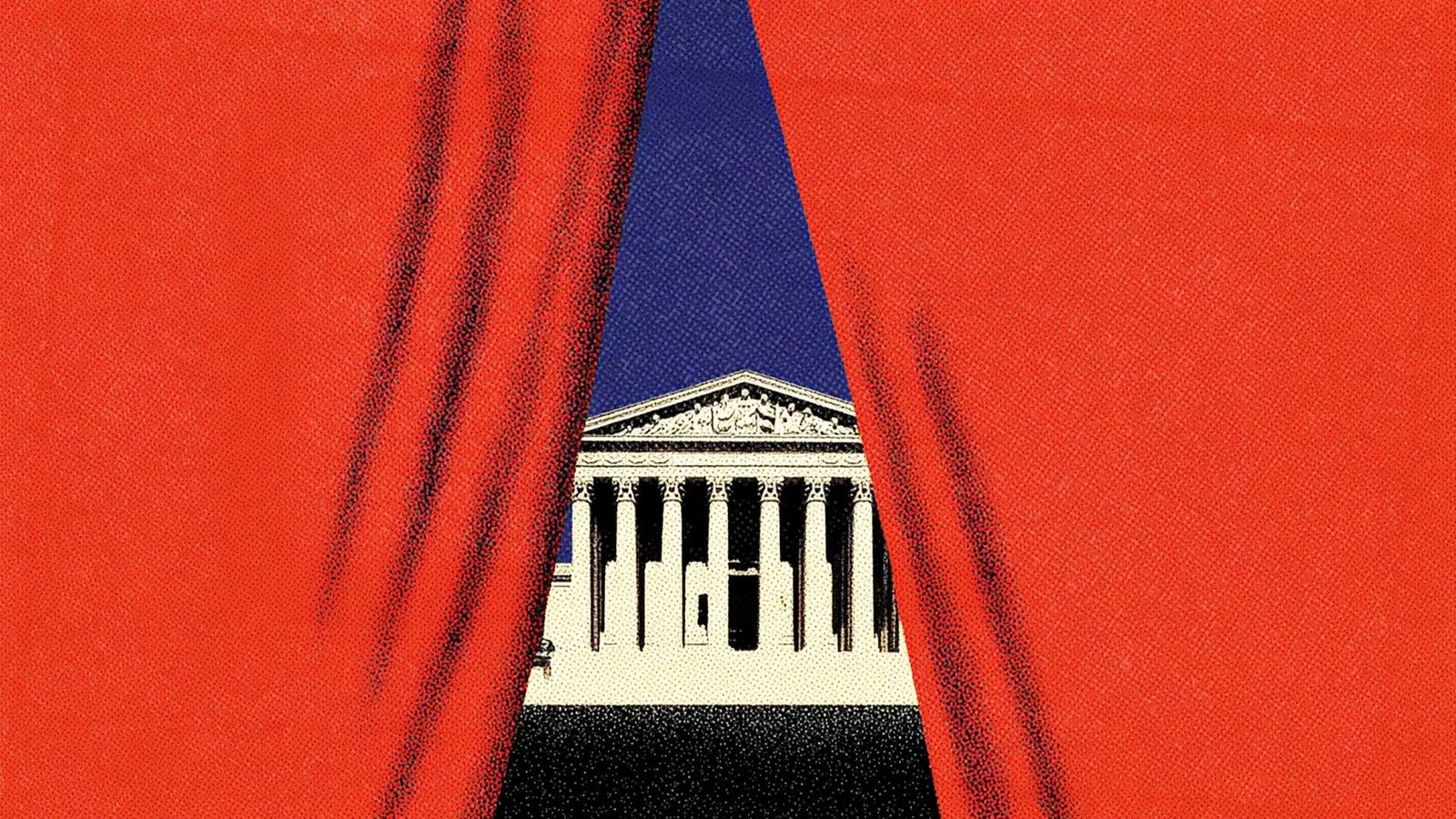
The U.S. Supreme Court’s 2026–2027 term officially kicks off on Monday. But you may be forgiven if you didn’t realize the justices had actually gone away on a summer break. After all, the Court has certainly stayed busy enough over the past two months, issuing a number of high-profile orders and opinions on issues ranging from President Donald Trump’s efforts to restrict the use of mail-in ballots to the president’s ongoing construction of a new White House ballroom.

Those cases, however, were all from the Supreme Court’s emergency docket, sometimes also known among its critics as the shadow docket. The Court’s regular docket, in which the justices only decide cases after reading several rounds of briefs and hearing lengthy oral arguments, was in fact on pause over the summer. That pause will be lifted on Monday when oral arguments start again.

So what’s coming on the regular docket? Here are two notable cases that I’ll be watching this month.

You’re reading Injustice System from Damon Root and Reason. Get more of Damon’s commentary on constitutional law and American history.

1. Suncor Energy, Inc. v. County Commissioners of Boulder County. County officials in Colorado sued Suncor Energy for damages under Colorado law over injuries allegedly caused by the effects of greenhouse gas emissions and climate change. The energy company countered by arguing that this kind of state lawsuit is preempted by federal law because the alleged conduct at issue did not originate in Colorado. In other words, if a state seeks to sue an energy company under state law over damages allegedly caused by interstate or even international pollution or greenhouse gas emissions, may the state lawsuit proceed, or must it be dropped because federal law, not state law, controls?

Needless to say, the importance of this case for future climate change-related litigation is significant. Oral arguments are scheduled for October 5.

2. Salazar v. Paramount Global. The Video Privacy Protection Act of 1988 (VPPA), which was passed after a video store clerk leaked to a journalist a list of films that then-Supreme Court nominee Robert Bork had rented, prohibits a “video tape service provider” from “knowingly disclos[ing], to any person, personally identifiable information concerning any consumer of such provider.” At issue in this case is whether Paramount Global, doing business as the website 247Sports, violated this federal law when it shared user Michael Salazar’s private information, including what videos he watched, with Facebook.

Here is how that legal question is presented in the case: “whether the phrase ‘goods or services from a video tape service provider,’ as used in the VPPA’s definition of ‘consumer,’ refers to all of a video tape service provider’s goods or services or only to its audiovisual goods or services.”

In short, this is a case with big ramifications for both the digital privacy of consumers and the business practices of tech companies. Oral arguments are scheduled for October 14.


This Week in Legal History

On September 30, 1857—169 years ago yesterday—Justice Benjamin Curtis resigned from the Supreme Court in protest over its decision in Dred Scott v. Sandford (1857), the notorious case that held that African Americans “had no rights which the white man was bound to respect.” Curtis was one of two dissenters in Dred Scott, and his judicial objections still make for illuminating reading today.

The Dred Scott opinion was written by Chief Justice Roger Taney. He held that neither Scott nor any other black person could ever count as a U.S. citizen because they were, in Taney’s words, “beings of an inferior order” who could never qualify as any part of that “We the People” for whom the U.S. Constitution was written. Black Americans “are not included, and were not intended to be included,” Taney asserted, “under the word ‘citizens’ in the Constitution.”

Writing in dissent, Curtis laid bare the historical illiteracy of Taney’s argument. “At the time of the ratification of the Articles of Confederation,” Curtis noted, “all free native-born inhabitants of the States of New Hampshire, Massachusetts, New York, New Jersey, and North Carolina, though descended from African slaves, were not only citizens of those States, but such of them as had the other necessary qualifications possessed the franchise of electors, on equal terms with other citizens.” In other words, when the Constitution was up for ratification, a number of black Americans were literally among the “We the People” who brought the document into existence because they were among the ratifying populations of those five ratifying states.

Taney’s opinion is now widely remembered as among the Supreme Court’s very worst. It’s also worth remembering Curtis’ wise dissent, which opposed Taney’s crimes against the Constitution in real time.

Read the full article here

Fact Checker

Verify the accuracy of this article using AI-powered analysis and real-time sources.

Get Your Fact Check Report

Enter your email to receive detailed fact-checking analysis

5 free reports remaining

Continue with Full Access

You've used your 5 free reports. Sign up for unlimited access!

Already have an account? Sign in here

#MediaBias #MediaEthics #PressFreedom #PublicDiscourse #PublicOpinion
Share. Facebook Twitter Pinterest LinkedIn Tumblr Email Telegram Copy Link
News Room
  • Website
  • Facebook
  • X (Twitter)
  • Instagram
  • LinkedIn

The FSNN News Room is the voice of our in-house journalists, editors, and researchers. We deliver timely, unbiased reporting at the crossroads of finance, cryptocurrency, and global politics, providing clear, fact-driven analysis free from agendas.

Related Articles

Cryptocurrency & Free Speech Finance

EU Presses Binance Over ‘Reverse Solicitation’ Exemption for Users: Report

21 minutes ago
Media & Culture

The Case for Good Faith

1 hour ago
Cryptocurrency & Free Speech Finance

MetaMask Exits Lido Validators Amid Infrastructure ‘Security Incident’

1 hour ago
Media & Culture

Brickbat: Thick as Thieves

2 hours ago
Debates

Practical Magic 2 vs The Witches of Eastwick

2 hours ago
Media & Culture

Axel Kaiser Explains the Javier Milei Effect

4 hours ago
Add A Comment
Leave A Reply Cancel Reply

Editors Picks

Bitcoin kicks off new quarter in the old $82,000-$85,000 price range

19 minutes ago

Bitcoin Trapped Below $86K as PCE Changes Cloud Inflation Reading

20 minutes ago

EU Presses Binance Over ‘Reverse Solicitation’ Exemption for Users: Report

21 minutes ago

The Case for Good Faith

1 hour ago
Latest Posts

Celsius Lawsuit Against Chainalysis Narrows as One Claim Survives

1 hour ago

MetaMask Exits Lido Validators Amid Infrastructure ‘Security Incident’

1 hour ago

Brickbat: Thick as Thieves

2 hours ago

Subscribe to News

Get the latest news and updates directly to your inbox.

At FSNN – Free Speech News Network, we deliver unfiltered reporting and in-depth analysis on the stories that matter most. From breaking headlines to global perspectives, our mission is to keep you informed, empowered, and connected.

FSNN.net is owned and operated by GlobalBoost Media
, an independent media organization dedicated to advancing transparency, free expression, and factual journalism across the digital landscape.

Facebook X (Twitter) Discord Telegram
Latest News

2 Supreme Court Cases to Watch This Month

2 minutes ago

Bitcoin kicks off new quarter in the old $82,000-$85,000 price range

19 minutes ago

Bitcoin Trapped Below $86K as PCE Changes Cloud Inflation Reading

20 minutes ago

Subscribe to Updates

Get the latest news and updates directly to your inbox.

© 2026 GlobalBoost Media. All Rights Reserved.
  • Privacy Policy
  • Terms of Service
  • Our Authors
  • Contact

Type above and press Enter to search. Press Esc to cancel.

🍪

Cookies

We and our selected partners wish to use cookies to collect information about you for functional purposes and statistical marketing. You may not give us your consent for certain purposes by selecting an option and you can withdraw your consent at any time via the cookie icon.

Cookie Preferences

Manage Cookies

Cookies are small text that can be used by websites to make the user experience more efficient. The law states that we may store cookies on your device if they are strictly necessary for the operation of this site. For all other types of cookies, we need your permission. This site uses various types of cookies. Some cookies are placed by third party services that appear on our pages.

Your permission applies to the following domains:

  • https://fsnn.net
Necessary
Necessary cookies help make a website usable by enabling basic functions like page navigation and access to secure areas of the website. The website cannot function properly without these cookies.
Statistic
Statistic cookies help website owners to understand how visitors interact with websites by collecting and reporting information anonymously.
Preferences
Preference cookies enable a website to remember information that changes the way the website behaves or looks, like your preferred language or the region that you are in.
Marketing
Marketing cookies are used to track visitors across websites. The intention is to display ads that are relevant and engaging for the individual user and thereby more valuable for publishers and third party advertisers.