Close Menu
FSNN | Free Speech News NetworkFSNN | Free Speech News Network
  • Home
  • News
    • Politics
    • Legal & Courts
    • Tech & Big Tech
    • Campus & Education
    • Media & Culture
    • Global Free Speech
  • Opinions
    • Debates
  • Video/Live
  • Community
  • Freedom Index
  • About
    • Mission
    • Contact
    • Support
Trending

AI, tech IPOs, quantum, Strategy sale fears all converge, NYDIG says

47 minutes ago

ETF flows tell a different story

2 hours ago

Wall Street Is Coming for Hyperliquid’s Perps Crown, Arthur Hayes Says

2 hours ago
Facebook X (Twitter) Instagram
Facebook X (Twitter) Discord Telegram
FSNN | Free Speech News NetworkFSNN | Free Speech News Network
Market Data Newsletter
Sunday, June 7
  • Home
  • News
    • Politics
    • Legal & Courts
    • Tech & Big Tech
    • Campus & Education
    • Media & Culture
    • Global Free Speech
  • Opinions
    • Debates
  • Video/Live
  • Community
  • Freedom Index
  • About
    • Mission
    • Contact
    • Support
FSNN | Free Speech News NetworkFSNN | Free Speech News Network
Home»News»Media & Culture»1776 All-Stars: Samuel Adams Was the Most Libertarian Founder
Media & Culture

1776 All-Stars: Samuel Adams Was the Most Libertarian Founder

News RoomBy News Room8 hours agoNo Comments4 Mins Read455 Views
Share Facebook Twitter Pinterest Copy Link LinkedIn Tumblr Email VKontakte Telegram
1776 All-Stars: Samuel Adams Was the Most Libertarian Founder
Share
Facebook Twitter Pinterest Email Copy Link

Listen to the article

0:00
0:00

Key Takeaways

Playback Speed

Select a Voice

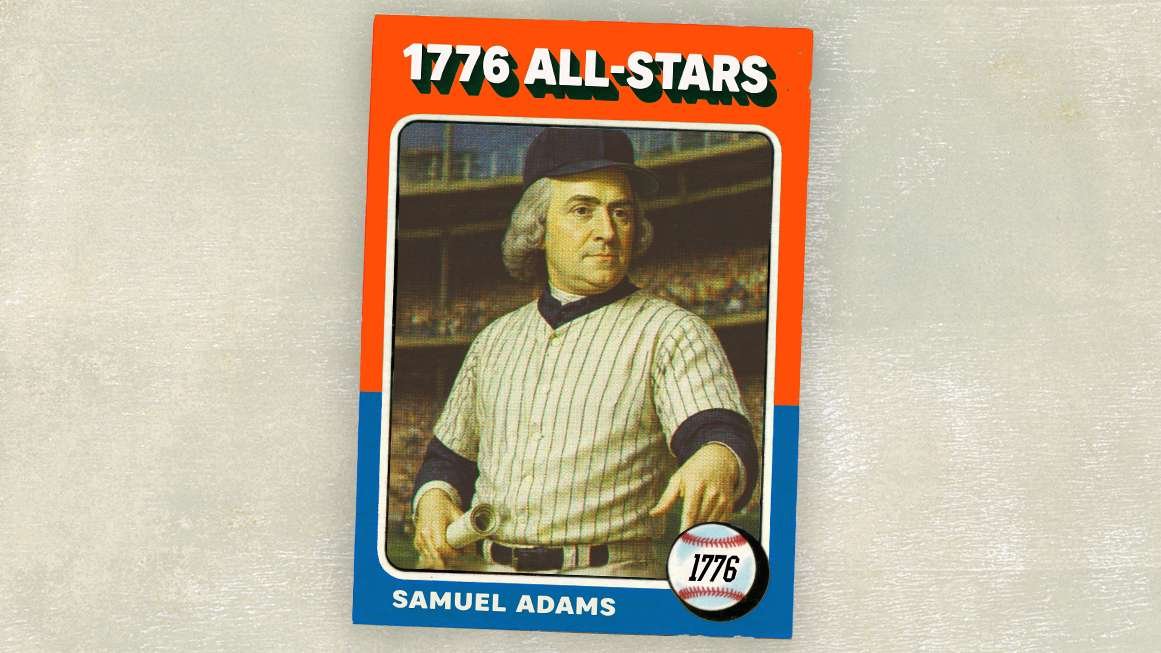
This is part of 1776 All-Stars, a series about Reason‘s favorite American Founders. Read more here.

Joanna Andreasson

The American Battlefield Trust describes Samuel Adams as “a rabble-rouser and propagandist” for American independence. His tireless advocacy and organizing for liberty, his limited time in major political office, and his disdain for hereditary aristocracy make him the most libertarian Founding Father.

You can find a couple of libertarian-leaning legislators wandering the halls of the Capitol, but libertarians often operate outside of elective office, as rabble-rousers and propagandists first and foremost. Albert Jay Nock eloquently expressed as much in his 1936 essay “Isaiah’s Job.” The libertarian’s usual task is to fan the torch of liberty and pass it on to the next generation of always-lonely liberty lovers so that the world may be made marginally freer over time.

But Samuel Adams did not merely keep liberty alive in the hearts and minds of a minority of Americans. He fanned so much oxygen into the flame that it grew into the inferno of the American Revolution.

Adams was precocious: He matriculated at Harvard when he was only 14 years old. There, he was introduced to and influenced by the political and moral philosophy of the natural rights theorist John Locke. Adams’ philosophical education contributed to his denunciation of hereditary aristocracy, as evidenced by his contempt for the nepotistic governor of Massachusetts, Thomas Hutchinson. Eight years after graduating from Harvard, Adams launched The Independent Advertiser, a publication dedicated to “defend[ing] the rights and liberties of mankind.”

Adams wasn’t just a firebrand, of course. He was actively involved in patriot politics. Before the revolution, he served as a member of the Massachusetts General Court. He was a delegate to the First and Second Continental Congresses, the Confederation Congress, and the Constitutional Convention. He served as lieutenant governor and then governor of Massachusetts. He also served a while as a Boston tax collector. While his acceptance of that last role might not weigh in favor of the Most Libertarian Founder appellation, his execution of it did: The National Constitution Center reports that he “often did not collect the taxes, especially when his fellow townsmen could not meet their bill.”

James Otis Jr., the Massachusetts lawyer credited with originating the “no taxation without representation” slogan, was Adams’ political mentor. When the Stamp Act was imposed without colonial consent in 1765, Adams spearheaded the protests that ultimately resulted in the Stamp Act Riots. After London responded by passing the Townshend Acts and stationing 2,000 British regulars in Boston, Adams wrote a piece defending the right to bear arms and the right of revolution. Invoking the English jurist William Blackstone, Adams defended “the right of having and using arms for self-preservation and defence…to protect and maintain inviolate the three great and primary rights of personal security, personal liberty and private property.”

A year later, a customs officer shot and killed 11-year-old Christopher Seider. Adams responded by leading a huge funeral procession that honored the young patriot and galvanized opposition to the British presence. The Boston Massacre would occur less than two weeks later.

Adams referenced “Mr. Locke” by name in his 1772 essay “The Rights of the Colonists,” but he hardly had to: Adams’ essay was minarchism exemplified. Presaging the Declaration of Independence, Adams identified the right to life, liberty, and property, and the means to defend these rights, as natural and inalienable. “The grand end of civil government,” he wrote, “is for the support, protection, and defence of those very rights.” Men may not renounce these rights, he added, because they are “the gift of God Almighty” and “it is not in the power of man to alienate this gift and voluntarily become a slave.”

Speaking of which: Unlike George Washington and Thomas Jefferson, Adams never owned any slaves. When presented with an enslaved girl in 1765, he immediately freed her.

In response to the Tea Act of 1773, which granted the British East Indian Company a monopoly on the tea trade to the colonies, Adams utilized the Boston Committee of Correspondence to coordinate resistance to taxation and trade restrictions. This resistance was realized in the form of the Boston Tea Party, when somewhere between 60 and 90 members of the Sons of Liberty—allegedly at Adams’ signal—threw 42 tons of British tea into the Boston Harbor.

Adams was a prolific polemicist and an adept organizer. If not for his persuasive prose and tireless rabble-rousing, the American Revolution might never have happened.

1776 All-Stars, a series about Reason‘s favorite American Founders:

Read the full article here

Fact Checker

Verify the accuracy of this article using AI-powered analysis and real-time sources.

Get Your Fact Check Report

Enter your email to receive detailed fact-checking analysis

5 free reports remaining

Continue with Full Access

You've used your 5 free reports. Sign up for unlimited access!

Already have an account? Sign in here

#IndependentMedia #MediaBias #PoliticalMedia #PressFreedom #PublicDiscourse
Share. Facebook Twitter Pinterest LinkedIn Tumblr Email Telegram Copy Link
News Room
  • Website
  • Facebook
  • X (Twitter)
  • Instagram
  • LinkedIn

The FSNN News Room is the voice of our in-house journalists, editors, and researchers. We deliver timely, unbiased reporting at the crossroads of finance, cryptocurrency, and global politics, providing clear, fact-driven analysis free from agendas.

Related Articles

Cryptocurrency & Free Speech Finance

Wall Street Is Coming for Hyperliquid’s Perps Crown, Arthur Hayes Says

2 hours ago
Media & Culture

AI Remember Doing the Time Warp

3 hours ago
Cryptocurrency & Free Speech Finance

Claude Opus 4.8 Review: Better At What’s It Good At, Worse At What It’s Not

5 hours ago
Media & Culture

Is Japan a Libertarian Paradise? Not Quite. 

6 hours ago
Media & Culture

Today in Supreme Court History: June 7, 1965

7 hours ago
Media & Culture

Judge Ryan Nelson (9th Cir.) Charged with Battery for Allegedly Knocking off Man’s Glasses in Parking Space Dispute

11 hours ago
Add A Comment
Leave A Reply Cancel Reply

Editors Picks

ETF flows tell a different story

2 hours ago

Wall Street Is Coming for Hyperliquid’s Perps Crown, Arthur Hayes Says

2 hours ago

AI Remember Doing the Time Warp

3 hours ago

Abra CEO Bill Barhydt sees tokenization overtaking bitcoin price as crypto’s main story

3 hours ago
Latest Posts

Bitcoin 2026 Bear Market Needs Months to Spark Capitulation Bottom

3 hours ago

Foundation cuts and departures aren’t a crisis, Joe Lubin says

5 hours ago

Claude Opus 4.8 Review: Better At What’s It Good At, Worse At What It’s Not

5 hours ago

Subscribe to News

Get the latest news and updates directly to your inbox.

At FSNN – Free Speech News Network, we deliver unfiltered reporting and in-depth analysis on the stories that matter most. From breaking headlines to global perspectives, our mission is to keep you informed, empowered, and connected.

FSNN.net is owned and operated by GlobalBoost Media
, an independent media organization dedicated to advancing transparency, free expression, and factual journalism across the digital landscape.

Facebook X (Twitter) Discord Telegram
Latest News

AI, tech IPOs, quantum, Strategy sale fears all converge, NYDIG says

47 minutes ago

ETF flows tell a different story

2 hours ago

Wall Street Is Coming for Hyperliquid’s Perps Crown, Arthur Hayes Says

2 hours ago

Subscribe to Updates

Get the latest news and updates directly to your inbox.

© 2026 GlobalBoost Media. All Rights Reserved.
  • Privacy Policy
  • Terms of Service
  • Our Authors
  • Contact

Type above and press Enter to search. Press Esc to cancel.

🍪

Cookies

We and our selected partners wish to use cookies to collect information about you for functional purposes and statistical marketing. You may not give us your consent for certain purposes by selecting an option and you can withdraw your consent at any time via the cookie icon.

Cookie Preferences

Manage Cookies

Cookies are small text that can be used by websites to make the user experience more efficient. The law states that we may store cookies on your device if they are strictly necessary for the operation of this site. For all other types of cookies, we need your permission. This site uses various types of cookies. Some cookies are placed by third party services that appear on our pages.

Your permission applies to the following domains:

  • https://fsnn.net
Necessary
Necessary cookies help make a website usable by enabling basic functions like page navigation and access to secure areas of the website. The website cannot function properly without these cookies.
Statistic
Statistic cookies help website owners to understand how visitors interact with websites by collecting and reporting information anonymously.
Preferences
Preference cookies enable a website to remember information that changes the way the website behaves or looks, like your preferred language or the region that you are in.
Marketing
Marketing cookies are used to track visitors across websites. The intention is to display ads that are relevant and engaging for the individual user and thereby more valuable for publishers and third party advertisers.