Close Menu
FSNN | Free Speech News NetworkFSNN | Free Speech News Network
  • Home
  • News
    • Politics
    • Legal & Courts
    • Tech & Big Tech
    • Campus & Education
    • Media & Culture
    • Global Free Speech
  • Opinions
    • Debates
  • Video/Live
  • Community
  • Freedom Index
  • About
    • Mission
    • Contact
    • Support
Trending

UK’s bold new crypto rules promise to unlock global trading, but huge compliance hurdles still threaten the rollout

13 minutes ago

Revolut Notifies Customers of USDT Delisting

15 minutes ago

Today in Supreme Court History: July 4, 1776

55 minutes ago
Facebook X (Twitter) Instagram
Facebook X (Twitter) Discord Telegram
FSNN | Free Speech News NetworkFSNN | Free Speech News Network
Market Data Newsletter
Saturday, July 4
  • Home
  • News
    • Politics
    • Legal & Courts
    • Tech & Big Tech
    • Campus & Education
    • Media & Culture
    • Global Free Speech
  • Opinions
    • Debates
  • Video/Live
  • Community
  • Freedom Index
  • About
    • Mission
    • Contact
    • Support
FSNN | Free Speech News NetworkFSNN | Free Speech News Network
Home»News»Media & Culture»1776 All-Stars: George Washington Was a Model of Restraint
Media & Culture

1776 All-Stars: George Washington Was a Model of Restraint

News RoomBy News Room2 hours agoNo Comments4 Mins Read330 Views
Share Facebook Twitter Pinterest Copy Link LinkedIn Tumblr Email VKontakte Telegram
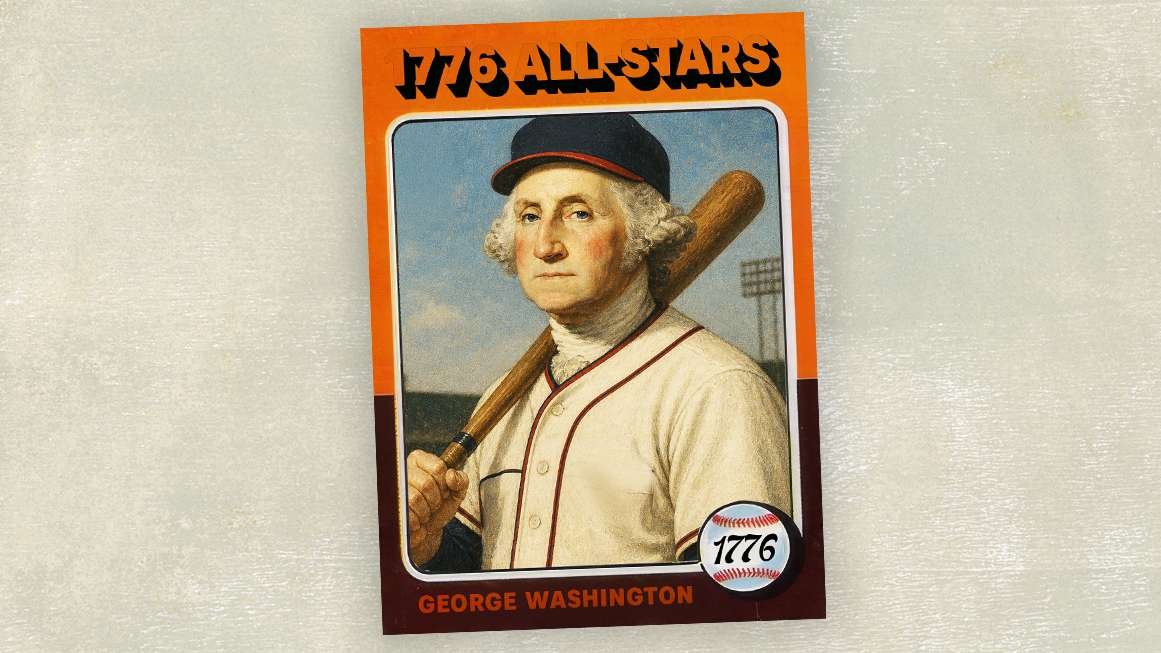
1776 All-Stars: George Washington Was a Model of Restraint
Share
Facebook Twitter Pinterest Email Copy Link

Listen to the article

0:00
0:00

Key Takeaways

Playback Speed

Select a Voice

This is part of 1776 All-Stars, a series about Reason‘s favorite American Founders. Read more here.

Joanna Andreasson

In the final days of the American Revolution, Continental Army soldiers gathered in Newburgh, New York, to demand that Congress fund their back pay and promised pensions. Anonymous letters circulating among the troops suggested that they might refuse to disband, and might even overthrow Congress, if their benefits weren’t forthcoming.

Some of the generals and politicians egging the soldiers on hoped that George Washington would take up his men’s cause and in doing so replace a weak Congress with a powerful new federal government. Instead, Washington ended the mutiny with a few words and some brilliant political showmanship.

In the middle of an address to the restive soldiers in which he urged them to respect Congress, the aged general conspicuously reached into his pocket for his glasses.

“Gentlemen, you will permit me to put on my spectacles, for I have not only grown gray but almost blind in the service of my country,” he said to the assembled soldiers. There wasn’t a dry eye left in the house after that.

The so-called Newburgh conspiracy collapsed instantly. American history did not begin with a military coup; instead, Washington gave the new nation a powerful image of republican self-restraint and a tradition of military submission to civilian authority.

That’s a lot to accomplish just by putting on one’s glasses.

Libertarians can certainly find much to criticize in George Washington. At the beginning of the War of Independence, some wanted to use voluntary militias to fight the redcoats. Washington demanded instead that we stand up a European-style army, which in turn necessitated European-style martial discipline, taxes, and inflation. After the war, he agitated for replacing the decentralized government established by the Articles of Confederation with a stronger federal government with its own robust powers to tax. As the first president under the new Constitution, Washington was hardly a small-government man. He supported a permanent standing army and put down a tax revolt at the point of a sword.

Despite all that, the highlights of Washington’s military and political career show him time and again walking away from power when he had every opportunity to seize or retain it. The Newburgh conspiracy is a prime example.

Washington sympathized with his soldiers’ demands. But he could not abide the mutineers’ call to “never sheath your sword…until you have obtained full and ample justice.” Instead, he impressed upon the troops the necessity of trusting the slow, frustrating process of representative government.

“Like all other large bodies, where there is a variety of different interests to reconcile, [Congress’] deliberations are slow,” he told the soldiers. “Why then should we distrust them? And, in consequence of that distrust, adopt measures which may cast a shade over that glory which has been so justly acquired.”

Washington continued to defer to Congress as president, even when it dawdled on funding the canals and national university he favored. “Motives of delicacy,” he said, prevented him from influencing the legislative process too much.

And then, after two terms in office, Washington retired, although he easily could have stayed in office until death and set the horrible precedent of a lifetime presidency.

Washington’s restraint is remarkable when compared to the conduct of other revolutionary leaders. It’s a lot easier to try to take the path of Cromwell or Napoleon.

It’s remarkable too when considered in light of Washington’s own ambitious character. You don’t go from a member of the modest gentry on the imperial periphery to the richest, most powerful man in the continent-sized country you helped found without some drive.

Nor was the man afraid of a little self-promotion. When the Second Continental Congress convened, Washington made sure to show up in his militia uniform to provide a not-so-subtle hint about who he thought should be in charge of a new continental army.

Washington was nevertheless willing to sacrifice his ego to preserve the proper functioning of representative government and the natural rights that it protected.

This attitude feels particularly alien here in 2026. Neither the current occupant of the White House nor the “no justice, no peace” crowd protesting him seems willing to sacrifice any short-term partisan advantage, even if that comes with serious long-term costs. The president is no longer a humble civil servant but the center of our political system.

But 250 years on, we still live in an America where the military listens dutifully to presidents who come and go every four to eight years. That fact suggests the best parts of Washington’s legacy are also the most enduring.

1776 All-Stars, a series about Reason‘s favorite American Founders:

Read the full article here

Fact Checker

Verify the accuracy of this article using AI-powered analysis and real-time sources.

Get Your Fact Check Report

Enter your email to receive detailed fact-checking analysis

5 free reports remaining

Continue with Full Access

You've used your 5 free reports. Sign up for unlimited access!

Already have an account? Sign in here

#FreePress #MediaAccountability #PoliticalCoverage #PoliticalDebate #PublicOpinion
Share. Facebook Twitter Pinterest LinkedIn Tumblr Email Telegram Copy Link
News Room
  • Website
  • Facebook
  • X (Twitter)
  • Instagram
  • LinkedIn

The FSNN News Room is the voice of our in-house journalists, editors, and researchers. We deliver timely, unbiased reporting at the crossroads of finance, cryptocurrency, and global politics, providing clear, fact-driven analysis free from agendas.

Related Articles

Media & Culture

Today in Supreme Court History: July 4, 1776

55 minutes ago
Media & Culture

Brickbats: July 2026

3 hours ago
Media & Culture

Judge’s Conclusions About Risks of Identification for ICE Officers

10 hours ago
Media & Culture

Virginia Law Banning Law Enforcement Officer Masks Blocked as to ICE

11 hours ago
Media & Culture

No One Can Control the Future

12 hours ago
Media & Culture

The Conservative Anarchism of Dwight Macdonald

13 hours ago
Add A Comment
Leave A Reply Cancel Reply

Editors Picks

Revolut Notifies Customers of USDT Delisting

15 minutes ago

Today in Supreme Court History: July 4, 1776

55 minutes ago

1776 All-Stars: George Washington Was a Model of Restraint

2 hours ago

Brickbats: July 2026

3 hours ago
Latest Posts

Tim Draper Denies Moving BTC After Coinbase Transfer Claim

3 hours ago

XRP price jumps 8%, Ripple-linked token may provide great risk-reward at these levels

4 hours ago

Bitcoin’s next parabolic run is coming. But there’s a $1 trillion catch

5 hours ago

Subscribe to News

Get the latest news and updates directly to your inbox.

At FSNN – Free Speech News Network, we deliver unfiltered reporting and in-depth analysis on the stories that matter most. From breaking headlines to global perspectives, our mission is to keep you informed, empowered, and connected.

FSNN.net is owned and operated by GlobalBoost Media
, an independent media organization dedicated to advancing transparency, free expression, and factual journalism across the digital landscape.

Facebook X (Twitter) Discord Telegram
Latest News

UK’s bold new crypto rules promise to unlock global trading, but huge compliance hurdles still threaten the rollout

13 minutes ago

Revolut Notifies Customers of USDT Delisting

15 minutes ago

Today in Supreme Court History: July 4, 1776

55 minutes ago

Subscribe to Updates

Get the latest news and updates directly to your inbox.

© 2026 GlobalBoost Media. All Rights Reserved.
  • Privacy Policy
  • Terms of Service
  • Our Authors
  • Contact

Type above and press Enter to search. Press Esc to cancel.

🍪

Cookies

We and our selected partners wish to use cookies to collect information about you for functional purposes and statistical marketing. You may not give us your consent for certain purposes by selecting an option and you can withdraw your consent at any time via the cookie icon.

Cookie Preferences

Manage Cookies

Cookies are small text that can be used by websites to make the user experience more efficient. The law states that we may store cookies on your device if they are strictly necessary for the operation of this site. For all other types of cookies, we need your permission. This site uses various types of cookies. Some cookies are placed by third party services that appear on our pages.

Your permission applies to the following domains:

  • https://fsnn.net
Necessary
Necessary cookies help make a website usable by enabling basic functions like page navigation and access to secure areas of the website. The website cannot function properly without these cookies.
Statistic
Statistic cookies help website owners to understand how visitors interact with websites by collecting and reporting information anonymously.
Preferences
Preference cookies enable a website to remember information that changes the way the website behaves or looks, like your preferred language or the region that you are in.
Marketing
Marketing cookies are used to track visitors across websites. The intention is to display ads that are relevant and engaging for the individual user and thereby more valuable for publishers and third party advertisers.