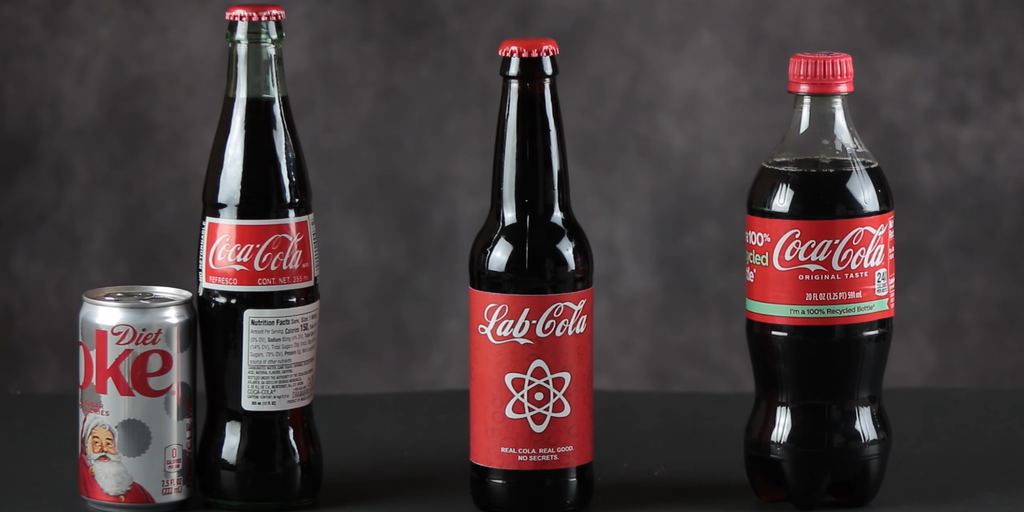
A YouTuber claims to have reverse-engineered Coca-Cola’s closely guarded recipe using mass spectrometry, taste testing and a year of trial-and-error, producing a near-identical clone.
The analysis suggests more than 99% of Coke’s composition is sugar, caffeine and acid, with the long-mythologized “secret formula” accounting for less than 1% of the drink by weight.
The findings undercut decades of brand mystique around Coca-Cola’s vault-guarded recipe, highlighting how modern lab tools can replicate proprietary flavors without infringing trademarks.
Coca-Cola keeps its secret formula locked inside a 10-foot vault at the World of Coca-Cola museum in Atlanta, complete with a keypad and hand-print scanner.
The company has spent 139 years cultivating the mystique, claiming only two employees know the full recipe at any given time.
YouTuber LabCoatz just blew past all that theater with some special hardware and about a year of obsessive testing.
The 25-minute video dropped January 9 and has already racked up 2.8 million views. In it, LabCoatz walks through his entire reverse-engineering process: taste tests, spreadsheets ranking each batch against real Coke, and finally, mass spectrometry courtesy of two YouTuber friends with actual lab equipment.
The result? A clone so close that taste testers couldn’t reliably tell it apart from the real thing. One guy gave it 9.5 out of 10. Another said he’d buy it off store shelves.
Here’s the thing that makes Coca-Cola’s whole secrecy theater kind of hilarious: over 99% of the drink’s composition is pure sugar.
A liter contains about 110 grams of sugar, 96 milligrams of caffeine, 0.64 grams of phosphoric acid, and caramel color. That’s it.
Now, the entire 139-year mystery, the vault with the hand scanner, the legend that only two employees know the formula at any time — all of that drama is about the “natural flavors” that make up less than 1% of your Coke by weight.
What’s Actually in Your Coke (Sadly, Not That Kind)
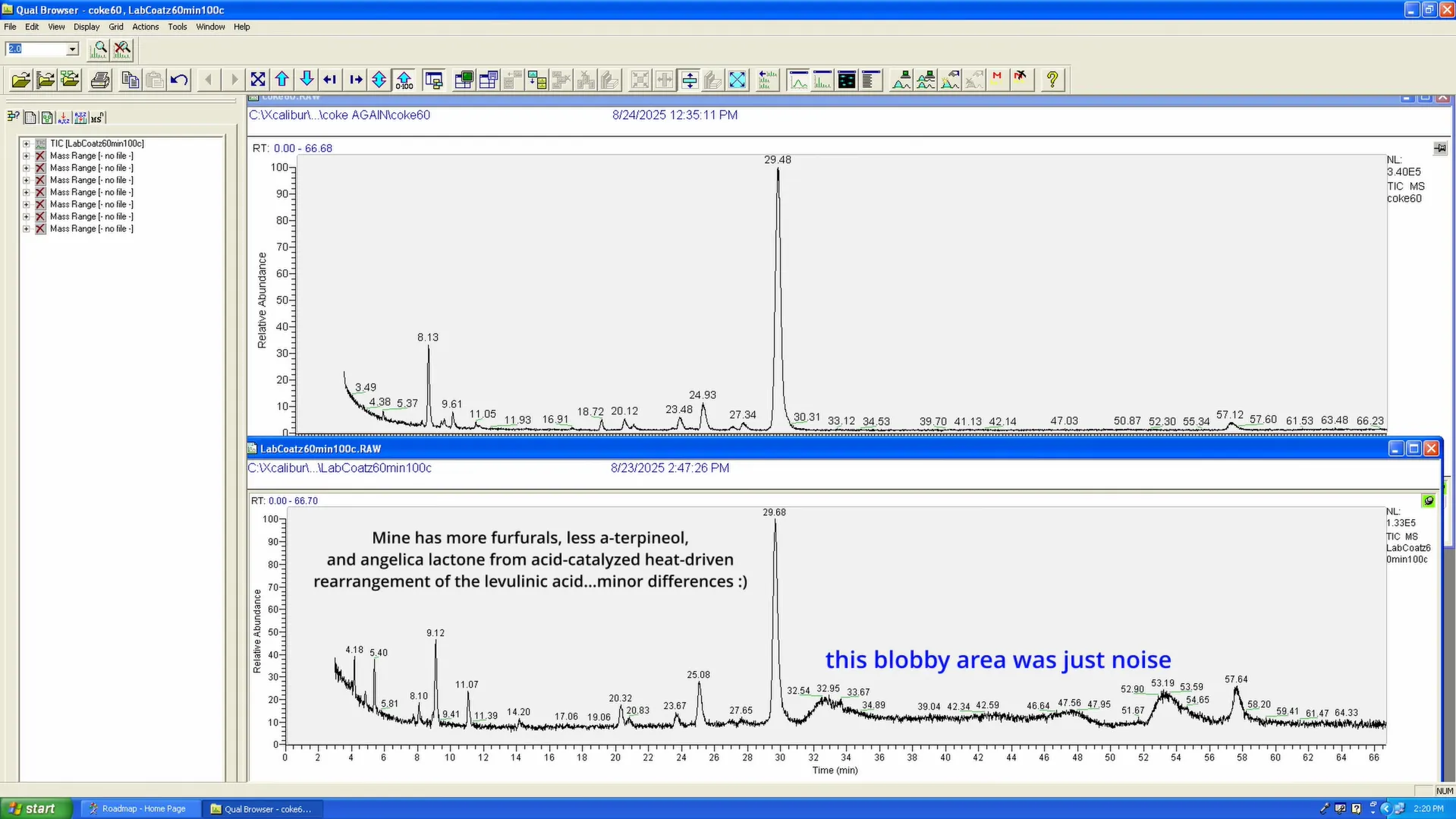
So what’s actually in that 1%? LabCoatz’s mass spectrometry breakdown found alpha-terpinene (from citrus oils), limonene, cinnamaldehyde (cinnamon), sabinene and cedrene (nutmeg), acetic acid (vinegar) and fenchol (whatever that is). Basically a bunch of essential oils and other chemicals.
For those curious coke heads, this is the exact recipe. Believe it or not everything you need can be found online.
Image: Labcoatz via YouTube
And yes, the legend is true—kind of. Real Coca-Cola does use coca leaves, but no cocaine is involved in the process—you’re probably just addicted to sugar.
The Stepan Company in New Jersey is one of the only American companies licensed to work with coca, extracting the cocaine for pharmaceutical use and selling the “decocainized” leaf extract to Coca-Cola. Before you get too excited: no, you can’t buy this stuff. LabCoatz tried. His order from a “definitely not sketchy Peruvian website” got seized at the border. So he had to reverse-engineer around it.
The breakthrough came from an unexpected place: wine tannins. Coca leaf extract is basically a tea plant, and teas contain tannins, dry, astringent compounds that mask sweetness and add that fresh quality people associate with Coke.
In the video, he explains why this is key to differentiating Coca-Cola from other sweeter products, such as Pepsi.
Since tannins are nonvolatile, they don’t show up on gas-based mass spectrometry, which is why LabCoatz missed them for months. Once he added wine tannins (sold for winemaking), the mass spectrum of his replica became nearly identical to the real thing. The flavor snapped into place.
In terms of concentrations, the product is pretty much a twin of the original. The DIY Coke and the ultrasecret real Coke have extremely similar chromatography results—meaning, the molecular composition is pretty much the same.
Image: Labcoatz
The final recipe calls for lemon oil, lime oil, a tiny bit of orange, tea tree oil (standing in for the coca freshness), cassia cinnamon, nutmeg, coriander, and fenchol.
Age the mixture, dilute with food-grade alcohol, and you’ve got the legendary “7X flavoring” that Coca-Cola’s mythology centers on.
A secondary water-based solution adds the vinegar, caffeine, glycerin for mouthfeel, phosphoric acid, wine tannins, vanilla, and caramel color. Heat it, mix with carbonated water, and refrigerate overnight.
Of course, watch the video for full details.
DIY Coke: Cheap to Make, Expensive to Start, Legal to Share
Can you actually make this at home? Technically yes. But for a bored DIY curious, the “technically” weighs more than the “yes”: you need very precise equipment like a precision scale, micro pipettes, glass labware (phosphoric acid eats through metal), and a stockpile of essential oils.
The startup cost is steep, and it requires some knowledge. But once you have everything, each liter costs pennies. The flavor concentrate alone makes enough for 5,000 liters of soda.
LabCoatz burned through two SodaStreams over the course of the project, which feels like a badge of honor.
Why hasn’t Coca-Cola just patented the recipe?
Because patents require you to describe exactly what you’re patenting. Filing one would mean publishing the formula.
Instead, the company ships unlabeled ingredients from different facilities, keeping curious eyes from knowing what is really going on.
It’s a strategy that works great until someone with a mass spectrometer decides to spend a year figuring it out. And since LabCoatz isn’t trying to sell his clone under the Coca-Cola name, he hasn’t broken any laws.
The vault in Atlanta, by the way, was moved there in 2011 after sitting in a SunTrust Bank for 86 years.
The whole thing is marketing theater. The recipe’s mystique adds to the brand. But mystique doesn’t survive a mass spectrometer and a determined YouTuber with a spreadsheet ranking each batch’s taste against the original.
LabCoatz burned through two SodaStreams over the course of the project. The payoff: a recipe that regular Coke drinkers struggled to distinguish from the real thing.
Generally Intelligent Newsletter
A weekly AI journey narrated by Gen, a generative AI model.
The FSNN News Room is the voice of our in-house journalists, editors, and researchers. We deliver timely, unbiased reporting at the crossroads of finance, cryptocurrency, and global politics, providing clear, fact-driven analysis free from agendas.
We and our selected partners wish to use cookies to collect information about you for functional purposes and statistical marketing. You may not give us your consent for certain purposes by selecting an option and you can withdraw your consent at any time via the cookie icon.
Cookies are small text that can be used by websites to make the user experience more efficient. The law states that we may store cookies on your device if they are strictly necessary for the operation of this site. For all other types of cookies, we need your permission. This site uses various types of cookies. Some cookies are placed by third party services that appear on our pages.
Your permission applies to the following domains:
https://fsnn.net
Necessary
Necessary cookies help make a website usable by enabling basic functions like page navigation and access to secure areas of the website. The website cannot function properly without these cookies.
Statistic
Statistic cookies help website owners to understand how visitors interact with websites by collecting and reporting information anonymously.
Preferences
Preference cookies enable a website to remember information that changes the way the website behaves or looks, like your preferred language or the region that you are in.
Marketing
Marketing cookies are used to track visitors across websites. The intention is to display ads that are relevant and engaging for the individual user and thereby more valuable for publishers and third party advertisers.


 Freedom Index