Close Menu
FSNN | Free Speech News NetworkFSNN | Free Speech News Network
  • Home
  • News
    • Politics
    • Legal & Courts
    • Tech & Big Tech
    • Campus & Education
    • Media & Culture
    • Global Free Speech
  • Opinions
    • Debates
  • Video/Live
  • Community
  • Freedom Index
  • About
    • Mission
    • Contact
    • Support
Trending

‘Whales’ are buying the dip while everyone else runs for the exits

29 minutes ago

How CoreWeave and Miners Pivoted

33 minutes ago

Indictment Over Disruption of Minneapolis Church Service Unsealed

1 hour ago
Facebook X (Twitter) Instagram
Facebook X (Twitter) Discord Telegram
FSNN | Free Speech News NetworkFSNN | Free Speech News Network
Market Data Newsletter
Saturday, January 31
  • Home
  • News
    • Politics
    • Legal & Courts
    • Tech & Big Tech
    • Campus & Education
    • Media & Culture
    • Global Free Speech
  • Opinions
    • Debates
  • Video/Live
  • Community
  • Freedom Index
  • About
    • Mission
    • Contact
    • Support
FSNN | Free Speech News NetworkFSNN | Free Speech News Network
Home»News»Media & Culture»Yale Journal on Regulation Symposium on the 20th Anniversary of Kelo v. City of New London
Media & Culture

Yale Journal on Regulation Symposium on the 20th Anniversary of Kelo v. City of New London

News RoomBy News Room1 month agoNo Comments3 Mins Read1,787 Views
Share Facebook Twitter Pinterest Copy Link LinkedIn Tumblr Email VKontakte Telegram
Yale Journal on Regulation Symposium on the 20th Anniversary of Kelo v. City of New London
Share
Facebook Twitter Pinterest Email Copy Link

Listen to the article

0:00
0:00

Key Takeaways

Playback Speed

Select a Voice

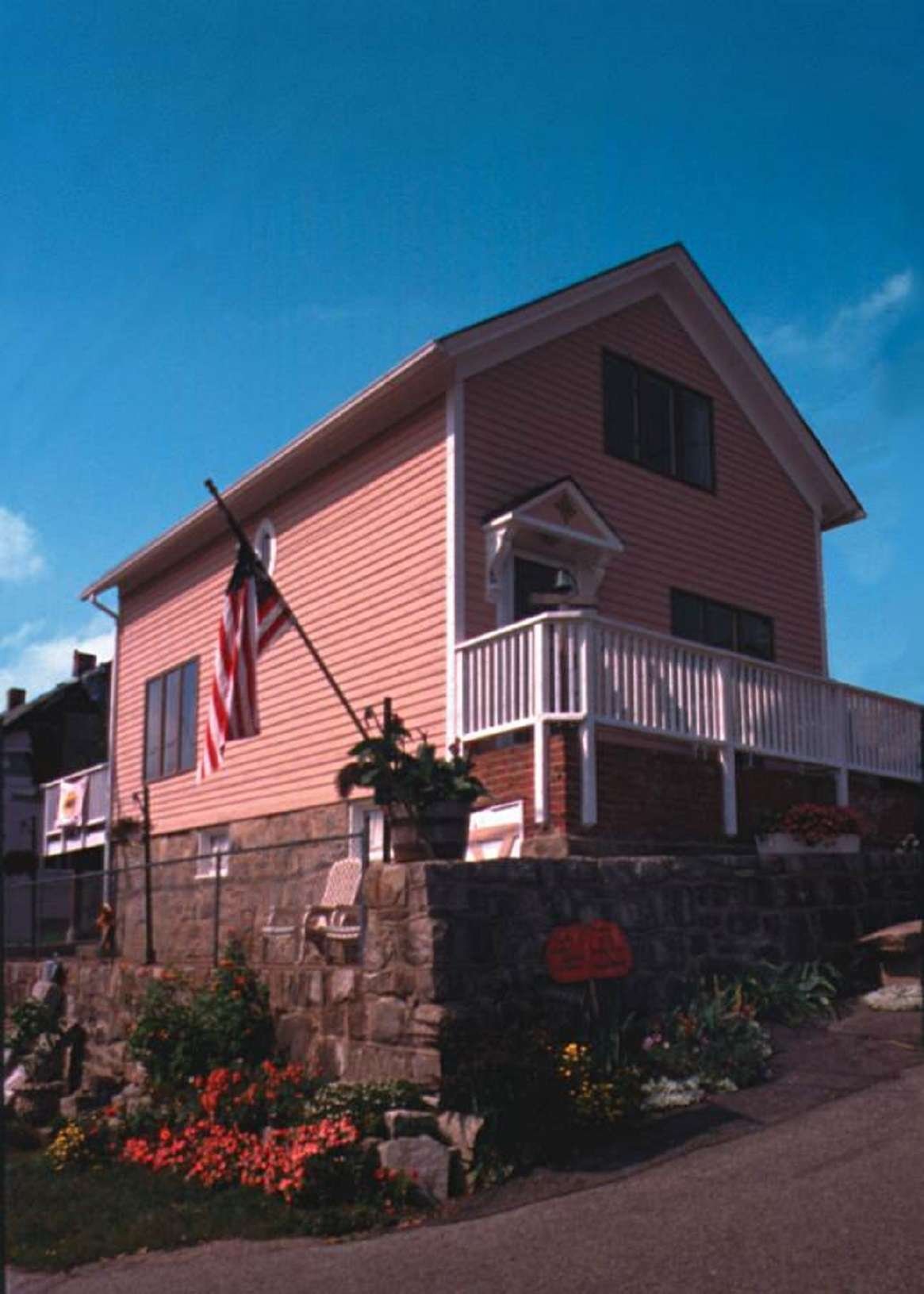
Susette Kelo’s famous “little pink house,” which became a nationally known symbol of the case that bears her name. (Institute for Justice.)


This year saw the twentieth anniversary of Kelo v. City of New London, one of the most controversial property rights decisions in the history of the Supreme Court. Although the Fifth Amendment only permits the taking of private property for “public use,” the Court ruled that the transfer of condemned land to private parties for “economic development” is permitted by the Constitution. Building on earlier decisions such as Berman v. Parker (1954), a closely divided 5-4 majority ruled that virtually any potential benefit to the public qualifies as a “public use.”

The Yale Journal on Regulation sponsored a symposium to mark the occasion, which I organized and co-edited along with legal scholars Eric Claeys (George Mason University) and David Schleicher (Yale). The articles in the symposium are now published and are available online at the journal’s website. Contributors include attorneys on both sides of the Kelo case, and leading takings and property law scholars such as Richard Epstein, Tom Merrill, Maureen Brady, Vicki Been and Yun-Chien Chang, Gerald Dickinson, and more. Eric Claeys and I also contributed articles, in addition to our role as editors.

The other editors and I have written an Introduction for the symposium, which summarizes the significance of Kelo, and provides a brief overview of the symposium articles.

My contribution to the symposium (also available on SSRN), is “Public Use, Exclusionary Zoning, and Democracy.” Here is the abstract:

The twentieth anniversary of Kelo v. City of New London is a good opportunity to consider the broader significance of public use for constitutional theory, and to explore parallels between the “public use” issue at stake in Kelo and another major issue in constitutional property rights under the Takings Clause: exclusionary zoning. This Article takes up that challenge. Part I highlights the strikingly similar history of the two issues. In both cases, there is a strong originalist argument that the policy in question—private-to-private condemnations in one case, exclusionary zoning in the other—violates the property-rights provisions of the Fifth Amendment. But, on both issues, the Supreme Court and federal courts generally have taken a highly deferential approach since the rise of Progressive and New Deal Era skepticism of property rights. Part II outlines reasons why that conventional wisdom is wrong. Judicial deference on both public use and exclusionary zoning has greatly harmed the poor and disadvantaged, particularly racial minorities. Moreover, stronger judicial review can actually further “representation-reinforcement” in two ways: by giving voice to groups excluded from the political process, and by empowering them to “vote with their feet.” Finally, Part III highlights synergies between judicial enforcement of public-use limitations on eminent domain and enforcement of restrictions on exclusionary zoning.

I have also written a second article to mark the 20th anniversary of Kelo. This one was published at the Brennan Center State Court Report,  and focuses on the massive state legislative and judicial reaction to Kelo, and the lessons which can be learned from it.


Read the full article here

Fact Checker

Verify the accuracy of this article using AI-powered analysis and real-time sources.

Get Your Fact Check Report

Enter your email to receive detailed fact-checking analysis

5 free reports remaining

Continue with Full Access

You've used your 5 free reports. Sign up for unlimited access!

Already have an account? Sign in here

#FreePress #NarrativeControl #OpenDebate #PoliticalCoverage #PoliticalNews
Share. Facebook Twitter Pinterest LinkedIn Tumblr Email Telegram Copy Link
News Room
  • Website
  • Facebook
  • X (Twitter)
  • Instagram
  • LinkedIn

The FSNN News Room is the voice of our in-house journalists, editors, and researchers. We deliver timely, unbiased reporting at the crossroads of finance, cryptocurrency, and global politics, providing clear, fact-driven analysis free from agendas.

Related Articles

Media & Culture

Indictment Over Disruption of Minneapolis Church Service Unsealed

1 hour ago
Cryptocurrency & Free Speech Finance

India Faces Pressure to Rethink Crypto Taxes Ahead of Union Budget as Trading Shifts Offshore

3 hours ago
Media & Culture

Trump’s Tariff War Is Crushing American Alcohol Makers

3 hours ago
Media & Culture

Private Suit Commandeers New Hampshire Government to Maintain Vehicle Emission Inspections

4 hours ago
Media & Culture

I Published a Fake Paper on Pregnancy Cravings for Prime Numbers

5 hours ago
Media & Culture

Hawaii Deceptive Election-Related Deepfake Disclaimer Requirement Struck Down,

6 hours ago
Add A Comment

Comments are closed.

Editors Picks

How CoreWeave and Miners Pivoted

33 minutes ago

Indictment Over Disruption of Minneapolis Church Service Unsealed

1 hour ago

Bitcoin breaks key support level as Glassnode warns of further price breakdown

1 hour ago

There Is No Trust In DeFi Without Proper Risk Management

2 hours ago
Latest Posts

The market for tokenized equities has exploded by 2,800% in a single year

3 hours ago

IPOs, Venture Rounds and On-Chain Credit

3 hours ago

India Faces Pressure to Rethink Crypto Taxes Ahead of Union Budget as Trading Shifts Offshore

3 hours ago

Subscribe to News

Get the latest news and updates directly to your inbox.

At FSNN – Free Speech News Network, we deliver unfiltered reporting and in-depth analysis on the stories that matter most. From breaking headlines to global perspectives, our mission is to keep you informed, empowered, and connected.

FSNN.net is owned and operated by GlobalBoost Media
, an independent media organization dedicated to advancing transparency, free expression, and factual journalism across the digital landscape.

Facebook X (Twitter) Discord Telegram
Latest News

‘Whales’ are buying the dip while everyone else runs for the exits

29 minutes ago

How CoreWeave and Miners Pivoted

33 minutes ago

Indictment Over Disruption of Minneapolis Church Service Unsealed

1 hour ago

Subscribe to Updates

Get the latest news and updates directly to your inbox.

© 2026 GlobalBoost Media. All Rights Reserved.
  • Privacy Policy
  • Terms of Service
  • Our Authors
  • Contact

Type above and press Enter to search. Press Esc to cancel.

🍪

Cookies

We and our selected partners wish to use cookies to collect information about you for functional purposes and statistical marketing. You may not give us your consent for certain purposes by selecting an option and you can withdraw your consent at any time via the cookie icon.

Cookie Preferences

Manage Cookies

Cookies are small text that can be used by websites to make the user experience more efficient. The law states that we may store cookies on your device if they are strictly necessary for the operation of this site. For all other types of cookies, we need your permission. This site uses various types of cookies. Some cookies are placed by third party services that appear on our pages.

Your permission applies to the following domains:

  • https://fsnn.net
Necessary
Necessary cookies help make a website usable by enabling basic functions like page navigation and access to secure areas of the website. The website cannot function properly without these cookies.
Statistic
Statistic cookies help website owners to understand how visitors interact with websites by collecting and reporting information anonymously.
Preferences
Preference cookies enable a website to remember information that changes the way the website behaves or looks, like your preferred language or the region that you are in.
Marketing
Marketing cookies are used to track visitors across websites. The intention is to display ads that are relevant and engaging for the individual user and thereby more valuable for publishers and third party advertisers.