

 Freedom Index
Listen to the article
A Review of Sex and Style: Literary Criticism and Gender in Early Modern England by Elizabeth Scott-Baumann, 216 pages, Princeton UP (September 2025).
The seventeenth-century English poet and playwright Aphra Behn (1640–89) was one of the first women to make a living from writing. Her life was extraordinary, although many details are obscure. We know she was born in 1640, probably the daughter of a barber in Kent, and was briefly married to a Dutch or German man whose surname she used professionally. She worked as a spy in Antwerp for Charles II following the Stuart Restoration, where she used the code name Astrea, and ran up debts when the king was slow or delinquent with payments. Back in England, she worked the London theatre circuit in a bid to pay her creditors; and her first play, a comedy entitled The Forc’d Marriage, was staged by the Duke’s Company in London in 1670. Behn’s best-known work, The Rover, a comedy set among English visitors in Naples and Madrid, had its first performance in 1677. Charles II requested a private performance and Behn wrote a sequel four years later.
None of this endeared the playwright to envious male peers, who disparaged her for carrying on with a disreputable lawyer who’d narrowly escaped being convicted of murder. It didn’t help her cause that she wrote openly about sex, and penned affectionate poems to other women, such as one entitled To the Fair Clorinda, prompting assumptions about bisexuality and lesbianism. These suspicions were further amplified by her membership in a literary circle gathered around the libertine poet John Wilmot, better known as the 2nd Earl of Rochester.
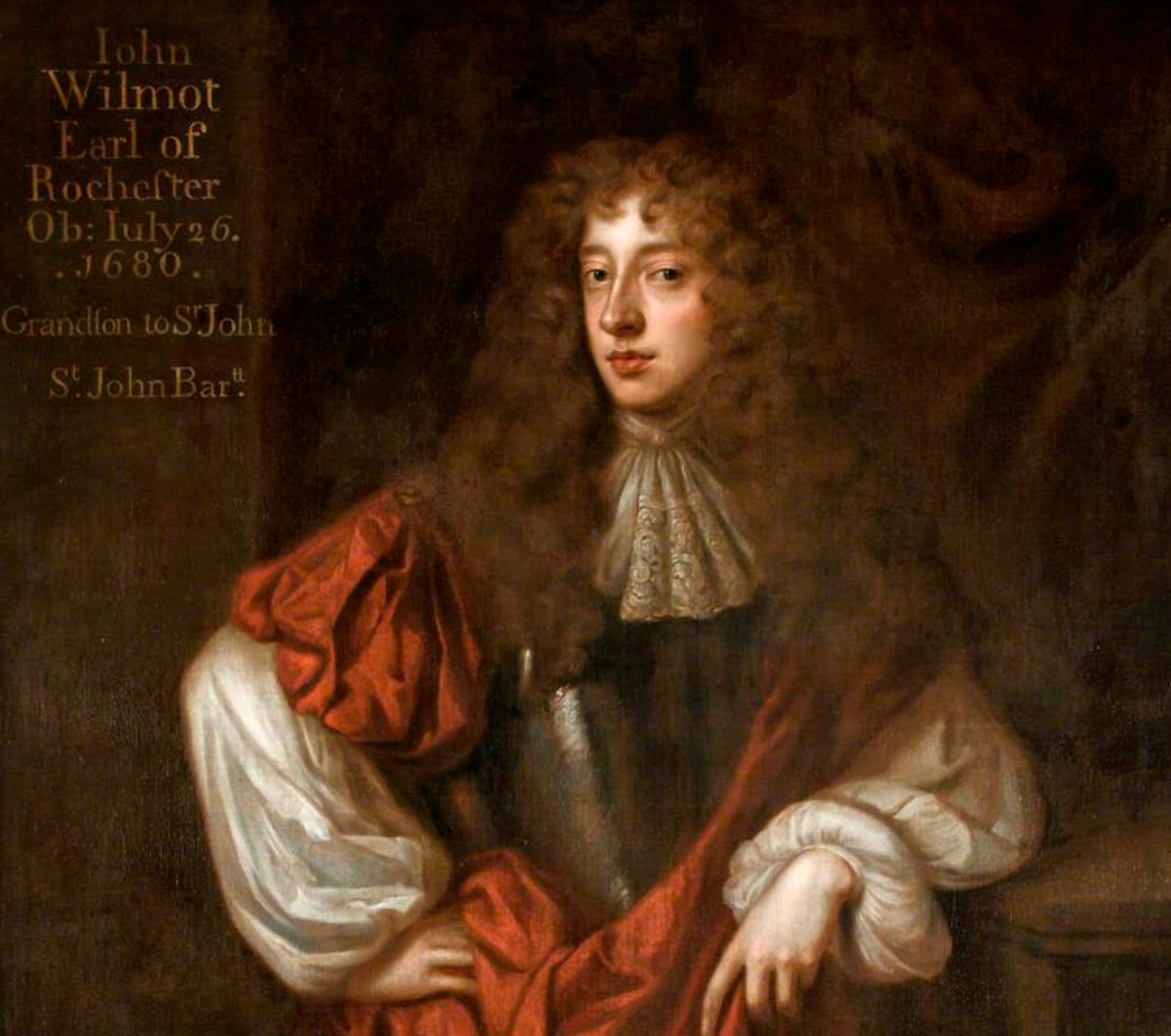
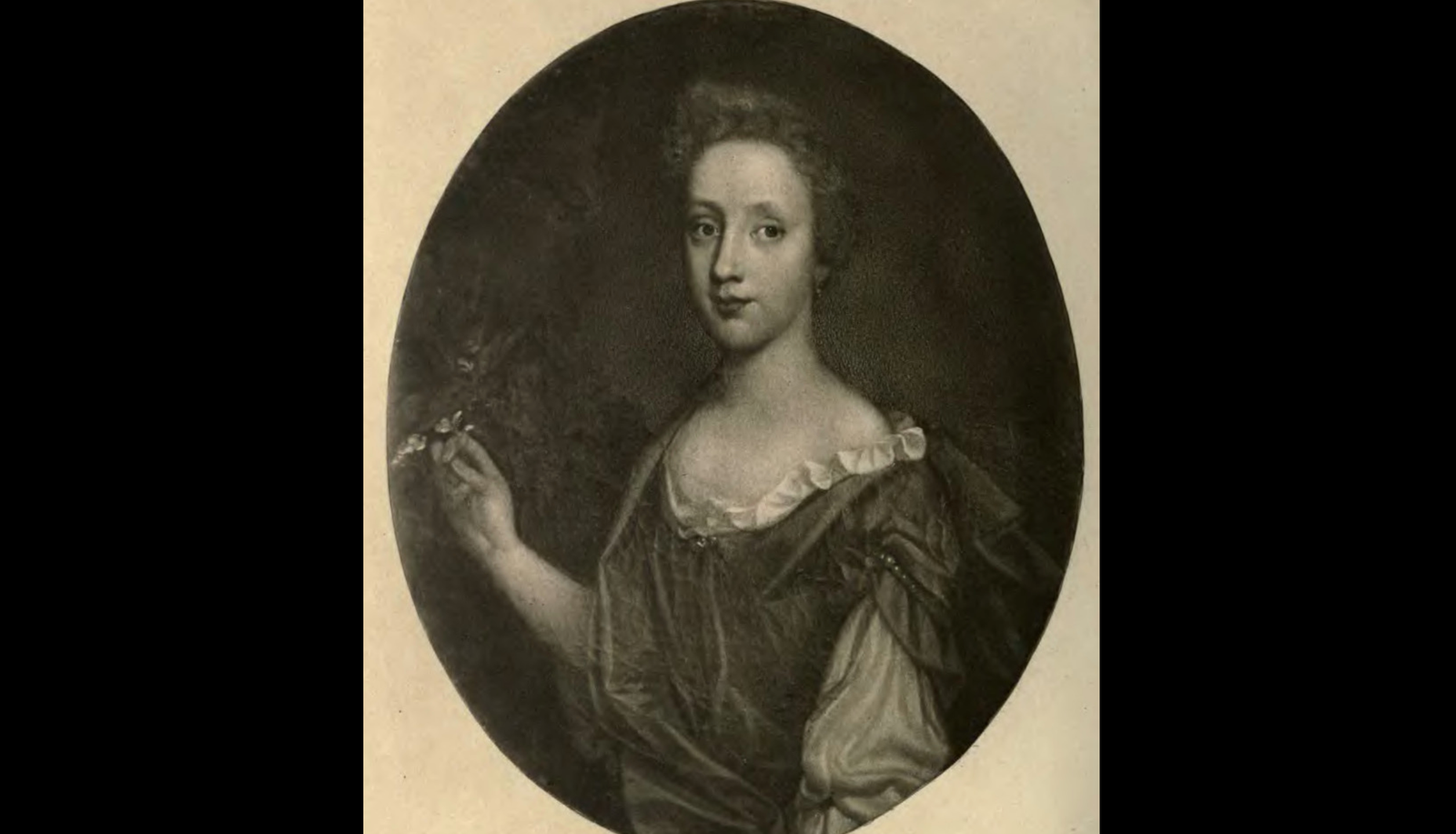
His coterie included a niece, the poet Anne Wharton, who’d been brought up in the Wilmot family home after the death of her mother. When Rochester died at age of 33 in 1680 (reportedly from a sexually transmitted disease), Wharton and Behn exchanged poems eulogising their departed mentor. They were both conscious of the way female poets were judged by male critics, and used the opportunity to try out ideas about style and its relationship to poets’ biological sex. This included a discussion of the poet Sappho and the damage done to her “honour” due to her supposed attraction to women. On this score, Wharton urged Behn to remain chaste:
Scorn meaner themes, declining low desire,
And bid your muse maintain a vestal fire.
If you do this, what glory will ensue,
To all our sex, to poesy and you?
It’s a reminder of the restrictions that burdened women writers during this period. While the florid and (famously) promiscuous Charles II had no time for the Puritanism that had marked the Commonwealth period under Oliver Cromwell, female behaviour and language remained just as rigidly policed as ever.
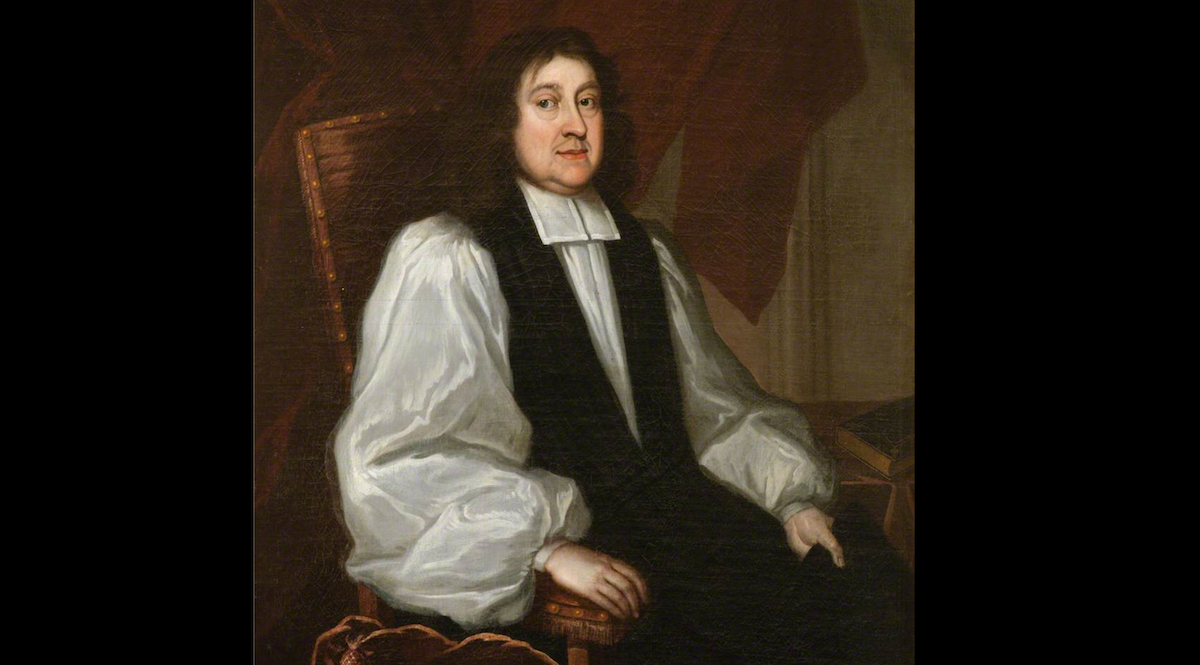
Wharton also corresponded on literary themes with the liberal historian and cleric Gilbert Burnet, future Bishop of Salisbury, who expressed horror at her association with Behn. There was an element of self-interest here: Wharton had previously written warmly about Burnet, and so he feared that her praise for this scandalous friend might damage his standing indirectly. He rebuked Wharton in a letter:
Some of Mrs Behn’s [poems] are very tender, but she is so abominably vile a woman and [mocks] not only all religion, but all virtue in so odious and obscene a manner, that I am as heartily sorry she has writ anything in your commendation, as I am glad, (I had almost said proud) that you have honoured me as you have done.
Burnet’s description of Behn’s poetry as “tender” was not the compliment it might appear, as it implied feminine weakness and susceptibility to emotion in her writing. In Wharton’s reply, she enclosed a copy of another poem addressed to Behn, which included a coded reference to her insalubrious reputation:
May yours excel the matchless Sappho’s name;
May you have all her wit, without her shame:
Tho’ she to honour gave a fatal wound,
Employ your hand to raise it from the ground.
Burnet was not mollified, however. He wrote back to Wharton, doubling down on his attack on Behn:
I am very much pleased with your verses to Mrs Behn; but there are some errors in women, that are never to be forgiven to that degree, as to allow those of a severe virtue to hold any correspondence with them.
Burnet’s disapproval notwithstanding, the exchange of poems between the two women demonstrates an intense interest in the process of writing, and an eagerness to discuss it with other female authors. In Wharton’s case, however, her poetry (and a verse drama) went unpublished in her lifetime—with the exception of an elegy upon her uncle Rochester’s death, which appeared under the pseudonym Urania. (Her literary work would finally appear in the late 1980s, more than three centuries later, when it was championed by Germaine Greer and Susan Hastings in their collection, Kissing the Rod: An Anthology of Seventeenth-Century Women’s Verse.)
It should be said that Wharton’s concern for Behn’s public standing is ironic, given that her own reputation would be destroyed after her agonising death (probably after being infected with syphilis by her husband) in 1685, at the age of 26. Wharton’s brother-in-law Goodwin Wharton subsequently made a series of lurid allegations against her in his autobiography, claiming to have had an affair with Wharton before her marriage to his brother, and accusing her of sleeping with an uncle and two other men. (In fact, it actually sounds as though Wharton was raped by a series of sexual predators, having become a victim of the libertine lifestyle pursued by aristocrats after the restoration of the monarchy had swept prim Puritans from the halls of power.)
Female poets of the seventeenth century often had to put up with stern (and hypocritical) moral judgments that had nothing to do with their literary skills. In Burnet’s case, it’s notable that he even chided Wharton for insisting on discussing literary themes when he wanted to focus on assassinating Behn’s character: “But how comes it, that write what I will to you on other subjects, I can get no answers but concerning poesy?” As Elizabeth Scott-Baumann writes in her newly published scholarly book, Sex and Style: Literary Criticism and Gender in Early Modern England, men of letters such as Burnet often regarded their female counterparts not as poets and dramatists, but as bodies—and very much sexed bodies at that.
Sex and Style
A new literary history that places women writers at the center of poetic theory and practice in English literature of the sixteenth and seventeenth centuries
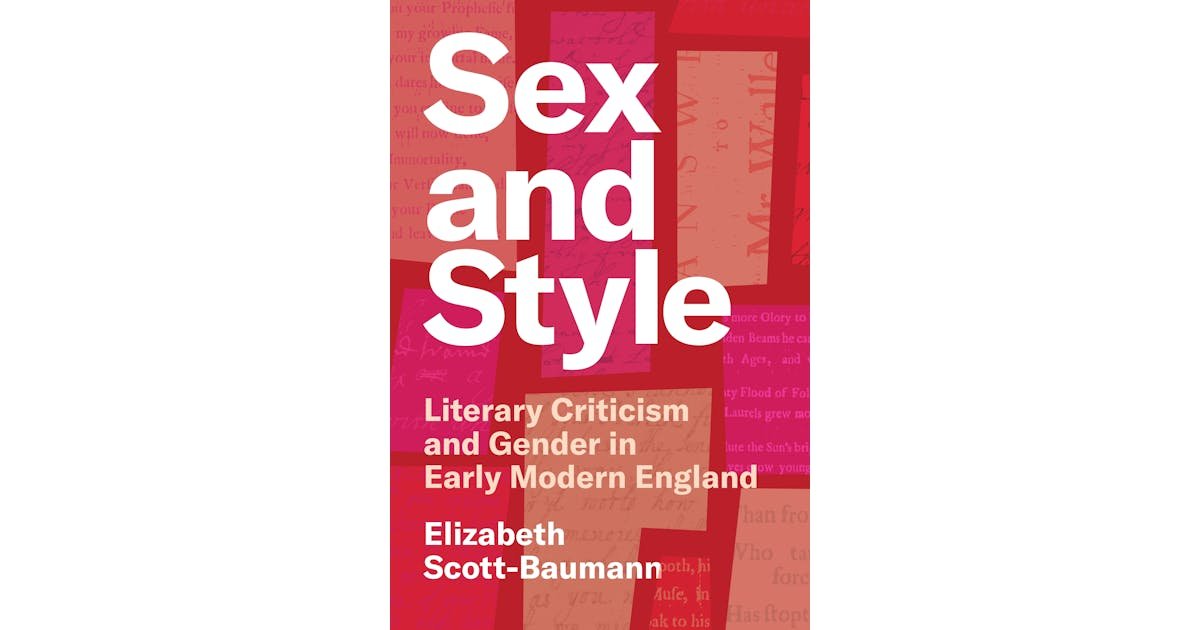
Scott-Baumann, a Reader in Early Modern Literature at King’s College London, reports that she became interested in the subject during her PhD research, when she observed the deficiencies of the period’s “all-male literary canon.” Despite the availability of a mass of previously unpublished letters and manuscripts, thanks to digitisation projects at universities, there are scant anthologies that focus on female literary critics predating 1800. Scott-Baumann’s book is intended to fill that gap, documenting the critical writing of Behn, Wharton, Margaret Cavendish, Katherine Philips, Lucy Hutchinson, and Anne Southwell, among others. Drawing on a wide variety of sources, including handwritten manuscripts and private letters, she shows us female authors confidently discussing poetic style as far back as the sixteenth century.
The years following the Restoration were a relatively productive time for female writers, thanks to the relaxation of Puritan-inspired cultural restrictions that had been imposed under Oliver Cromwell’s regime. Yet there were also new political risks to navigate, especially for those who’d published work in support of the Parliamentary (which is to say, anti-Royalist) cause during the Civil War.
Indeed, it might be argued that Scott-Baumann’s close focus on the primary texts she’s gathered leaves out important historical context, as readers are too often left in the dark about these authors’ (often extraordinary and certainly tumultuous) biographical back stories. To take one example, the above-referenced Cavendish, Duchess of Newcastle, was not only a prolific writer in diverse genres, but also an important Royalist who’d attended on Charles II’s wife, Henrietta Maria, and even fled England with her during the Queen’s exile years in France.
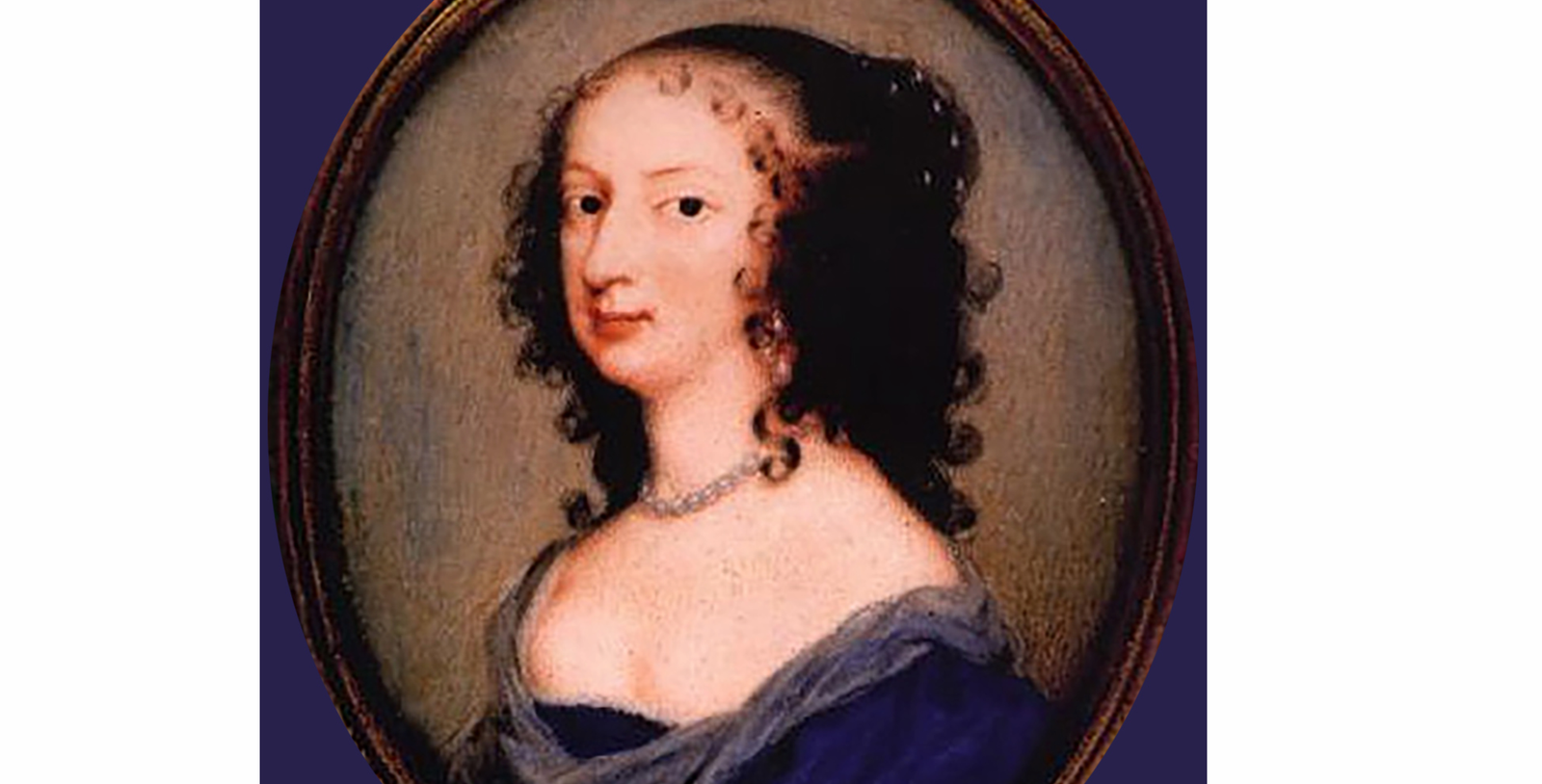
Behn, who was also a Royalist, is probably the most familiar figure to appear in Scott-Baumann’s catalogue of female poets and critics. But an earlier writer, Anne Southwell (1574–1636), had already ably skewered the double standards that Behn and her contemporaries would endure:
Dare you but write, you are Minerva’s bird,
The owl at which these bats and crows must wonder,
They’ll criticize upon the smallest word:
This wanteth number, case, that tense and gender.
Then must you frame a pitiful epistle,
To pray him be a rose was born a thistle.
This poem was probably written in the early decades of the seventeenth century, making Southwell one of the first writers known to have used the word “criticize” in the modern (explicitly negative) sense of the word. She was by then Lady Southwell, a title received when her first husband was knighted in 1603.
With rare exceptions such as Behn, little in the way of education was available to women of humble birth. Female poets tended to come from the middle class or, as with Cavendish, the aristocracy. Another example is Puritan poet Lucy Hutchinson (née Apsley, 1620–81), whose father was Lieutenant of the Tower of London. In her youth, she’d attended boarding school, allowing her to learn Latin and Greek, education that was denied to most girls, as Behn complained:
The God-like Virgil, and great Homer’s verse,
Like divine mysteries are concealed from us
We are forbid all grateful themes,
No ravishing thoughts approach our ear,
The fulsome jingles of the times,
Is all we are allowed to understand or hear.
This didn’t stop Behn (evidently something of an autodidact) from producing a loose translation of Ovid’s Epistle of Oenone to Paris, a lament by the Trojan hero’s first wife in Ovid’s poem, Heroides. This was the only contribution by a woman in an edition of Ovid’s epistles edited by the poet John Dryden in 1680. “Ovidian complaint, as authored by men, had become an elite poetic mode,” Scott-Baumann points out, making Behn’s poem “a challenge to the male ventriloquism of complaining women.”
Hutchinson (whose husband John Hutchinson was a signatory to Charles I’s death-warrant) put her classical education to good use by producing the first translation into English of De Rerum Natura (On the Nature of Things), a controversial text by the Roman philosopher Lucretius. She created a vivid picture of herself at work, saying she “turned it into English in a room where my children practised the several qualities they were taught, with their tutors, and I numbered the syllables of my translation by the threads of the canvas I wrought in.”
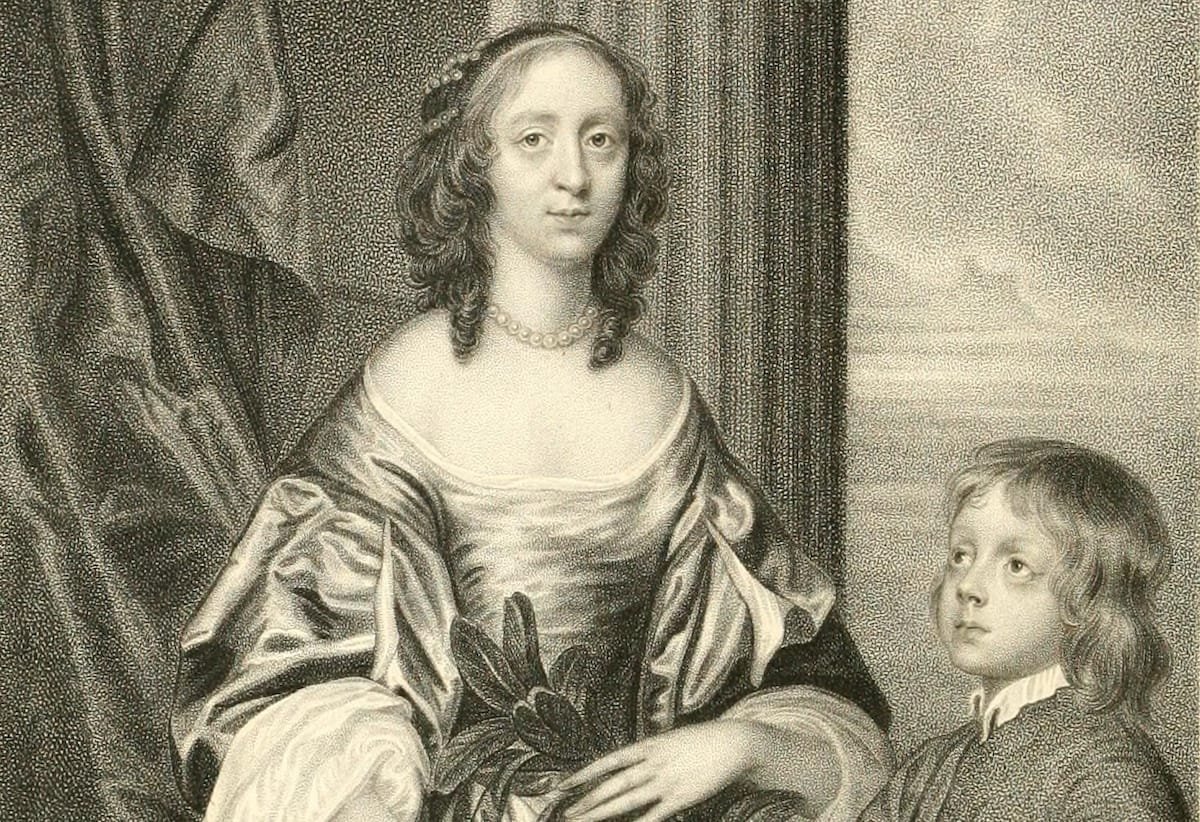
Hutchinson wrote in iambic pentameters, in which each line consists of ten syllables, but sometimes stopped short after eight. A Victorian critic, Hugh Munro, seized on her domestic descriptions, suggesting that Hutchinson had made such mistakes because she had noisy children. Munro’s assumption that the short lines were accidental, rather than a deliberate use of irregularity for effect, reflects Southwell’s complaint about the hyper-critical male approach to female-authored works. Scott-Baumann points out that many readers have noticed similar lapses in John Milton’s verse, but interpret them as examples of “sublimity.”
Hutchinson’s decision to translate Lucretius (b. 99 BC) was bold. While he was not an atheist strictly speaking, Lucretius believed that such deities that do exist are not remotely interested in human affairs. (He also theorised, correctly, that the world is made up of atoms.) This stood in pronounced contrast to Hutchinson’s own profoundly felt religious convictions, which she expressed in a long poem called Order and Disorder, the first five cantos of which were published in 1679. The work shows God very much engaged with the world, but frustrated by human sinfulness:
My ravished soul a pious ardor fires
To sing those mystic wonders it admires,
Contemplating the rise of everything
That with time’s birth flowed from th’eternal spring;
And the no less stupendous providence
By which discording natures ever since
Have kept up universal harmony,
While in one joint obedience all agree,
Performing that to which they were designed
With ready inclination; but mankind
Alone rebels against his maker’s will,
Which, though opposing, he must yet fulfill.
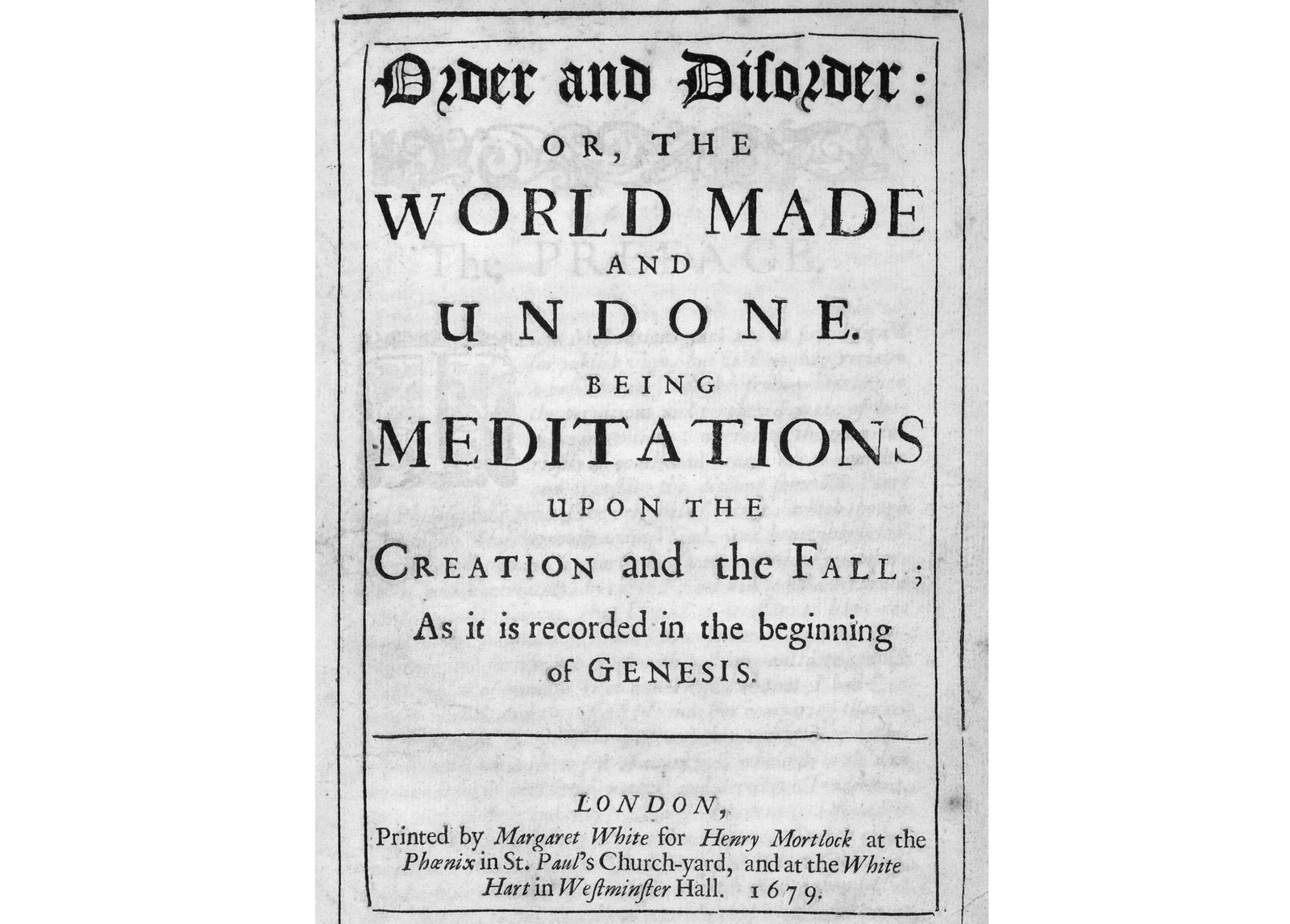
Hutchinson came to regret translating Lucretius, describing him much later as “this lunatic, who not able to dive into the true original and cause of beings and accidents, admires them who devised this casual, irrational dance of atoms.” By doing so, she was explicitly renouncing the view that the world around us exists as an accident of physics, as opposed to the planned creation of a supernatural entity.
She criticised her younger self in robust terms, claiming she’d been drawn to ancient poets and philosophers by the “vain curiosity of youth,” even though she’d known their accounts to be blasphemous. This renunciation appears in the preface to Order and Disorder, fifteen years after the death of her husband, who’d been arrested for his part in the regicide of Charles I (despite her best attempts to have him released). Like many English writers (of either sex) in the years following the Restoration, she was eager to distance herself from radical ideas that had seemed permissible during the Civil War but which now risked provoking the ire of the king.
The poet and translator Katherine Philips (née Fowler) was a passionate Royalist, despite being married to a Welsh parliamentarian, James Philips, who supported the Parliamentary cause. She attended a boarding school in Hackney, where she was an eager reader of European literature. Like many female authors of the period, she wrote about style and language, while also composing her own poetry and translating works from French. Members of her Welsh writers’ group, the Society of Friendship, took on classical-sounding pseudonyms. Philips was Orinda (more specifically, “The Matchless Orinda”), while her husband was “Antenor,” and their friend Sir Charles Cotterell, “Poliarchus.”
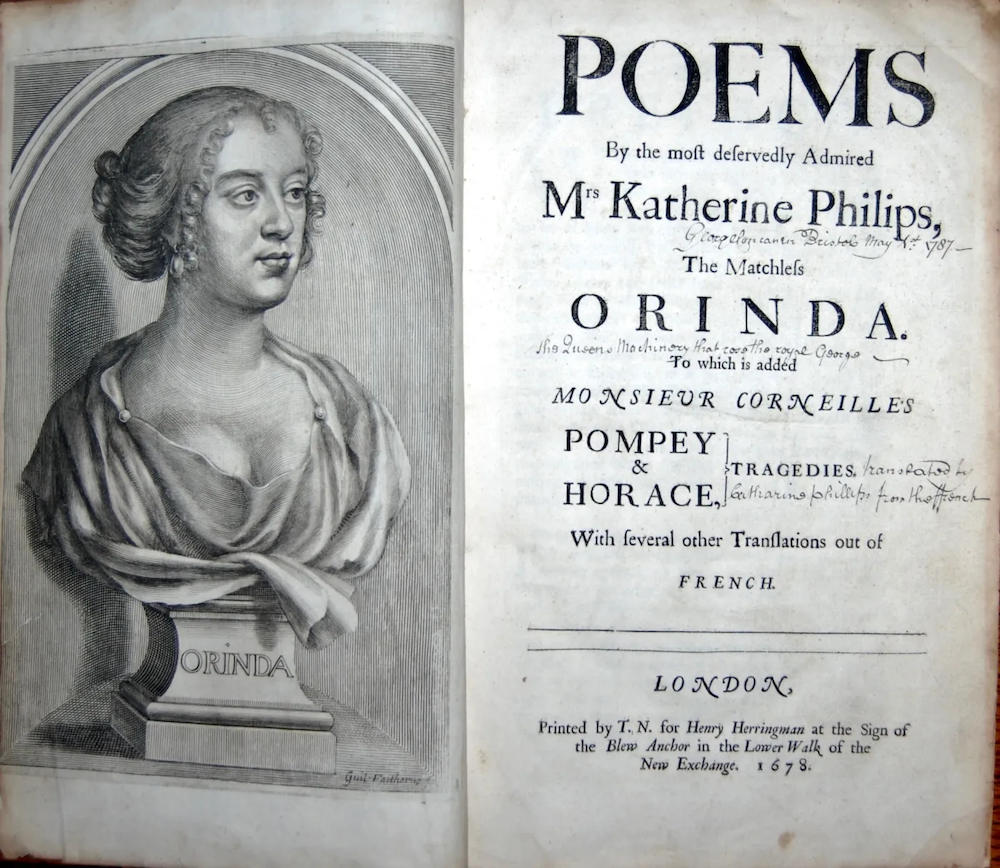
Like Behn, she was the subject of fascinated speculation about her sexual preferences, since many of her poems were written for her friends Anne Owen (Lucasia) and Mary Aubrey (Rosania). “For thou art all that I can prize/My joy, my life, my rest,” she wrote to Owen in a poem entitled To My Excellent Lucasia, on Our Friendship.
Her friend Cotterell, a Royal courtier, had lived in Antwerp and The Hague during the Interregnum, spoke several languages, and was a natural confidant for “Orinda” when she wanted to discuss her translation of Pierre Corneille’s tragedy La Mort de Pompée, a play first performed in France in 1642. In producing the first edition in English twenty years later, Philips exercised great care—so much so that she wrote to Cotterell for advice about translating a single word:
I was loath to use the word ‘Effort,’ but not having language enough to find any other rhyme without losing all the spirit and force of the next line, and knowing that it had been naturalized at least these twelve years; besides, that it was not used in that place in the French, I ventured to let it pass…
The rhyme Philips was worried about was contained in the words, “That it should Earth as well as Heav’n protect/And lending his Despair a kind Effort/It should the staggering Universe support.” (In the original: Ayant sauvé le ciel, sauvera bien la terre/Et dans son désespoir à la fin se mêlant/Pourra prêter l’épaule au monde chancelant.) By use of the word “Effort,” Philips had introduced an error according to the arcane literary standards of the era, which governed the mixing of so-called “masculine” and ”feminine” words. Words with one syllable were regarded as “masculine,” delivering rhymes with greater punch. And depending on what effect they were seeking to convey, women writers would agonise over whether a bi-syllabic word they wanted to use could be pronounced as a single syllable: “heaven” as “heav’n,” for instance.
What’s important here aren’t the obsolete rules of style at play, or the manner in which Philips broke them, but rather the fact that even female authors of the period had to tailor their work to the underlying connotation of “feminine” as weak or soft.
Philips herself disliked polysyllabic “feminine” rhyme, and said so when other women employed it—which helps explain why she was uncomfortable when she used it in her own work. Criticising a rival translation of La Mort de Pompée, Philips suggested that “feminine” rhyme was unsuitable “in an heroic poem.” (Cottrell’s reply has not survived, but Philips wrote back, thanking him for suggesting an alternative rhyme.)
Philips died of smallpox in 1664, at age 32. An authoritative edition of her poems was published three years later, in which the anonymous editor compares the impact of an earlier, pirated, and apparently crudely inaccurate edition of her work to the ravages of the disease:
But the small pox, that malicious disease… was not satisfied to be as injurious a printer of her face, as the other had been of her poems, but treated her with a more fatal cruelty than the stationer had them; for though he to her most sensible affliction surreptitiously possessed himself of a false copy, and sent those children of her fancy into the world, so martyred, that they were more unlike themselves than she could have been made had she escaped; that murderous tyrant, with greater barbarity seized unexpectedly upon her, the true original, and to the much juster affliction of all the world, violently tore her out of it, and hurried her untimely to her grave.
It’s an extraordinary passage, blurring “the line between body and page,” in Scott-Baumann’s phrase: women and texts are interchangeable, the pirated text disfiguring Philips’s poems as the disease ravaged her face.
Philips’s older contemporary Margaret Cavendish was more fortunate, living to the age of 49 or 50, and being honoured with a monument, designed by the celebrated sculptor Grinling Gibbons, in Westminster Abbey. Her husband, the Duke of Newcastle, was a friend of the playwright Ben Jonson, whose enthusiasm for classical authors such as Plutarch and Martial was common among literary men of the period. Cavendish was sceptical, however, scorning Greek and Latin texts as “dead ashes without fire.” She lambasted peers who had “an obstinate belief that none but the ancients were masters of knowledge, and their works the only guides of truth, which is as ridiculous as to think that Nature cannot or will not make anything equal to her former works.”
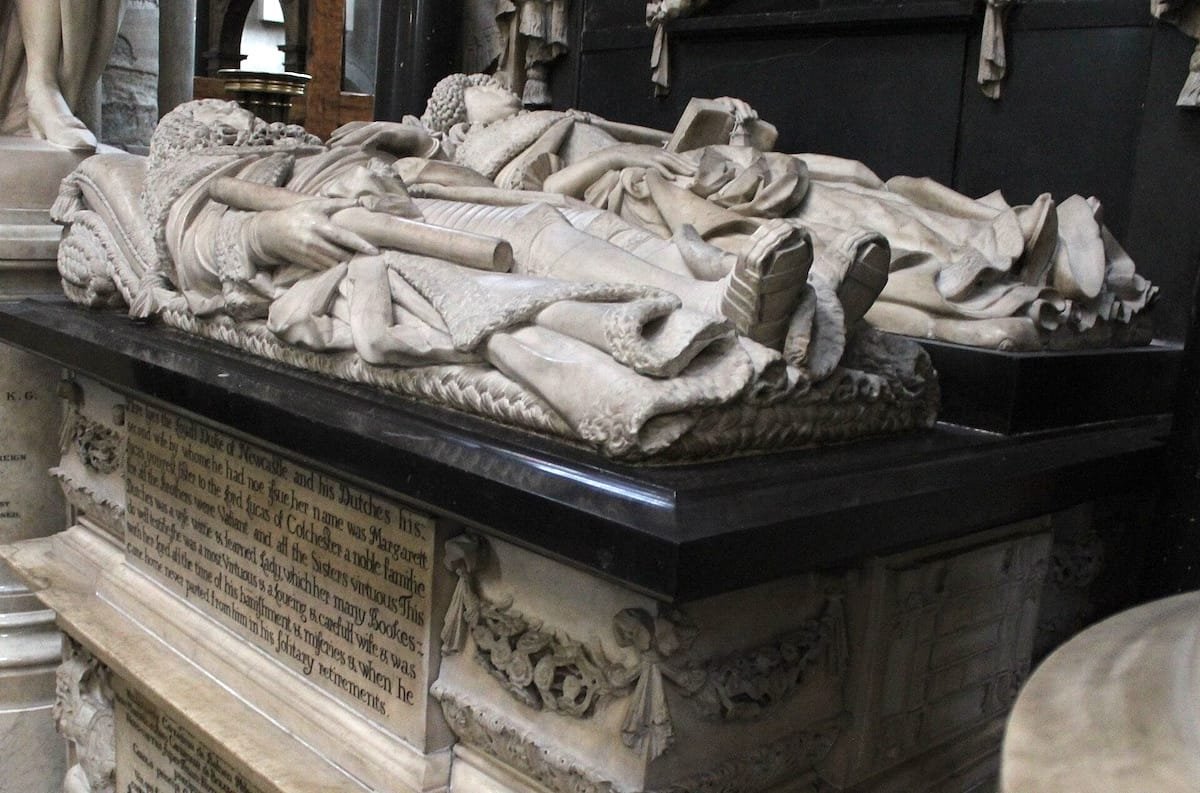
Cavendish’s challenge to the importance of the classics was encouraging to female contemporaries who could read them only in translation—although she made a puzzling (to modern eyes) exception for the poet Ovid. In a satirical poem, The Purchase of Poets, she imagines male poets from the ancient world competing with each other for Fame, personified as a woman, in what Scott-Baumann calls “a squabbling marketplace of male egos.” Homer, Virgil, and Ovid call on fictional or historical characters to speak on their behalf, with the latter lighting on the mathematician Pythagoras:
Pythagoras for Ovid thought it meet
To speak, whose numbers smooth, and words were sweet.
Ladies, said he, are for varieties,
And change as oft, as he makes beasts, birds and trees:
As many several shapes, and forms they take,
Some goddesses, and some do devils make.
Then let fair Fame sweet Ovid’s lady be,
Since change doth please that sex, none’s fit but he.
The final line reflects a popular view in Cavendish’s time, characterising women as fickle and changeable, and links it to the shape-shifting in Ovid’s celebrated poem Metamorphoses. It’s a piece of stereotyping that lands awkwardly in light of our twenty-first-century understanding of the artificially constructed nature of femininity (while some modern feminists regard Ovid’s poem Ars Amatoria as close to rape apology). It’s a reminder that ground-breaking women such as Cavendish do sometimes turn out to have had toe-curling attitudes toward other women. And in a passage from the preface to her Poems and Fancies, she uses a sexist argument to make the case for the existence of a specifically female form of creativity:
Poetry, which is built upon fancy, women may claim, as a work belonging most properly to themselves: for I have observed that their brains work usually in a fantastical motion: as in their several, and various dresses, in their many and singular choice of clothes, and ribbons, and the like; in their curious shadowing, and mixing of colours, in their wrought works, and divers sorts of stitches they employ their needle, and many curious things they make, as flowers, boxes, baskets with beads, shells, silk, straw or anything else.
Cavendish herself was intensely interested in fashion, although it is quite a leap from aristocratic women amusing themselves by adding decorative finishes to their dresses, to the imaginative effort required to produce poetry and fiction. Cavendish’s novel The Blazing World, for instance, is considered one of the earliest examples of science fiction, predating Mary Shelley’s Frankenstein by more than a century and a half. The female protagonist of that book survives a kidnapping plot that brings her to the North Pole, where she finds the entrance to a parallel universe whose half-human inhabitants worship her as a goddess while she creates a new religion. There is scant mention of flowers, boxes, baskets with beads, shells, silk, and straw.
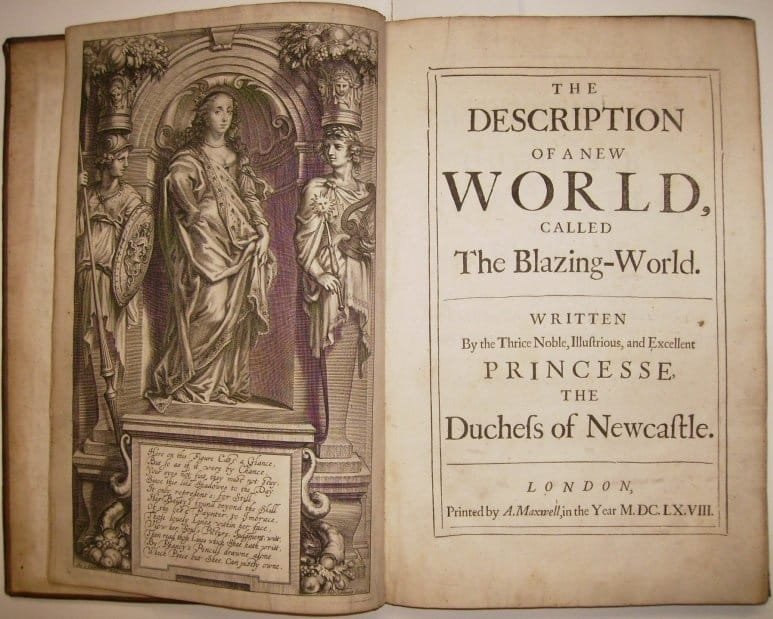
Cavendish divided opinion in the seventeenth century, with the famous diarist Samuel Pepys dismissing her as “a mad, conceited, ridiculous woman.” Even one of her admirers, the philosopher Walter Charleton, addressed her in ambiguous terms: “You are the first great lady that ever wrote so much and so much of your own: and, for ought we can divine, you will also be the last.” Whether he believed Cavendish had achieved something so singular that other female writers could not follow her example—or he wished that none would try—is unknown.
The fact remains that even an aristocrat such as Cavendish, who gave so much thought to what is now termed literary criticism (and authored what anthologists have called “the first critical essay ever to be published on Shakespeare”) fell into obscurity until the early twentieth century. Writing in The Common Reader in 1925, Virginia Woolf expresses admiration for Cavendish’s “authentic fire,” and argues that “there is something noble and Quixotic and high-spirited, as well as crack-brained and bird-witted, about her.”
Woolf also resurrects Aphra Behn in a chapter of A Room of One’s Own in 1929, writing that the playwright “proved that money could be made by writing at the sacrifice, perhaps, of certain agreeable qualities.” Thanks to Behn, Woolf continued, “writing became not merely a sign of folly and a distracted mind but was of practical importance.”
Women writers in the seventeenth century struggled under many constraints, from limited access to education, to a lack of professional opportunities, to prurient commentary upon their sex lives that often blurred the line between misogynist speculation and literary criticism. As Sex and Style shows, those who were able to stick with the craft naturally became astute critics in their own right, able to defend their use of language and metre as ably as any male poet. Many died tragically young; and even those who didn’t, such as Behn, earned barely enough to survive. Despite her prolific output—she published a work of prose fiction, Oroonoko: or the Royal Slave, less than a year before her death in 1689 at age 48—Behn’s last years were spent in poverty.
“All women together ought to let flowers fall on the tomb of Aphra Behn,” wrote Woolf of her sacrifices. “For it was she who earned them the right to speak their minds.”
Quillette invites thoughtful responses to its essays.
Selected responses are published once per week as part of a curated Letters to the Editor feature. If selected, letters appear under the contributor’s real name and may be edited for clarity and length.
To submit a letter for consideration, please email [email protected].
Read the full article here
Fact Checker
Verify the accuracy of this article using AI-powered analysis and real-time sources.