Close Menu
FSNN | Free Speech News NetworkFSNN | Free Speech News Network
  • Home
  • News
    • Politics
    • Legal & Courts
    • Tech & Big Tech
    • Campus & Education
    • Media & Culture
    • Global Free Speech
  • Opinions
    • Debates
  • Video/Live
  • Community
  • Freedom Index
  • About
    • Mission
    • Contact
    • Support
Trending

NYSE Exchanges Remove Cap Limiting Crypto Options

40 minutes ago

Bitcoin Price Slides but Holds Up Better Than Stocks as Oil Shock Continues

41 minutes ago

A Critical Review of Naoise Mac Sweeney’s New Book

2 hours ago
Facebook X (Twitter) Instagram
Facebook X (Twitter) Discord Telegram
FSNN | Free Speech News NetworkFSNN | Free Speech News Network
Market Data Newsletter
Monday, March 23
  • Home
  • News
    • Politics
    • Legal & Courts
    • Tech & Big Tech
    • Campus & Education
    • Media & Culture
    • Global Free Speech
  • Opinions
    • Debates
  • Video/Live
  • Community
  • Freedom Index
  • About
    • Mission
    • Contact
    • Support
FSNN | Free Speech News NetworkFSNN | Free Speech News Network
Home»Opinions»Debates»Why Britain Needs to Break the Silence on Islamist Extremism
Debates

Why Britain Needs to Break the Silence on Islamist Extremism

News RoomBy News Room4 months agoNo Comments4 Mins Read628 Views
Share Facebook Twitter Pinterest Copy Link LinkedIn Tumblr Email VKontakte Telegram
Why Britain Needs to Break the Silence on Islamist Extremism
Share
Facebook Twitter Pinterest Email Copy Link

Listen to the article

0:00
0:00

Key Takeaways

Playback Speed

Select a Voice

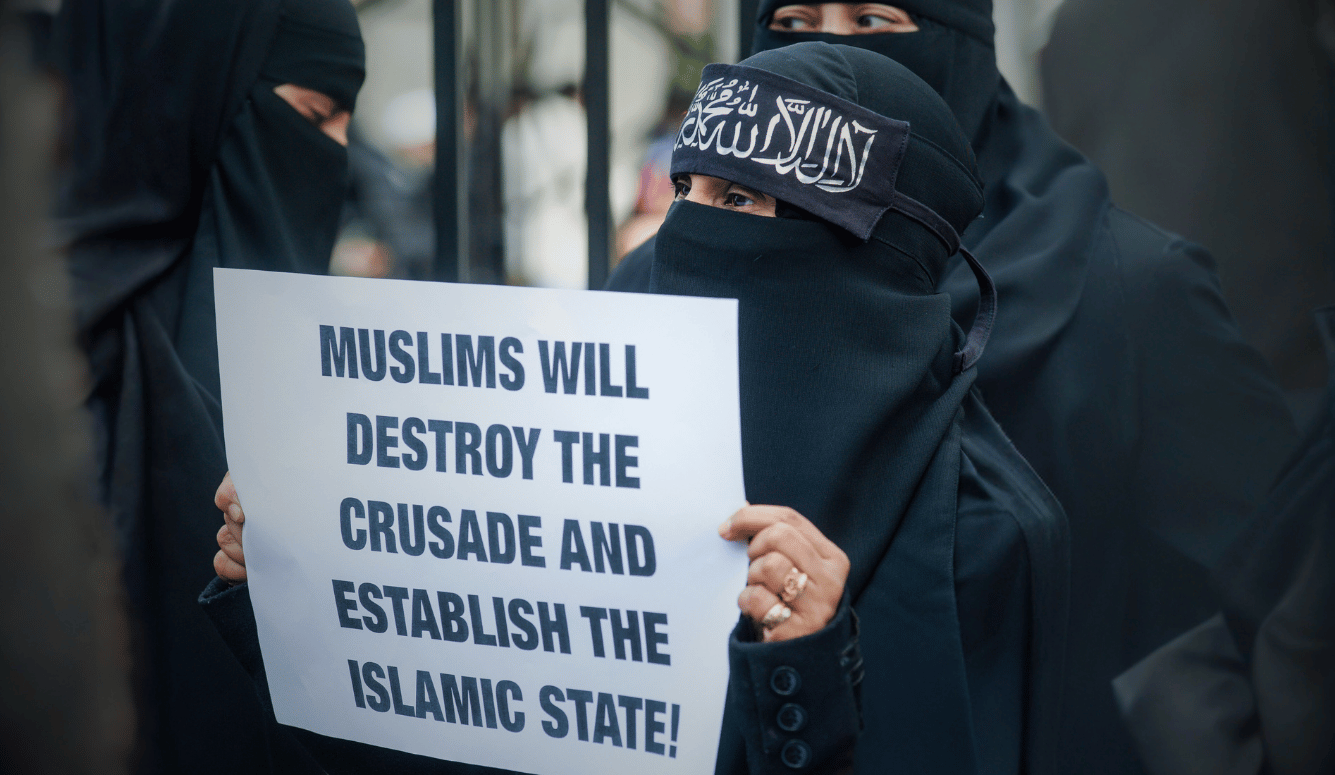
The priorities of Britain’s extremism researchers, and even those of the country’s state apparatus, do not reflect the fact that Islamism presents the greatest terror threat to the UK. Islamism is a religio-political movement that aims to reestablish a theocratic Caliphate in the modern world—a single polity encompassing all of the world’s Muslims, within which Sharia Law would be followed in all matters, and non-Muslims would be reduced to (at best) second-class citizens. This ideology began with the founding of the Muslim Brotherhood in Egypt in 1928, and it now exists in multiple variants and offshoots worldwide. Al-Qaeda, Islamic State, Boko Haram, Hamas, the Taliban, and the Shi’ite regime ruling the Islamic Republic of Iran are all overtly Islamist entities, while the governments of Turkey and Qatar might diplomatically be described as influenced by or sympathetic to Islamism.

For many Western politicians and intellectuals, criticism of Islamism is taboo, but this should not be the case. Aside from Qatar’s Al-Jazeera media network and a minority of Islamist-aligned states, the Muslim world is far more ready than the West to acknowledge the danger that Islamist movements and ideology pose. Multiple Muslim-majority states have even outlawed Islamist organisations like the Muslim Brotherhood altogether, which is now banned in Jordan, Saudi Arabia, the United Arab Emirates, and its own native Egypt, but remains free to operate throughout continental Europe (with the exception of Austria) and the English-speaking world.

Revolution in and conquest of Muslim-majority regions of the world has always been the greatest priority for Islamists—Islamic State, for example, was largely occupied with a war against its Muslim neighbours. However, they also seek dominance over Muslim minorities elsewhere in the world, and they work to infiltrate state and community institutions wherever they are able to do so. A recent report about the Muslim Brotherhood’s activities in France paints a disturbing picture of creeping totalitarianism. As the BBC reported in May:

In a copy of the report published in Le Figaro newspaper, the authors identified the Federation of Muslims of France (FMF) as the main French emanation of the historic Muslim Brotherhood, which was founded 100 years ago to promote a return to core Islamic values.

They said the FMF controlled 139 places of worship in France, with a further 68 affiliated—in all around 7% of the total. The organisation also ran some 280 associations, in sports, education, charity and other fields, as well as 21 schools.

The aim of the movement was to set up “ecosystems at local level” to “structure the lives of Muslims from birth till death.”

“[The movement’s] officials, who are hardened activists, enter into a relationship with the local authority. … Social norms—the veil, beards, dress, fasting—are gradually imposed as the ecosystem solidifies,” the authors write.

“What happens is that religious practice become[s] stricter, with a high level of girls wearing the abaya (long robe) and a massive and visible increase in the number of young girls wearing Islamic headscarves. Some are as young as five or six.”

All of the same symptoms may be observed in the UK, where Brotherhood-linked figures and organisations are also well-established in the religious and charitable sectors, maintain extensive investment and property portfolios, and provide cradle-to-grave services for many British Muslims. In 2015, a review of the Muslim Brotherhood in Britain—commissioned the previous year by then-prime minister David Cameron—found that “Muslim Brotherhood associates and affiliates here have at times had significant influence on the largest UK Muslim student organisation, national organisations which have claimed to represent Muslim communities, … charities, and some mosques.”

The report further explained:

[I]n common with the Muslim Brotherhood elsewhere, Muslim Brotherhood-related organisations and individuals in the UK have openly supported the activities of Hamas. People associated with the Muslim Brotherhood in the UK have applauded suicide bombing by Hamas, in some cases against civilians. Hamas terrorist activities have not been publicly disowned or condemned. Muslim Brotherhood organisations and associates in the UK have neither openly nor consistently refuted the literature of Brotherhood member Sayyid Qutb which is known to have inspired people (including in this country) to engage in terrorism.

Exemplifying this trend, the report added that two Brotherhood-linked organisations—the Muslim Association of Britain and the Muslim Council of Britain—had “consistently opposed programmes by successive Governments to prevent terrorism.” Yet, as recently as 2023, the Ministry of Defence was trusting the latter to endorse chaplains in the armed forces.


Read the full article here

Fact Checker

Verify the accuracy of this article using AI-powered analysis and real-time sources.

Get Your Fact Check Report

Enter your email to receive detailed fact-checking analysis

5 free reports remaining

Continue with Full Access

You've used your 5 free reports. Sign up for unlimited access!

Already have an account? Sign in here

Share. Facebook Twitter Pinterest LinkedIn Tumblr Email Telegram Copy Link
News Room
  • Website
  • Facebook
  • X (Twitter)
  • Instagram
  • LinkedIn

The FSNN News Room is the voice of our in-house journalists, editors, and researchers. We deliver timely, unbiased reporting at the crossroads of finance, cryptocurrency, and global politics, providing clear, fact-driven analysis free from agendas.

Related Articles

Cryptocurrency & Free Speech Finance

Bitcoin Price Slides but Holds Up Better Than Stocks as Oil Shock Continues

41 minutes ago
Debates

A Critical Review of Naoise Mac Sweeney’s New Book

2 hours ago
Debates

Too Vague to Restrict Immigration

4 hours ago
Cryptocurrency & Free Speech Finance

How AI Is Being Used to Clear Court Backlogs in LA

12 hours ago
Media & Culture

Today in Supreme Court History: March 22, 1957

15 hours ago
Media & Culture

What Happens If There’s a Murder in Antarctica?

16 hours ago
Add A Comment

Comments are closed.

Editors Picks

Bitcoin Price Slides but Holds Up Better Than Stocks as Oil Shock Continues

41 minutes ago

A Critical Review of Naoise Mac Sweeney’s New Book

2 hours ago

Tokenized Deposits Gain Ground as Banks Move Money Onchain

2 hours ago

Too Vague to Restrict Immigration

4 hours ago
Latest Posts

BTC Performance Driven By Individuals While Central Banks Drive Gold Price

4 hours ago

If one trader can force the outcome of a prediction market, it shouldn’t be tradable

6 hours ago

Bitcoin Returns to its 200-Week Trend Line for a Bearish Weekly Close

6 hours ago

Subscribe to News

Get the latest news and updates directly to your inbox.

At FSNN – Free Speech News Network, we deliver unfiltered reporting and in-depth analysis on the stories that matter most. From breaking headlines to global perspectives, our mission is to keep you informed, empowered, and connected.

FSNN.net is owned and operated by GlobalBoost Media
, an independent media organization dedicated to advancing transparency, free expression, and factual journalism across the digital landscape.

Facebook X (Twitter) Discord Telegram
Latest News

NYSE Exchanges Remove Cap Limiting Crypto Options

40 minutes ago

Bitcoin Price Slides but Holds Up Better Than Stocks as Oil Shock Continues

41 minutes ago

A Critical Review of Naoise Mac Sweeney’s New Book

2 hours ago

Subscribe to Updates

Get the latest news and updates directly to your inbox.

© 2026 GlobalBoost Media. All Rights Reserved.
  • Privacy Policy
  • Terms of Service
  • Our Authors
  • Contact

Type above and press Enter to search. Press Esc to cancel.

🍪

Cookies

We and our selected partners wish to use cookies to collect information about you for functional purposes and statistical marketing. You may not give us your consent for certain purposes by selecting an option and you can withdraw your consent at any time via the cookie icon.

Cookie Preferences

Manage Cookies

Cookies are small text that can be used by websites to make the user experience more efficient. The law states that we may store cookies on your device if they are strictly necessary for the operation of this site. For all other types of cookies, we need your permission. This site uses various types of cookies. Some cookies are placed by third party services that appear on our pages.

Your permission applies to the following domains:

  • https://fsnn.net
Necessary
Necessary cookies help make a website usable by enabling basic functions like page navigation and access to secure areas of the website. The website cannot function properly without these cookies.
Statistic
Statistic cookies help website owners to understand how visitors interact with websites by collecting and reporting information anonymously.
Preferences
Preference cookies enable a website to remember information that changes the way the website behaves or looks, like your preferred language or the region that you are in.
Marketing
Marketing cookies are used to track visitors across websites. The intention is to display ads that are relevant and engaging for the individual user and thereby more valuable for publishers and third party advertisers.