Close Menu
FSNN | Free Speech News NetworkFSNN | Free Speech News Network
  • Home
  • News
    • Politics
    • Legal & Courts
    • Tech & Big Tech
    • Campus & Education
    • Media & Culture
    • Global Free Speech
  • Opinions
    • Debates
  • Video/Live
  • Community
  • Freedom Index
  • About
    • Mission
    • Contact
    • Support
Trending

Vitalik Buterin Withdraws $44.7M in ETH to Support Ethereum Growth Through ‘Mild Austerity’

7 minutes ago

Judge Says ICE Violated Court Orders in 74 Cases—See Them All Here

35 minutes ago

RCFP statement on arrests of journalists Don Lemon, Georgia Fort

52 minutes ago
Facebook X (Twitter) Instagram
Facebook X (Twitter) Discord Telegram
FSNN | Free Speech News NetworkFSNN | Free Speech News Network
Market Data Newsletter
Friday, January 30
  • Home
  • News
    • Politics
    • Legal & Courts
    • Tech & Big Tech
    • Campus & Education
    • Media & Culture
    • Global Free Speech
  • Opinions
    • Debates
  • Video/Live
  • Community
  • Freedom Index
  • About
    • Mission
    • Contact
    • Support
FSNN | Free Speech News NetworkFSNN | Free Speech News Network
Home»News»Media & Culture»Why America’s Inequality Story Doesn’t Add Up
Media & Culture

Why America’s Inequality Story Doesn’t Add Up

News RoomBy News Room4 weeks agoNo Comments5 Mins Read1,640 Views
Share Facebook Twitter Pinterest Copy Link LinkedIn Tumblr Email VKontakte Telegram
Why America’s Inequality Story Doesn’t Add Up
Share
Facebook Twitter Pinterest Email Copy Link

Listen to the article

0:00
0:00

Key Takeaways

Playback Speed

Select a Voice

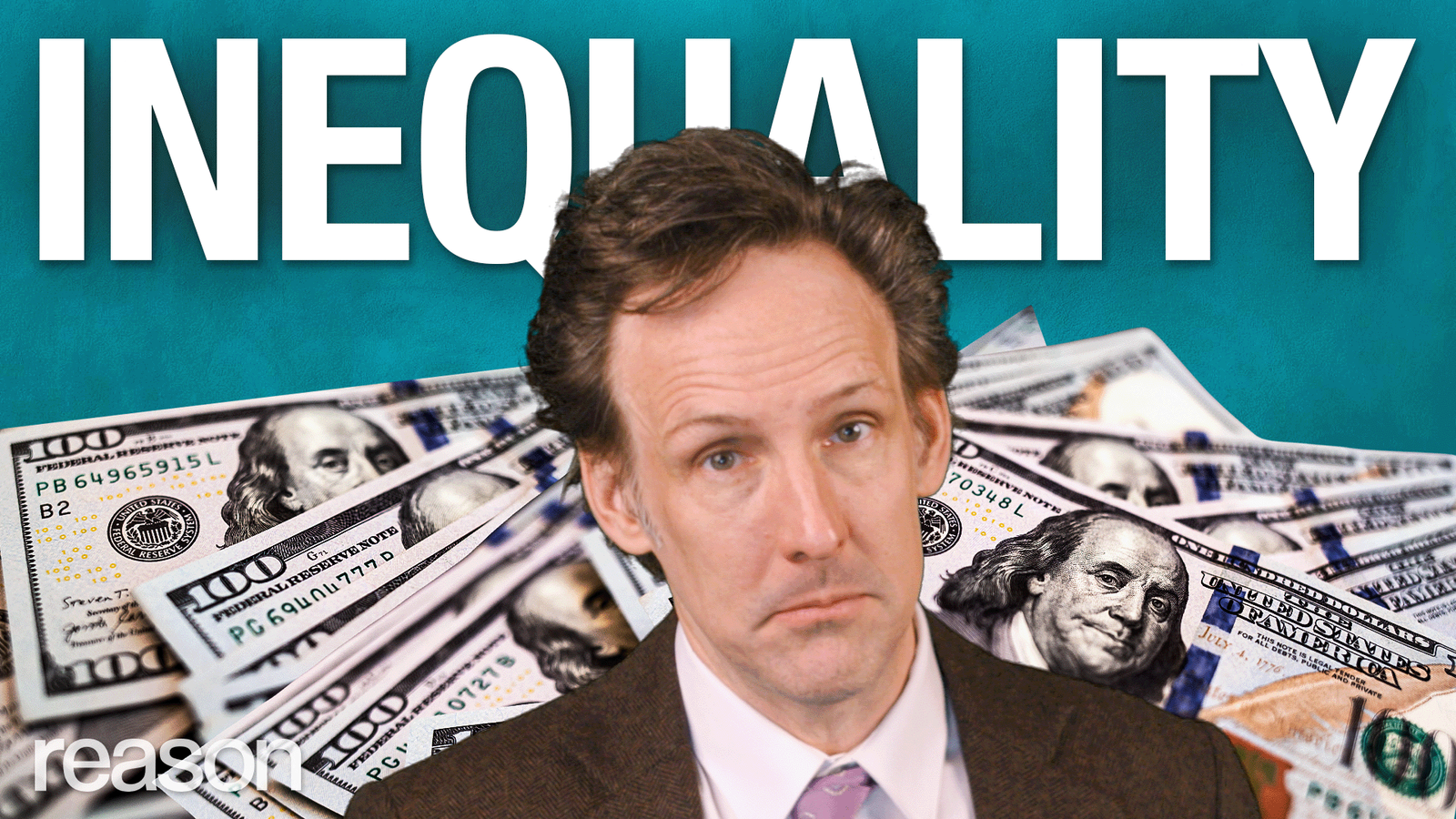
If you’re like most Americans, you get the bulk of your cardio from marching in—or fleeing from—pitchfork-wielding mobs. These days, those mobs tend to be chasing oligarchs with their fancy castles and grave-robbing sidekicks. Inequality, we are told, is spiraling out of control. 

But that’s wrong. America doesn’t actually have an inequality problem. We have a measurement problem. 

Most of the infuriating headlines about inequality rely on data from the Census Bureau. And when the Census Bureau calculates inequality in the U.S., it leaves out two very important things: taxes and redistribution. 

The Census Bureau looks at pre-tax income. If you earn $100,000 a year and pay $20,000 in taxes, the Census Bureau counts you as earning $100,000, not the $80,000 you actually take home. 

That missing $20,000 doesn’t vanish. The federal government redistributes it to the lowest quintile of Americans through food stamps, housing vouchers, Medicaid, child tax credits, Section 8 housing subsidies, and dozens of other programs. But almost none of that is factored into inequality statistics. There are over 100 federal programs that each redistribute over $100 million a year. Yet the Census Bureau counts only eight of them as “income.” 

Most state and local transfer payments aren’t counted either. In fact, roughly two-thirds of all government transfer payments to individuals and households never enter the inequality data at all, according to the Census Bureau data we calculated.

When you add those transfers and benefits back in, the average household in the bottom quintile of earners receives around $40,000 per year in cash and in-kind support—income that simply disappears from inequality charts. 

So when people say “tax the rich people to fix inequality,” that literally cannot work with how inequality is measured in America. According to our statistics, you could triple taxes on the wealthy and inequality would look exactly the same—assuming the rich didn’t flee to Gault’s Gulch, Heaton’s Hollow, or the Buffet-Warren Tax-Dodge Zone and Water Park. 

What about Europe, you ask, irritatingly. Europe is a nice place—good cheese, sort of England’s chunky sidekick. But American taxation is actually more progressive than in Europe. Wealthy Americans fund a much larger percentage of our government than wealthy European vampires do in their countries. Europeans pay higher taxes not because they pulverize the rich, but because they tax their middle class more heavily and rely far more on sales taxes, which disproportionately impact the poor.

If your solution is to force corporations to redistribute profits more evenly, that runs into the same problem. The Census Bureau does not count employer benefits, such as health insurance premiums, dental and vision insurance, or Health Savings Accounts, as income. Much of what people call “wage stagnation” is compensation shifting into benefits that never show up in the data. 

You can reasonably argue—and I would—that government spends our taxes in stupid ways: corn subsidies, upward transfers of wealth, military parades. We could also argue that government could better allocate resources to genuinely help people who need it. But that’s a spending problem, not a revenue problem.

The measurement problems don’t end there. When the Census Bureau began tracking household income in 1947, government officials treated women as wifely accessories or house pets and didn’t bother keeping track of individual earnings. Instead, they tracked household income, treating husbands and wives as a single economic unit—a practice they still use today. 

Since then, women have entered the workforce en masse, and couples increasingly marry within their income brackets. So imagine a lady lawyer earning $100,000 who marries a doctor earning $100,000, and I, a bachelor comedian, also inexplicably earning $100,000. Even though we all earn the same exact amount of income, the Census Bureau would report rampant inequality because my household only makes half of what theirs does. What is actually a pairing phenomenon gets misinterpreted as income inequality. 

Income statistics are also snapshots in time, not reflections of a medieval caste system. Most people move between income brackets over the course of their lives. My first year out of college, for example, I earned basically nothing and sat in the bottom quintile. Since then, I have schemed, clawed, fought, and seduced my way into higher-paying and often legal jobs. While there are exceptions, the vast majority of Americans earn more at 50 than they did at 18. 

So when looking at the (already flawed) inequality statistics over the last 60 years, we’re not looking at the same poor and rich people. Between the ages of 25 and 60, three-quarters of American households will fall into the top quintile of income earners for at least one year of their lives. 

To be clear, income inequality exists. But once you factor in taxes, transfers, benefits, and mobility, that gap is not as catastrophically chasmic as often portrayed. 

Imagine there’s a button that doubles everyone’s real wealth: houses cost half as much, groceries cost half as much, and your paycheck goes twice as far. Everyone’s life improves, but inequality explodes because the rich gain more dollars than the poor.

Would you hit that button?

I would, because I care more about poverty than inequality. I care more about raising the floor than lowering the ceiling.

Read the full article here

Fact Checker

Verify the accuracy of this article using AI-powered analysis and real-time sources.

Get Your Fact Check Report

Enter your email to receive detailed fact-checking analysis

5 free reports remaining

Continue with Full Access

You've used your 5 free reports. Sign up for unlimited access!

Already have an account? Sign in here

#CivicEngagement #InformationWar #Journalism #NarrativeControl #PoliticalCoverage
Share. Facebook Twitter Pinterest LinkedIn Tumblr Email Telegram Copy Link
News Room
  • Website
  • Facebook
  • X (Twitter)
  • Instagram
  • LinkedIn

The FSNN News Room is the voice of our in-house journalists, editors, and researchers. We deliver timely, unbiased reporting at the crossroads of finance, cryptocurrency, and global politics, providing clear, fact-driven analysis free from agendas.

Related Articles

Cryptocurrency & Free Speech Finance

Vitalik Buterin Withdraws $44.7M in ETH to Support Ethereum Growth Through ‘Mild Austerity’

7 minutes ago
Media & Culture

Judge Says ICE Violated Court Orders in 74 Cases—See Them All Here

35 minutes ago
Legal & Courts

RCFP statement on arrests of journalists Don Lemon, Georgia Fort

52 minutes ago
Cryptocurrency & Free Speech Finance

What Trump’s Fed Pick Kevin Warsh Means for Crypto

1 hour ago
Media & Culture

Why Zohran Mamdani’s ‘free childcare’ plan won’t work for New York City

2 hours ago
Cryptocurrency & Free Speech Finance

Morning Minute: Washington Just Gave Crypto the Green Light

2 hours ago
Add A Comment

Comments are closed.

Editors Picks

Judge Says ICE Violated Court Orders in 74 Cases—See Them All Here

35 minutes ago

RCFP statement on arrests of journalists Don Lemon, Georgia Fort

52 minutes ago

Kevin Warsh’s return to the Fed sparks bitcoin jitters over rates, balance sheet cuts

54 minutes ago

Trump Picks Kevin Warsh as Next Federal Reserve Chair

57 minutes ago
Latest Posts

What Trump’s Fed Pick Kevin Warsh Means for Crypto

1 hour ago

Why Zohran Mamdani’s ‘free childcare’ plan won’t work for New York City

2 hours ago

CPJ condemns arrests of journalists Don Lemon and Georgia Fort over Minnesota protests

2 hours ago

Subscribe to News

Get the latest news and updates directly to your inbox.

At FSNN – Free Speech News Network, we deliver unfiltered reporting and in-depth analysis on the stories that matter most. From breaking headlines to global perspectives, our mission is to keep you informed, empowered, and connected.

FSNN.net is owned and operated by GlobalBoost Media
, an independent media organization dedicated to advancing transparency, free expression, and factual journalism across the digital landscape.

Facebook X (Twitter) Discord Telegram
Latest News

Vitalik Buterin Withdraws $44.7M in ETH to Support Ethereum Growth Through ‘Mild Austerity’

7 minutes ago

Judge Says ICE Violated Court Orders in 74 Cases—See Them All Here

35 minutes ago

RCFP statement on arrests of journalists Don Lemon, Georgia Fort

52 minutes ago

Subscribe to Updates

Get the latest news and updates directly to your inbox.

© 2026 GlobalBoost Media. All Rights Reserved.
  • Privacy Policy
  • Terms of Service
  • Our Authors
  • Contact

Type above and press Enter to search. Press Esc to cancel.

🍪

Cookies

We and our selected partners wish to use cookies to collect information about you for functional purposes and statistical marketing. You may not give us your consent for certain purposes by selecting an option and you can withdraw your consent at any time via the cookie icon.

Cookie Preferences

Manage Cookies

Cookies are small text that can be used by websites to make the user experience more efficient. The law states that we may store cookies on your device if they are strictly necessary for the operation of this site. For all other types of cookies, we need your permission. This site uses various types of cookies. Some cookies are placed by third party services that appear on our pages.

Your permission applies to the following domains:

  • https://fsnn.net
Necessary
Necessary cookies help make a website usable by enabling basic functions like page navigation and access to secure areas of the website. The website cannot function properly without these cookies.
Statistic
Statistic cookies help website owners to understand how visitors interact with websites by collecting and reporting information anonymously.
Preferences
Preference cookies enable a website to remember information that changes the way the website behaves or looks, like your preferred language or the region that you are in.
Marketing
Marketing cookies are used to track visitors across websites. The intention is to display ads that are relevant and engaging for the individual user and thereby more valuable for publishers and third party advertisers.