

 Freedom Index
Listen to the article
I travel a lot, and this is one of my dad’s favourite things to brag about over coffee with his mates. Previous destinations—Mexico, Colorado, Bali—all elicited curiosity or envy. But now I was going to Israel for the first time, and his friends’ reaction was telling. “Why the hell would she want to go there?” they asked. Maybe they genuinely believe Israel is a warzone where people run to and from bomb shelters all day every day. But more likely, I suspect, they’re making a moral judgement, suggesting that visiting a country shows complicity in its perceived evils.
I am very familiar with the double standard applied to Israel. I’m sure they wouldn’t have such a reaction if I were to visit China or Qatar. But what never ceases to amaze me is just how misinterpreted Israel is by the average Australian. If they were to spend just an hour there, what they’d see is a functioning, diverse democracy that’s managed to do something our own nation is failing at: having a backbone and being proud of who it is. My first conversation there proved that within thirty minutes of my arrival.
It was Saturday morning and Ben Gurion Airport was a ghost town—Shabbat meant none of the usual buses were running, so I downloaded Israel’s Uber equivalent, Gett. Within minutes I was matched with Munir. He was pale, blue-eyed, around seventy years old. Through a Google Translate-mediated conversation, I told him I was a journalist, that it was my first time in Israel, and that I wanted to learn more about his country. “I’m not Jewish but I am very interested in Israel.” He nodded, then patted himself on the chest as he said, “ani [I am] Muslim.” Even with my basic Hebrew, I understood those two words. I couldn’t help but ask him, “Are you Palestinian?” He shook his head undoubtedly and again tapped himself on the chest as he said, “Muslim Israeli.”
Munir dropped me at my hotel close to Frishman beach where I proceeded to pay what seemed like an exorbitant price for basic accommodation. When I told the receptionist I thought it was too expensive, she laughed. “Welcome to Israel.” While many Australians think Israel is struggling, the opposite is true. The shekel appreciated 14.3 percent against the US dollar in 2025. Despite everything—wars, boycotts, regional hostility—Israel has a per capita GDP of around US$58,000 and is rapidly closing the gap with Australia’s US$63,000. Some economists reckon Israel could surpass us by 2030.
How does a nation under perpetual threat, with no natural resources, dependent on desalinated water, surrounded by hostile neighbours, manage to outperform countries unburdened by such disadvantages? The answer is uncomfortable for our complacent national psyche: necessity. We’re the lucky country. We’ve got abundant land, resources, oceans protecting us from hostile neighbours, and no history of persecution that might forge resilience. Things have been fine, we assume they’ll stay fine, and we plod along nicely. But I increasingly fear that the character of Australia is changing from the inside, and we’re too comfortable to notice.
Growing up, I was told that mateship was the Australian value that set us apart from Britain with its class system. It emerged from convict hardship, crystallised in the goldfields, turned political during the great shearers’ strikes of the 1890s, and became sacred at Gallipoli, where the ANZACs refused to abandon wounded mates under fire. But mateship requires something to tie you together—a shared identity, culture, values, or purpose. The mateship written into our national mythology was almost exclusively Anglo-Celtic, white, and male, and it developed in a society where racism was present and Aboriginal Australians were largely excluded, despite their sovereignty and culture long predating the nation being constructed around them. Sure, there were exceptions to this Anglo-Celtic majority—Chinese, Jewish, Italian, and Pacific Islander soldiers were accepted—but there was a prevailing, dominant culture most people could rally around.
Australia has abandoned that model. Since 1973, an official multicultural policy encourages immigrants to maintain separate languages, festivals, and enclaves. We celebrate difference rather than forge unity. The result is that Australia’s overall social cohesion index is at its lowest level since measurements began in 2007. According to the Scanlon Foundation, 49 percent of Australians now believe immigration levels are too high, up from 33 percent just a year ago. According to the Lowy Institute, only 52 percent say they’d fight if Australia were attacked. Social cohesion is collapsing fastest among the young, who are especially vulnerable to propaganda spread by hostile actors such as Qatar, Russia and China, who have a lot to gain by seeing us weak and divided.
Israel knows the dangers of division. The events of 7 October 2023 couldn’t have happened without years of division in Israeli society. Yes, there is a divide between the liberal Tel Avivians and the rest of the nation, and a divide between the Ashkenazi elite and the more working-class Mizrahi. But a Jew is a Jew, whether you vote for Bibi or protest against him and that provides a cultural unity that may be part of the reason why, for example, Israel’s homicide rate is around 1.5–2.0 per 100,000 people, 0.5 lower than Australia.
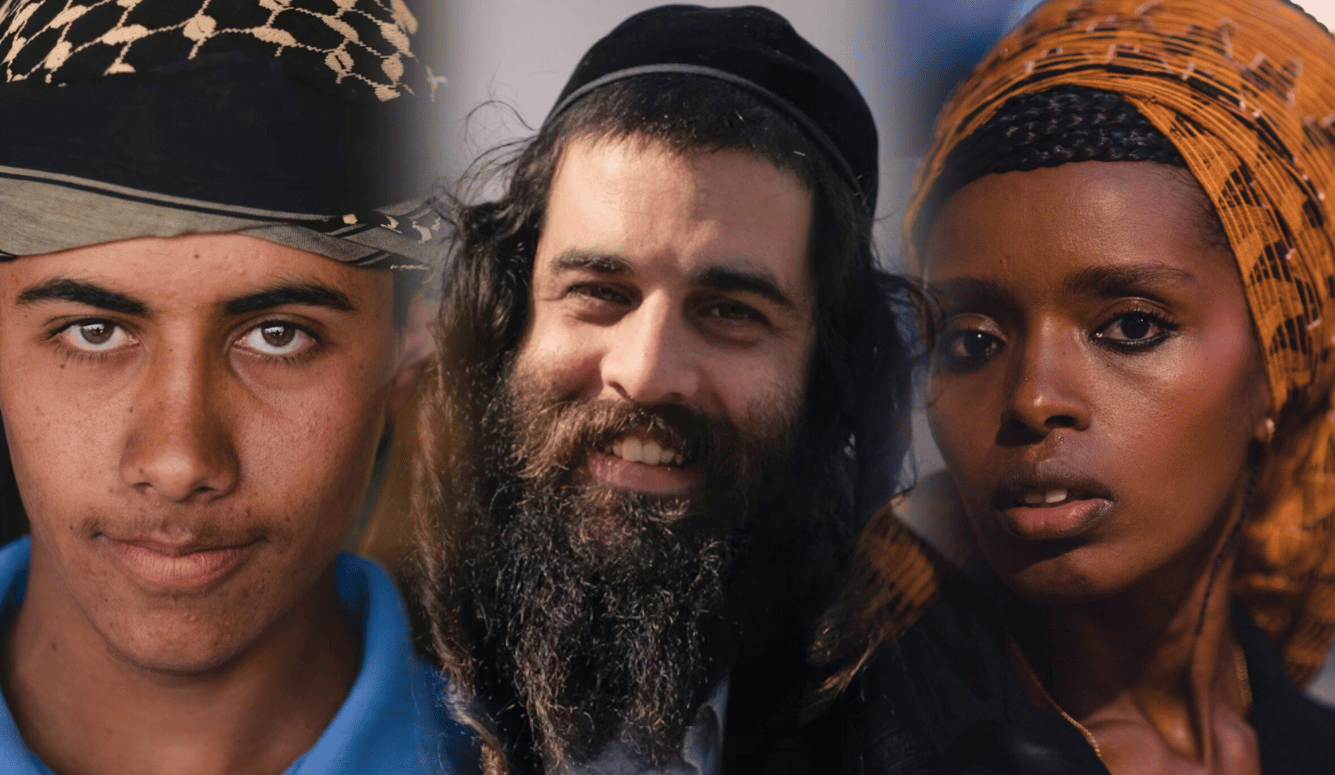
Israel is a blueprint for how multiethnicity can work when there is a unified, dominant culture—the opposite of Australia’s unchecked multiculturalism. After 1948, Israel faced a challenge that would have destroyed most nations. They had to unite Jews from eighty countries—as disparate as Ethiopia, Iran, Russia, Yemen, Poland, Morocco—who spoke dozens of languages and came from wildly different cultures. Today, 78 percent of Israel is Jewish, but that encompasses Mizrahi, Ashkenazi, Sephardic, Ethiopian, and other ethnicities that had little in common beyond their religion and their shared history as Jews. Yet Israel forged them into a unified nation within a single generation. How?
They took deliberate, even aggressive assimilation measures. They revived Hebrew, dead as an everyday language for 1800 years, and made it compulsory everywhere. Every immigrant attended intensive Hebrew courses (ulpan). Children were taught exclusively in Hebrew. Yiddish and Ladino newspapers were taxed out of existence, and within one generation, kids from radically different backgrounds spoke the same language with the same accent.
Three years of compulsory military service threw eighteen-year-olds from every background into the same barracks, creating shared experiences and bonds that transcended their parents’ origins. Kibbutzim mixed teenagers from different continents. Hebrew songs and state TV were the only pop culture available. By the 1970s, children of immigrants from Warsaw and Baghdad spoke Hebrew, served in the same units, and saw themselves simply as Israeli. Today their grandchildren fight together without hesitation, united by culture and purpose rather than divided by ancestry. And they clearly made love together, as well as war. Over fifty percent of Israel’s Jewish population now identifies as having mixed Ashkenazi, Sephardic, and Mizrahi heritage.
This isn’t about abandoning immigration or diversity—Israel has plenty of both. In fact, about 22 percent of the population is not Jewish, made up primarily of Muslims (18 percent), Christians (2 percent), and Druze (1.6 percent). But Israel maintains safety, order, and harmony among this diverse population by insisting upon its Jewishness. Muslims and Christians are welcome to practise their respective religions, but they must respect the fact that Israel is a Jewish nation. Any newcomers are expected to join the shared national project, rather than form parallel societies.
In a recent interview for Quillette, British author Harry Saul Markham warns:
Friends in Australia, do not allow what has happened in the UK to happen to your country. Because believe me, the mood on our streets is febrile. The prospect of violence and social unrest is extremely high—higher than it’s ever been. The sense of atomisation and the loss of any real community or reconciliation—these things are palpable.
The Bondi Beach massacre shows how urgently we need to heed Markham’s warning. For months, mobs descended on synagogues, protesters ambushed hostage families calling them “baby killers,” and a portrait of Iran’s Supreme Leader was carried across the Harbour Bridge on a pro-Palestine march. Yet our leaders remained silent, prioritising “community relations” over honest conversation about the antisemitism within pockets of our Muslim community.
The Bondi terrorists were father and son: Sajid Akram, who arrived from India on a student visa—never intended as a path to permanent settlement—and his Australian-born son, Naveed. No assimilation was expected or demanded of this family. Local radical preacher Wissam Haddad fulminated against Jews. All of this created the conditions for the worst terrorist attack on Australian soil in history. Israel tells newcomers “you’re signing up to be Israeli, to live in a Jewish majority nation.” Australia’s message to the Akrams was: “We’re not confident in who we are or what we stand for.”
This same pattern has already played out in Britain, where the refusal to discuss integration has had devastating consequences. Net migration peaked at 944,000 in 2023, with the top three feeder nations being India, Pakistan, and Nigeria, all of which have significant Muslim communities. Without strong assimilation, ethnic enclaves have become entrenched and trust in government has collapsed—according to the National Centre for Social Research, 45 percent of Britons “almost never” trust the government to place the needs of the nation above the interests of its own party.
Trust in democratic institutions depends on the equal application of the law and the protection of citizens. Britain has failed on both counts. The failure of integration has enabled horrific crimes, including grooming gangs predominantly made up of men of Pakistani heritage who systematically abused at least 1,400 children in Rotherham alone between 1997 and 2013, and perpetrated further mass crimes in Rochdale, Telford, and dozens of other towns. These gangs operated with impunity for decades, likely because authorities feared being called racist. Yet at the same time, people have been prosecuted for social media posts—most notoriously Lucy Connolly, who posted a furious tweet saying that they could burn asylum hostels “for all I care,” immediately after British-born Axel Rudakubana, the child of Rwandan immigrants, stabbed three young girls at a children’s dance class in Southport. Connolly is currently serving a 31-month prison sentence. Cases like these have led many to suspect that the government cares more about cracking down on speech than on punishing violent crime. They have earned the British Prime Minister the nickname of “Two-Tier Kier”—even though much of the relevant censorship legislation was passed by previous Conservative governments. The problem goes deeper than any single political party.
Meanwhile, Australia is at a crossroads. The Bondi massacre could be our wake-up call, or the first of many such attacks as we sleepwalk down Britain’s path. We need to decide who we are and what we want to be while we still can. Israel chose deliberate assimilation and national service to unite immigrants from eighty countries. We need similar mechanisms that build shared identity. Compulsory national service, whether military or civilian, could be a start.
Antisemites are in my replies saying they wish I got raped in the Muslim quarter of Jerusalem because I’m pro-Israel, meanwhile I’m here having a life changing experience in the West Bank, getting welcomed into a Muslim house, smoking a shisha and getting to know what it’s really… pic.twitter.com/TtdPEXCNbf
— Ζoë Booth (@zoecabina) November 16, 2025
I wish more Australians would visit Israel for themselves. They’d discover a proud nation that knows who it is, where it came from, and what it stands for. Israel doesn’t apologise for insisting newcomers join its national project. It shapes its own narrative and cares little what the world thinks of it. We don’t need to copy Israel’s exact model—the pressures on that country are unique—but we could benefit from similar clarity and backbone. Britain shows us what happens when you abandon national identity in the name of multiculturalism; Israel shows us what’s possible when you don’t.
Read the full article here
Fact Checker
Verify the accuracy of this article using AI-powered analysis and real-time sources.