Close Menu
FSNN | Free Speech News NetworkFSNN | Free Speech News Network
  • Home
  • News
    • Politics
    • Legal & Courts
    • Tech & Big Tech
    • Campus & Education
    • Media & Culture
    • Global Free Speech
  • Opinions
    • Debates
  • Video/Live
  • Community
  • Freedom Index
  • About
    • Mission
    • Contact
    • Support
Trending

Joe Kent Is the First Iran War Crack in the Trump Admin

35 minutes ago

BTC remains down sharply as Fed stays on hold

55 minutes ago

FTX Recovery Trust Announces Fourth Round of Creditor Repayments

59 minutes ago
Facebook X (Twitter) Instagram
Facebook X (Twitter) Discord Telegram
FSNN | Free Speech News NetworkFSNN | Free Speech News Network
Market Data Newsletter
Thursday, March 19
  • Home
  • News
    • Politics
    • Legal & Courts
    • Tech & Big Tech
    • Campus & Education
    • Media & Culture
    • Global Free Speech
  • Opinions
    • Debates
  • Video/Live
  • Community
  • Freedom Index
  • About
    • Mission
    • Contact
    • Support
FSNN | Free Speech News NetworkFSNN | Free Speech News Network
Home»News»Media & Culture»Wealth Taxes Are Proven Failures. Will California Take Note?
Media & Culture

Wealth Taxes Are Proven Failures. Will California Take Note?

News RoomBy News Room1 month agoNo Comments5 Mins Read467 Views
Share Facebook Twitter Pinterest Copy Link LinkedIn Tumblr Email VKontakte Telegram
Wealth Taxes Are Proven Failures. Will California Take Note?
Share
Facebook Twitter Pinterest Email Copy Link

Listen to the article

0:00
0:00

Key Takeaways

Playback Speed

Select a Voice

When government grows to dominate ever-larger shares of the economy, and when politicians refuse to be responsible about what they spend, there’s a predictable next move: Insist that the problem is “the rich” not paying enough. Never mind that high earners already shoulder a disproportionate share of the tax burden. Never mind that relying on a small and mobile group of people for the bulk of your revenue makes public finances more volatile, not more stable.

No, once spending is treated as untouchable and restraint as politically impossible, it’s only a matter of time before politics demands more, more, more. More taxes and more distortion. This helps explain why wild new forms of wealth taxes are popping up.

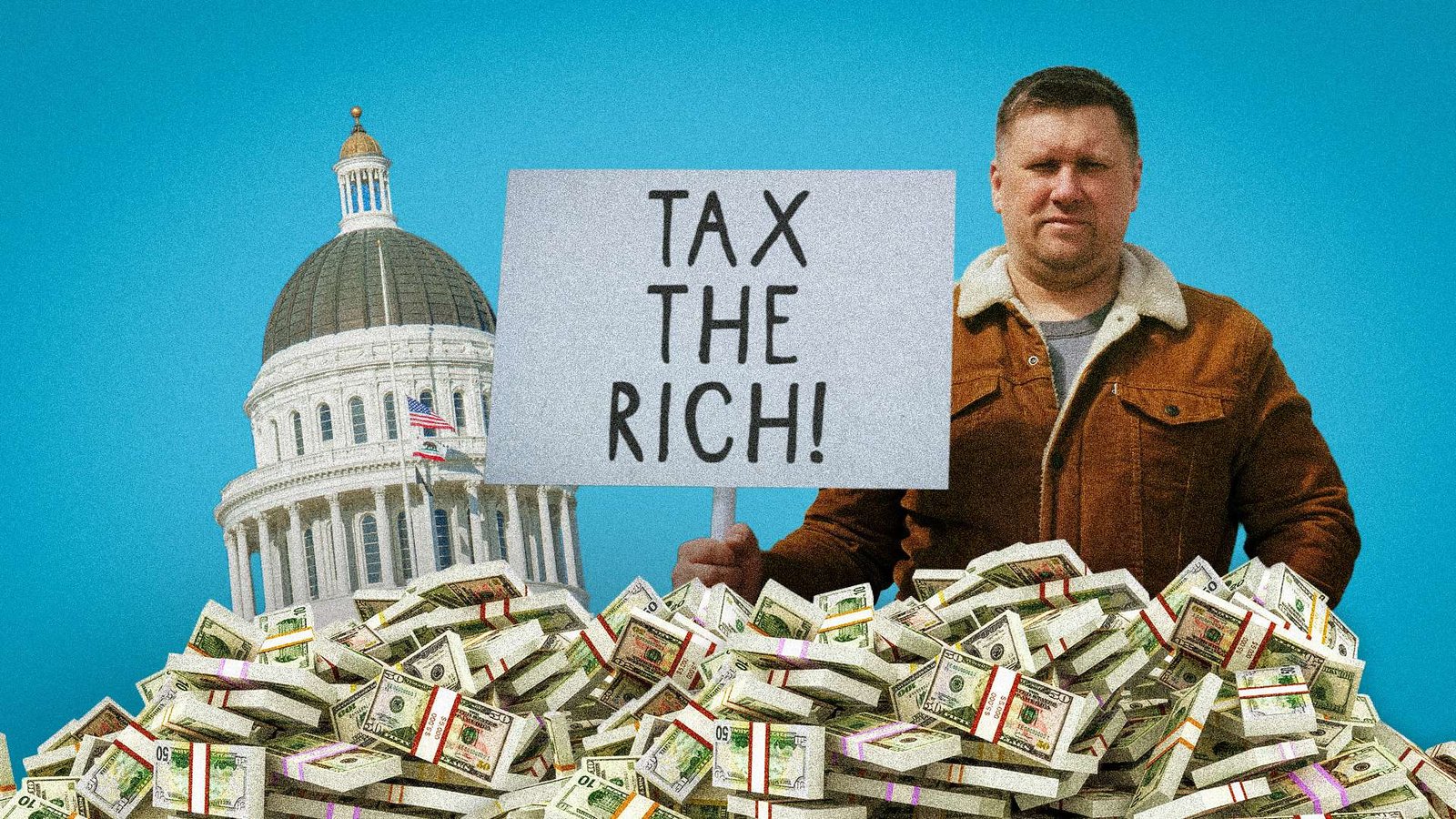
California voters are heading toward a November ballot fight over a so-called one-time 5 percent tax on billionaires’ net worth, tied to residency on a date that’s already passed. Illinois lawmakers recently flirted with a tax on unrealized gains—think of stocks yet to be sold at fluctuating prices that only exist on paper—before retreating. And New York City Mayor Zohran Mamdani wants a wealth tax to help close the city’s roughly $12 billion budget gap. Prominent progressive Democrats have explicitly endorsed national wealth taxes (e.g., proposals from Massachusetts Sen. Elizabeth Warren).

Different places, same impulse: Avoid hard fiscal decisions by squeezing a narrow group harder.

A wealth tax is not like the income or consumption taxes we’re used to. In theory, it’s a cut of a person’s entire stock of assets (less their liabilities). In its classic form, a wealth tax is assessed annually. Newer examples in the U.S. appear as onetime levies or use a “mark-to-market” system to tax unrealized gains, treating appreciation as income. However it’s packaged, the economic logic is the same.

Wealth taxes are also a uniquely blunt and damaging instrument. Across advanced economies, they have repeatedly been narrowed or even repealed after delivering disappointing revenue, tax avoidance, capital flight, and costly administrative battles. The international record is decisively negative no matter what convoluted arguments their supporters want to use in America.

Start with the claim that “the rich have the money to pay it.” Most large fortunes are not sitting in piles of idle cash. They are ownership stakes in operating businesses and other productive investments already taxed through income, capital gains, and corporate taxes. Wealth taxes layer in additional levies, which, among other things, function like highly confiscatory effective tax rates on normal investment returns. This is especially true in low-growth environments and when stacked on top of already high federal, state, and local taxes.

Therefore, claims that wealth taxes “only hit billionaires” don’t hold water, either. That’s not how economics works. Reducing returns on saving and investment means that over time, the wealthy invest less—and we need them to invest. The harm, including slower productivity and wage growth, may be spread out in myriad ways across the economy. But it’s real.

In other words, a policy that makes it more expensive to build, scale, and keep businesses in a jurisdiction does not stop with the people writing the checks. Rich people and their money are mobile. Workers are not, and they ultimately pay a high price through fewer opportunities and lower pay.

Then there are the claims that taxes like the one proposed in California are a “onetime” thing. This misleading framing solves nothing.

A tax hinging on residency at a particular moment creates a coordination problem for the state by encouraging the wealthy to leave—perhaps permanently—and business decisions to be made based on tax strategy rather than consumer needs. In a system already dependent on a small number of taxpayers, losing even a handful can wipe out projected revenue.

The effect is magnified because billionaire wealth is often illiquid. Paying the tax typically requires selling assets or borrowing against them, triggering capital gains taxes, leverage risks, and further distortions. It helps explain why some high-net-worth individuals have already left states like California while others openly posture to exit if these proposals pass.

What comes next is predictable. When wealth tax revenue falls short—and it will—policymakers will expand the taxes rather than cut spending. A “onetime” levy applied to billionaires or millionaires makes its way to far lower net worths. Rates rise. What begins as a narrow, exceptional measure becomes more permanent for more people, justified at each step by the same fiscal desperation that produced a proven failure of a policy in the first place.

Only then will the taxman relent. Europe’s wealth taxes proved long-term failures, and only a handful remain. Californians, consider yourselves warned.

Wealth taxes are not a solution to a broken fiscal culture; they’re a symptom that treats spending growth as inevitable and responsibility as optional. Policymakers calling for more durable finances and real upward mobility can fecklessly blame the rich or do the real, hard work: Control spending growth, broaden tax bases, and foster stable, pro-investment environments.

COPYRIGHT 2026 CREATORS.COM

Read the full article here

Fact Checker

Verify the accuracy of this article using AI-powered analysis and real-time sources.

Get Your Fact Check Report

Enter your email to receive detailed fact-checking analysis

5 free reports remaining

Continue with Full Access

You've used your 5 free reports. Sign up for unlimited access!

Already have an account? Sign in here

#CivicEngagement #FreePress #Journalism #NarrativeControl #OpenDebate
Share. Facebook Twitter Pinterest LinkedIn Tumblr Email Telegram Copy Link
News Room
  • Website
  • Facebook
  • X (Twitter)
  • Instagram
  • LinkedIn

The FSNN News Room is the voice of our in-house journalists, editors, and researchers. We deliver timely, unbiased reporting at the crossroads of finance, cryptocurrency, and global politics, providing clear, fact-driven analysis free from agendas.

Related Articles

Media & Culture

Joe Kent Is the First Iran War Crack in the Trump Admin

35 minutes ago
Cryptocurrency & Free Speech Finance

Pudgy Penguins Launched A New Game. Crypto Scammers Made A Fake Version

1 hour ago
Media & Culture

DHS Pledges Not To Deport Any U.S. Citizens if Congress Ends Shutdown

2 hours ago
Cryptocurrency & Free Speech Finance

Coalition Urges OpenAI to Scrap AI Ballot Measure Over Child Safety Concerns

2 hours ago
Media & Culture

Goverment Shutdowns Won’t Stop Airport Security If Airport Security Isn’t Run by the Government

3 hours ago
Cryptocurrency & Free Speech Finance

Trump White House Registers Aliens.gov—Is the UFO File Drop Imminent?

3 hours ago
Add A Comment

Comments are closed.

Editors Picks

BTC remains down sharply as Fed stays on hold

55 minutes ago

FTX Recovery Trust Announces Fourth Round of Creditor Repayments

59 minutes ago

Pudgy Penguins Launched A New Game. Crypto Scammers Made A Fake Version

1 hour ago

DHS Pledges Not To Deport Any U.S. Citizens if Congress Ends Shutdown

2 hours ago
Latest Posts

Polymarket snaps up Brahma as prediction market competition heats up

2 hours ago

Bitcoin Trips After FOMC But Bulls May Keep Buying

2 hours ago

Coalition Urges OpenAI to Scrap AI Ballot Measure Over Child Safety Concerns

2 hours ago

Subscribe to News

Get the latest news and updates directly to your inbox.

At FSNN – Free Speech News Network, we deliver unfiltered reporting and in-depth analysis on the stories that matter most. From breaking headlines to global perspectives, our mission is to keep you informed, empowered, and connected.

FSNN.net is owned and operated by GlobalBoost Media
, an independent media organization dedicated to advancing transparency, free expression, and factual journalism across the digital landscape.

Facebook X (Twitter) Discord Telegram
Latest News

Joe Kent Is the First Iran War Crack in the Trump Admin

35 minutes ago

BTC remains down sharply as Fed stays on hold

55 minutes ago

FTX Recovery Trust Announces Fourth Round of Creditor Repayments

59 minutes ago

Subscribe to Updates

Get the latest news and updates directly to your inbox.

© 2026 GlobalBoost Media. All Rights Reserved.
  • Privacy Policy
  • Terms of Service
  • Our Authors
  • Contact

Type above and press Enter to search. Press Esc to cancel.

🍪

Cookies

We and our selected partners wish to use cookies to collect information about you for functional purposes and statistical marketing. You may not give us your consent for certain purposes by selecting an option and you can withdraw your consent at any time via the cookie icon.

Cookie Preferences

Manage Cookies

Cookies are small text that can be used by websites to make the user experience more efficient. The law states that we may store cookies on your device if they are strictly necessary for the operation of this site. For all other types of cookies, we need your permission. This site uses various types of cookies. Some cookies are placed by third party services that appear on our pages.

Your permission applies to the following domains:

  • https://fsnn.net
Necessary
Necessary cookies help make a website usable by enabling basic functions like page navigation and access to secure areas of the website. The website cannot function properly without these cookies.
Statistic
Statistic cookies help website owners to understand how visitors interact with websites by collecting and reporting information anonymously.
Preferences
Preference cookies enable a website to remember information that changes the way the website behaves or looks, like your preferred language or the region that you are in.
Marketing
Marketing cookies are used to track visitors across websites. The intention is to display ads that are relevant and engaging for the individual user and thereby more valuable for publishers and third party advertisers.