Close Menu
FSNN | Free Speech News NetworkFSNN | Free Speech News Network
  • Home
  • News
    • Politics
    • Legal & Courts
    • Tech & Big Tech
    • Campus & Education
    • Media & Culture
    • Global Free Speech
  • Opinions
    • Debates
  • Video/Live
  • Community
  • Freedom Index
  • About
    • Mission
    • Contact
    • Support
Trending

Ctrl-Alt-Speech: Let Fly The Claudes Of War, With Casey Newton

18 minutes ago

Executive Order Excluding Federal Agencies from Collective Bargaining Requirements Was Wrongly Enjoined, Ninth Circuit Holds

24 minutes ago

Bitcoin Miner MARA jumps 17% after striking a deal with Starwood to build AI data centers

47 minutes ago
Facebook X (Twitter) Instagram
Facebook X (Twitter) Discord Telegram
FSNN | Free Speech News NetworkFSNN | Free Speech News Network
Market Data Newsletter
Friday, February 27
  • Home
  • News
    • Politics
    • Legal & Courts
    • Tech & Big Tech
    • Campus & Education
    • Media & Culture
    • Global Free Speech
  • Opinions
    • Debates
  • Video/Live
  • Community
  • Freedom Index
  • About
    • Mission
    • Contact
    • Support
FSNN | Free Speech News NetworkFSNN | Free Speech News Network
Home»Opinions»Debates»War or Deal Isn’t the Real Question
Debates

War or Deal Isn’t the Real Question

News RoomBy News Room2 hours agoNo Comments4 Mins Read134 Views
Share Facebook Twitter Pinterest Copy Link LinkedIn Tumblr Email VKontakte Telegram
War or Deal Isn’t the Real Question
Share
Facebook Twitter Pinterest Email Copy Link

Listen to the article

0:00
0:00

Key Takeaways

Playback Speed

Select a Voice

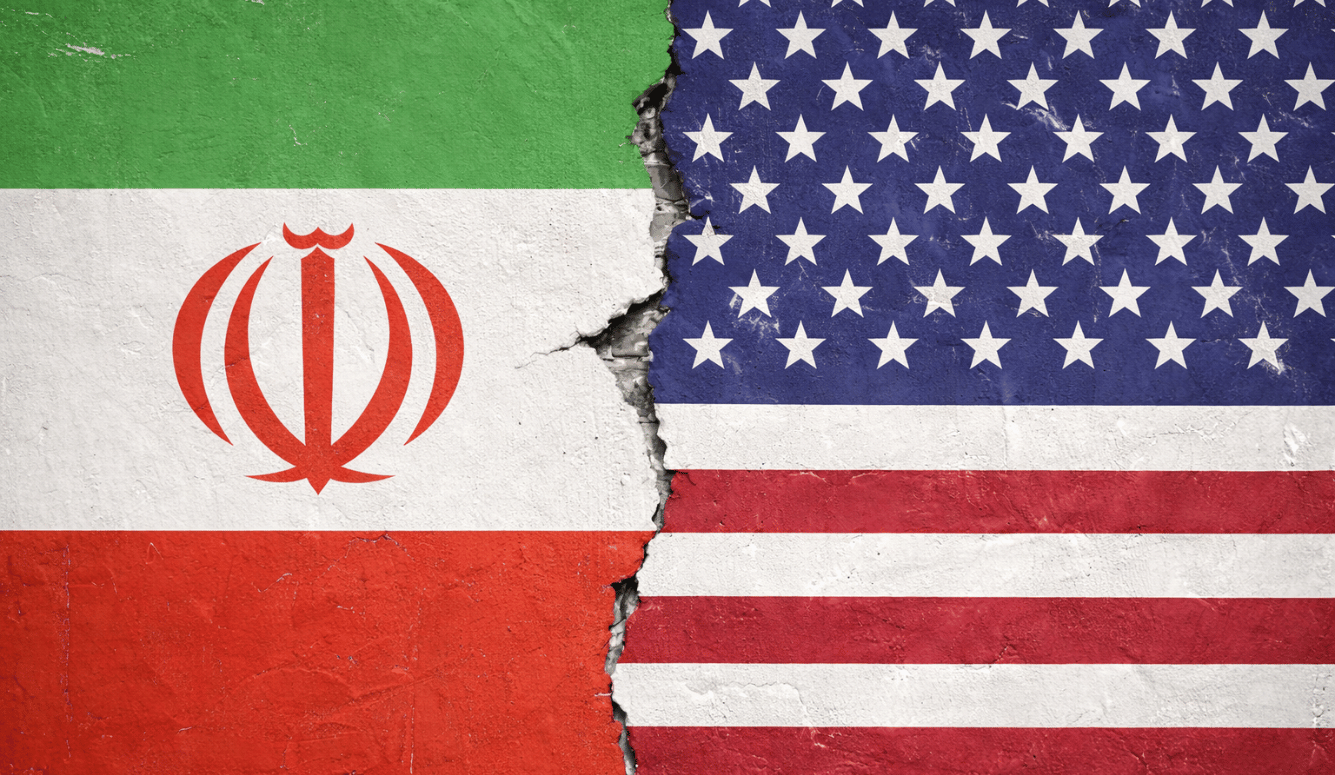
Benny Morris has explained US president Donald Trump’s Iranian dilemma with characteristic clarity, but his analysis is incomplete. The decisive question is not whether Washington strikes or negotiates, it is what institutional architecture follows either decision. Without durable enforcement mechanisms, either path risks becoming a prelude to recurrence rather than resolution.

Trump’s Iran Dilemma: War or a Hollow Deal

President Donald Trump must choose between a military strike on Iran, whose consequences no one can predict, and a deal that would leave the Islamic Republic still able to attack its own citizens, menace Israel, and export terrorism worldwide.

The Strike Scenario: Degradation Versus Elimination

A military strike on Iran’s nuclear facilities could significantly degrade its program, but degradation is not elimination. Iran’s nuclear capacity is a distributed system embedded in scientific expertise, engineering capacity, hardened facilities, and procurement networks. Destroying centrifuge halls cannot erase technical knowledge or the latent capacity to rebuild.

The central strategic question is therefore whether or not the United States and its regional partners are prepared for the sustained enforcement campaign that would have to follow a strike. Tehran would almost certainly activate its proxy network in Lebanon, Iraq, and Yemen. In addition to striking Gulf shipping, Iran may attempt to close the Strait of Hormuz. At which point, Washington would face a second decision: escalate further, or accept a contained but ongoing shadow war as the price of delaying Iran’s nuclear progress.

A strike, in other words, would not be a discrete event, but the opening act of a containment strategy that could last years. If policymakers are unwilling to sustain that follow-on architecture—maritime protection, proxy suppression, procurement interdiction, cyber disruption, intelligence monitoring—then the initial strike becomes strategically incomplete.

Historical Precedent and Strategic Endurance

History suggests that preventative military action can delay but rarely eliminate determined proliferation efforts. Israel’s 1981 strike on Iraq’s Osirak reactor disrupted Saddam Hussein’s program, but Iraqi nuclear ambitions continued covertly until they were exposed after the 1991 Gulf War. The 2007 strike on Syria’s al-Kibar facility removed a nascent capability, but only because the program was at an early stage and the Assad regime chose not to rebuild. Iran’s nuclear program, on the other hand, is mature, distributed, and deeply embedded in national infrastructure.

Likewise, arms-control agreements have had mixed durability. The JCPOA (the Joint Comprehensive Plan of Action, also known as the Iran Nuclear Deal) signed by the Obama administration extended breakout timelines and imposed inspections, but sunset clauses and political fragmentation undermined long-term confidence. The lesson is not that diplomacy is futile, nor that force is decisive. It is that neither instrument operates independently of sustained enforcement and political cohesion.

The more ambitious the objective, the longer and more disciplined the enforcement period must be.

The Negotiated Settlement: Verification or Drift

Negotiation presents a different set of risks to military action. Iran insists that uranium enrichment is a sovereign right. From Tehran’s perspective, this is a matter of national dignity as much as strategic leverage. A settlement that leaves enrichment intact but capped may extend breakout timelines and reduce immediate risk, but only if verification is intrusive, continuous, and backed by automatic consequences for noncompliance.

The weakness of the JCPOA was not just that its terms were flawed, but that enforcement relied too heavily on political consensus. Sunset clauses created ambiguity about long-term intent. Disputes over compliance became arenas for diplomatic bargaining rather than automatic triggers for response.

If Washington negotiates again, the architecture must be different. Inspection regimes would need real-time access. Procurement channels would need constant monitoring. Financial networks supporting missile programs and proxy groups would need to remain constrained even if nuclear-related sanctions were lifted.
A settlement that isolates the nuclear file while ignoring Iran’s regional conduct may temporarily stabilise one dimension of the threat while leaving others intact.

Over time, these domains intersect. Ballistic-missile development and proxy warfare create pressure on neighbours that increases incentives for nuclear hedging. The architecture must therefore account for interdependence rather than compartmentalise it. Without such mechanisms, negotiation risks becoming managed delay.


Read the full article here

Fact Checker

Verify the accuracy of this article using AI-powered analysis and real-time sources.

Get Your Fact Check Report

Enter your email to receive detailed fact-checking analysis

5 free reports remaining

Continue with Full Access

You've used your 5 free reports. Sign up for unlimited access!

Already have an account? Sign in here

Share. Facebook Twitter Pinterest LinkedIn Tumblr Email Telegram Copy Link
News Room
  • Website
  • Facebook
  • X (Twitter)
  • Instagram
  • LinkedIn

The FSNN News Room is the voice of our in-house journalists, editors, and researchers. We deliver timely, unbiased reporting at the crossroads of finance, cryptocurrency, and global politics, providing clear, fact-driven analysis free from agendas.

Related Articles

Media & Culture

Ctrl-Alt-Speech: Let Fly The Claudes Of War, With Casey Newton

18 minutes ago
Media & Culture

Executive Order Excluding Federal Agencies from Collective Bargaining Requirements Was Wrongly Enjoined, Ninth Circuit Holds

24 minutes ago
Cryptocurrency & Free Speech Finance

‘Private Bitcoin’ to Launch on Starknet With Zcash-Like Features

50 minutes ago
Media & Culture

Withholding $260 Million From Minnesota Won’t Win the War on Medicaid Fraud

1 hour ago
Cryptocurrency & Free Speech Finance

There’s a New DeFi Bill in Congress—What Does That Mean for Crypto Market Structure?

2 hours ago
Media & Culture

Why Libertarians Should Be Wary About Releasing the Epstein Files

2 hours ago
Add A Comment
Leave A Reply Cancel Reply

Editors Picks

Executive Order Excluding Federal Agencies from Collective Bargaining Requirements Was Wrongly Enjoined, Ninth Circuit Holds

24 minutes ago

Bitcoin Miner MARA jumps 17% after striking a deal with Starwood to build AI data centers

47 minutes ago

Jack Dorsey’s Block Announces 4,000 Job Cuts in AI Overhaul

48 minutes ago

‘Private Bitcoin’ to Launch on Starknet With Zcash-Like Features

50 minutes ago
Latest Posts

Withholding $260 Million From Minnesota Won’t Win the War on Medicaid Fraud

1 hour ago

War or Deal Isn’t the Real Question

2 hours ago

U.S. regulator’s GENIUS pitch puts dark cloud over crypto sector’s stablecoin model

2 hours ago

Subscribe to News

Get the latest news and updates directly to your inbox.

At FSNN – Free Speech News Network, we deliver unfiltered reporting and in-depth analysis on the stories that matter most. From breaking headlines to global perspectives, our mission is to keep you informed, empowered, and connected.

FSNN.net is owned and operated by GlobalBoost Media
, an independent media organization dedicated to advancing transparency, free expression, and factual journalism across the digital landscape.

Facebook X (Twitter) Discord Telegram
Latest News

Ctrl-Alt-Speech: Let Fly The Claudes Of War, With Casey Newton

18 minutes ago

Executive Order Excluding Federal Agencies from Collective Bargaining Requirements Was Wrongly Enjoined, Ninth Circuit Holds

24 minutes ago

Bitcoin Miner MARA jumps 17% after striking a deal with Starwood to build AI data centers

47 minutes ago

Subscribe to Updates

Get the latest news and updates directly to your inbox.

© 2026 GlobalBoost Media. All Rights Reserved.
  • Privacy Policy
  • Terms of Service
  • Our Authors
  • Contact

Type above and press Enter to search. Press Esc to cancel.

🍪

Cookies

We and our selected partners wish to use cookies to collect information about you for functional purposes and statistical marketing. You may not give us your consent for certain purposes by selecting an option and you can withdraw your consent at any time via the cookie icon.

Cookie Preferences

Manage Cookies

Cookies are small text that can be used by websites to make the user experience more efficient. The law states that we may store cookies on your device if they are strictly necessary for the operation of this site. For all other types of cookies, we need your permission. This site uses various types of cookies. Some cookies are placed by third party services that appear on our pages.

Your permission applies to the following domains:

  • https://fsnn.net
Necessary
Necessary cookies help make a website usable by enabling basic functions like page navigation and access to secure areas of the website. The website cannot function properly without these cookies.
Statistic
Statistic cookies help website owners to understand how visitors interact with websites by collecting and reporting information anonymously.
Preferences
Preference cookies enable a website to remember information that changes the way the website behaves or looks, like your preferred language or the region that you are in.
Marketing
Marketing cookies are used to track visitors across websites. The intention is to display ads that are relevant and engaging for the individual user and thereby more valuable for publishers and third party advertisers.