

 Freedom Index
Listen to the article
I.
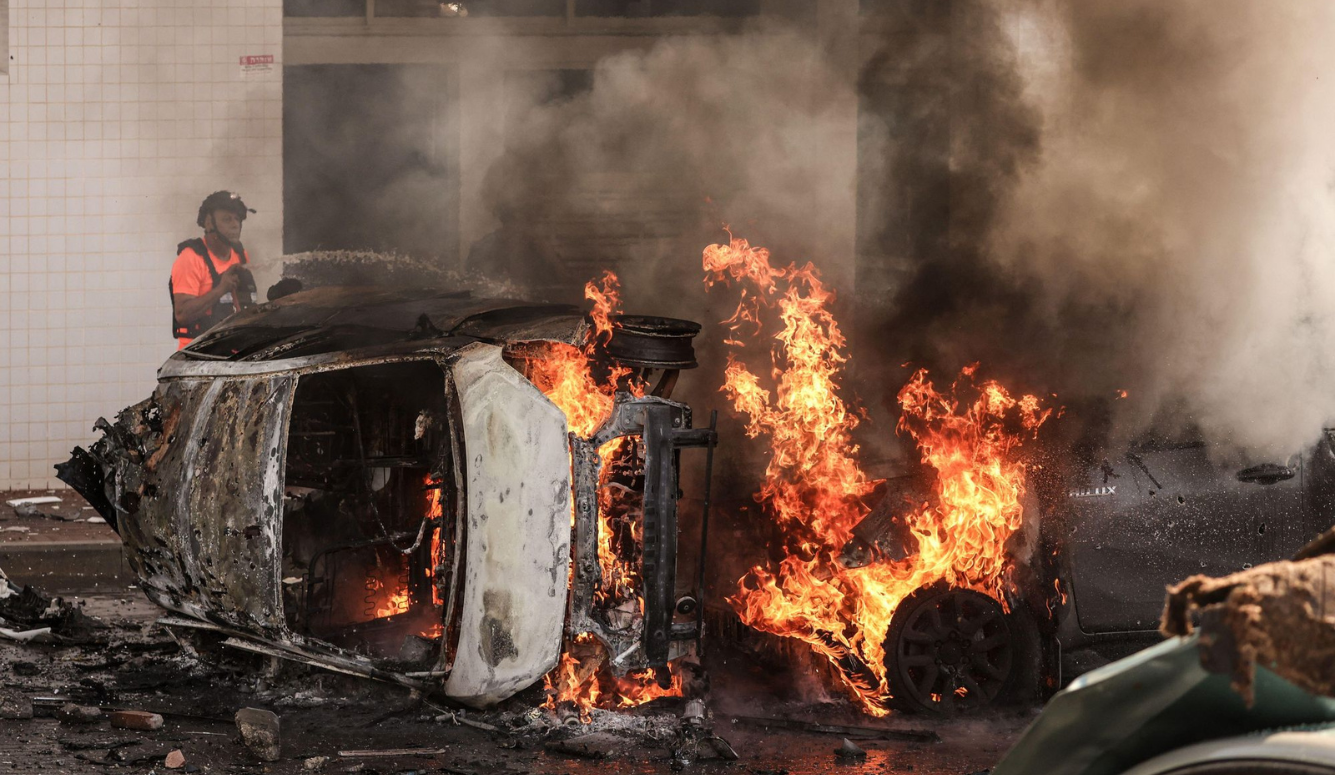
When the United States and Israel began attacking Iran on 28 February 2026, a striking contrast between the two allies quickly became apparent. In Israel, the war received overwhelming support across the political spectrum. The United States, on the other hand, began the war deeply divided—a product of Trump’s authoritarian and polarising presidency and a refusal on the part of many American liberals to acknowledge the realities of Islamist ideology in general, and of the Islamic Republic of Iran in particular.
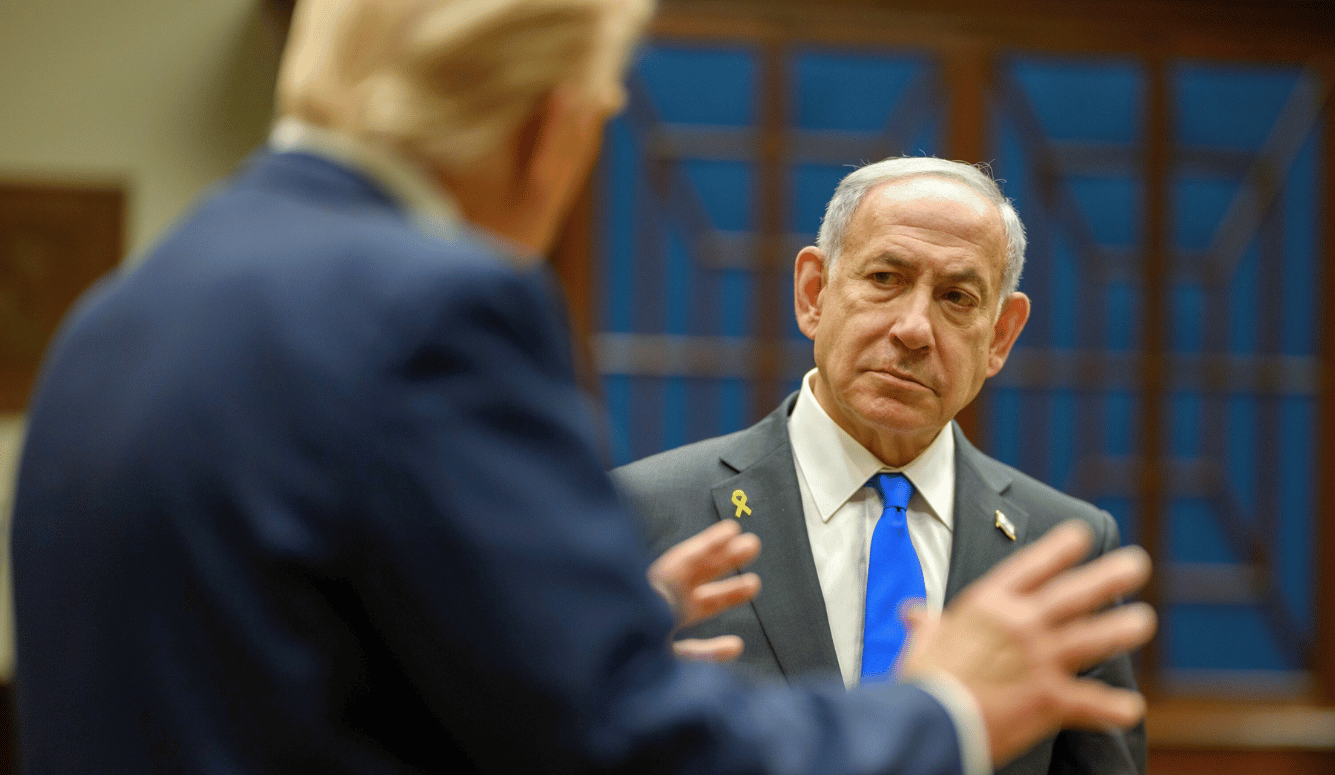
Israelis believe this operation is a necessary response to the existential threat posed by a genocidal regime and the “axis of resistance” it constructed over decades. Since the Hamas attack on 7 October 2023, Israelis have disagreed about many things, but not about the danger of the Islamic Republic of Iran and its proxies in Lebanon, Gaza, Iraq, Syria, and Yemen. On 2 March, Yair Lapid—Israel’s fourteenth prime minister and leader of the centrist opposition to Benjamin Netanyahu—published an essay titled “At Last, a Just War” in the pages of the Economist, in which he wrote:
Israel, as is well known, lives in a constant political storm. Within that storm I have fairly earned the title of “Netanyahu’s fiercest political rival.” I have been sharply critical of the way parts of the situation in Gaza have been conducted and of the way the government led by Binyamin Netanyahu has failed to get a grip on settler violence in the West Bank. Yet on this military campaign, I stand behind the government and behind the operation in Iran.
Why? Because this is not political—it is existential. All of Israel stands united in the face of the Iranian threat, united behind our soldiers and our pilots, united in gratitude to President Donald Trump for the rare leadership and courage he has shown. On this issue there is no opposition and no coalition. In all my years in politics, I do not remember such consensus on any subject.
Israeli liberals like Lapid understand the reactionary antisemitic ideology of the Islamic Republic, its messianic religious fanaticism, and its reactionary hatred of liberal modernity, democracy, the United States (“the Great Satan”), and Israel (“the Little Satan”). Israelis are also aware that a regime willing to murder thousands of its own citizens as they protest in the streets poses a dire threat to others. The January massacres in Tehran and other Iranian cities were of profound historical importance, and far bloodier than the massacre in Tiananmen Square by China’s Communist regime in 1989. In the view of Israeli liberals, Iran’s pursuit of nuclear weapons is inseparable from the nature of the regime—a nuclear Iran raised the spectre of a second Holocaust. Crushing the Iranian threat is, Lapid argued, a matter of survival.
Iran’s Weekend of Blood
How internet blackouts, morgue data, and medical testimony point to a five-digit death toll.
In the United States, however, this understanding is not shared by many people within the Democratic Party or the country’s liberal institutions and intellectual life. On the contrary, following the initial expression of support for Israel after the Hamas massacre in October 2023, liberals became increasingly critical of the IDF’s conduct in Gaza. As a result, President Trump’s decision to go to war on 28 February immediately aggravated America’s polarisation. On the morning the war began, the editors of the New York Times acknowledged the importance of preventing Iran from acquiring nuclear weapons, but also denounced the attack as a reckless decision taken without careful planning or adequate justification.
Trump could certainly have done more to explain his administration’s case for military action to the American people and to Congress in advance of the attack. But his 1,100-word statement on 28 February was uncharacteristically brief and cogent. In its key passage, he said:
[T]he United States military is undertaking a massive and ongoing operation to prevent this very wicked, radical dictatorship from threatening America and our core national security interests. We’re going to destroy their missiles and raze their missile industry to the ground. It will be totally again obliterated. We’re going to annihilate their navy. We’re going to ensure that the region’s terrorist proxies can no longer destabilize the region or the world and attack our forces, and no longer use their IEDs, or roadside bombs as they are sometimes called, to so gravely wound and kill thousands and thousands of people, including many Americans. And we will ensure that Iran does not obtain a nuclear weapon. It’s a very simple message. They will never have a nuclear weapon.
Trump’s statement was clear and crisp, unlike the infamously incoherent “weave” of free association that he likes to employ at his rallies. Nor was it the bundle of insults and dubious claims with which he filled his State of the Union address just a few days earlier, when he unfortunately declined to make the case for the most important foreign-policy decision of his two presidencies. Trump’s determination to thwart Iran’s nuclear ambitions was firmly in line with a consensus endorsed by Presidents Clinton, Bush, Obama, and Biden, all of whom declared that Iran should never be permitted to acquire weapons of mass destruction. But only Trump has had both the opportunity and the will to use armed force to accomplish that goal. It turns out that, in his own view, “America First” is not synonymous with the isolationism and antisemitism of the movement that first raised that banner in the late 1930s.
II.
But while the war aims are just, the Trump administration has made accomplishing them more difficult by refusing to consult or explain or attempt to win support for a policy that could yet demand a steep price in money and American lives. During his second term, Trump has preferred to govern by decree. He has stretched the powers of his office, scorned compromise and consensus, and destroyed whatever remained of his credibility with the half of the country that did not vote for him in 2024. He has neglected what British military historian Michael Howard called “the forgotten dimensions of strategy”—the need to build a political consensus before taking a society to war. By antagonising his political opponents and inflaming the hatreds and resentments of his narrow but passionate MAGA base, Trump has made domestic coalition-building impossible.
Before leading his country into an extremely dangerous military conflict, Trump ought to have sought popular backing and Congressional authorisation. He should have drawn on decades of expertise in the State Department and used soft power to amplify the American case and counter misinformation from Russia, China, and Iran. It would also have been wise to strengthen, not fray, the United States’ bonds with Canada and its European NATO partners. It would have made sense to strengthen Ukraine instead of undermining it, and to acknowledge that Ukraine’s survival and Russia’s defeat serve the same American interest in the broader struggle against the global totalitarian axis. Just as Russia sent Iranian drones to bomb Ukrainian cities, Russia is now reportedly providing intelligence to help the Islamic Republic target US military assets. And Trump should have explained to the American people that Ukraine is attempting to defend the same democratic values that inspired Israel’s fight for survival.
But Trump has done none of this. In fact, he has done the reverse. He spent the early months of his second term making absurd claims about Canada becoming the 51st US state. He threatened to seize Greenland from Denmark. He humiliated Ukrainian president Volodymyr Zelensky during a televised presser in the Oval Office in February 2025. He permitted his vice president to insult America’s European allies and flatter the continental far-right at the Munich Security Conference that spring. He adopted a National Security Strategy that expressed a profound misunderstanding of the strategic importance of the NATO alliance. He bypassed the State Department and Congress and gutted the budgets of soft-power instruments like the Voice of America just when they were needed most. And he levied ruinous tariffs, over the objections of economic experts and business leaders, that rebounded on the US economy and consumers, and antagonised friends and foes alike.
Trump’s Retreat: America Abandons Global Leadership Role
It is difficult to overstate just how reactionary Trump’s 2025 National Security Strategy is.
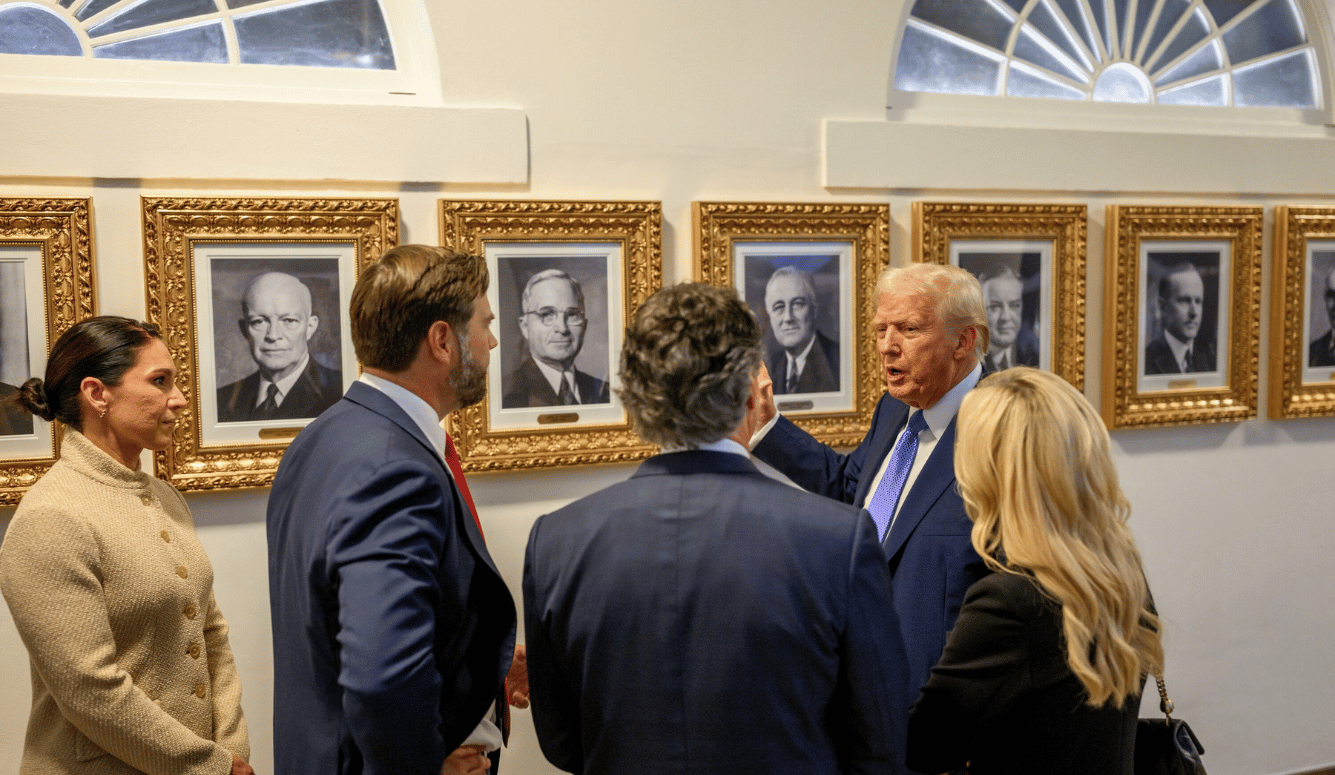
Trump’s stewardship of the United States has been just as counterproductive on the domestic front. Despite avenging his electoral defeat by Joe Biden with victory over Biden’s vice-president in 2024, Trump has clung to the inflammatory lie that the 2020 election was stolen from him. He has called those who tried to nullify that result on 6 January 2021 “patriots” and granted hundreds of them pardons following their convictions in courts of law. He allowed Elon Musk, an entrepreneur who knew nothing about the federal government, to rampage through the professional civil service and fire thousands of competent public servants for no good reason. He undermined scientific expertise at the National Institutes of Health, the Centers for Disease Control and Prevention, and the Environmental Protection Agency.
Trump appointed Robert F. Kennedy, Jr.—a conspiracy theorist ignorant of modern science, medicine, and the benefits of vaccines—to lead the Department of Health and Human Services. He appointed Tulsi Gabbard—a former left-wing isolationist—to be director of national intelligence. He expanded the operations of US Immigration and Customs Enforcement and its poorly trained agents wound up killing American citizens and arresting legally settled and law-abiding migrants. He attacked American universities producing significant research that contributes to America’s global scientific and medical preeminence and spread fear among foreign students. He abandoned essential support for American production of clean energy just as the global market for electric cars was expanding. And while supporting tax cuts for the wealthiest Americans, he called for cuts to Medicaid, a program that provides health coverage to low-income Americans.
A leader aware of the forgotten dimensions of strategy would not have undermined his own criticism of campus antisemitism and Israel-hatred by refusing to emphatically condemn the antisemitism espoused by some of the most powerful influencers on the right of the Republican Party. Such a leader would not have plastered his name on the Kennedy Center for the Performing Arts, draped a banner bearing his image over the Department of Justice, or destroyed the classical elegance of the White House by gilding the Oval Office and demolishing the East Wing to make way for a ballroom. That leader would not have made a habit of intimidating and goading those who already fear he is creating an authoritarian presidency.
But Trump did all those things and more. And in so doing, he undermined his ability to convince anyone beyond his base that he could be right about anything. By 28 February, when he told the truth about Iran and what needed to be done about it, the Democratic Party and the liberal press and media were in no mood to listen. As a result, the first week of the war has produced a mixture of spectacular American and Israeli military success and an explosion of fierce domestic opposition.
The United States does not have a leader in the Democratic Party like Yair Lapid or a majority on the New York Times editorial board willing to support a war against the Islamic Republic, especially not one led by Donald Trump. Americans must therefore live with an uncomfortable paradox: that the cause of antifascism has been abandoned by the party of Franklin Roosevelt and is being prosecuted instead by the most authoritarian American president in living memory. Unfortunately, there is no appetite within the Democratic Party, or within the intellectual world from which it draws support and orientation, for using US military power to keep nuclear weapons out of the hands of genocidal religious fanatics.
This is not entirely a product of Trump’s own unforced errors. Since the terrorist attacks of 11 September 2001, only a small minority of liberal voices in America and Europe have been willing to critically examine the nature and doctrines of Islamist movements, a totalitarian interpretation of Islam found in Iran’s Shi’ite regime and various Sunni and Shi’ite terrorist organisations. In the United States, Paul Berman investigated the history and meaning of Islamist ideology in books like Terror and Liberalism (2004) and Flight of the Intellectuals (2010). My own contributions to this discussion have included historical works, and essays for publications like the American Interest, Persuasion, and Quillette. Iranian-American author Roya Hakakian has offered details of the scope and brutality of the Islamic Republic’s repeated violent repression of peaceful protests. Among German liberals, similar critiques of Islamism and the Islamic Republic of Iran have appeared in Bassam Tibi’s Islamism and Islam (2012) and Matthias Küntzel’s Jihad and Jew-Hatred (2007). Küntzel has also published many English-language essays on Iran and the threat it poses to the United States, Europe, and Israel.
The Ideology of Mass Murder
Hamas and the origins of the October 7th attacks.
In response to these writers and others like them, Islamists and many Western liberals have replied with accusations of “Islamophobia.” Criticisms of Islamist ideology have been redescribed as a kind of racism or religious bigotry. This mistaken argument has proved to be a potent one. It has helped to marginalise criticism of Islamic fanaticism in the academy and in liberal outlets like the New York Times, the Washington Post, CNN, MSNBC, the Atlantic, the New Republic, the New Yorker, and the New York Review of Books. Of the policy-oriented think tanks in Washington, the Washington Institute for Near East Policy is one of the few Democratic-leaning institutions to argue that diplomacy with Iran could not succeed without a credible threat of force.
Disaffection with the Bush administration’s policies after 9/11, along with a morally relativistic approach to Western multiculturalism, have made the Democratic Party and liberal intellectuals increasingly reluctant to speak frankly about the most reactionary ideology since Nazism. Barack Obama’s tenure in office set the tone as he sought to repair relations with Muslim-majority countries abroad and Muslim communities at home. The result of this intellectual abdication has been the adoption of this species of anti-totalitarianism by the American Right, where it has found a home at think tanks and organisations like the Foundation for Defense of Democracies, the Hudson Institute, the Middle East Forum, and within the Republican Party.
III.
The results of this shift of political coordinates were particularly evident on 4 March 2026 when the United States’ Senate debated a resolution that sought to end support for the six-day-old war. It was introduced by Democrat Tim Kaine, and co-sponsored by one Republican, Rand Paul (known for his opposition to most American military operations abroad), and 26 of Kaine’s Democratic colleagues. The resolution directed “the President to remove U.S. armed forces from hostilities within or against Iran unless a declaration of war or authorization to use military force for such purpose has been enacted.” Forty-four of 45 Democrats plus Paul and two independents voted in favour. Fifty-two of 53 Republicans plus Democratic senator John Fetterman voted against. So the resolution was defeated by a vote of 53 to 47.
The Democrats’ principal complaints were that the Trump administration had not explained its war aims or how it planned to accomplish them; that Iran posed no imminent threat—nuclear or otherwise—to the United States; that the administration’s other justifications for military action kept changing; that Congress had not been consulted, and that the war was therefore illegal. Chris Murphy, the Democratic junior senator from Connecticut, spoke for many of his party colleagues when he said, “It is really hard to encapsulate in one speech how dangerous, how inane, how illegal, how ill-planned this war with Iran is, especially just after the first few days. We are likely going to end up with a worse Iranian regime at the end. We are telling the Iranian people to rise up on the streets, but we have no plan to support them if they do.”
But Murphy went too far when he also claimed that “the first several days of this conflict have been criminally incompetent.” By the time he said that, Ayatollah Khamenei and other members of the Iranian leadership had already been killed; much of the Iranian Navy had been sunk; Iran’s capacity to fire ballistic missiles and drones had been significantly reduced by American and Israeli bombing of launch sites; and efforts to prevent reconstitution of the nuclear program following the June war were proceeding. Nevertheless, Murphy concluded his speech by announcing, “We should not sugarcoat this. This is already a disaster of epic proportions, and I am just going to tell you it is likely to get worse.”
A number of Democrats pointed out that Trump had assured the world that Iran’s nuclear program had been “obliterated” by US bombs during the Twelve Day War. Massachusetts’s junior senator Ed Markey insisted that diplomacy with Iran was still the best means of arms control: “A diplomatic solution remains the best way to permanently and verifiably prevent Iran from acquiring a nuclear weapon. The more Trump bombs Iran, the further we get away from diplomatic deals. We are going backwards.”
Given their historic support for the United Nations and the importance of international organisations such as the International Atomic Energy Agency (IAEA), it was odd that these speakers didn’t pay more attention to what that agency’s reports have to say on this matter. In a report on Iran’s nuclear program published on 12 November 2025, IAEA director general Rafael Mariano Grossi wrote that:
Based on the information previously provided by Iran, previous Agency verification activities and estimates based on the past operating records of the relevant declared facilities, the Agency’s estimate of Iran’s total enriched uranium stockpile, as of 13 June 2025, was 9874.9 kg: comprising 9040.5 kg of uranium in the form of UF6 and 834.4 kg of uranium in other forms. The total enriched uranium stockpile in the form of UF6 of 9040.5 kg comprised: 2391.1 kg of uranium enriched up to 2% U-235; 6024.4 kg of uranium enriched up to 5% U-235; 184.1 kg of uranium enriched up to 20% U-235; and 440.9 kg of uranium enriched up to 60% U-235.
During negotiations with the Trump administration conducted in February 2026, the Iranians claimed they still possessed 460 kilograms of uranium enriched to sixty percent, and acknowledged that this could be enriched to weapons-grade level within a week to ten days—enough for eleven nuclear bombs. This statement undercut years of assertions that their nuclear program was exclusively peaceful because nuclear-power plants do not require uranium enriched to those levels.
In a 27 February 2026 IAEA report, Grossi concluded that the agency could not verify:
• whether Iran has suspended all enrichment-related activities, including research and development;
• whether Iran has suspended all reprocessing activities;
• the size of Iran’s uranium stockpile at the affected facilities;
• whether Iran has suspended work on all heavy water-related projects;
• Iran’s inventories of centrifuges and related equipment.… Moreover, in light of Iran’s continued unwillingness to address the unresolved safeguards issues, the Agency has outstanding concerns about the possible presence of undeclared nuclear material and activities in Iran.
In short, the IAEA was worried that Iran was concealing its efforts to reconstitute the nuclear program that had been badly damaged in the June war.
The issue of the legality of Trump’s decision was the weakest part of the Democrats’ anti-war case. The War Powers Act of 1973 requires the president to report the reasons for the use of force to the speaker of the House and president pro tempore of the Senate within 48 hours. It then gives the president the authority to conduct military operations for sixty days before going to Congress to receive a declaration of war or “enacted specific authorization” for the use of US armed forces. As the Republican senior senator for Wyoming John Barasso put it, the terms of the War Powers Act were “never intended to allow Congress to micromanage military operations.” Presidents Clinton, Bush, Obama, and Biden all acted on its basis. Trump is now doing likewise.
Republican speeches during the debate emphasised the Islamic Republic’s barbarism, fanaticism, intransigence, mendacity, and its long history of hostility to the United States and Israel. And while Democrats repeatedly invoked the lessons of Vietnam, Afghanistan, Iraq, and Libya, Republicans pointed to other precedents. “We have learned the lessons from North Korea,” countered Pete Ricketts, the Republican junior senator for Nebraska, “that, once a nation has nuclear weapons and a missile system, they are not going back.” That is precisely why the United States needs “to destroy their ability to threaten us and their neighbors, right now, before it gets out of control. If we wait too long, we may not be able to stop it.”
Tommy Tuberville, the Republican senior senator from Alabama, and Lindsey Graham, the Republican senior senator from South Carolina, both described the Islamic Republic as a “death cult,” but only Tuberville connected the regime’s Islamist ideology to Islam. Tuberville did not offer a particularly nuanced view of the link between Islam and the ideology of the Islamic Republic of Iran, but at least he mentioned the issue, which none of the Democrats thought to do. Members of the Senate—and the American people—were therefore able to juxtapose Tuberville’s blunt and inadequate discussion with the complete lack of examination of this matter by the opposition.
A note of caution was introduced by Republican senior senator for Kentucky and former majority leader Mitch McConnell. While McConnell applauded Trump’s “bold and tough decision” and acknowledged that it “could transform the region for the better,” he conceded that the president needed to explain the connection between “worthy objectives” and the “military and diplomatic means to achieve them.” The Democrats, who had supported keeping the military option on the table in the past, he noted, would hopefully “consider the consequences of terminating ongoing operations before they have even succeeded.” What would the Chinese and Russians conclude “if America lost its stomach for decisive action?” What “cold comfort” would allies take from “erratic and partisan application of U.S. foreign policy commitments?”
McConnell even connected American support for Ukraine to Trump’s attack on Iran: “One of the reasons U.S. operations have enjoyed such freedom of maneuver in the Western Hemisphere and the Middle East is that Russia is bogged down in its war in Ukraine—a war whose battlefield innovations are already shaping operations in the Gulf. If Russia were more unencumbered, it could have provided more material assistance to its partners in Venezuela and Iran.” The United States should therefore “be careful not to compel an outcome [in Ukraine] that allows Russia to reassert itself in regions of critical importance to the United States. At the same time, there is tremendous value globally to destroying Iran’s ability to produce the drones that rain down death in Europe and the Middle East alike.” McConnell was the only senator in the debate to make this connection, but his words do not appear to have made an impression on the Trump administration. On 13 March, Trump lifted sanctions on Russia in an attempt to ease energy prices.
The challenge to the Democrats from Trump’s allies in the Senate amounted to this: You agree that Iran should not acquire nuclear weapons, but at this moment of opportunity, when the regime has never been weaker, you refuse to support the use of force, which is the only means left to bring about that goal. Two of your presidents have tried to end Iran’s nuclear ambitions with diplomatic agreements. Both failed because the Islamic Republic never had any intention of renouncing the pursuit of a capability it considers a national right. If you want the ends, you must also choose the means to achieve it. And if you don’t, you replace serious policymaking with wishful thinking.
IV.
There is never a good time to go to war, and no one, no matter how confident they are of disaster or victory, knows how this one is going to end. But the degrading of Hezbollah and Hamas after 7 October and the fall of the Assad regime created an opportunity that Trump and Netanyahu both realised they had to act upon before it vanished. Israel has the world’s second-most capable air force and its government is deeply familiar with Iran. Given all of this, any American president would be derelict in not seizing the chance to do what his predecessors could not. Trump had at last connected the necessary means of military force to the goal of a nuclear-free Iran that the entire US Senate had long supported.
By uniting against Trump’s war, the Democratic Party and the liberal press have demonstrated an irrational faith in the power of diplomacy and inspections even when experience shows that these approaches stand no chance of success. Eloquent about the dangers and costs of war, the Democrats are unable to consider the foreseeable costs of inaction. Once an Iranian dictatorship driven by religious fanaticism actually acquires nuclear weapons, the logic of rationality that has allowed it to reach multiple accords of nuclear deterrence—however ineffective—with its bitter enemies over the past eight decades will no longer apply.
Like many people who long to see the end of the Islamic Republic, I would prefer that America were led by anyone but Trump during the Iranian regime’s present moment of acute vulnerability. But since we don’t live in that world, we have to make the best of this one. The paradox of this conflict is that a thoroughgoing authoritarian at home has been the man selected by circumstance to finally confront the theofascists of the Middle East. This profoundly flawed president has, in this one matter, at last taken the decision that has a chance to end the 47-year war against the liberal West begun by the religious and political reactionaries in Iran.
Quillette invites thoughtful responses to its essays.
Selected responses are published once per week as part of a curated Letters to the Editor feature. If selected, letters appear under the contributor’s real name and may be edited for clarity and length.
To submit a letter for consideration, please email [email protected].
Read the full article here
Fact Checker
Verify the accuracy of this article using AI-powered analysis and real-time sources.