

 Freedom Index
Listen to the article
Notwithstanding scattered Israeli military strikes against Hamas, the ceasefire that went into effect last October in Gaza still largely holds. The public-relations campaign against the Jewish state continues apace, however. Israel’s most strident critics maintain not only that Israel committed genocide against Palestinians during the two-year conflict, but also that this claimed genocide continues to this day.
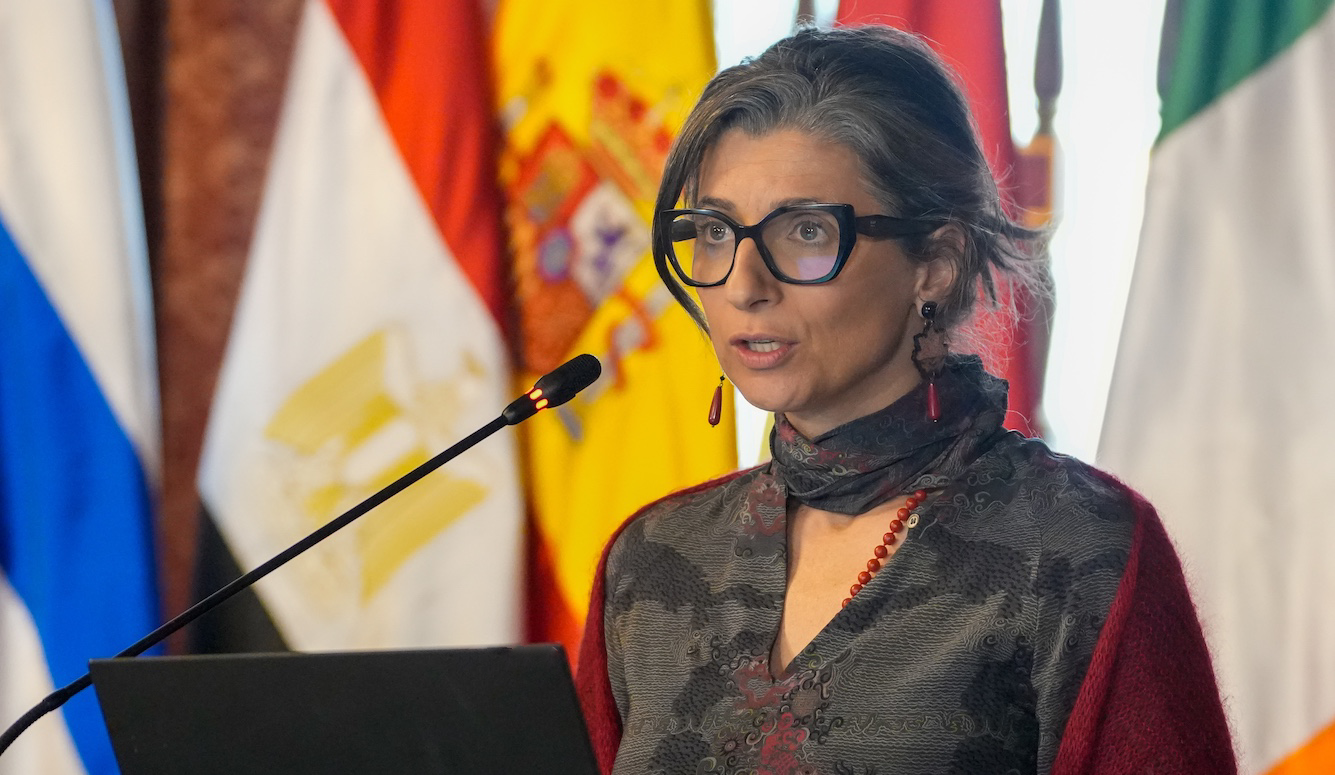
The critic with the biggest soapbox is United Nations Human Rights Council Rapporteur Francesca Albanese. In her March 2024 study, Anatomy of a Genocide, she concluded there were “reasonable grounds” to believe that the threshold criteria required to establish the charge of genocide had been met in Gaza. In her October 2025 report to the UN General Assembly, Gaza Genocide: A Collective Crime, Albanese continues to denounce Israel’s military conduct in Gaza, while also criticising the larger international community for failing to arrest it.
The scathing anti-Israeli tone of these reports will come as no surprise to anyone acquainted with the 47-year-old Italian legal scholar, who’s served as the UN Special Rapporteur on the Occupied Palestinian territories since 2022. Last year, she was sanctioned by the US government for waging a “campaign of political and economic warfare against the United States and Israel,” in the words of Secretary of State Marco Rubio. According to Rubio, Albanese had engaged with the International Criminal Court (ICC) “in efforts to investigate, arrest, detain, or prosecute” Americans and Israelis; though neither country is a signatory to the 1998 Rome Statute. (The ICC’s jurisdiction is generally limited to the treaty’s member states.)
The central thesis of Albanese’s new report is that the destruction in Gaza was not the result of a conventional military conflict. Rather, Albanese describes it as “full-fledged genocide,” an “internationally enabled crime,” and a systemic “settler-colonial process of erasure,” which could not have persisted without the complicity of foreign powers. Albanese further brands Israel a threat to “international peace and security,” and declares that support for the Jewish state constitutes “an offense to justice” and “the idea of common humanity.”
Even many mainstream critics of Israel, I suspect, will be hard-pressed to deny that Albanese takes a distinctly one-sided view of the conflict. But readers of the report will at least be rewarded with insights into the means by which the precepts of international law (and the moral stature of august-sounding bodies such as the UN Human Rights Council) have been weaponised by Israel’s ideological adversaries.
Albanese structures her findings around claimed violations of the 1948 Genocide Convention. She argues that the evidence in Gaza does not point to accidental collateral damage, but to a deliberate policy of “unmaking” a people. In this regard, she points to three specific acts: killing members of the targeted group (i.e., Palestinians); causing serious bodily or mental harm; and deliberately inflicting conditions of life calculated to bring about physical destruction.
Of course, all of these phenomena are invariably in evidence, to some extent at least, in every conventional military conflict. This is especially the case in the context of urban warfare conducted in densely populated areas such as Gaza, against an enemy that deliberately positions its combatants among civilians.
Yet Albanese seems mostly uninterested in the fine points of urban warfare, or in Hamas’s tactics—except to the extent that she accuses Israel of using them as a pretext to commit genocide. She further argues that Israel has used “humanitarian camouflage”—the strategic invocation of international humanitarian law terminology such as “human shields” and “collateral damage”—to justify the liquidation of Palestinian life and infrastructure.
The report also highlights the “genocidal logic” embedded in the statements of high-ranking Israeli political and military officials. By way of example, she cites “human animals”; and the Biblical term Amalek, a byword for an enemy of the Israelites that must be fought and destroyed. But while this language is certainly strong, the context is important: These terms weren’t used to refer to Gazans in general, but rather to jihadists who’ve taken up arms against Israel.
Albanese’s rhetoric tends to switch back and forth between legal analysis and moral philosophy, particularly when she discusses the role of Israel’s foreign backers—whom she accuses of “third state complicity” (notwithstanding the aspirational nature of Palestinian statehood). By providing a “veneer of legality” to Israel’s actions, Albanese alleges, these foreign states (“primarily Western ones,” she is careful to specify) have become accessory to a “joint criminal enterprise.”
The rapporteur argues that the international community has flouted its responsibilities under the Genocide Convention, which mandates signatories to act “to prevent or to punish” genocide. “No State can credibly claim to uphold international law while arming, supporting, or shielding a genocidal regime,” she writes. “States knew. States had the means to act… International law does not allow the luxury of feigned ignorance, delay or rhetorical acrobatics.”
Arguments in defence of Israel’s actions are dismissed as “propaganda” that “cast[s] Palestinians as less than human.” Albanese goes on to claim that “by framing Gaza’s destruction as a battle of civilization against barbarism,” Western leaders “have helped Israel erase the distinction between civilians and combatants.”
This is one of many instances in which Albanese’s free-form moralising masks her dubious legal reasoning and lack of evidence: Nowhere in the report could I find proof that Israel had “erased” the distinction between civilians and combatants (which is crucial to a finding of genocide). More broadly, the idea that Israel has committed “genocide” in Gaza is an accusation, not a fact. But Albanese (who uses the word often) treats the claim as unambiguously true, citing another single-issue Palestinian-focused UN entity—the Independent International Commission of Inquiry on the Occupied Palestinian Territory.
As noted above, Albanese has little to say about Palestinian motives and tropes, or the manner by which Hamas and Palestinian Islamic Jihad initiated the 2023–25 conflict with their murderous invasion of Israel on 7 October 2023. It should be remembered that her mandate as Rapporteur “is to assess the human rights situation” in the West Bank and Gaza, “report publicly about it, and work with governments, civil society and others to foster international cooperation.” The fact that Gaza has been ruled for two decades by a theocratic terrorist group that provoked a ruinous war would seem to be highly germane.
Albanese rejects the significance of 7 October because she contends it was merely part of a “continuum of erasure” that Israel has been inflicting on Palestinians since 1948. In reckoning the costs of “occupation”—a term she uses to describe Gaza’s situation both before and after 7 October; as well as Israel’s civil and military presence in the West Bank—she implicitly dismisses the idea that Hamas is a morally independent actor. Rather, it is to be regarded as a mere symptom of Israel’s malign presence. By this logic, Hamas cannot be held liable for its actions.
While Albanese’s formal mandate is restricted to Gaza and the West Bank, she argues that events in these areas have existential ramifications for literally everyone on the planet. In fact, she suggests that the Palestinian issue could unlock a new phase of global cooperation and harmony—but only if the world follows her advice: “This is not only about Palestine. It is about the survival of the United Nations… From the ruins of oppression, a new multilateralism must emerge, not a façade, but a living architecture of rights and dignity for the many, not the few.”
Needless to say, Albanese is hardly the first UN official to launch questionable rhetorical attacks on Israel. But she sets herself apart from predecessors with her unusually polemical tone. Moreover, while former UN reports have typically focused on individual issues and incidents, she employs the more generalised academic jargon of “settler-colonialism,” which serves to dismiss entire nations and societies (the United States, Canada, Australia, and Israel being the usual targets) as stained with original sin, and therefore morally illegitimate in and of themselves. (Other academic terms she rolls out include “domicide, urbicide, scholasticide, medicide, cultural genocide and ecocide.”)
By viewing the conflict through this ideological lens, Albanese interprets the destruction of hospitals, universities, and mosques not as a tragic but unavoidable product of military necessity—there is much evidence that Hamas used these locations as fortresses and prisons—but rather as proof that Israel is furthering a malevolent settler-colonial agenda. In fact, she claims that before the first Israeli bomb fell in Gaza in October 2023, the Strip had already been “primed for genocide” through a seventeen-year blockade that made it “unliveable.”
As this passage suggests, Albanese’s language can sometimes blur into conspiracism, as when she writes that “the violence that Israel has unleashed against the Palestinians post-7 October is not happening in a vacuum, but is part of a long-term intentional, systematic, State-organized forced displacement and replacement of the Palestinians.” In her narrative, the cold-blooded murder of 1,200 Israelis by Hamas terrorists (and the kidnapping and rape of many more) are apparently mere footnotes to this sinister Israeli blueprint.
Not surprisingly, Gaza Genocide: A Collective Crime has divided international opinion. Albanese’s findings were welcomed by international human rights organisations, many of which have published their own similarly doctrinaire responses to Israel’s military campaign in Gaza. On the other hand, Israel and the United States have both denounced the report, arguing that the author’s approach serves to exculpate Palestinian violence while effectively denying Israel the right to defend itself against a foe that cynically embeds itself among civilians.
Ultimately, Albanese’s motivation appears to be fundamentally political. Her gratuitous smears on Israel’s moral legitimacy—as well as her unsettling indifference to Palestinian acts of terrorism—suggest that her core objection lies not with the war that’s just been concluded, but rather with the whole Zionist project to establish sovereignty in the historical homeland of the Jews.
And while she seems to imagine the 7 October 2023 attacks were a pretext for Israel to commit genocidal acts, it’s hard to avoid the suspicion that Albanese herself is acting on pretext. Which is to say that she used the ensuing war as an opportunity to broadcast her own pre-formed antipathy to Israel’s existence as a Jewish state with a moral right to defend its borders.
In her more exalted passages, Albanese presents as a self-styled prophet, predicting doom if the community of nations continues to abet the forces of Zionism. In that case, she warns, the “façade” of the rules-based order may collapse, leaving not just Palestinians but other societies vulnerable to the four horsemen of settler-colonial evil. As in a battle between devils and angels, “the world now stands on a knife-edge between the collapse of the international rule of law and hope for renewal.”
So what is to be done in the short term? Albanese calls upon the international community to levy sweeping punishments against Israel—including boycotting and sanctioning its economy, and suspending it from the United Nations.
That hasn’t happened, of course. Since Albanese released her report in October, the world’s attention has largely shifted to other crises—including in Venezuela, Iran, and even humble Greenland.
Nevertheless, we haven’t heard the last of Albanese: Earlier this year, the UN Human Rights Council decided to keep Albanese on as Special Rapporteur. Assuming she serves out her full term, she’ll continue leading humanity out of the “ruins of oppression” until at least 2028.
Read the full article here
Fact Checker
Verify the accuracy of this article using AI-powered analysis and real-time sources.