Close Menu
FSNN | Free Speech News NetworkFSNN | Free Speech News Network
  • Home
  • News
    • Politics
    • Legal & Courts
    • Tech & Big Tech
    • Campus & Education
    • Media & Culture
    • Global Free Speech
  • Opinions
    • Debates
  • Video/Live
  • Community
  • Freedom Index
  • About
    • Mission
    • Contact
    • Support
Trending

New York’s New 3D Printing Law, As Written, Is Extremely Harmful And Annoying

15 minutes ago

Federal Trade Commission Calls Chamber of Commerce ‘Left-Wing’—Because It Opposes Onerous Regulations

17 minutes ago

Artemis II and China’s Lunar Ambitions

34 minutes ago
Facebook X (Twitter) Instagram
Facebook X (Twitter) Discord Telegram
FSNN | Free Speech News NetworkFSNN | Free Speech News Network
Market Data Newsletter
Friday, February 20
  • Home
  • News
    • Politics
    • Legal & Courts
    • Tech & Big Tech
    • Campus & Education
    • Media & Culture
    • Global Free Speech
  • Opinions
    • Debates
  • Video/Live
  • Community
  • Freedom Index
  • About
    • Mission
    • Contact
    • Support
FSNN | Free Speech News NetworkFSNN | Free Speech News Network
Home»News»Media & Culture»U.S. To Spend $24.4 Trillion More Than It Has Over the Next Decade, Report Warns
Media & Culture

U.S. To Spend $24.4 Trillion More Than It Has Over the Next Decade, Report Warns

News RoomBy News Room2 hours agoNo Comments5 Mins Read1,581 Views
Share Facebook Twitter Pinterest Copy Link LinkedIn Tumblr Email VKontakte Telegram
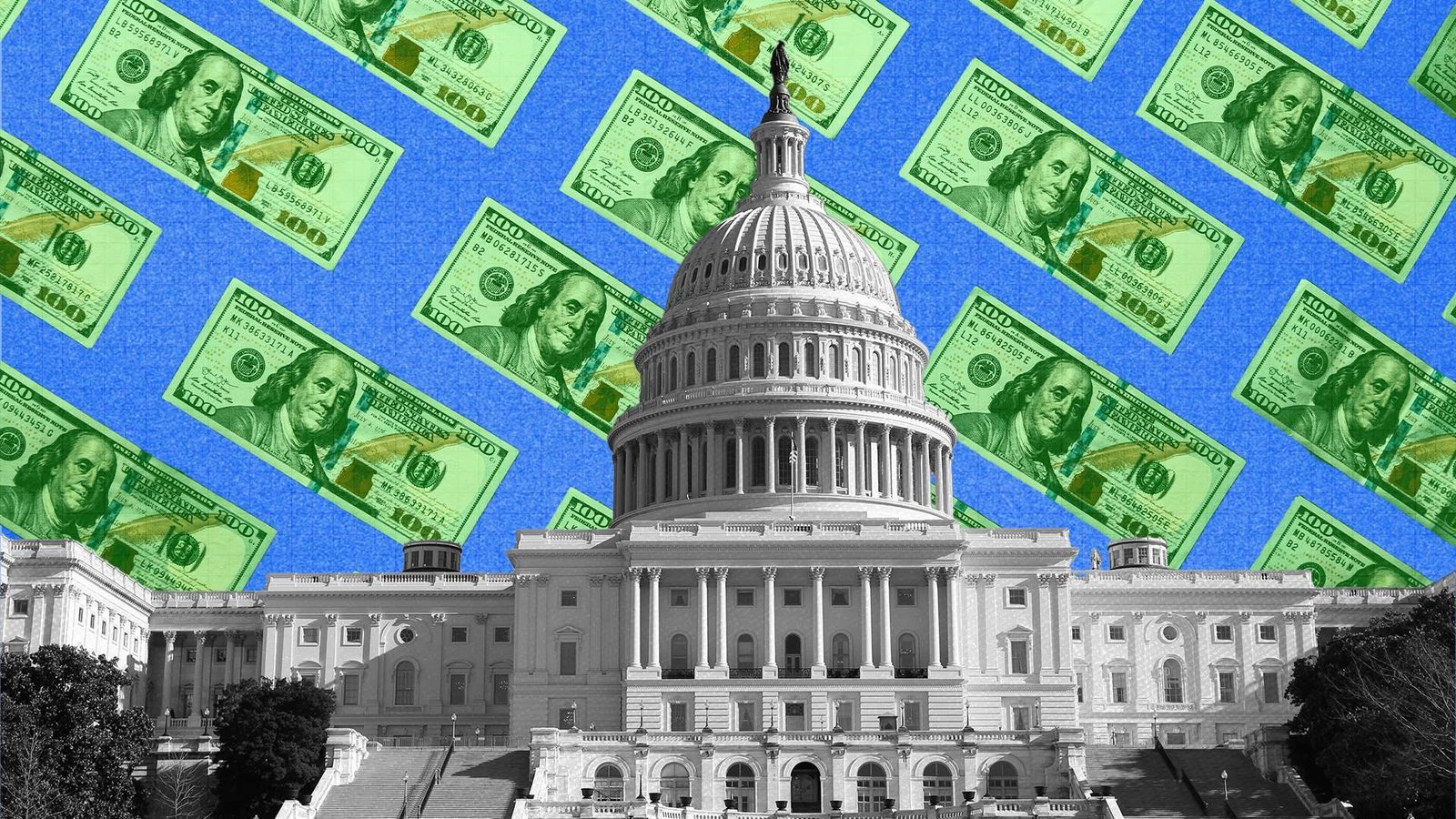
U.S. To Spend .4 Trillion More Than It Has Over the Next Decade, Report Warns
Share
Facebook Twitter Pinterest Email Copy Link

Listen to the article

0:00
0:00

Key Takeaways

Playback Speed

Select a Voice

Despite what progressives have been arguing lately, the United States does not have a tax problem. Federal revenues, even after last year’s extension of the Trump tax cuts, are running above their historical average as a share of gross domestic product (GDP). What America has is a spending problem so large that the Congressional Budget Office’s latest 10-year outlook reads less like a fiscal forecast than a warning label.

Between now and 2036, the CBO projects $94.6 trillion in federal spending against $70.2 trillion in revenue, a decadelong deficit of $24.4 trillion. Outlays reached 23.1 percent of GDP in 2025, nearly two full percentage points above the 50-year average, meaning annual spending growth is outpacing the economy itself. Debt held by the public is projected to hit 101 percent of GDP this year, which will surpass the post-WWII record of 106 percent by 2030, and climb to 120 percent by 2036.

The Trump administration says it wants to cut the deficit to 3 percent of GDP by the end of this presidential term, roughly half the current trajectory. The CBO’s numbers show how far that ambition is from reality.

The cost of paying the interest is now the central story, and it’s a grim one. Net interest outlays will rise from about $1 trillion this year to more than $2.1 trillion by 2036, when interest payments alone are projected to consume more than a quarter of total tax revenues. The federal government will spend more on the costs of past borrowing than it spends on many of the programs the borrowing was supposed to fund.

The interest problem reflects both rising debt and the compounding effect of all that borrowing. As deficits raise indebtedness, interest payments increase, financed by additional borrowing. If interest rates rise more than projected, the dynamic accelerates.

These fiscal troubles are further intensified by spending on autopilot. Social Security, Medicare, Medicaid and net interest are projected to represent roughly 73% of total outlays by 2036 and absorb nearly all federal revenues.

Think about that: Virtually every dollar the government collects in taxes will pay for entitlements and interest before Congress appropriates even a single cent for defense, infrastructure, research, or anything else. Congress’ room to maneuver shrinks each year, not because of the choices it’s making so much as the choices it’s not willing to make.

Nonetheless, politicians have been busy making things worse by further increasing the number of tax carveouts, which are better understood as spending through the tax code. The CBO notes that these tax expenditures, including no tax on tips and a new tax credit for seniors, equal 8 percent of GDP. In the coming decade, that cumulative revenue loss will amount to more than $34 trillion.

As always, the CBO’s report relies on various optimistic assumptions: that temporary tax provisions are allowed to expire on schedule; that planned spending reductions actually occur; that controversial tariffs remain in place; that interest rates remain where they are now. It also assumes that in 2032, when the Social Security Trust fund dries up, Congress will borrow enough to maintain all benefits at their current level without creating more inflation. Not all these things will happen.

On the other hand, the report does embed several assumptions that might be tilting the outlook in a more pessimistic direction. The CBO assumes less economic growth than some private-sector forecasts, which could suppress projected revenues and elevate projected debt ratios. Stronger productivity or labor force growth would materially improve the fiscal picture. And, of course, if Congress decides against all expectations to reform Social Security (rather than slap on an expensive bandage) once the trust fund is exhausted, the long-term outlook would stabilize.

This is a two-party failure. Entitlement growth reflects demographic realities and longstanding, fixable design flaws. Recent tax legislation reduced revenue despite some welcomed spending offsets. The honest accounting is that both parties have contributed to this problem and neither has offered a plan equal to its scale. It’s why both sides should care.

It’s simply not possible to treat persistent, trillion-dollar budget deficits as an abstraction much longer. They divert capital away from productive private investment, raise real interest rates, and slow growth. They also hollow politicians’ own fiscal capacity. When the next emergency hits, the government will start from a position of weakness. And in a stressed environment, every additional dollar of emergency borrowing comes at a higher cost than it should.

If policymakers refuse to align spending with revenues so as to reassure investors that America will pay its debt, the market’s adjustment will be painful. It will unleash higher inflation.

President Donald Trump must make good on his deficit-reduction promise. Democrats must sign on. Reform is a choice. Disorder is what happens when that choice is deferred.

COPYRIGHT 2026 CREATORS.COM

Read the full article here

Fact Checker

Verify the accuracy of this article using AI-powered analysis and real-time sources.

Get Your Fact Check Report

Enter your email to receive detailed fact-checking analysis

5 free reports remaining

Continue with Full Access

You've used your 5 free reports. Sign up for unlimited access!

Already have an account? Sign in here

#CivicEngagement #MediaAccountability #MediaAndPolitics #PressFreedom #PublicDiscourse
Share. Facebook Twitter Pinterest LinkedIn Tumblr Email Telegram Copy Link
News Room
  • Website
  • Facebook
  • X (Twitter)
  • Instagram
  • LinkedIn

The FSNN News Room is the voice of our in-house journalists, editors, and researchers. We deliver timely, unbiased reporting at the crossroads of finance, cryptocurrency, and global politics, providing clear, fact-driven analysis free from agendas.

Related Articles

Media & Culture

New York’s New 3D Printing Law, As Written, Is Extremely Harmful And Annoying

15 minutes ago
Media & Culture

Federal Trade Commission Calls Chamber of Commerce ‘Left-Wing’—Because It Opposes Onerous Regulations

17 minutes ago
Debates

Artemis II and China’s Lunar Ambitions

34 minutes ago
Cryptocurrency & Free Speech Finance

Google Brings AI Music Generation to Gemini—We Tried It, and It’s Too Little Too Late

44 minutes ago
Media & Culture

Iran Is Trying To Silence Dissent. Western Media Are Breaking Through Anyway.

1 hour ago
Cryptocurrency & Free Speech Finance

AI in Hollywood? ‘Silicon Valley’ Star T.J. Miller Isn’t Worried

2 hours ago
Add A Comment
Leave A Reply Cancel Reply

Editors Picks

Federal Trade Commission Calls Chamber of Commerce ‘Left-Wing’—Because It Opposes Onerous Regulations

17 minutes ago

Artemis II and China’s Lunar Ambitions

34 minutes ago

Robinhood (HOOD) L2 testnet logs 4 million transactions in first week

39 minutes ago

BTC Lightning Network Tops $1B in Monthly Transaction Volume: River

41 minutes ago
Latest Posts

Google Brings AI Music Generation to Gemini—We Tried It, and It’s Too Little Too Late

44 minutes ago

Iran Is Trying To Silence Dissent. Western Media Are Breaking Through Anyway.

1 hour ago

White House favors some stablecoin rewards, tells banks it’s time to move

2 hours ago

Subscribe to News

Get the latest news and updates directly to your inbox.

At FSNN – Free Speech News Network, we deliver unfiltered reporting and in-depth analysis on the stories that matter most. From breaking headlines to global perspectives, our mission is to keep you informed, empowered, and connected.

FSNN.net is owned and operated by GlobalBoost Media
, an independent media organization dedicated to advancing transparency, free expression, and factual journalism across the digital landscape.

Facebook X (Twitter) Discord Telegram
Latest News

New York’s New 3D Printing Law, As Written, Is Extremely Harmful And Annoying

15 minutes ago

Federal Trade Commission Calls Chamber of Commerce ‘Left-Wing’—Because It Opposes Onerous Regulations

17 minutes ago

Artemis II and China’s Lunar Ambitions

34 minutes ago

Subscribe to Updates

Get the latest news and updates directly to your inbox.

© 2026 GlobalBoost Media. All Rights Reserved.
  • Privacy Policy
  • Terms of Service
  • Our Authors
  • Contact

Type above and press Enter to search. Press Esc to cancel.

🍪

Cookies

We and our selected partners wish to use cookies to collect information about you for functional purposes and statistical marketing. You may not give us your consent for certain purposes by selecting an option and you can withdraw your consent at any time via the cookie icon.

Cookie Preferences

Manage Cookies

Cookies are small text that can be used by websites to make the user experience more efficient. The law states that we may store cookies on your device if they are strictly necessary for the operation of this site. For all other types of cookies, we need your permission. This site uses various types of cookies. Some cookies are placed by third party services that appear on our pages.

Your permission applies to the following domains:

  • https://fsnn.net
Necessary
Necessary cookies help make a website usable by enabling basic functions like page navigation and access to secure areas of the website. The website cannot function properly without these cookies.
Statistic
Statistic cookies help website owners to understand how visitors interact with websites by collecting and reporting information anonymously.
Preferences
Preference cookies enable a website to remember information that changes the way the website behaves or looks, like your preferred language or the region that you are in.
Marketing
Marketing cookies are used to track visitors across websites. The intention is to display ads that are relevant and engaging for the individual user and thereby more valuable for publishers and third party advertisers.