

 Freedom Index
Listen to the article
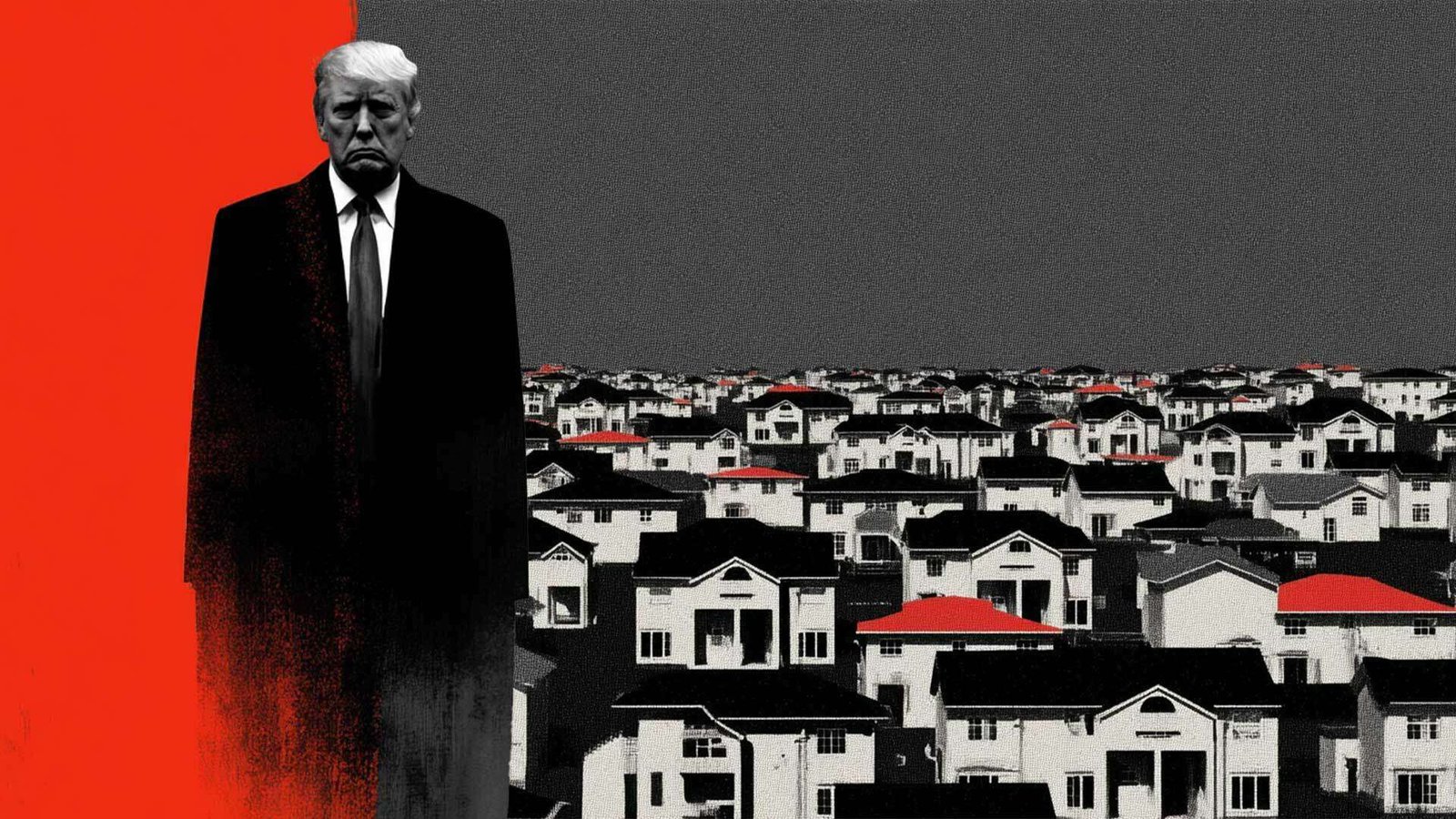
In the latest development in horseshoe theory, President Donald Trump said on Wednesday that his administration would ban large institutional investors from owning single-family homes.
“People live in homes, not corporations,” said Trump in a Truth Social post. He promised his administration would unilaterally ban large investors from buying homes and ask Congress to codify the restriction.
????President Trump will immediately take steps to ban big institutional investors from buying more single family homes and he will be calling on Congress to codify it. pic.twitter.com/Rq77lfs8Vi
— James Blair (@JamesBlairUSA) January 7, 2026
The notion that the president could enact such a ban on his own authority seems dubious in the extreme. Still, the proposal is popular with wings of both the Republican and Democratic parties, and Trump is likely to find several allies in Congress who would support passing such a law.
Large institutional investors have gone from buying effectively zero single-family homes before the Great Recession to being responsible for a small but non-negligible percentage of home purchasers in recent years.
As investors’ activity has grown, so too have complaints from politicians of both parties that they are outbidding would-be owner-occupier families, who are then condemned to a life of perpetual renting.
Democrats in Congress have repeatedly introduced legislation that would levy prohibitively high excise taxes on single-family homes owned in excess of 100 by investors.
Texas Republican Gov. Greg Abbott and New York Democratic Gov. Kathy Hochul have both criticized institutional home investors. One of the few things that J.D. Vance and Tim Walz were able to agree on in the 2024 vice presidential debate was the need to stop Wall Street from buying single-family homes.
Mostly Democratic state legislators from California to Nebraska have proposed complete bans on single-family home purchases by large investors and out-of-state corporations, although none of the most far-reaching proposals have become law.
While Trump offered no details on his proposed ban, these proposals provide hints at what a federal crackdown might look like in practice.
Whatever the specifics, any real federal effort to squeeze institutional investors out of the single-family housing market is bound to make shelter more expensive and less plentiful.
For all the political attention paid to larger institutional investors, they make up a small percentage of home purchasers and own an even smaller share of the country’s single-family homes.
According to The Wall Street Journal‘s parsing of the data, investors were responsible for about 25 percent of single-family home purchases in the first quarter of 2024. That is up from 20 percent in 2016, and the increase is almost totally driven by larger investors who own upward of 100 homes.
Over the past few years, companies owning 1,000 or more homes have accounted for only about 1 percent of all single-family purchases, but in 2024, their purchases appear to have dropped to effectively zero.
Purchases by entities that own more than 10 homes have ranged from 2 percent to 6 percent in recent years. That means that the 20 percent or so of homes being bought by investors are predominantly being sold to smaller landlords who own 10 or fewer homes.
And the bulk of home sales (some 75–80 percent) continue to be owner-occupiers.
These numbers look even more lopsided when one considers the ownership statistics on the overall stock of housing.
The Census Bureau estimates that in 2023 there were some 99 million single-family homes in the United States, of which between 14 million and 15 million were rental units.
Meanwhile, the Urban Institute found that institutional investors, defined as owning 100 or more homes, owned 574,000 single-family rentals in 2022. Based on these numbers, institutional investors own about 3 percent of single-family rentals and .5 percent of all single-family homes.
They’ve hardly cornered the market. Additionally, the overall number of single-family rentals hit a peak in the immediate aftermath of the Great Recession and has been in steady decline since.
Commercial real estate firm CBRE reported in an October 2024 research brief that single-family rental inventory had declined by 1.7 million units since 2016. Contrary to the dominant political narrative, owner-occupying homeowners are outbidding investors and landlords for more and more of the country’s homes each year.
This is to be expected, says Kevin Erdmann, an affiliated scholar at George Mason University’s Mercatus Center.
“A homeowner is the renter’s favorite landlord and the landlord’s favorite renter, and they always agree with everything they want to do on the property,” he says, meaning that when individuals own their own homes, they reduce many of the conflicts, risks, and inefficiencies inherent in the landlord-tenant relationship.
An owner-occupier doesn’t need to argue with a landlord about replacing an old appliance. They don’t need to worry about a tenant not paying rent, damaging the property, or moving and leaving them with a vacancy to fill.
As such, owner-occupiers are willing to pay a higher purchase price for a home. Landlords who do have to absorb all the risks and costs of their business demand a higher offsetting yield from owning a home, says Erdmann, which means demanding a lower purchase price.
This is why owner-occupiers have dominated the market for single-family home purchases for decades, and continue to do so. The post-Great Recession period, when credit was constrained and prices had collapsed, was an extreme exception to the rule.
To the degree investors did pile into the single-family market after the Great Recession, the results are positive.
Research finds that their post-Recession single-family investments did reduce the homeownership rate, but also helped to stabilize the housing market, improve housing quality, increase construction employment, and decrease housing vacancy.
Likewise, research on the Dutch city of Rotterdam’s ban on buy-to-rent arrangements in certain neighborhoods found that affected neighborhoods had higher homeownership rates, but also higher housing costs and fewer renters.
Another 2022 study found that institutional investment in real estate increases neighborhood diversity by opening up more affordable rental housing options. That study did find that these investors were raising home prices overall.
Banning institutional investors from the single-family market would reduce the accessibility they provide to renters who can’t qualify for mortgages. It would also help to crush a growing source of new housing supply: build-to-rent developments.
While the stock of single-family rentals has been declining for years, new developments of single-family subdivisions purpose-built as rentals and financed by large institutional investors have been increasing precipitously.
Estimates vary, but the U.S. has gone from building a few thousand build-to-rent homes each year to around 30,000 as of 2023. CBRE, the commercial real estate firm, estimates that they are as high as 5 percent of new single-family home construction.
And as new apartment construction in the United States has risen considerably in recent years, annual production rates are roughly at the limit of what’s allowed by existing zoning codes, says Erdmann. New single-family homes built to sell are also near the limits created by federal restrictions on mortgage credit, he argues.
The only growth in home production to be squeezed is from expanding build-to-rent construction. While politicians are interpreting this activity as homes taken from homeowners, they are, in fact new supply that would go away under any ban on institutional investors.
Build-to-rent development “is no different from a local developer coming in and saying ‘there’s this chunk of land. I’m going to cut in this little subdivision.’ Why would we say if you’re a company, you can’t do it?” says Norbert Michael of the Cato Institute. “That doesn’t get more supply, it gets us less supply.”
Trump has a habit of tweeting out bold policy proposals that end up going nowhere. The 50-year mortgage thus far appears to be one of them. Perhaps a ban on institutional investor-owned housing will be too.
Given the bipartisan agitation against housing investors, as well as the general rise in “Republican socialism”, it would seem foolish to discount the idea that some sort of crackdown could come to pass.
If it does, the U.S. housing market will continue to be dominated by single-family homes being built for and bought by owner-occupiers, and developer built rental apartment buildings.
But renters looking for a single-family home in which to live will have fewer options, and the U.S. homebuilding rate will be pushed down by regulation once again.
Read the full article here
Fact Checker
Verify the accuracy of this article using AI-powered analysis and real-time sources.