

 Freedom Index
Listen to the article
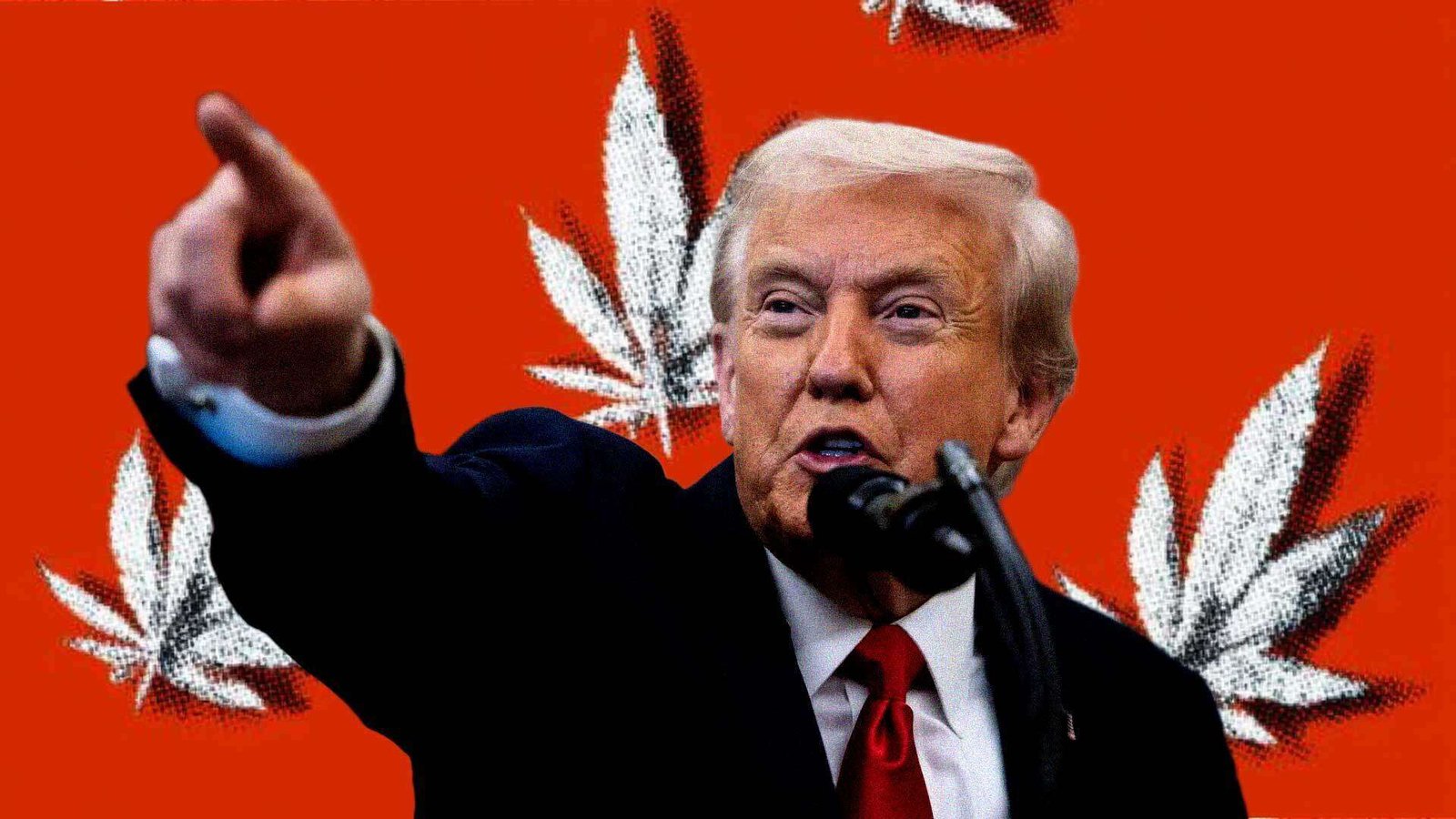
During his 2024 campaign, President Donald Trump indicated that he supported the Biden administration’s plan to reclassify marijuana under the Controlled Substances Act (CSA), saying “we will continue to focus on research to unlock the medical uses of marijuana [as] a Schedule 3 drug.” Last August, Trump confirmed that his administration was “looking at reclassification,” a move he reportedly discussed last week during a telephone call with House Speaker Mike Johnson (R–La.) that also included cannabis industry executives. The Washington Post reports that Trump is expected to issue an executive order that “directs federal agencies to pursue reclassification,” which MJBizDaily says could happen this week.
Since 1970, marijuana has been listed in Schedule I of the CSA, a category supposedly reserved for substances with a high abuse potential and no accepted medical use—drugs so dangerous that they cannot be used safely even under a doctor’s supervision. That classification has never made much sense, and moving marijuana to Schedule III, a category that includes prescription drugs such as ketamine, Tylenol with codeine, and anabolic steroids, would recognize that it does not meet the criteria for Schedule I. But the practical impact of rescheduling would be relatively modest.
“Symbolically, it suggests that maybe marijuana isn’t as harmful as people thought [and that] maybe it does have some health benefits,” Vanderbilt University law professor Robert Mikos, who specializes in drug policy, told The Washington Post. “On the practical side, though, the impact is pretty muted.”
Placing marijuana in Schedule III would not legalize recreational use, and it would allow medical use only if the Food and Drug Administration (FDA) approved specific cannabis-based products as prescription drugs. Producing and distributing marijuana, even in compliance with state law, would still be federal crimes, albeit subject to somewhat less severe penalties. Reclassifying marijuana nevertheless would be a financial boon to state-licensed marijuana businesses, relieving them of a disability that results in staggeringly high effective income tax rates. It also would make medical research easier by eliminating federal restrictions that are specific to Schedule I.
Under Section 280E of the Internal Revenue Code, businesses that supply Schedule I or Schedule II substances in violation of federal law are not allowed to claim standard deductions for expenses such as advertising, renting retail space, and paying sales staff. Counterintuitively, tax courts have ruled that such businesses can deduct the “cost of goods sold,” which includes expenses directly related to cultivating, processing, and purchasing marijuana. But the inability to claim deductions available to fully legal businesses has long plagued the cannabis industry, making it difficult for marijuana merchants to turn a profit, let alone invest in expansion.
The 280E restriction “often results in tax rates of more than 70% for marijuana retailers in particular,” MJBizDaily noted in 2023. “I cannot emphasize enough that removal of § 280E would change the industry forever,” cannabis lawyer Vince Sliwoski wrote around the same time. “Having worked with cannabis businesses for 13 years, I view taxation as the largest affront to marijuana businesses—more than banking access, intellectual property protection problems, lack of bankruptcy, you name it. This would be HUGE.”
Marijuana’s Schedule I status also imposes burdens on researchers interested in exploring the plant’s medical potential. “The moment that a drug gets a Schedule I [designation], which is done in order to protect the public so that they don’t get exposed to it, it makes research much harder,” National Institute on Drug Abuse Director Nora Volkow noted during congressional testimony in 2019. That designation, she explained, requires researchers to complete a “lengthy and cumbersome” registration process. It also entails special storage requirements.
In addition to its tax implications and its impact on research, placing marijuana in Schedule III would acknowledge that the federal government has been exaggerating the drug’s hazards and ignoring its potential benefits for half a century. Schedule I, which includes “heroin and LSD,” is “the classification meant for the most dangerous substances” and is “even higher than the classification of fentanyl and methamphetamine,” President Joe Biden noted in October 2022, when he instructed Attorney General Merrick Garland and the Department of Health and Human Services (HHS) to begin the process of reviewing marijuana’s classification. On Twitter, Biden reiterated that “we classify marijuana at the same level as heroin” and treat it as “more serious than fentanyl,” which he said “makes no sense.”
HHS completed its review in August 2023, recommending that the Drug Enforcement Administration (DEA) move marijuana from Schedule I to Schedule III. The DEA had long taken the position that a drug has a “currently accepted medical use” only if there is enough evidence to pass muster with the FDA. HHS instead applied a more permissive two-part test.
Part 1 asked “whether there is widespread current experience with medical use of marijuana in the United States by licensed HCPs [health care practitioners] operating in accordance with implemented state-authorized programs, where such medical use is recognized by entities that regulate the practice of medicine under these state jurisdictions.” Since 38 states had approved medical use of marijuana, it easily satisfied this prong.
“More than 30,000 HCPs are authorized to recommend the use of marijuana for more than six million registered patients,” HHS noted. That means there is “widespread clinical experience associated with various medical conditions recognized by a substantial number of jurisdictions across the United States.”
Part 2 of the new HHS test asked “whether there exists some credible scientific support for at least one of the medical conditions for which the Part 1 test is satisfied.” After reviewing the relevant literature, HHS concluded that there is “credible scientific support” for marijuana’s use as a treatment for pain, for nausea and vomiting, and for “anorexia related to a medical condition.” That conclusion, it emphasized, is “not meant to imply that safety and effectiveness have been established for marijuana that would support FDA approval of a marijuana drug product for a particular indication.”
Regarding “potential for abuse,” the HHS analysis underlined the slipperiness of the concept, which the CSA does not define. The fact that people like marijuana, for example, counts as one piece of evidence that suggests its potential for abuse. As HHS put it, “there is ample epidemiological evidence that marijuana is self-administered by humans because of its ability to produce rewarding psychological effects, such as euphoria.” But while HHS noted widespread nonmedical use of marijuana, it drew a distinction between use and abuse even in that context—a distinction that has always been anathema to the DEA.
“Evidence shows that some individuals are taking marijuana in amounts sufficient to create a hazard to their health and to the safety of other individuals and the community,” HHS said. “However, evidence also exists showing that the vast majority of individuals who use marijuana are doing so in a manner that does not lead to dangerous outcomes to themselves or others.”
Marijuana use “may lead to moderate or low physical dependence, depending on
frequency and degree of marijuana exposure,” HHS said. “It can produce psychic dependence in some individuals, but the likelihood of serious outcomes is low, suggesting that high psychological dependence does not occur in most individuals who use marijuana.” While “experimental data and clinical reports demonstrate that chronic, but not acute, use of marijuana can produce both psychic and physical dependence in humans,” it said, “the symptoms associated with both kinds of dependence are relatively mild for most individuals.”
HHS also noted that “the risks to the public health posed by marijuana are low compared to other drugs of abuse,” such as heroin (Schedule I), cocaine (Schedule II), and benzodiazepines such as Valium and Xanax (Schedule IV). That conclusion was “based on an evaluation of various epidemiological databases for [emergency room] visits, hospitalizations, unintentional exposures, and most importantly, for overdose deaths.” Although “abuse of marijuana produces clear evidence of harmful consequences, including substance use disorder,” HHS said, they are “less common and less harmful” than the negative consequences associated with other drugs.
In “various epidemiological databases” compiled from 2015 to 2021, HHS noted, “the utilization-adjusted rate of adverse outcomes involving marijuana was consistently lower than the respective utilization-adjusted rates of adverse outcomes involving heroin, cocaine, and, for certain outcomes, other comparators. Also, the rank order of the comparators in terms of adverse outcome counts typically placed alcohol or heroin in the first or immediately subsequent positions, with marijuana in a lower place.”
Given the conclusion that marijuana has a “currently accepted medical use,” it plainly did not belong in Schedule I. And given the evidence regarding its relative hazards, HHS decided, placement in Schedule III made sense. “While marijuana is associated with a high prevalence of abuse,” it said, “the profile of and propensity for serious outcomes related to that abuse lead to a conclusion that marijuana is most appropriately controlled in Schedule III under the CSA.”
Garland, the official directly charged with rescheduling drugs under the CSA, accepted that recommendation in May 2024. The proposed rule was posted by the DEA, the agency to which the attorney general historically has delegated scheduling decisions, and it had a DEA docket number. But it was signed by Garland alone and not by Anne Milgram, then the DEA’s administrator, which reflected internal opposition to the move.
The DEA’s resistance likely explains why the rule, which was supported by a large majority of commenters, was not finalized during the eight remaining months of the Biden administration. Judging from the Post‘s report, Trump plans to start over again, so it is not clear exactly how long it will take to reschedule marijuana this time around, assuming that does in fact happen.
MJBizDaily notes “significant opposition” from the DEA and “highly placed health officials,” saying critics of the move were responsible for leaking the news of Trump’s plan. DEA Administrator Terrance Cole “is said to be skeptical and may push for a lengthy review of health and science data,” the outlet reports. It also notes that “major anti-reform groups” such as Smart Approaches to Marijuana are expected to “challenge marijuana rescheduling through the courts.”
Assuming Trump follows through on his plan, it would be a “partial victory,” cannabis lawyer Shawn Hauser told CNBC, noting that it would not resolve the conflict between federal prohibition and state laws that allow medical or recreational use of marijuana. “This [is] the beginning of a new era of public health policy,” Hauser said. “If implemented, it dismantles nearly a century of outdated drug policies that fly in the face of science and medicine.”
Brian Vicente, founding partner of Hauser’s law firm, emphasized the tax impact. “This monumental change will have a massive, positive effect on thousands of state-legal cannabis businesses around the country,” he told Cannabis Business Times. “One dominating inequity cannabis businesses face is the inability to deduct regular business expenses, since they sell a Schedule I substance. Rescheduling releases cannabis businesses from the crippling tax burden they have been shackled with and allows these businesses to grow and prosper. We work with hundreds of licensed cannabis businesses, and the ability to deduct ordinary operating costs under the Schedule III proposal is a game-changer for them.”
Other cannabis industry observers are less enthusiastic. High Times Publisher Josh Kesselman, founder of RAW Rolling Papers, worries that rescheduling could pose new legal perils for state-licensed marijuana businesses. Potential charges include “selling a prescription drug without a license, misbranding a drug, illegal distribution, and conspiracy,” he told CBS News. Chris Fontes, founder and CEO of High Spirits, “echoed those concerns, saying many cannabis businesses would be unable to legally operate in a Schedule III framework without FDA approval and licensure.”
The concern that rescheduling will expose the cannabis industry to new legal risks seems overblown to me. People who produce and sell marijuana, even with state permission, are already committing multiple federal felonies every day, meaning they are subject to heavy criminal penalties and civil forfeiture. Although an annually renewed congressional spending rider bars the Justice Department from targeting state-licensed medical marijuana suppliers, prosecutorial discretion is the only protection for businesses that serve the recreational market. While that would still be true with marijuana in Schedule III, a new policy of targeting those businesses for violating FDA regulations would be just as politically perilous as going after them under current law.
Two dozen states, accounting for most of the U.S. population, have legalized recreational marijuana, and polls indicate that a large majority of Americans oppose the federal ban. In this context, a new crackdown on state-legal marijuana suppliers, whatever form it took, would be widely controversial.
Fontes’ skepticism is nevertheless understandable, since his company sells seltzers and gummies that contain hemp-derived THC, a product category that Congress accidentally legalized in 2018 but recently decided to ban, effective next November. That decision illustrates the contradictions of federal cannabis policy.
Congress has sought to protect medical marijuana providers from federal interference even as it leaves in place the prohibition that authorizes their prosecution. During his first term, Trump proposed eliminating that protection. But last year, Trump supported legalization of recreational marijuana in his home state of Florida, and he said he also favored legislation that would remove barriers to marijuana banking.
Those positions did not stop Trump from signing the appropriations bill that included the ban on psychoactive hemp products, and they did not stop his administration from defending a federal law that makes it a felony for cannabis consumers to possess guns—a policy at the center of a Second Amendment case the Supreme Court will hear this term. And now Trump is pushing a reform that falls far short of repealing the federal marijuana ban that Congress just voted to extend.
“Removing cannabis from its Schedule I classification validates the experiences of tens of millions of Americans, as well as those of tens of thousands of physicians, who have long recognized that cannabis possesses legitimate medical utility,” said Paul Armentano, deputy director of the National Organization for the Reform of Marijuana Laws. “But while such a move potentially provides some benefits to patients, and veterans especially, it still falls well short of the changes necessary to bring federal marijuana policy into the 21st century.”
Read the full article here
Fact Checker
Verify the accuracy of this article using AI-powered analysis and real-time sources.