Close Menu
FSNN | Free Speech News NetworkFSNN | Free Speech News Network
  • Home
  • News
    • Politics
    • Legal & Courts
    • Tech & Big Tech
    • Campus & Education
    • Media & Culture
    • Global Free Speech
  • Opinions
    • Debates
  • Video/Live
  • Community
  • Freedom Index
  • About
    • Mission
    • Contact
    • Support
Trending

Potential buyers are circling Winklevoss-backed crypto exchange Gemini (GEMI)

18 minutes ago

CoreWeave’s $8.5B Deal Signals Shift From Crypto Mining to AI Finance

22 minutes ago

YouTube Now Lets You Create Your Own AI Deepfakes

26 minutes ago
Facebook X (Twitter) Instagram
Facebook X (Twitter) Discord Telegram
FSNN | Free Speech News NetworkFSNN | Free Speech News Network
Market Data Newsletter
Thursday, April 9
  • Home
  • News
    • Politics
    • Legal & Courts
    • Tech & Big Tech
    • Campus & Education
    • Media & Culture
    • Global Free Speech
  • Opinions
    • Debates
  • Video/Live
  • Community
  • Freedom Index
  • About
    • Mission
    • Contact
    • Support
FSNN | Free Speech News NetworkFSNN | Free Speech News Network
Home»News»Media & Culture»Trump’s New Budget—Which Proposes $1.5 Trillion for Defense—Is Unserious. You Should Still Take It Seriously.
Media & Culture

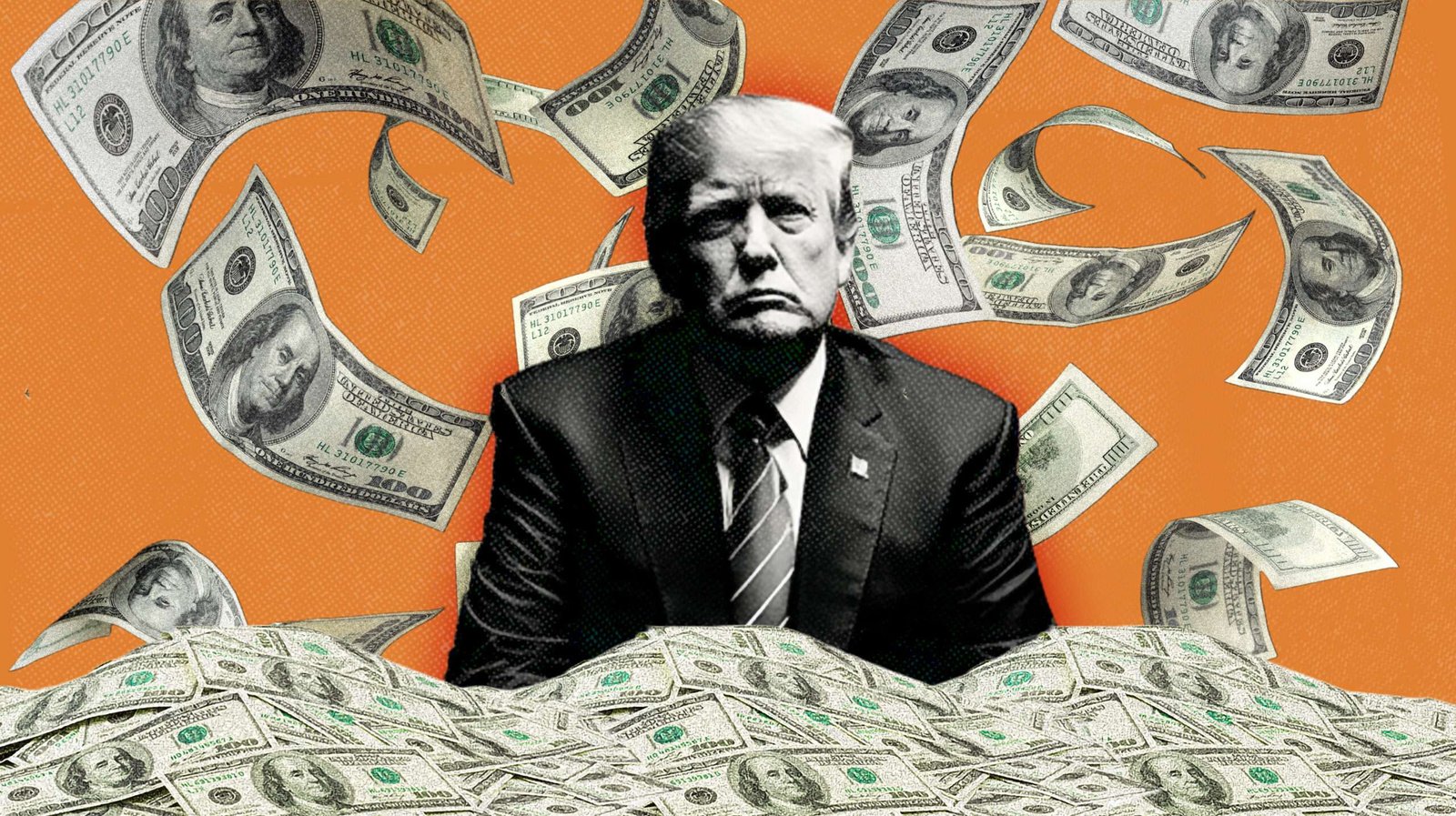
Trump’s New Budget—Which Proposes $1.5 Trillion for Defense—Is Unserious. You Should Still Take It Seriously.

News RoomBy News Room6 hours agoNo Comments4 Mins Read583 Views
Share Facebook Twitter Pinterest Copy Link LinkedIn Tumblr Email VKontakte Telegram
Trump’s New Budget—Which Proposes .5 Trillion for Defense—Is Unserious. You Should Still Take It Seriously.
Share
Facebook Twitter Pinterest Email Copy Link

Listen to the article

0:00
0:00

Key Takeaways

Playback Speed

Select a Voice

The president’s fiscal 2027 budget is out, and I have two reactions. The first will sound familiar: Like so many budgets before it, this is not a serious effort to put America’s government on a sustainable path. The second is more important: It would be a mistake to dismiss it as just another unserious document. That is exactly how we got here.

Start with what the new budget does and does not do. It’s not a comprehensive fiscal plan. It covers only about one-third of federal spending, focusing heavily on discretionary choices and largely ignoring the autopilot spending that drives our long-term debt.

The headline item is defense spending. The administration proposes a jump of $445 billion to reach $1.5 trillion. That’s a 42 percent increase in one year, the largest since the Korean War, raising defense spending to roughly 4.4 percent of gross domestic product (GDP).

This is not a onetime surge that will simply recede when things calm down in Iran. It’s an expansion of the spending base. Bureaucracies and procurement contracts do not shrink after a buildup. And procurement cycles, contracting and industrial capacity do not scale quickly. The Pentagon cannot efficiently absorb that kind of increase overnight.

So, whatever one thinks about our national security needs, this budget commits the country to trillions in additional cumulative spending layered atop existing obligations. The fiscal commitment is permanent even if the operational absorption is slow.

The rest of the proposed budget is largely cosmetic. The Trump administration calls for cutting roughly 10 percent from nondefense discretionary spending, but these are the same kinds of proposals that appear every year of Republican administrations and rarely survive Congress and the appropriations process. They are politically easy to announce, difficult to enact, and—if they were to survive—insufficient to change the fiscal trajectory.

More importantly, this budget avoids the core problems. It proposes no meaningful reforms to Social Security or Medicare, the drivers of our debt. It offers no comprehensive tax plan. It does not present a coherent 10-year path for deficits or debt. It is, in effect, a partial spending request without any underlying fiscal architecture.

Republicans must choose. They cannot implement endless tax cuts, raise defense spending by 42 percent, and also refuse to reform Social Security and Medicare. Something has to give. Cutting foreign aid, trimming waste, or reducing immigration-related expenses won’t begin to close the gap in any meaningful way.

Democrats face the same reckoning. They cannot be the party of expanded entitlements, climate spending coupled with degrowth demands, student debt relief, and the preservation of every program without pushing America further toward a fiscal disaster. Increasing taxes on the wealthy is not a fiscal plan. The arithmetic does not come close to closing a gap of this magnitude even under the most optimistic assumptions.

The presidential budget relies on overly optimistic assumptions of its own, the likes of which have characterized federal budgeting for decades. Economic growth projections of around 3 percent are treated as baseline despite a workforce that is barely growing and policy choices that actively constrain the labor supply. That would require sustained productivity growth at levels we have rarely achieved outside of exceptional periods. AI may well boost productivity, but assuming that it will deliver decadelong 3 percent growth is not serious budgeting.

This is not merely an accounting problem. When markets do not believe official growth projections, they immediately revise down their expectations for future tax revenues and therefore expect smaller future fiscal surpluses. Those revised expectations are reflected in bond prices and, ultimately, in the price level. Optimistic budget assumptions produce bad spreadsheets and can erode fiscal credibility in real time.

Meanwhile, the bill is already arriving. Interest costs have nearly tripled since 2001, and within a decade, they will consume nearly one-third of federal tax revenue. Within a few decades, interest could absorb closer to two-thirds of annual taxes—and that’s under relatively benign assumptions about interest rates.

This is the quiet crisis unfolding. It is the interaction of too much debt, rising interest costs, and persistent political unwillingness to act.

Knowing all this, it would be easy to treat this budget as one more unserious document and move on. But that would miss the point, because it is not an outlier. It is part of a pattern that has been building for years and has only accelerated since the Great Recession.

That pattern must end. Year after year, presidents of both parties submit budgets that avoid necessary tradeoffs. Year after year, Congress fails to impose discipline. And year after year, the debt trajectory worsens, imposing a growing burden on the vibrancy of the private sector.

COPYRIGHT 2026 CREATORS.COM

Read the full article here

Fact Checker

Verify the accuracy of this article using AI-powered analysis and real-time sources.

Get Your Fact Check Report

Enter your email to receive detailed fact-checking analysis

5 free reports remaining

Continue with Full Access

You've used your 5 free reports. Sign up for unlimited access!

Already have an account? Sign in here

#CivicEngagement #FreePress #MediaBias #PoliticalDebate #PressFreedom
Share. Facebook Twitter Pinterest LinkedIn Tumblr Email Telegram Copy Link
News Room
  • Website
  • Facebook
  • X (Twitter)
  • Instagram
  • LinkedIn

The FSNN News Room is the voice of our in-house journalists, editors, and researchers. We deliver timely, unbiased reporting at the crossroads of finance, cryptocurrency, and global politics, providing clear, fact-driven analysis free from agendas.

Related Articles

Cryptocurrency & Free Speech Finance

YouTube Now Lets You Create Your Own AI Deepfakes

26 minutes ago
Media & Culture

Trump Won With the MAHA Vote. Now He Might Be Losing It.

58 minutes ago
Cryptocurrency & Free Speech Finance

OpenAI Says Enterprise AI Is Already 40% of Its Revenue Amid ‘Agentic Workflow’ Shift

1 hour ago
Media & Culture

Someone Filed a Bogus DMCA Notice to Kill a Story About A Sketchy SEO Firm. It Worked — Briefly.

2 hours ago
Media & Culture

FBI Goes After Whistleblower Who Helped Unmask the ‘Fort Bragg Cartel’

2 hours ago
Cryptocurrency & Free Speech Finance

Google’s PaperOrchestra AI Converts Lab Notes Into Publication-Ready Research Papers

2 hours ago
Add A Comment
Leave A Reply Cancel Reply

Editors Picks

CoreWeave’s $8.5B Deal Signals Shift From Crypto Mining to AI Finance

22 minutes ago

YouTube Now Lets You Create Your Own AI Deepfakes

26 minutes ago

Trump Won With the MAHA Vote. Now He Might Be Losing It.

58 minutes ago

Kalshi now controls 89% of the U.S. prediction market as regulated trading takes over

1 hour ago
Latest Posts

Here’s Why Ethereum Price Remains Bullish Above $1,800.

1 hour ago

OpenAI Says Enterprise AI Is Already 40% of Its Revenue Amid ‘Agentic Workflow’ Shift

1 hour ago

Someone Filed a Bogus DMCA Notice to Kill a Story About A Sketchy SEO Firm. It Worked — Briefly.

2 hours ago

Subscribe to News

Get the latest news and updates directly to your inbox.

At FSNN – Free Speech News Network, we deliver unfiltered reporting and in-depth analysis on the stories that matter most. From breaking headlines to global perspectives, our mission is to keep you informed, empowered, and connected.

FSNN.net is owned and operated by GlobalBoost Media
, an independent media organization dedicated to advancing transparency, free expression, and factual journalism across the digital landscape.

Facebook X (Twitter) Discord Telegram
Latest News

Potential buyers are circling Winklevoss-backed crypto exchange Gemini (GEMI)

18 minutes ago

CoreWeave’s $8.5B Deal Signals Shift From Crypto Mining to AI Finance

22 minutes ago

YouTube Now Lets You Create Your Own AI Deepfakes

26 minutes ago

Subscribe to Updates

Get the latest news and updates directly to your inbox.

© 2026 GlobalBoost Media. All Rights Reserved.
  • Privacy Policy
  • Terms of Service
  • Our Authors
  • Contact

Type above and press Enter to search. Press Esc to cancel.

🍪

Cookies

We and our selected partners wish to use cookies to collect information about you for functional purposes and statistical marketing. You may not give us your consent for certain purposes by selecting an option and you can withdraw your consent at any time via the cookie icon.

Cookie Preferences

Manage Cookies

Cookies are small text that can be used by websites to make the user experience more efficient. The law states that we may store cookies on your device if they are strictly necessary for the operation of this site. For all other types of cookies, we need your permission. This site uses various types of cookies. Some cookies are placed by third party services that appear on our pages.

Your permission applies to the following domains:

  • https://fsnn.net
Necessary
Necessary cookies help make a website usable by enabling basic functions like page navigation and access to secure areas of the website. The website cannot function properly without these cookies.
Statistic
Statistic cookies help website owners to understand how visitors interact with websites by collecting and reporting information anonymously.
Preferences
Preference cookies enable a website to remember information that changes the way the website behaves or looks, like your preferred language or the region that you are in.
Marketing
Marketing cookies are used to track visitors across websites. The intention is to display ads that are relevant and engaging for the individual user and thereby more valuable for publishers and third party advertisers.