Close Menu
FSNN | Free Speech News NetworkFSNN | Free Speech News Network
  • Home
  • News
    • Politics
    • Legal & Courts
    • Tech & Big Tech
    • Campus & Education
    • Media & Culture
    • Global Free Speech
  • Opinions
    • Debates
  • Video/Live
  • Community
  • Freedom Index
  • About
    • Mission
    • Contact
    • Support
Trending

The Enduring Fight Over ‘Fighting Words’

4 minutes ago

Yield-Bearing Stablecoins Surge as Washington Fights Over Yield

25 minutes ago

Spot Bitcoin ETFs Log Their First Five-Day Inflow Streak of 2026

1 hour ago
Facebook X (Twitter) Instagram
Facebook X (Twitter) Discord Telegram
FSNN | Free Speech News NetworkFSNN | Free Speech News Network
Market Data Newsletter
Saturday, March 14
  • Home
  • News
    • Politics
    • Legal & Courts
    • Tech & Big Tech
    • Campus & Education
    • Media & Culture
    • Global Free Speech
  • Opinions
    • Debates
  • Video/Live
  • Community
  • Freedom Index
  • About
    • Mission
    • Contact
    • Support
FSNN | Free Speech News NetworkFSNN | Free Speech News Network
Home»News»Media & Culture»Trump’s Labor Department Admits That Trump’s Immigration Crackdown Is Causing a Shortage of Farm Workers
Media & Culture

Trump’s Labor Department Admits That Trump’s Immigration Crackdown Is Causing a Shortage of Farm Workers

News RoomBy News Room5 months agoNo Comments4 Mins Read195 Views
Share Facebook Twitter Pinterest Copy Link LinkedIn Tumblr Email VKontakte Telegram
Trump’s Labor Department Admits That Trump’s Immigration Crackdown Is Causing a Shortage of Farm Workers
Share
Facebook Twitter Pinterest Email Copy Link

Listen to the article

0:00
0:00

Key Takeaways

Playback Speed

Select a Voice

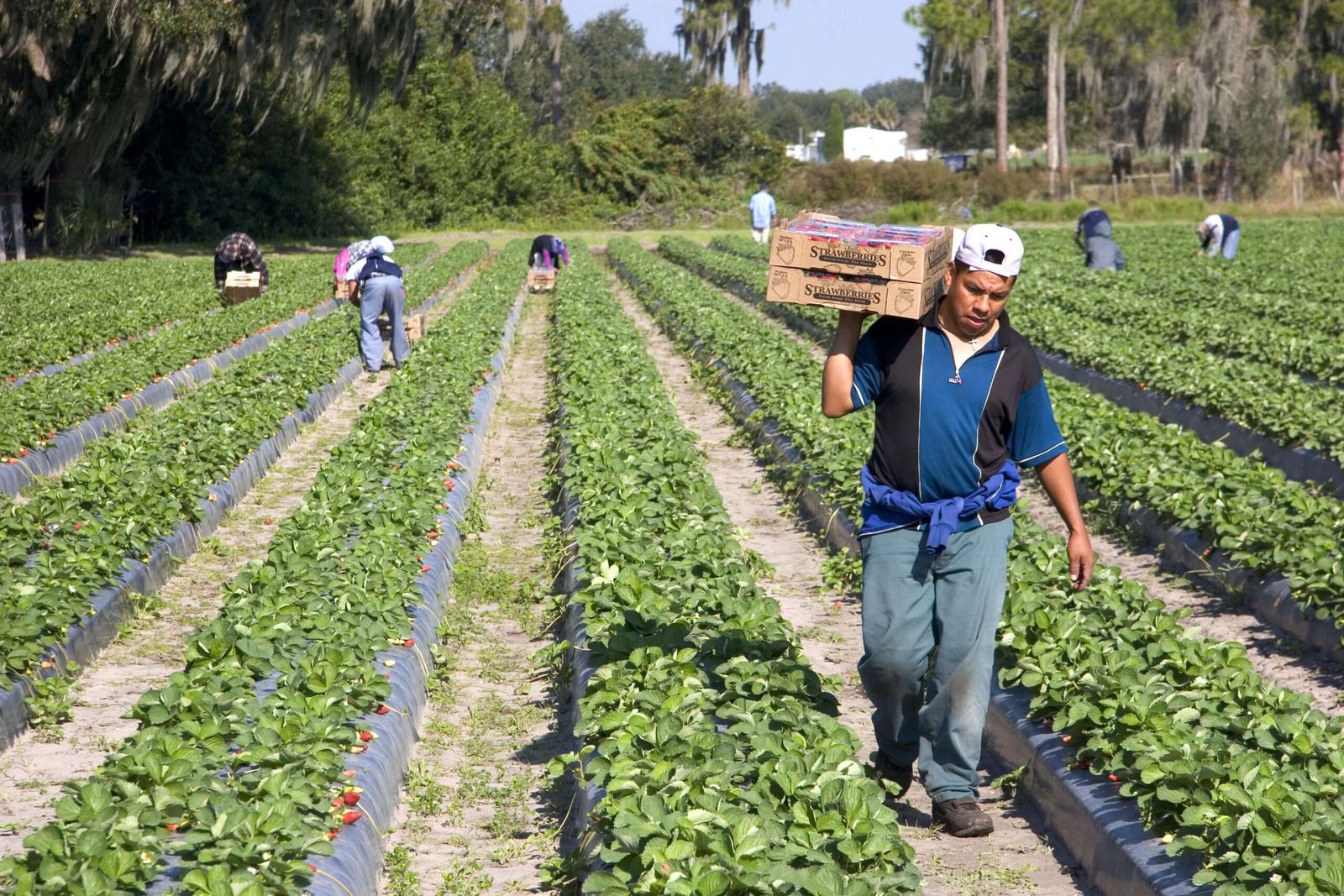
The Trump administration’s immigration crackdown is making it harder for American farms to find seasonal workers and putting the nation’s food supply chain at risk.

But don’t take my word for it. Ask the Trump administration itself.

In documents filed to the Federal Register earlier this month, the Department of Labor warned of a “current and imminent labor shortage” on American farms that “presents a sufficient risk of supply shock-induced food shortages.” The shortage is being caused by the administration’s crackdown on undocumented workers, “who previously cycled in and out of the U.S. through a porous border,” but are now being kept out or choosing not to try to enter the country in the first place.

The loss of those temporary, undocumented workers could have a big impact on American farms. The Labor Department cites a study that found a 10 percent decline in the agricultural workforce would result in a 4.2 percent reduction in farm output and a 5.5 percent decline in farm revenue. “Given that approximately 42 percent of the U.S. crop workforce are unable to enter the country, potentially subject to removal or voluntarily leaving the labor force, these impacts will likely be dramatically higher,” the department notes. “Such significant economic impacts not only create tangible and imminent economic harms, but they structurally disrupt the ordinary operations of the U.S. agricultural sector, resulting in shortages of agricultural commodities that cannot be supplemented with imports in the near-term.”

The Federal Register documents are a refreshingly straightforward admission of a tradeoff that the Trump administration has been less willing to discuss in more public settings. In July, for example, Agriculture Secretary Brooke Rollins said mass deportations would “move the workforce towards automation and 100 percent American participation.” She also suggested that able-bodied adults currently receiving Medicaid benefits should look for agricultural jobs vacated by undocumented workers.

That doesn’t seem to be happening. America’s agricultural workforce has declined by about 80,000 between January and August, according to Bureau of Labor Statistics data.

The consequences are starting to be felt. “People don’t understand that if we don’t get more labor, our cows don’t get milked and our crops don’t get picked,” Tim Wood, a Pennsylvania dairy farmer, told Politico last month.

The immigration crackdown is also making it harder for legal immigrants using the H-2A visa, which allows foreigners to enter the country for one year to work agricultural jobs. Lee Wroten, a Florida farmer, told a local Fox affiliate this week that fewer legal immigrants are turning up for work, in part because they are “freaked” out by ICE raids that have indiscriminately targeted legal and undocumented immigrants alike.

As for Americans taking those jobs? Wroten says that’s not happening. “It’s hard work—it’s hot, sweaty, not sexy, and most Americans don’t want to do that kind of work.”

The Department of Labor filings in the Federal Register come to the same conclusion.

“The Department does not believe American workers currently unemployed or marginally employed will make themselves readily available in sufficient numbers to replace large numbers of aliens no longer entering the country, voluntarily leaving, or choosing to exit the labor force due to the self-perceived potential for their removal based on their illegal entry and status,” the report states. “The available data strongly demonstrates a persistent and systemic lack of sufficient numbers of qualified, eligible, and interested American workers to perform the kinds of work that agricultural employers demand.”

Improving the H-2A visa program could help solve the labor crisis that’s developing in American agriculture—because making it easier for workers to enter the country legally is the best way to reduce illegal immigration. Unfortunately, as Kelly Lester explained in Reason earlier this year, the current H-2A visa program “is riddled with costs, bureaucracy, and inefficiency.” As a result, “American farmers are being crushed not only by worker shortages but by a broken guest worker system that cannot meet their needs.”

It would have made sense for the Trump administration to implement a better guest worker program before trying to slam the border shut. Instead, it will now have to face the consequences of its own actions—and Americans will pay the price when food supply chains get snarled.

Read the full article here

Fact Checker

Verify the accuracy of this article using AI-powered analysis and real-time sources.

Get Your Fact Check Report

Enter your email to receive detailed fact-checking analysis

5 free reports remaining

Continue with Full Access

You've used your 5 free reports. Sign up for unlimited access!

Already have an account? Sign in here

Share. Facebook Twitter Pinterest LinkedIn Tumblr Email Telegram Copy Link
News Room
  • Website
  • Facebook
  • X (Twitter)
  • Instagram
  • LinkedIn

The FSNN News Room is the voice of our in-house journalists, editors, and researchers. We deliver timely, unbiased reporting at the crossroads of finance, cryptocurrency, and global politics, providing clear, fact-driven analysis free from agendas.

Related Articles

Media & Culture

The Enduring Fight Over ‘Fighting Words’

4 minutes ago
Media & Culture

Review: A Period Drama About the Price of Progress in the American West

6 hours ago
Media & Culture

At The WBC: Mark DeRosa Screwed Up & Then MLB Streisanded The Story

7 hours ago
Media & Culture

Firing Government DEI Executive Didn’t Violate First Amendment

7 hours ago
Media & Culture

Who’s Being Pornographic Here? (And Were Pornography Allegations Related to School Library Book Reading Defamatory?)

8 hours ago
Media & Culture

Background Check’s Reporting Expunged Conviction Isn’t Defamation or Fair Credit Reporting Act Violation

9 hours ago
Add A Comment

Comments are closed.

Editors Picks

Yield-Bearing Stablecoins Surge as Washington Fights Over Yield

25 minutes ago

Spot Bitcoin ETFs Log Their First Five-Day Inflow Streak of 2026

1 hour ago

Authorities Dismantle SocksEscort Proxy Network and Crypto Fraud

2 hours ago

Bitcoin holds $71,000 as Trump warns of Iran oil strikes

3 hours ago
Latest Posts

KuCoin Introduces Perpetual Futures Tied to Tesla and Strategy stocks

3 hours ago

BlackRock Won’t Consider Exotic Crypto ETFs

5 hours ago

Ethereum Foundation Outlines Ethos and Responsibilities in New Mandate

6 hours ago

Subscribe to News

Get the latest news and updates directly to your inbox.

At FSNN – Free Speech News Network, we deliver unfiltered reporting and in-depth analysis on the stories that matter most. From breaking headlines to global perspectives, our mission is to keep you informed, empowered, and connected.

FSNN.net is owned and operated by GlobalBoost Media
, an independent media organization dedicated to advancing transparency, free expression, and factual journalism across the digital landscape.

Facebook X (Twitter) Discord Telegram
Latest News

The Enduring Fight Over ‘Fighting Words’

4 minutes ago

Yield-Bearing Stablecoins Surge as Washington Fights Over Yield

25 minutes ago

Spot Bitcoin ETFs Log Their First Five-Day Inflow Streak of 2026

1 hour ago

Subscribe to Updates

Get the latest news and updates directly to your inbox.

© 2026 GlobalBoost Media. All Rights Reserved.
  • Privacy Policy
  • Terms of Service
  • Our Authors
  • Contact

Type above and press Enter to search. Press Esc to cancel.

🍪

Cookies

We and our selected partners wish to use cookies to collect information about you for functional purposes and statistical marketing. You may not give us your consent for certain purposes by selecting an option and you can withdraw your consent at any time via the cookie icon.

Cookie Preferences

Manage Cookies

Cookies are small text that can be used by websites to make the user experience more efficient. The law states that we may store cookies on your device if they are strictly necessary for the operation of this site. For all other types of cookies, we need your permission. This site uses various types of cookies. Some cookies are placed by third party services that appear on our pages.

Your permission applies to the following domains:

  • https://fsnn.net
Necessary
Necessary cookies help make a website usable by enabling basic functions like page navigation and access to secure areas of the website. The website cannot function properly without these cookies.
Statistic
Statistic cookies help website owners to understand how visitors interact with websites by collecting and reporting information anonymously.
Preferences
Preference cookies enable a website to remember information that changes the way the website behaves or looks, like your preferred language or the region that you are in.
Marketing
Marketing cookies are used to track visitors across websites. The intention is to display ads that are relevant and engaging for the individual user and thereby more valuable for publishers and third party advertisers.