Close Menu
FSNN | Free Speech News NetworkFSNN | Free Speech News Network
  • Home
  • News
    • Politics
    • Legal & Courts
    • Tech & Big Tech
    • Campus & Education
    • Media & Culture
    • Global Free Speech
  • Opinions
    • Debates
  • Video/Live
  • Community
  • Freedom Index
  • About
    • Mission
    • Contact
    • Support
Trending

Speaking Freely: Jacob Mchangama

14 minutes ago

The AI Doc’s Falsehoods And False Balance

15 minutes ago

Infographic: Who Really Pays for Tariffs? These Scholars Tracked a Bottle of Wine To Find Out.

16 minutes ago
Facebook X (Twitter) Instagram
Facebook X (Twitter) Discord Telegram
FSNN | Free Speech News NetworkFSNN | Free Speech News Network
Market Data Newsletter
Thursday, April 2
  • Home
  • News
    • Politics
    • Legal & Courts
    • Tech & Big Tech
    • Campus & Education
    • Media & Culture
    • Global Free Speech
  • Opinions
    • Debates
  • Video/Live
  • Community
  • Freedom Index
  • About
    • Mission
    • Contact
    • Support
FSNN | Free Speech News NetworkFSNN | Free Speech News Network
Home»News»Media & Culture»Trump Keeps Taking Equity Shares of Private Companies. A New GOP Bill Would Codify the Practice.
Media & Culture

Trump Keeps Taking Equity Shares of Private Companies. A New GOP Bill Would Codify the Practice.

News RoomBy News Room20 hours agoNo Comments4 Mins Read514 Views
Share Facebook Twitter Pinterest Copy Link LinkedIn Tumblr Email VKontakte Telegram
Trump Keeps Taking Equity Shares of Private Companies. A New GOP Bill Would Codify the Practice.
Share
Facebook Twitter Pinterest Email Copy Link

Listen to the article

0:00
0:00

Key Takeaways

Playback Speed

Select a Voice

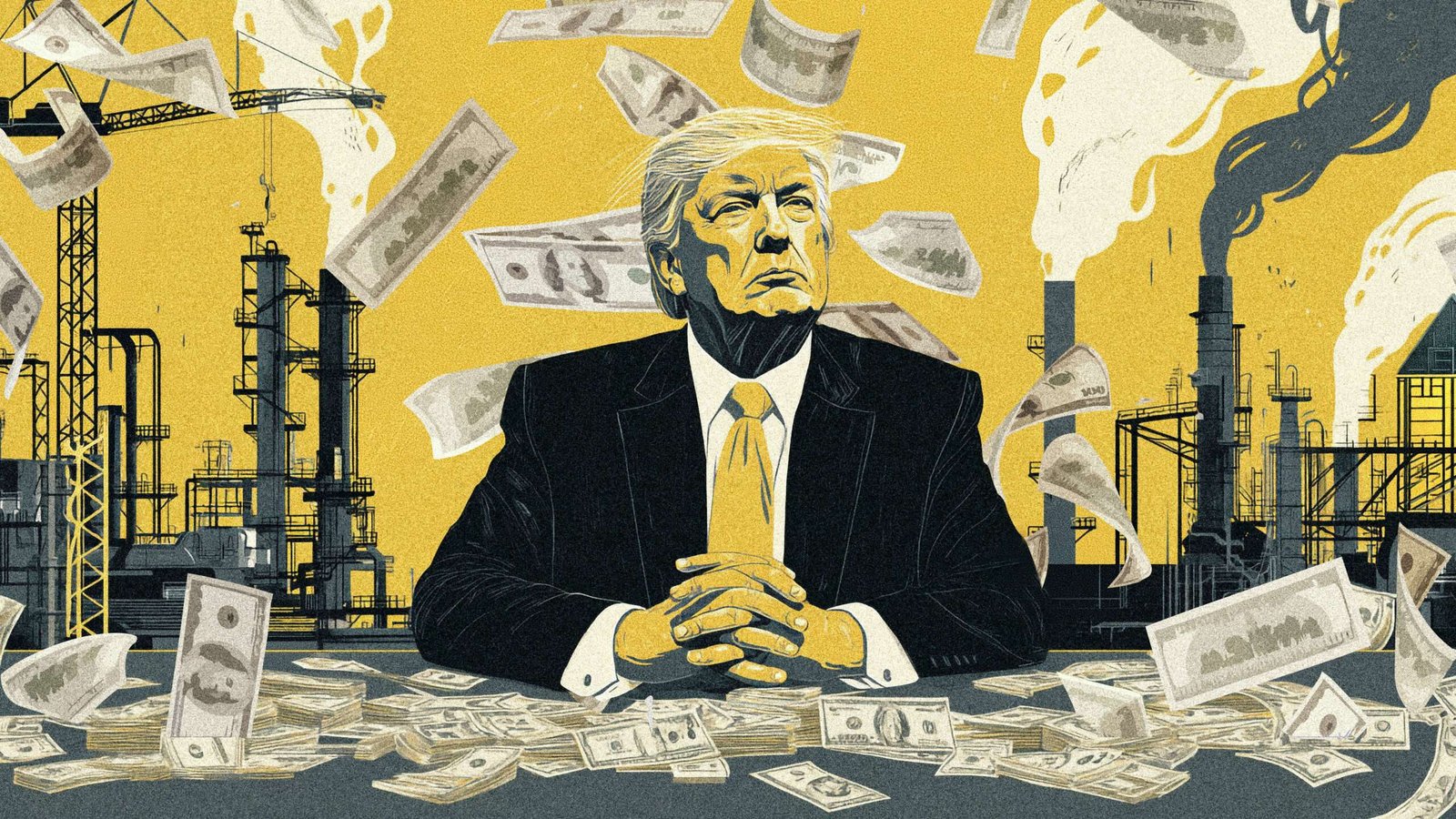
Since reentering office, President Donald Trump has taken equity shares in multiple private companies on behalf of the U.S. government. For example, after then-President Joe Biden awarded an $8.5 billion grant to Intel, Trump demanded a 10 percent stake in the company—all this, even though such an act has no basis in law.

A new GOP bill would not only codify the practice but expand it.

Rep. Warren Davidson (R–Ohio) has introduced the DPA Modernization Act of 2026, which would reauthorize the Defense Production Act (DPA).

Passed in 1950 at the outset of the Korean War, the DPA gives the president considerable power over the economy. While some provisions have expired over the years, the law still allows the president to compel private companies to prioritize the manufacture of certain goods if it is determined to be key to national security priorities.

The Defense Production Act Committee—made up of the heads of federal agencies—coordinates DPA actions with money from the Defense Production Act Fund. Davidson’s bill would raise the DPA Fund’s maximum budget from $750 million to $2 billion, and it would allow any member of the DPA Committee to make equity investments in private companies with it, so long as the secretary of the treasury—acting as the “Fund manager”—says the company “is unable to obtain additional equity investment from private sources on commercially reasonable terms.”

The bill caps total government ownership of any company at 15 percent and requires the committee to “sell and liquidate any equity support for an entity provided under this section as soon as commercially feasible…taking into consideration the national security interests of the United States.”

None of these are meaningful limitations: With only Treasury Secretary Scott Bessent’s permission, the government can use taxpayer funds to purchase equity in companies. While it’s likely intended as a restraint, 15 percent of a multi-billion-dollar company is still a sizable piece—when Trump demanded a 10 percent stake of Intel, it would’ve made the U.S. government its largest shareholder. A 15 percent shareholder can wield significant power over a company’s decision making, even when they don’t also control the world’s largest army.

And although the bill would require the DPA Committee to “liquidate” its holdings, the added provision to do so only after “taking into consideration…national security interests” means it can hold the shares indefinitely. As Tufts University professor Daniel W. Drezner wrote in 2024 at Foreign Policy, eventually, “everything became national security and national security became everything,” and the same officials who would be subject to the law are also the ones who can decide what does and does not constitute “national security.”

Currently, there exists no clear legal basis for what Trump is doing, past his own ability to bully companies into cooperating. Davidson’s bill would not only codify Trump’s actions into law, but it would also set up a framework for both this administration and any in the future to do it too.

Some in the administration defend the proposal by saying that as long as taxpayers are making investments into private companies, we should reap the rewards. “Hey, we want equity for the money. If we’re going to give you the money, we want a piece of the action,” Commerce Secretary Howard Lutnick told CNBC in August, characterizing Trump’s rationale for demanding a 10 percent stake in Intel.

But there are several problems with that way of thinking. First of all, it assumes the government has a role in funding private companies, which undermines the free market principles that have turned the U.S. economy into the envy of the world (and for that matter doesn’t appear to work).

If the goal is to let American taxpayers reap the benefits of an equity stake, that can only happen if the investment pays off. But ahead of the Intel announcement, the company had struggled for years, registering as the worst-performing tech stock in 2024. Turning a grant into an equity stake ties the taxpayer to the company’s financial future, raising the possibility of a need for future investment.

“You don’t want the executive branch treating government programs as if they’re running a mutual fund,” Cato Institute policy analyst Tad DeHaven tells Reason. “The private sector is more than capable of making such investments. That’s not the role of the state.”

Read the full article here

Fact Checker

Verify the accuracy of this article using AI-powered analysis and real-time sources.

Get Your Fact Check Report

Enter your email to receive detailed fact-checking analysis

5 free reports remaining

Continue with Full Access

You've used your 5 free reports. Sign up for unlimited access!

Already have an account? Sign in here

#CivicEngagement #FreePress #Journalism #PoliticalMedia #PressFreedom
Share. Facebook Twitter Pinterest LinkedIn Tumblr Email Telegram Copy Link
News Room
  • Website
  • Facebook
  • X (Twitter)
  • Instagram
  • LinkedIn

The FSNN News Room is the voice of our in-house journalists, editors, and researchers. We deliver timely, unbiased reporting at the crossroads of finance, cryptocurrency, and global politics, providing clear, fact-driven analysis free from agendas.

Related Articles

Media & Culture

The AI Doc’s Falsehoods And False Balance

15 minutes ago
Media & Culture

Infographic: Who Really Pays for Tariffs? These Scholars Tracked a Bottle of Wine To Find Out.

16 minutes ago
Cryptocurrency & Free Speech Finance

Elon Musk’s X Is Making Big Changes to Combat Crypto Scams

37 minutes ago
Campus & Education

UK government admits the obvious: Free countries shouldn’t police legal speech

1 hour ago
Media & Culture

Justice Department Drops 23,000 Cases To Make Room for Trump’s Immigration Crackdown

1 hour ago
Cryptocurrency & Free Speech Finance

Google Jumps Back Into the Open Source AI Race With Gemma 4

2 hours ago
Add A Comment
Leave A Reply Cancel Reply

Editors Picks

The AI Doc’s Falsehoods And False Balance

15 minutes ago

Infographic: Who Really Pays for Tariffs? These Scholars Tracked a Bottle of Wine To Find Out.

16 minutes ago

Here is how Drift attackers drained more than $270 million using a Solana feature designed for convenience

34 minutes ago

Soluna Announces $53M Acquisition of Wind Farm for AI Facility

36 minutes ago
Latest Posts

Elon Musk’s X Is Making Big Changes to Combat Crypto Scams

37 minutes ago

UK government admits the obvious: Free countries shouldn’t police legal speech

1 hour ago

Print Blocking is Anti-Consumer – Permission to Print Part 1

1 hour ago

Subscribe to News

Get the latest news and updates directly to your inbox.

At FSNN – Free Speech News Network, we deliver unfiltered reporting and in-depth analysis on the stories that matter most. From breaking headlines to global perspectives, our mission is to keep you informed, empowered, and connected.

FSNN.net is owned and operated by GlobalBoost Media
, an independent media organization dedicated to advancing transparency, free expression, and factual journalism across the digital landscape.

Facebook X (Twitter) Discord Telegram
Latest News

Speaking Freely: Jacob Mchangama

14 minutes ago

The AI Doc’s Falsehoods And False Balance

15 minutes ago

Infographic: Who Really Pays for Tariffs? These Scholars Tracked a Bottle of Wine To Find Out.

16 minutes ago

Subscribe to Updates

Get the latest news and updates directly to your inbox.

© 2026 GlobalBoost Media. All Rights Reserved.
  • Privacy Policy
  • Terms of Service
  • Our Authors
  • Contact

Type above and press Enter to search. Press Esc to cancel.

🍪

Cookies

We and our selected partners wish to use cookies to collect information about you for functional purposes and statistical marketing. You may not give us your consent for certain purposes by selecting an option and you can withdraw your consent at any time via the cookie icon.

Cookie Preferences

Manage Cookies

Cookies are small text that can be used by websites to make the user experience more efficient. The law states that we may store cookies on your device if they are strictly necessary for the operation of this site. For all other types of cookies, we need your permission. This site uses various types of cookies. Some cookies are placed by third party services that appear on our pages.

Your permission applies to the following domains:

  • https://fsnn.net
Necessary
Necessary cookies help make a website usable by enabling basic functions like page navigation and access to secure areas of the website. The website cannot function properly without these cookies.
Statistic
Statistic cookies help website owners to understand how visitors interact with websites by collecting and reporting information anonymously.
Preferences
Preference cookies enable a website to remember information that changes the way the website behaves or looks, like your preferred language or the region that you are in.
Marketing
Marketing cookies are used to track visitors across websites. The intention is to display ads that are relevant and engaging for the individual user and thereby more valuable for publishers and third party advertisers.