Close Menu
FSNN | Free Speech News NetworkFSNN | Free Speech News Network
  • Home
  • News
    • Politics
    • Legal & Courts
    • Tech & Big Tech
    • Campus & Education
    • Media & Culture
    • Global Free Speech
  • Opinions
    • Debates
  • Video/Live
  • Community
  • Freedom Index
  • About
    • Mission
    • Contact
    • Support
Trending

We Could Have Flying Cars by 2028

9 minutes ago

FX startup OpenFX raises $94 million to expand stablecoin-powered cross-border payments

37 minutes ago

CoinDCX Pledges $11M for Anti-Fraud Drive After Impersonation Case

38 minutes ago
Facebook X (Twitter) Instagram
Facebook X (Twitter) Discord Telegram
FSNN | Free Speech News NetworkFSNN | Free Speech News Network
Market Data Newsletter
Tuesday, March 31
  • Home
  • News
    • Politics
    • Legal & Courts
    • Tech & Big Tech
    • Campus & Education
    • Media & Culture
    • Global Free Speech
  • Opinions
    • Debates
  • Video/Live
  • Community
  • Freedom Index
  • About
    • Mission
    • Contact
    • Support
FSNN | Free Speech News NetworkFSNN | Free Speech News Network
Home»Opinions»Debates»Trump Fed Attacks Show Need for Rules-Based Monetary Policy
Debates

Trump Fed Attacks Show Need for Rules-Based Monetary Policy

News RoomBy News Room2 months agoNo Comments5 Mins Read1,456 Views
Share Facebook Twitter Pinterest Copy Link LinkedIn Tumblr Email VKontakte Telegram
Trump Fed Attacks Show Need for Rules-Based Monetary Policy
Share
Facebook Twitter Pinterest Email Copy Link

Listen to the article

0:00
0:00

Key Takeaways

Playback Speed

Select a Voice

Central banks are soft targets for politicians looking to pass the blame for poor economic outcomes. Monetary policy is complicated. Most people cannot trace the chain of causation back from a bad inflation or unemployment report to some action taken by bureaucrats at the Federal Reserve, but the Fed is an easy target because it is explicitly tasked with maintaining stable prices and maximum employment. The truth is that most of the business cycle is determined by factors outside the Fed’s control, and while monetary policy can and does affect this cycle, it cannot (and should not be used in an effort to) overcome all other market forces.

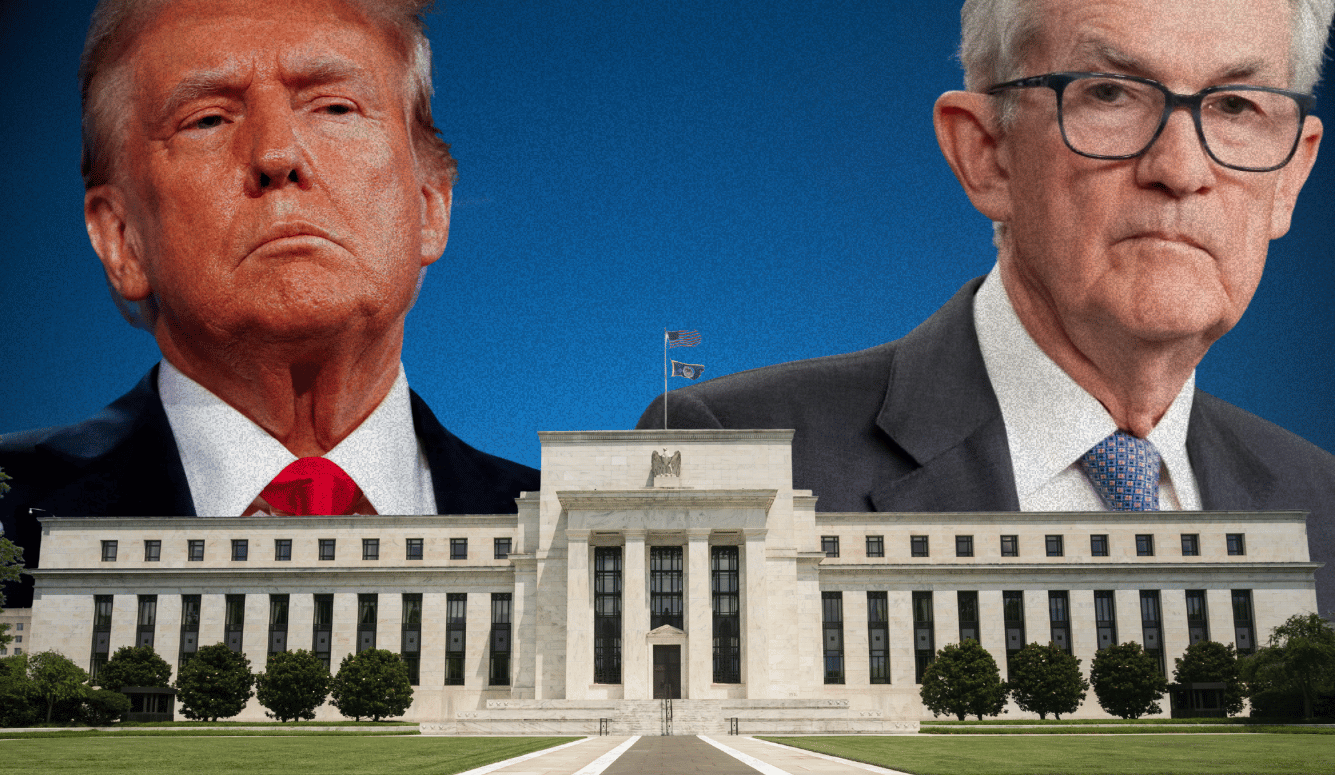
Still, blaming the Fed and its chair Jerome Powell seems to be a favourite hobby of the current US political administration. Last year saw Trump and other members of his circle hurl juvenile insults at Powell. They tried to forcibly oust Fed governor Lisa Cook. Trump controversially appointed Stephen Miran to the Fed board. Miran became the first person ever to keep his job at the White House (albeit via unpaid leave of absence) while also serving at the independent central bank. Now comes news of a federal investigation into Jerome Powell over his testimony to Congress on the renovation costs of the Fed headquarters.

To be clear, I am not a fan of central banking. The Fed has a bad track record and has made many recent mistakes, from labelling inflation “transitory” to financing the US government’s reckless borrowing bill. But I acknowledge that we are far from having a privatised monetary system, despite the numerous benefits such a system would bring. If we must have a central bank, it had better be independent of the whims of the executive branch. This does not mean that there should be no oversight of the Fed; on the contrary, a well-functioning central bank must be accountable to the public through elected members of Congress. In the context of monetary policy, independence simply means keeping an arm’s length between interest rate decisions and the desires of the executive branch.

Chair Powell himself claimed, in an unprecedented video response to the announcement of the criminal investigation, that it was a pretext for executive interference with monetary policy. Numerous politicians, Republicans included, agree with Powell. I am not a lawyer, so I cannot judge the case on its legal merits, but for the purposes of this article, I will assume this is another attempt by the executive to strong-arm the Fed and will offer thoughts on the future of monetary policy accordingly.

I recently wrote about the potential economic fallout from the federal investigation against Powell. To summarise, business as usual is the most likely outcome. Fed members will offer economic rationales for their rate decisions instead of political ones, and both Main Street and Wall Street will believe them. This is no credit to the Fed; rather, it reflects the strong tendency of the US economy to revert to the status quo. However, the odds of the status quo holding will reduce with each successive political attack, until some unknown threshold is crossed.

At that point, our key macroeconomic measures, such as inflation, may or may not stay on trend; that will depend on people’s faith in the Fed’s ability or desire to maintain stability. Case studies of similar scenarios elsewhere provide no encouragement. A current example: in 2021 and 2022, President Erdoğan of Turkey pressured his central bank into lowering rates, despite soaring inflation. The inflation rate in Turkey peaked at over 85 percent in late 2022 and remained elevated, exceeding 50 percent for much of 2022–24.    

A Tariff Time-Bomb

A critical part of the One Big Beautiful Bill’s budget equation may evaporate with a judicial pen stroke in the very near future.

Suffice to say, political interference is bad. President Trump and members of his administration should stop pressuring the Fed and leave it to conduct monetary policy independently. But these kinds of attacks are not unique. The Fed’s 1951 accord with the Treasury birthed the “independence” of the central bank. Since then, multiple presidents have pressured multiple Fed chairs to ease monetary conditions, hoping that the resulting short-term boost to output would help them electorally. The most famous example is Nixon pressuring Arthur Burns, to disastrous effect: the Fed under Burns eased up on rates in the early part of the 1970s, when US inflation was already elevated—around five percent. In fact, this phenomenon is so common that it is taught as a case study to budding macroeconomists in graduate school. It is termed “inflationary bias” because a central bank that caves to political pressure and tries to boost output by lowering interest rates in times of elevated inflation invariably fails to do so and manages only to raise the inflation rate.

The Fed is not blameless in this mess. Nearly 75 years have passed since the 1951 accord, and the Fed still does not have a reliable system for dealing with political interference. The current system within the Fed is too discretionary, too much of a black box, and it relies too heavily on the goodwill of politicians. If the system stays the way it is, it will be only a matter of time until Trump or a future president successfully manages to stage a repeat of the Nixon/Burns fiasco and consumers around the world pay the price—literally.


Read the full article here

Fact Checker

Verify the accuracy of this article using AI-powered analysis and real-time sources.

Get Your Fact Check Report

Enter your email to receive detailed fact-checking analysis

5 free reports remaining

Continue with Full Access

You've used your 5 free reports. Sign up for unlimited access!

Already have an account? Sign in here

Share. Facebook Twitter Pinterest LinkedIn Tumblr Email Telegram Copy Link
News Room
  • Website
  • Facebook
  • X (Twitter)
  • Instagram
  • LinkedIn

The FSNN News Room is the voice of our in-house journalists, editors, and researchers. We deliver timely, unbiased reporting at the crossroads of finance, cryptocurrency, and global politics, providing clear, fact-driven analysis free from agendas.

Related Articles

Media & Culture

We Could Have Flying Cars by 2028

9 minutes ago
Media & Culture

Today in Supreme Court History: March 31, 1962

1 hour ago
Media & Culture

Brickbats: April 2026

2 hours ago
Media & Culture

Brickbat: Ancient History

4 hours ago
Cryptocurrency & Free Speech Finance

Ethereum Foundation Backs ‘Economic Zone’ to Solve Fragmentation Issues

5 hours ago
Cryptocurrency & Free Speech Finance

New US Rule Seeks to Open $8T Retirement Market to Crypto

6 hours ago
Add A Comment

Comments are closed.

Editors Picks

FX startup OpenFX raises $94 million to expand stablecoin-powered cross-border payments

37 minutes ago

CoinDCX Pledges $11M for Anti-Fraud Drive After Impersonation Case

38 minutes ago

Today in Supreme Court History: March 31, 1962

1 hour ago

Risk-off mood deepens in crypto as futures interest declines: Crypto Markets Today

2 hours ago
Latest Posts

Bitcoin Slumps Toward Range Lows With US-Iran Press Briefing Due

2 hours ago

Brickbats: April 2026

2 hours ago

David Bailey’s NAKA sells roughly 5% of its BTC holdings

3 hours ago

Subscribe to News

Get the latest news and updates directly to your inbox.

At FSNN – Free Speech News Network, we deliver unfiltered reporting and in-depth analysis on the stories that matter most. From breaking headlines to global perspectives, our mission is to keep you informed, empowered, and connected.

FSNN.net is owned and operated by GlobalBoost Media
, an independent media organization dedicated to advancing transparency, free expression, and factual journalism across the digital landscape.

Facebook X (Twitter) Discord Telegram
Latest News

We Could Have Flying Cars by 2028

9 minutes ago

FX startup OpenFX raises $94 million to expand stablecoin-powered cross-border payments

37 minutes ago

CoinDCX Pledges $11M for Anti-Fraud Drive After Impersonation Case

38 minutes ago

Subscribe to Updates

Get the latest news and updates directly to your inbox.

© 2026 GlobalBoost Media. All Rights Reserved.
  • Privacy Policy
  • Terms of Service
  • Our Authors
  • Contact

Type above and press Enter to search. Press Esc to cancel.

🍪

Cookies

We and our selected partners wish to use cookies to collect information about you for functional purposes and statistical marketing. You may not give us your consent for certain purposes by selecting an option and you can withdraw your consent at any time via the cookie icon.

Cookie Preferences

Manage Cookies

Cookies are small text that can be used by websites to make the user experience more efficient. The law states that we may store cookies on your device if they are strictly necessary for the operation of this site. For all other types of cookies, we need your permission. This site uses various types of cookies. Some cookies are placed by third party services that appear on our pages.

Your permission applies to the following domains:

  • https://fsnn.net
Necessary
Necessary cookies help make a website usable by enabling basic functions like page navigation and access to secure areas of the website. The website cannot function properly without these cookies.
Statistic
Statistic cookies help website owners to understand how visitors interact with websites by collecting and reporting information anonymously.
Preferences
Preference cookies enable a website to remember information that changes the way the website behaves or looks, like your preferred language or the region that you are in.
Marketing
Marketing cookies are used to track visitors across websites. The intention is to display ads that are relevant and engaging for the individual user and thereby more valuable for publishers and third party advertisers.