

 Freedom Index
Listen to the article
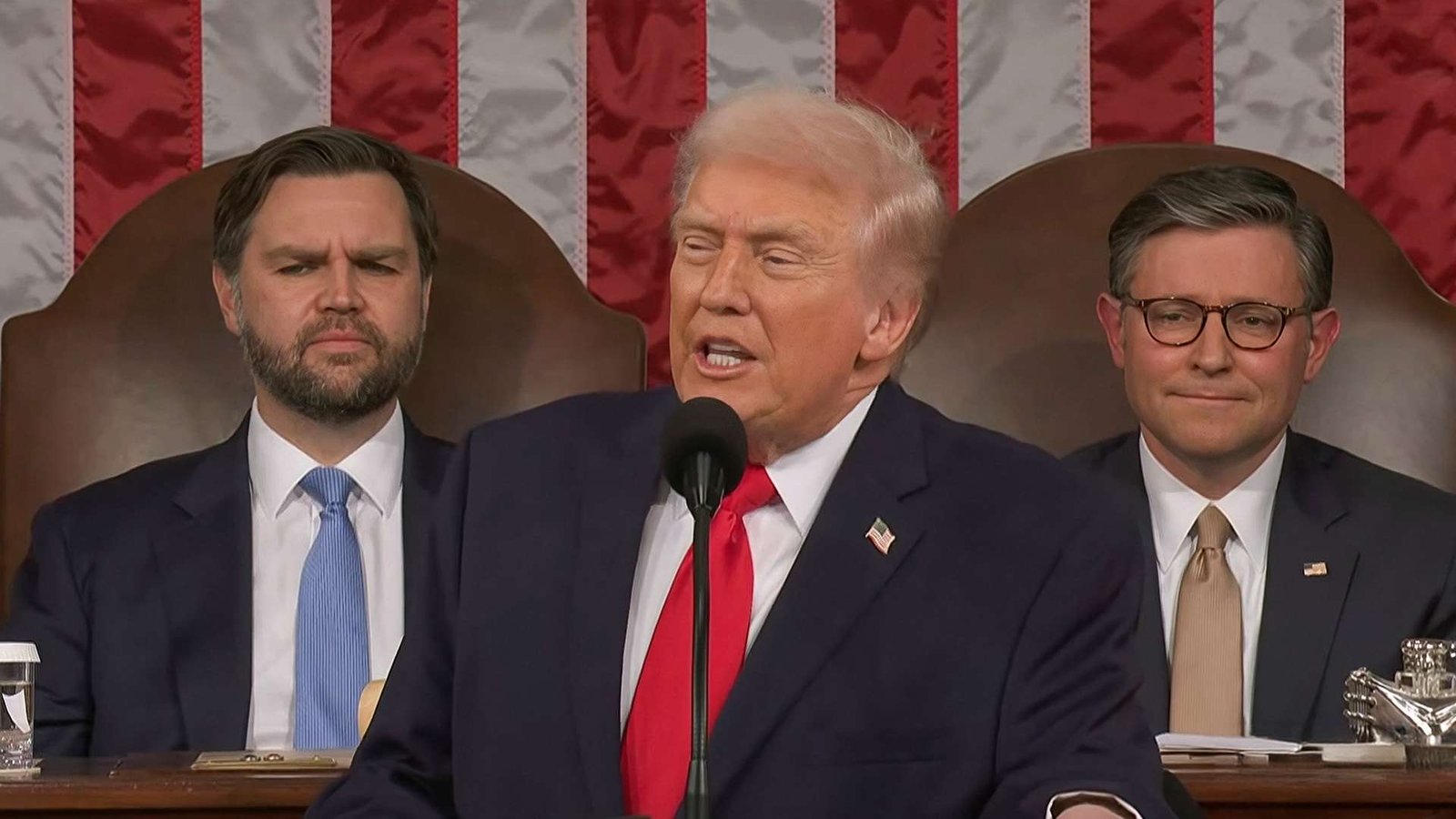
During his State of the Union address, President Donald Trump touted his executive order cracking down on large institutional investors purchasing single-family homes and then letting them out as rental housing.
“I signed an executive order to ban large Wall Street investment firms are buying up in the thousands single family homes, and now I’m asking Congress to make that ban permanent, because homes for people, really that’s what we want. We want homes for people, not for corporations. Corporations are doing just fine,” said the president.
Trump’s executive order did not in fact go so far as to actually ban institutional investors from owning single-family homes.
Instead, federal departments were directed to avoid doing anything to finance, insure, or facilitate large companies buying single-family housing. The order also threatened antitrust action against companies that bought large amounts of homes.
Were Trump to demand a more comprehensive ban, he’d likely find many allies in his speech’s audience tonight. Blocking “Wall Street” investors from owning single-family homes is a hot policy right now, and legislators from both parties support the idea.
Sens. Elizabeth Warren (D–Mass.) has mostly stuck to making frowny faces the State of the Union speech. But earlier in the day, she introduced legislation with Sen. Jeff Merkley of Oregon and other Democrats that would prevent entities that own 50 homes or more from deducting mortgage interest and home value depreciation from their taxes.
On the Republican side, Sen. Bernie Moreno (R–Ohio) has promised to introduce legislation codifying Trump’s executive order. Vice President J.D. Vance has also complained about Wall Street investors owning single-family homes.
In a memo sent to Congress last week, the Trump administration called for lawmakers to pass a bill that prohibits investors who own more than 100 homes from purchasing additional ones. (His initial executive order left “large institutional investor” undefined.)
That definition would impact many more entities than just major institutional investors like Blackstone. It would also block smaller, regional investors from expanding their portfolios of single-family rentals as well.
It’s odd that the moral panic over large investors owning single-family homes has become such a popular bipartisan cause over the past few years, given that investors of all sizes have generally been selling off their single-family rentals.
Commercial real estate firm CBRE reported in an October 2024 research brief that single-family rental inventory had declined by 1.7 million units since 2016. Investors who own more than 100 homes are also responsible for some 3 or 4 percent of single-family home purchases each year.
The vast majority of homes are owned, bought, and sold by either individual owner-occupiers or small mom-and-pop investors who own fewer than 10 homes.
This is the windmill that Trump and lawmakers of both parties are tilting at.
And even though large investors are not major purchasers of single-family homes, they do provide benefits that would be lost if federal regulation excluded them from the single-family rental market.
A 2022 study by Neroli Austin of the University of Michigan found that institutional investment in real estate increases neighborhood diversity by opening up more affordable rental housing options. That study did find that these investors were raising home prices overall.
Banning institutional investors from the single-family market would reduce the accessibility they provide to renters who can’t qualify for mortgages.
Trump repeated his line tonight that “homes are for people, not corporations.” OK. But some people would rather rent a home than purchase one. They’d have fewer options of where to live if the president’s proposed ban were come to pass.
Read the full article here
Fact Checker
Verify the accuracy of this article using AI-powered analysis and real-time sources.