

 Freedom Index
Listen to the article
BY JASON KELLEY | October 2, 2025
This is the ninth installment in a blog series documenting EFF’s findings from the Stop Censoring Abortion campaign. You can read additional posts here.
Meta has been getting content moderation wrong for years, like most platforms that host user-generated content. Sometimes it’s a result of deliberate design choices—privacy rollbacks, opaque policies, features that prioritize growth over safety—made even when the company knows that those choices could negatively impact users. Other times, it’s simply the inevitable outcome of trying to govern billions of posts with a mix of algorithms and overstretched human reviewers. Importantly, users shouldn’t have to worry about their posts being deleted or their accounts getting banned when they share factual health information that doesn’t violate the platforms’ policies. But knowing more about what the algorithmic moderation is likely to flag can help you to avoid its mistakes.
We analyzed the roughly one-hundred survey submissions we received from social media users in response to our Stop Censoring Abortion campaign. Their stories revealed some clear patterns: certain words, images, and phrases seemed to trigger takedowns, even when posts didn’t come close to violating Meta’s rules.
For example, your post linking to information on how people are accessing abortion pills online clearly is not an offer to buy or sell pills, but an algorithm, or a human content reviewer who doesn’t know for sure, might wrongly flag it for violating Meta’s policies on promoting or selling “restricted goods.”
That doesn’t mean you’re powerless. For years, people have used “algospeak”—creative spelling, euphemisms, or indirection—to sidestep platform filters. Abortion rights advocates are now forced into similar strategies, even when their speech is perfectly legal. It’s not fair, but it might help you keep your content online. Here are some things we learned from our survey:
Practical Tips to Reduce the Risk of Takedowns
While traditional social media platforms can help people reach larger audiences, using them also generally means you have to hand over control of what you and others are able to see to the people who run the company. This is the deal that large platforms offer—and while most of us want platforms to moderate some content (even if that moderation is imperfect), current systems of moderation often reflect existing societal power imbalances and impact marginalized voices the most.
There are ways companies and governments could better balance the power between users and platforms. In the meantime, there are steps you can take right now to break the hold these platforms have:
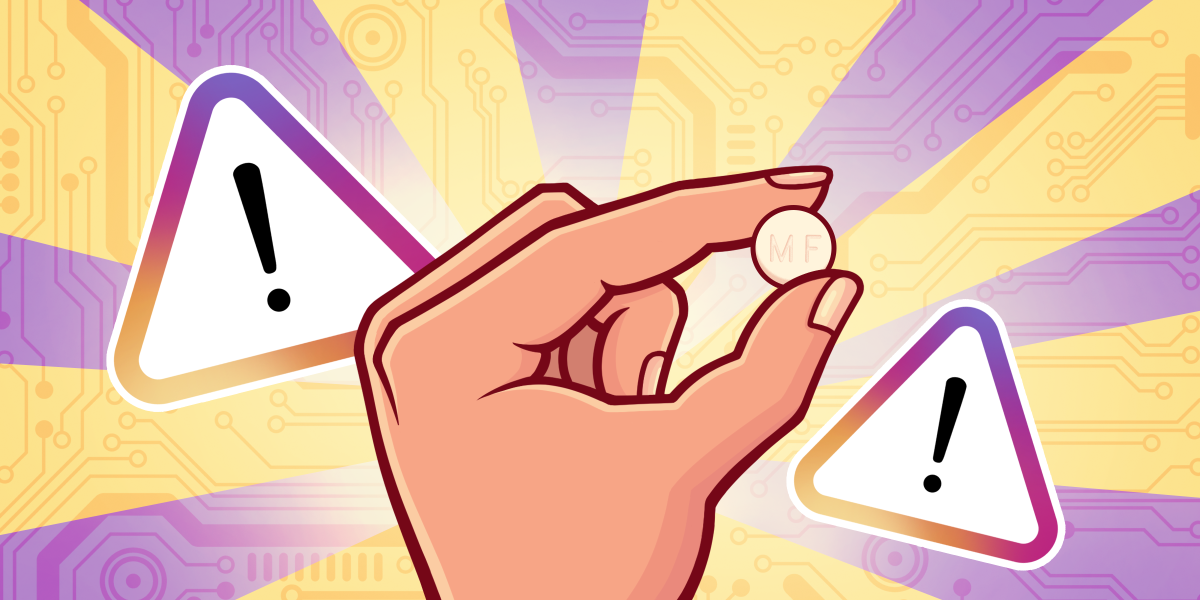
- Images and keywords matter. Posts with pill images, or accounts with “pill” in their names, were flagged often—even when the posts weren’t offering to sell medication. Before posting, consider whether you need to include an image of, or the word “pill,” or whether there’s another way to communicate your message.
- Clarity beats vagueness. Saying “we can help you find what you need” or “contact me for more info” might sound innocuous, but to an algorithm, it can look like an offer to sell drugs. Spell out what kind of support you do and don’t provide—for example: “We can talk through options and point you toward trusted resources. We don’t provide medical services or medication.”
- Be careful with links. Direct links to organizations or services that provide abortion pills were often flagged, even if the organizations operate legally. Instead of linking, try spelling out the name of the site or account.
- Certain word combos are red flags. Posts that included words like “mifepristone,” “abortion,” and “mail” together were frequently removed. You may still want to use them—they’re accurate and important—but know they make your post more likely to be flagged.
Alternatives and Backups
Big platforms give you reach, but they also set the rules—and those rules usually favor corporate interests over human rights. You don’t have to accept that as the only way forward:
- Keep a backup. Export your data regularly so you’re not left empty-handed if your account disappears overnight.
- Build your own space. Hosting a website isn’t free, but it puts you in control.
- Explore other platforms. Newsletters, Discord, and other community tools offer more control than Facebook or Instagram. Decentralized platforms like Mastodon and Bluesky aren’t perfect, but they show what’s possible when moderation isn’t dictated from the top down. (Learn more about the differences between Mastodon, Bluesky, and Threads, and how these kinds of platforms help us build a better internet.)
- Push for interoperability. Imagine being able to take your audience with you when you leave a platform. That’s the future we should be fighting for. (For more on interoperability and Meta, check out this video where Cory Doctorow explains what an interoperable Facebook would look like.)
Protect Your Privacy
If you’re working in abortion access—whether as a provider, activist, or volunteer—your privacy and security matter. The same is true for patients. Check out EFF’s Surveillance Self-Defense for tailored guides. Look at resources from groups like Digital Defense Fund and learn how location tracking tools can endanger abortion access. If you run an organization, consider some of the ways you can minimize what information you collect about patients, clients, or customers, in our guide to Online Privacy for Nonprofits.
Platforms like Meta insist they want to balance free expression and safety, but their blunt systems consistently end up reinforcing existing inequalities—silencing the very people who most need to be heard. Until they do better, it’s on us to protect ourselves, share our stories, and keep building the kind of internet that respects our rights.
This is the ninth post in our blog series documenting the findings from our Stop Censoring Abortion campaign. Read more in the series: https://www.eff.org/pages/stop-censoring-abortion
Affected by unjust censorship? Share your story using the hashtag #StopCensoringAbortion. Amplify censored posts and accounts, share screenshots of removals and platform messages—together, we can demonstrate how these policies harm real people.
Read the full article here
Fact Checker
Verify the accuracy of this article using AI-powered analysis and real-time sources.