Close Menu
FSNN | Free Speech News NetworkFSNN | Free Speech News Network
  • Home
  • News
    • Politics
    • Legal & Courts
    • Tech & Big Tech
    • Campus & Education
    • Media & Culture
    • Global Free Speech
  • Opinions
    • Debates
  • Video/Live
  • Community
  • Freedom Index
  • About
    • Mission
    • Contact
    • Support
Trending

Drift Protocol’s $285 Million Exploit on Solana Raises Questions Over DeFi Security

2 minutes ago

Weakening Speech Protections Will Punish All of Us—Not Just Meta

37 minutes ago

Alabama Birthing Center Regulations Are Nearly Impossible To Comply With. State Supreme Court Could Intervene.

40 minutes ago
Facebook X (Twitter) Instagram
Facebook X (Twitter) Discord Telegram
FSNN | Free Speech News NetworkFSNN | Free Speech News Network
Market Data Newsletter
Friday, April 3
  • Home
  • News
    • Politics
    • Legal & Courts
    • Tech & Big Tech
    • Campus & Education
    • Media & Culture
    • Global Free Speech
  • Opinions
    • Debates
  • Video/Live
  • Community
  • Freedom Index
  • About
    • Mission
    • Contact
    • Support
FSNN | Free Speech News NetworkFSNN | Free Speech News Network
Home»News»Media & Culture»The World Bank Used To Champion Markets. Now It’s Surrendering to State-Led Industrialization.
Media & Culture

The World Bank Used To Champion Markets. Now It’s Surrendering to State-Led Industrialization.

News RoomBy News Room2 hours agoNo Comments5 Mins Read1,652 Views
Share Facebook Twitter Pinterest Copy Link LinkedIn Tumblr Email VKontakte Telegram
The World Bank Used To Champion Markets. Now It’s Surrendering to State-Led Industrialization.
Share
Facebook Twitter Pinterest Email Copy Link

Listen to the article

0:00
0:00

Key Takeaways

Playback Speed

Select a Voice

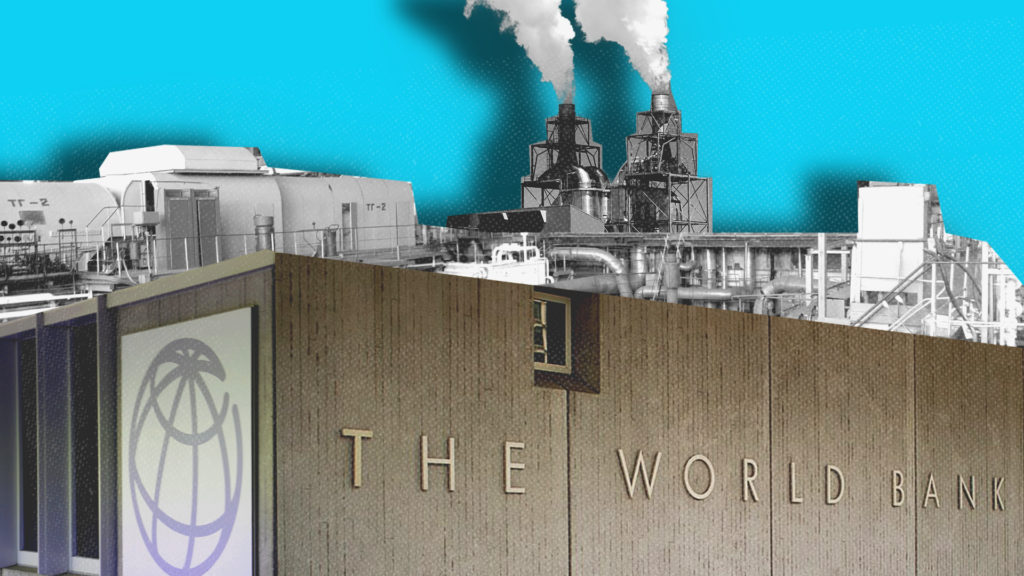
The World Bank recently published a 276-page report supporting the idea that industrial policy belongs “in the national policy toolkit of all countries.” This is a significant reversal for an institution that spent decades pushing developing nations toward fiscal discipline, open trade, and market liberalization. When the World Bank seems more interested in engaging with right- and left-wing populism than in promoting good economics, it tells you a lot about the era in which we live.

Industrial policy refers to government officials channeling resources to particular industries that the market would not. Arguments like national security or protecting “strategic” industries from competitors are often used to justify the policy. Whatever one thinks of these excuses, industrial policy is funded by taxpayers when the chosen instrument is subsidies, funded by consumers when the tool is tariffs, and always funded by the other domestic firms quietly crowded out as capital flows toward their politically favored competitors.

Every dollar directed by bureaucratic decree is a dollar that’s no longer directed by people spending their money on what most deserves it. Which, of course, is what makes markets work.

To be clear, the World Bank’s reversal wasn’t because a new generation of economists finally cracked open the historical record and discovered that state-led industrialization works. It’s because the World Bank’s most powerful shareholders, the United States and Western Europe, turned toward openly and aggressively practicing industrial policy.

With a cascade of green industrial subsidies during the Biden and Obama administrations, and protectionist tariffs and “golden shares” under the Trump administration, it became impossible to lecture developing countries about the dangers of letting governments pick winning businesses. In other words, the intellectual reversal followed the political reversal, not the other way around.

The World Bank’s report thus exists as a manual for governments that are going to do industrial policy regardless of what anyone tells them. It starts with the acknowledgment that all 183 countries surveyed boost at least one industry. But it stops arguing about whether industrial policy is legitimate and instead tries to diagnose which tools governments are capable of using without doing more harm than good. Mapping 15 different policy instruments along a spectrum from simple and low-risk to complex and demanding, the report warns governments repeatedly against blunt instruments that are politically easy but economically costly and urges governments to listen.

They won’t listen, and here’s why.

The report acknowledges that governments regularly botch industrial policy, yet it expresses hope that rising global education levels are giving more countries the human capital to make certain tools work. For example, a software tax exemption in Romania succeeded partly because a critical mass of people was now capable of becoming software engineers. Fair enough.

But while education raises the ceiling on what is theoretically achievable, it does nothing by itself to change a government’s incentives. The obstacle has never primarily been a shortage of capable technocrats or populations. The real hindrances are well documented, structural, and bipartisan.

The first obstacle is what economists call the “knowledge problem.” As the Cato Institute’s Scott Lincicome notes, centralized attempts to identify critical technologies repeatedly fail because governments cannot predict which will end up being most valuable or how markets will develop. In the 1990s, governments picked the right industries—semiconductors and supercomputers—but the wrong products and companies. No amount of educational attainment by bureaucracies or workers solves this. Only markets aggregate untold amounts of economic knowledge through rough, supply-and-demand responsive prices and voluntary exchange.

The report never grapples with this, suggesting tools like industrial parks aimed at coordination failures and skills-development programs aimed at under-investments in human capital. Someone must still decide where the park goes and which skills get funded for which sectors. These are predictions about what the economy will need, made by the same officials facing the same information constraints as any other planner. They are dressed in more sophisticated language than a tariff but are no less vulnerable to being wrong.

The second obstacle is politics. Educated people, bureaucrats, and CEOs operate under and inside governments where industries lobby, ministers have constituencies, and failing programs are far easier to throw more money at than to kill. The World Bank’s report concedes as much in calling the bluntest instruments “notoriously difficult to unwind.” But that’s not a technical or educational problem; it’s a political one.

Even in a country as educated as the U.S., a steel industry that has enjoyed decades of political protection does not quietly accept a withdrawn subsidy. It assumes the role of political actor, pressuring politicians for more. As protectionism dulls the industry’s genuine competitiveness, politics matter even more. This is bad even for nations rich enough to shoulder the cost.

The World Bank spent 276 pages telling governments how to do more of what governments most want to do but rarely do well. For developing nations, it’s like receiving a lifejacket that works better for people who already know how to swim and can afford to paddle around.

COPYRIGHT 2026 CREATORS.COM

Read the full article here

Fact Checker

Verify the accuracy of this article using AI-powered analysis and real-time sources.

Get Your Fact Check Report

Enter your email to receive detailed fact-checking analysis

5 free reports remaining

Continue with Full Access

You've used your 5 free reports. Sign up for unlimited access!

Already have an account? Sign in here

#IndependentMedia #InformationWar #MediaAndPolitics #NarrativeControl #PublicOpinion
Share. Facebook Twitter Pinterest LinkedIn Tumblr Email Telegram Copy Link
News Room
  • Website
  • Facebook
  • X (Twitter)
  • Instagram
  • LinkedIn

The FSNN News Room is the voice of our in-house journalists, editors, and researchers. We deliver timely, unbiased reporting at the crossroads of finance, cryptocurrency, and global politics, providing clear, fact-driven analysis free from agendas.

Related Articles

Cryptocurrency & Free Speech Finance

Drift Protocol’s $285 Million Exploit on Solana Raises Questions Over DeFi Security

2 minutes ago
Media & Culture

Alabama Birthing Center Regulations Are Nearly Impossible To Comply With. State Supreme Court Could Intervene.

40 minutes ago
Cryptocurrency & Free Speech Finance

Naoris Launches Post-Quantum Blockchain as Bitcoin, Ethereum Devs Scramble to Face Threat

1 hour ago
Media & Culture

Ctrl-Alt-Speech: Age Old Questions

2 hours ago
Legal & Courts

Russia’s designation of International Women’s Media Foundation as ‘undesirable’ is a ‘blatant’ attack on press freedom

2 hours ago
Cryptocurrency & Free Speech Finance

Google Researchers Reveal Every Way Hackers Can Trap, Hijack AI Agents

2 hours ago
Add A Comment
Leave A Reply Cancel Reply

Editors Picks

Weakening Speech Protections Will Punish All of Us—Not Just Meta

37 minutes ago

Alabama Birthing Center Regulations Are Nearly Impossible To Comply With. State Supreme Court Could Intervene.

40 minutes ago

why connectivity will define the next era

56 minutes ago

Bitcoin Bulls Must Clear $76K To Avoid New Lows In 2026

57 minutes ago
Latest Posts

Naoris Launches Post-Quantum Blockchain as Bitcoin, Ethereum Devs Scramble to Face Threat

1 hour ago

A Baseless Copyright Claim Against a Web Host—and Why It Failed

2 hours ago

Ctrl-Alt-Speech: Age Old Questions

2 hours ago

Subscribe to News

Get the latest news and updates directly to your inbox.

At FSNN – Free Speech News Network, we deliver unfiltered reporting and in-depth analysis on the stories that matter most. From breaking headlines to global perspectives, our mission is to keep you informed, empowered, and connected.

FSNN.net is owned and operated by GlobalBoost Media
, an independent media organization dedicated to advancing transparency, free expression, and factual journalism across the digital landscape.

Facebook X (Twitter) Discord Telegram
Latest News

Drift Protocol’s $285 Million Exploit on Solana Raises Questions Over DeFi Security

2 minutes ago

Weakening Speech Protections Will Punish All of Us—Not Just Meta

37 minutes ago

Alabama Birthing Center Regulations Are Nearly Impossible To Comply With. State Supreme Court Could Intervene.

40 minutes ago

Subscribe to Updates

Get the latest news and updates directly to your inbox.

© 2026 GlobalBoost Media. All Rights Reserved.
  • Privacy Policy
  • Terms of Service
  • Our Authors
  • Contact

Type above and press Enter to search. Press Esc to cancel.

🍪

Cookies

We and our selected partners wish to use cookies to collect information about you for functional purposes and statistical marketing. You may not give us your consent for certain purposes by selecting an option and you can withdraw your consent at any time via the cookie icon.

Cookie Preferences

Manage Cookies

Cookies are small text that can be used by websites to make the user experience more efficient. The law states that we may store cookies on your device if they are strictly necessary for the operation of this site. For all other types of cookies, we need your permission. This site uses various types of cookies. Some cookies are placed by third party services that appear on our pages.

Your permission applies to the following domains:

  • https://fsnn.net
Necessary
Necessary cookies help make a website usable by enabling basic functions like page navigation and access to secure areas of the website. The website cannot function properly without these cookies.
Statistic
Statistic cookies help website owners to understand how visitors interact with websites by collecting and reporting information anonymously.
Preferences
Preference cookies enable a website to remember information that changes the way the website behaves or looks, like your preferred language or the region that you are in.
Marketing
Marketing cookies are used to track visitors across websites. The intention is to display ads that are relevant and engaging for the individual user and thereby more valuable for publishers and third party advertisers.