

 Freedom Index
Listen to the article
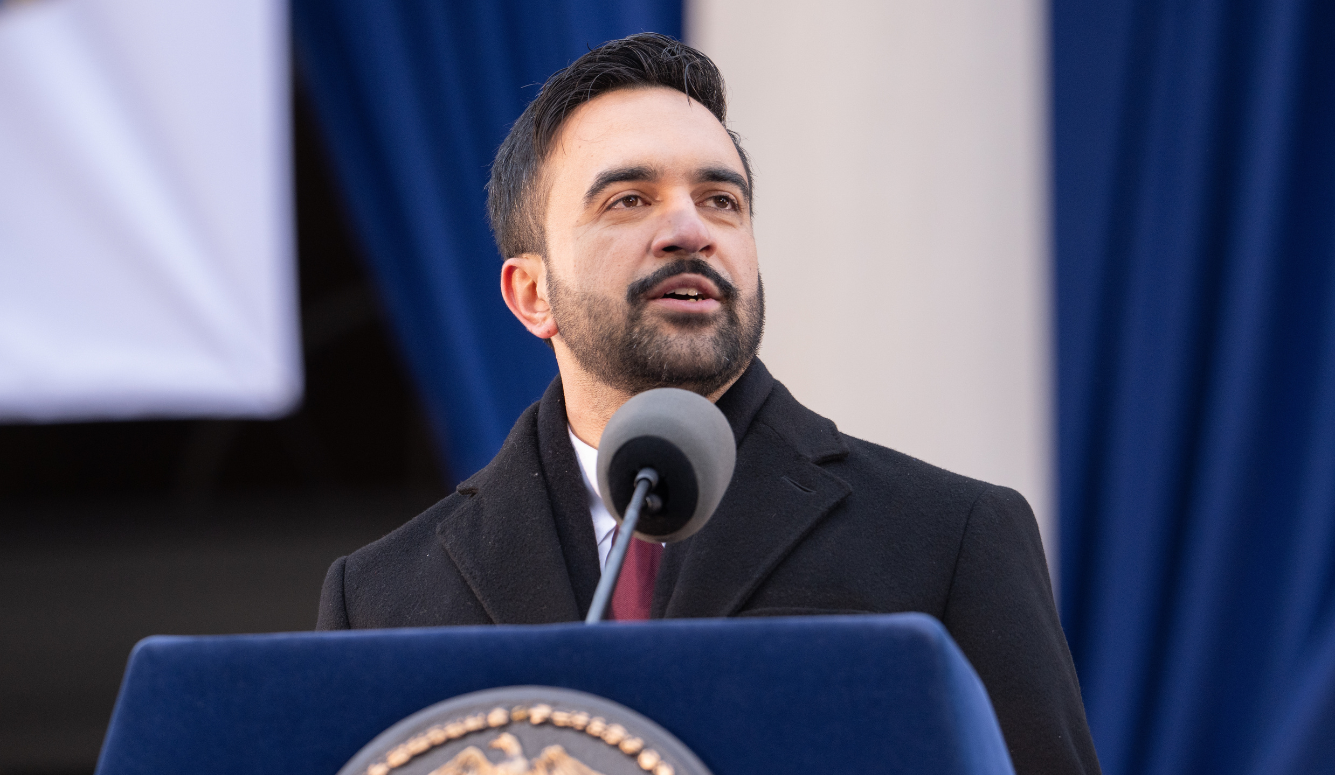
When Zohran Mamdani took office as the mayor of New York City on 1 January, he promised to usher in a transition from “the frigidity of rugged individualism to the warmth of collectivism.” It was a bizarre and stilted choice of words. “We will govern expansively and audaciously,” he told the people. The message was clear: New York’s political culture was about to change. Mamdani would institute free buses, a rent freeze, universal childcare, and higher taxes on wealth.
The people around Mamdani have been unusually candid about what the new mayor meant by “collectivism.” The Director of the Mayor’s Office to Protect Tenants, Cea Weaver said, “the reality is that for centuries, we have really treated property as an individualised good and not a collective good. And we are going to transition into treating it as a collective good and toward a model of shared equity.” Weaver was clear that this won’t be costless. “It will mean that families, especially white families but some POC families who are homeowners as well, are going to have a different relationship to property than the one that we currently have.”
But once you get into the mechanics of this, you quickly run into problems. New York contains eight million people, making millions of daily decisions: where to live, what rent to charge, which job to take, how to run a small business. Each decision rests on local knowledge—information that exists in fragments, held by individuals who understand their own circumstances and priorities in intimate detail.
The Economic Illiteracy of Alexandria Ocasio-Cortez
It is hard to emphasize how chillingly inept this remark is, especially for someone with a degree in economics.
A recent, citywide test case of collectivist rule making is instructive here. In June 2020, the NYC Rent Guidelines Board voted to set a zero percent increase for one-year renewals on rent-stabilised apartments whose leases started between 1 October 2020 and 30 September 2021. But costs for landlords kept climbing anyway, creating a squeeze. The RGB’s own operating-cost indices show big increases in key line items—e.g., from April 2021 to March 2022, all costs rose 4.2 percent, with insurance up 10.9 percent and maintenance up 9.2 percent. Sector-wide financial data tell the same story: one large NYC rent-stabilised lender/servicer reports that per-unit expenses are up 22 percent since 2020.
The nub of the problem is that the landlords’ incomes are capped for political reasons, but their bills aren’t. An apartment building needs heat, hot water, lifts, staff, boilers, roofs, facades—all of which are paid for out of rent. If rent is held flat or grows more slowly than insurance, labour, and maintenance costs, the owner has three options: run the building at a loss, inject outside cash, or cut back on needed spending and let the building deteriorate.
Of course, as I noted last year, Mamdani’s power to act will be limited by many checks and balances. Cities don’t get to simply implement collectivism in the way that Mamdani and his priesthood of ideological activists might wish. City governments are constrained by state and federal rules. Progressive ambitions in the US are often stymied by injunctions, hearings, lawsuits, and committees.
Even if Mamdani were able to govern like an Ayn Rand villain, New York wouldn’t immediately turn into a gulag—the Mayor is not exactly a Stalinist. But the language he and his team use—and the logic embedded in that language—echo ideologies that led to disaster in the twentieth century.
The deeper irony is that New York is already subject to a powerful form of collectivism. This takes the shape of a collective veto, which doesn’t come from City Hall, but from the wider local ecosystem of neighbourhood groups, preservation campaigns, community boards, well-lawyered locals, and so forth. Consider the saga of Elizabeth Street Garden: a long-running fight over whether to replace a small garden in Nolita with 123 units of affordable senior housing. Despite celebrity backing, after years of organising and litigation, in June 2025 the Adams administration moved to scrap the housing plan. This is New York’s real character arc: a progressive political class promising abundance through coordination, colliding with a local activist class that can block abundance through procedure. Housing is the most visible arena in which this plays out because everyone needs somewhere to live, but the same veto machinery affects things across many different domains.
Take transport. The city can spend years “engaging the community” before it lays a strip of paint on a road. The redesign of the McGuinness Boulevard in Greenpoint was a fairly simple proposal: reduce the road to one travel lane per direction, keep turning bays, and add parking-protected bike lanes on both sides, along with intersection changes meant to slow turning traffic and improve visibility. Even that modest project provoked a kind of civic trench warfare. In September 2023, a meeting about the redesign got so heated that police were called in. From that point on, procrastination took over. In 2024, the Department of Transport indicated that it was moving toward a scaled-back version of the original safety plan, and the street became a recurring mobilisation site. Hundreds of cyclists protested the watered-down redesign in August 2024. Then, with the election of Mamdani, the city announced that it would complete the full original redesign—with parking-protected bike lanes along the entire corridor (from Meeker Ave to the Pulaski Bridge) and one travel lane each way. This is what “community engagement” looks like in practice: a basic street-safety redesign becomes a multi-year political contest.
Then let’s take homelessness. Almost everyone agrees, in principle, that the city has a duty to shelter people. In practice, every neighbourhood fights to keep shelters elsewhere—and the pushback is often effective enough to stop shelters from being built. One example is 320 Pearl Street in the Seaport: when the Adams administration notified locals in June 2024 that it planned to convert the former Hampton Inn into a homeless shelter, it triggered a sustained backlash framed around a nearby elementary school, neighbourhood safety, and process complaints—and in August 2025 a Manhattan Supreme Court judge blocked the plan. That’s the permission regime in action: the city identifies a site, the neighbourhood mobilises, lawyers get involved, and the “solution” gets litigated away.
The result is that the system defaults to the most expensive, least durable workarounds—short-term placements and emergency procurement instead of stable capacity. The City Council’s own budget documents show that the city ends up paying a premium for temporary beds, short notice contracts, and perpetual crisis management.
With energy and infrastructure, it’s the same story. New York’s climate promises depend on building unglamorous things like power plants, transmission tie-ins, and substations—but the city’s permission culture makes it hard to do so. In Astoria, NRG Energy proposed replacing an aging electric plant with a new gas-fired generator, arguing that it would improve reliability and lower emissions. Locals and elected officials revolted anyway: The project became a magnet for hearings, organising, and vociferous public comment. In the end, state regulators denied the proposal on the grounds that it didn’t comply with New York’s climate law. Yet again, neighbourhood coalitions mobilised, the process thickened, and an attempt to improve local infrastructure turned into a years-long contest over vetoes.
Meanwhile, the grid operator has been warning that the city is drifting toward a capacity cliff: The New York Independent System Operator has explained that planned retirements of gas-fired generation will contribute to a reliability deficiency by 2033, and separate reporting has noted that margins could be tight even earlier if key projects slip. If you can’t build transmission, run cables, upgrade substations, and add firm capacity on time, then “electrify everything” becomes a meaningless slogan since the system can’t actually carry the load.
You will never be able to achieve citywide prosperity unless you can build your way towards it. You can’t mandate warmth when the system is full of bottlenecks. What you can do is clear the channels: simplify approvals, streamline permitting, reduce veto points, make regulations legible, let people build and adapt, and then use government where it actually excels—to provide basic services, safety nets, and infrastructure and enforce fair rules.
Corbynite Economics
In many ways, it is a book that feels badly out of date, and it is unlikely to be of interest to many people beyond those who already agree.

Mamdani’s central political bet is that coordination can substitute for markets: that public ambition, properly aimed, can reorganise incentives and deliver fairness. But New York’s existing coordination doesn’t primarily produce fairness or abundance; it produces procedural choke points. The mayor can announce his intent to provide “audacious governance,” but his real test is whether he can make the city do things—quickly, at scale, and without allowing every decision to be captured by the most organised objectors.
Read the full article here
Fact Checker
Verify the accuracy of this article using AI-powered analysis and real-time sources.