Close Menu
FSNN | Free Speech News NetworkFSNN | Free Speech News Network
  • Home
  • News
    • Politics
    • Legal & Courts
    • Tech & Big Tech
    • Campus & Education
    • Media & Culture
    • Global Free Speech
  • Opinions
    • Debates
  • Video/Live
  • Community
  • Freedom Index
  • About
    • Mission
    • Contact
    • Support
Trending

Potential buyers are circling Winklevoss-backed crypto exchange Gemini (GEMI)

13 minutes ago

CoreWeave’s $8.5B Deal Signals Shift From Crypto Mining to AI Finance

17 minutes ago

YouTube Now Lets You Create Your Own AI Deepfakes

21 minutes ago
Facebook X (Twitter) Instagram
Facebook X (Twitter) Discord Telegram
FSNN | Free Speech News NetworkFSNN | Free Speech News Network
Market Data Newsletter
Thursday, April 9
  • Home
  • News
    • Politics
    • Legal & Courts
    • Tech & Big Tech
    • Campus & Education
    • Media & Culture
    • Global Free Speech
  • Opinions
    • Debates
  • Video/Live
  • Community
  • Freedom Index
  • About
    • Mission
    • Contact
    • Support
FSNN | Free Speech News NetworkFSNN | Free Speech News Network
Home»News»Media & Culture»The Supreme Court’s Next Big Fourth Amendment Case
Media & Culture

The Supreme Court’s Next Big Fourth Amendment Case

News RoomBy News Room9 hours agoNo Comments3 Mins Read1,119 Views
Share Facebook Twitter Pinterest Copy Link LinkedIn Tumblr Email VKontakte Telegram
The Supreme Court’s Next Big Fourth Amendment Case
Share
Facebook Twitter Pinterest Email Copy Link

Listen to the article

0:00
0:00

Key Takeaways

Playback Speed

Select a Voice

In Carpenter v. United States (2018), the U.S. Supreme Court held that warrantless government tracking of cellphone users via their cellphone location records violated the constitutional right to be free from unreasonable search and seizure. “A person does not surrender all Fourth Amendment protection by venturing into the public sphere,” the Court said. “We decline to grant the state unrestricted access to a wireless carrier’s database of physical location information.”

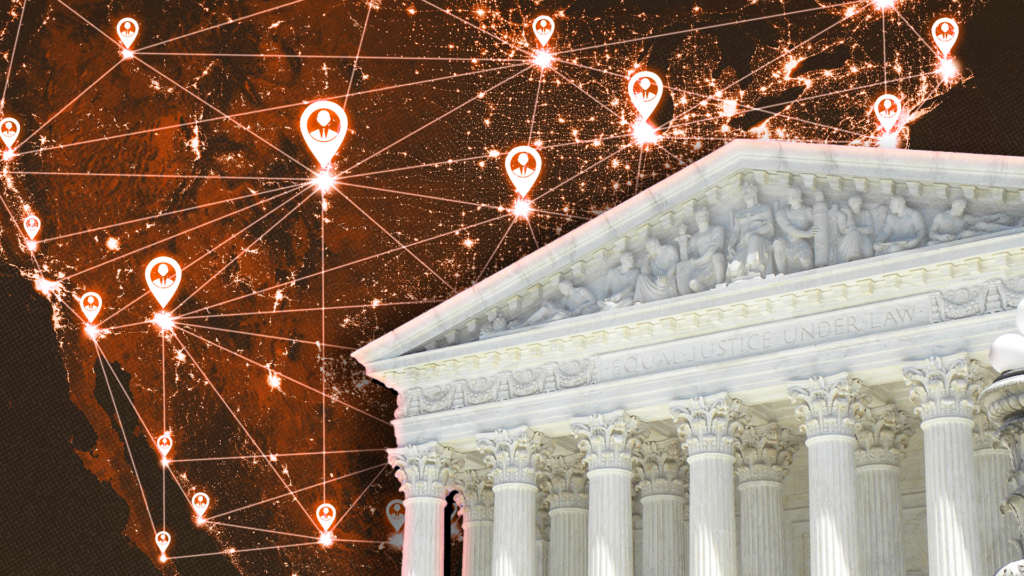
Later this month, the justices will hear oral arguments in another case that sits at the intersection of cutting-edge technology and the Fourth Amendment. And just like in Carpenter, the privacy rights of millions will once again be at stake.

You’re reading Injustice System from Damon Root and Reason. Get more of Damon’s commentary on constitutional law and American history.

At issue in the April 27 oral arguments in Chatrie v. United States is something known as a geofence warrant. It’s a law enforcement tool in which a tech company is required to hand over user information for all devices, such as cellphones, within a particular geographic area and specific period of time. In this case, a geofence warrant was served on Google by the police. That warrant told Google to search the location history of every one of its users in order to determine which users were present in the vicinity of a bank robbery. Okello Chatrie was ultimately convicted based on the information obtained via this geofence warrant.

According to Chatrie and his lawyers, “the geofence warrant was an unconstitutional general warrant [that] compelled Google to conduct a fishing expedition through millions of Google accounts, without any basis for believing that any one of them would contain incriminating evidence.” This “technology may be novel,” they told the Court, “but the constitutional problem it presents is not. The Fourth Amendment was born of the Founders’ revulsion for general warrants and writs of assistance—instruments that allowed the government to search first and develop suspicions later.”

The Trump administration has countered by arguing that Chatrie “had no reasonable expectation of privacy in the short-term location information, which he voluntarily allowed Google to collect.” That argument is based on something known as the third-party doctrine that, as the Supreme Court explained in Smith v. Maryland (1979), holds that “a person has no legitimate expectation of privacy in information he voluntarily turns over to third parties.”

But the Supreme Court’s recent Carpenter decision is now an additional factor that must be weighed whenever the third-party doctrine is invoked. In Carpenter, the Trump administration similarly invoked the third-party doctrine in support of warrantless cellphone data tracking. But the Supreme Court didn’t buy it. “Whether the Government employs its own surveillance technology…or leverages the technology of a wireless carrier,” the Court said in Carpenter, “we hold that an individual maintains a legitimate expectation of privacy in the record of his physical movements as captured through [cell site location information].”

As the above passage indicates, the logic of Carpenter would seem to pose a big problem for the Trump administration’s position in Chatrie. On top of that, as the Cato Institute pointed out in the amicus brief it filed, “under state law and Google’s user agreements, Chatrie may own his Location History records.” The reason why that matters is because “property rights lie at the heart of the Fourth Amendment, and they do not dissolve merely because one’s records are stored by a third party.”

This case seems to have all the makings of a big win for Fourth Amendment advocates. Stay tuned.

Read the full article here

Fact Checker

Verify the accuracy of this article using AI-powered analysis and real-time sources.

Get Your Fact Check Report

Enter your email to receive detailed fact-checking analysis

5 free reports remaining

Continue with Full Access

You've used your 5 free reports. Sign up for unlimited access!

Already have an account? Sign in here

#FreePress #NarrativeControl #PoliticalCoverage #PoliticalDebate #PublicDiscourse
Share. Facebook Twitter Pinterest LinkedIn Tumblr Email Telegram Copy Link
News Room
  • Website
  • Facebook
  • X (Twitter)
  • Instagram
  • LinkedIn

The FSNN News Room is the voice of our in-house journalists, editors, and researchers. We deliver timely, unbiased reporting at the crossroads of finance, cryptocurrency, and global politics, providing clear, fact-driven analysis free from agendas.

Related Articles

Cryptocurrency & Free Speech Finance

YouTube Now Lets You Create Your Own AI Deepfakes

21 minutes ago
Media & Culture

Trump Won With the MAHA Vote. Now He Might Be Losing It.

53 minutes ago
Cryptocurrency & Free Speech Finance

OpenAI Says Enterprise AI Is Already 40% of Its Revenue Amid ‘Agentic Workflow’ Shift

1 hour ago
Media & Culture

Someone Filed a Bogus DMCA Notice to Kill a Story About A Sketchy SEO Firm. It Worked — Briefly.

2 hours ago
Media & Culture

FBI Goes After Whistleblower Who Helped Unmask the ‘Fort Bragg Cartel’

2 hours ago
Cryptocurrency & Free Speech Finance

Google’s PaperOrchestra AI Converts Lab Notes Into Publication-Ready Research Papers

2 hours ago
Add A Comment
Leave A Reply Cancel Reply

Editors Picks

CoreWeave’s $8.5B Deal Signals Shift From Crypto Mining to AI Finance

17 minutes ago

YouTube Now Lets You Create Your Own AI Deepfakes

21 minutes ago

Trump Won With the MAHA Vote. Now He Might Be Losing It.

53 minutes ago

Kalshi now controls 89% of the U.S. prediction market as regulated trading takes over

1 hour ago
Latest Posts

Here’s Why Ethereum Price Remains Bullish Above $1,800.

1 hour ago

OpenAI Says Enterprise AI Is Already 40% of Its Revenue Amid ‘Agentic Workflow’ Shift

1 hour ago

Someone Filed a Bogus DMCA Notice to Kill a Story About A Sketchy SEO Firm. It Worked — Briefly.

2 hours ago

Subscribe to News

Get the latest news and updates directly to your inbox.

At FSNN – Free Speech News Network, we deliver unfiltered reporting and in-depth analysis on the stories that matter most. From breaking headlines to global perspectives, our mission is to keep you informed, empowered, and connected.

FSNN.net is owned and operated by GlobalBoost Media
, an independent media organization dedicated to advancing transparency, free expression, and factual journalism across the digital landscape.

Facebook X (Twitter) Discord Telegram
Latest News

Potential buyers are circling Winklevoss-backed crypto exchange Gemini (GEMI)

13 minutes ago

CoreWeave’s $8.5B Deal Signals Shift From Crypto Mining to AI Finance

17 minutes ago

YouTube Now Lets You Create Your Own AI Deepfakes

21 minutes ago

Subscribe to Updates

Get the latest news and updates directly to your inbox.

© 2026 GlobalBoost Media. All Rights Reserved.
  • Privacy Policy
  • Terms of Service
  • Our Authors
  • Contact

Type above and press Enter to search. Press Esc to cancel.

🍪

Cookies

We and our selected partners wish to use cookies to collect information about you for functional purposes and statistical marketing. You may not give us your consent for certain purposes by selecting an option and you can withdraw your consent at any time via the cookie icon.

Cookie Preferences

Manage Cookies

Cookies are small text that can be used by websites to make the user experience more efficient. The law states that we may store cookies on your device if they are strictly necessary for the operation of this site. For all other types of cookies, we need your permission. This site uses various types of cookies. Some cookies are placed by third party services that appear on our pages.

Your permission applies to the following domains:

  • https://fsnn.net
Necessary
Necessary cookies help make a website usable by enabling basic functions like page navigation and access to secure areas of the website. The website cannot function properly without these cookies.
Statistic
Statistic cookies help website owners to understand how visitors interact with websites by collecting and reporting information anonymously.
Preferences
Preference cookies enable a website to remember information that changes the way the website behaves or looks, like your preferred language or the region that you are in.
Marketing
Marketing cookies are used to track visitors across websites. The intention is to display ads that are relevant and engaging for the individual user and thereby more valuable for publishers and third party advertisers.