

 Freedom Index
Listen to the article
The United States Securities and Exchange Commission (SEC) published a crypto wallet and custody guide investor bulletin on Friday, outlining best practices and common risks of different forms of crypto storage for the investing public.
The SEC’s bulletin lists the benefits and risks of different methods of crypto custody, including self-custody versus allowing a third-party to hold digital assets on behalf of the investor.
If investors choose third-party custody, they should understand the custodian’s policies, including whether it “rehypothecates” the assets held in custody by lending them out or if the service provider is commingling client assets in a single pool instead of holding the crypto in segregated customer accounts.
Crypto wallet types were also outlined in the SEC guide, which broke down the pros and cons of hot wallets, which are connected to the internet, and offline storage in cold wallets.
Hot wallets carry the risk of hacking and other cybersecurity threats, according to the SEC, while cold wallets carry the risk of permanent loss if the offline storage fails, a storage device is stolen, or the private keys are compromised.
The SEC’s crypto custody guide highlights the sweeping regulatory change at the agency, which was hostile to digital assets and the crypto industry under former SEC Chairman Gary Gensler’s leadership.
Related: SEC sends warning letters to ETF issuers targeting untamed leverage
The crypto community celebrates the SEC guide as a transformational change in the agency
“The same agency that spent years trying to kill the industry is now teaching people how to use it,” Truth For the Commoner (TFTC) said in response to the SEC’s crypto custody guide.
The SEC is providing “huge value” to crypto investors by educating prospective crypto holders about custody and best practices, according to Jake Claver, the CEO of Digital Ascension Group, a company that provides services to family offices.
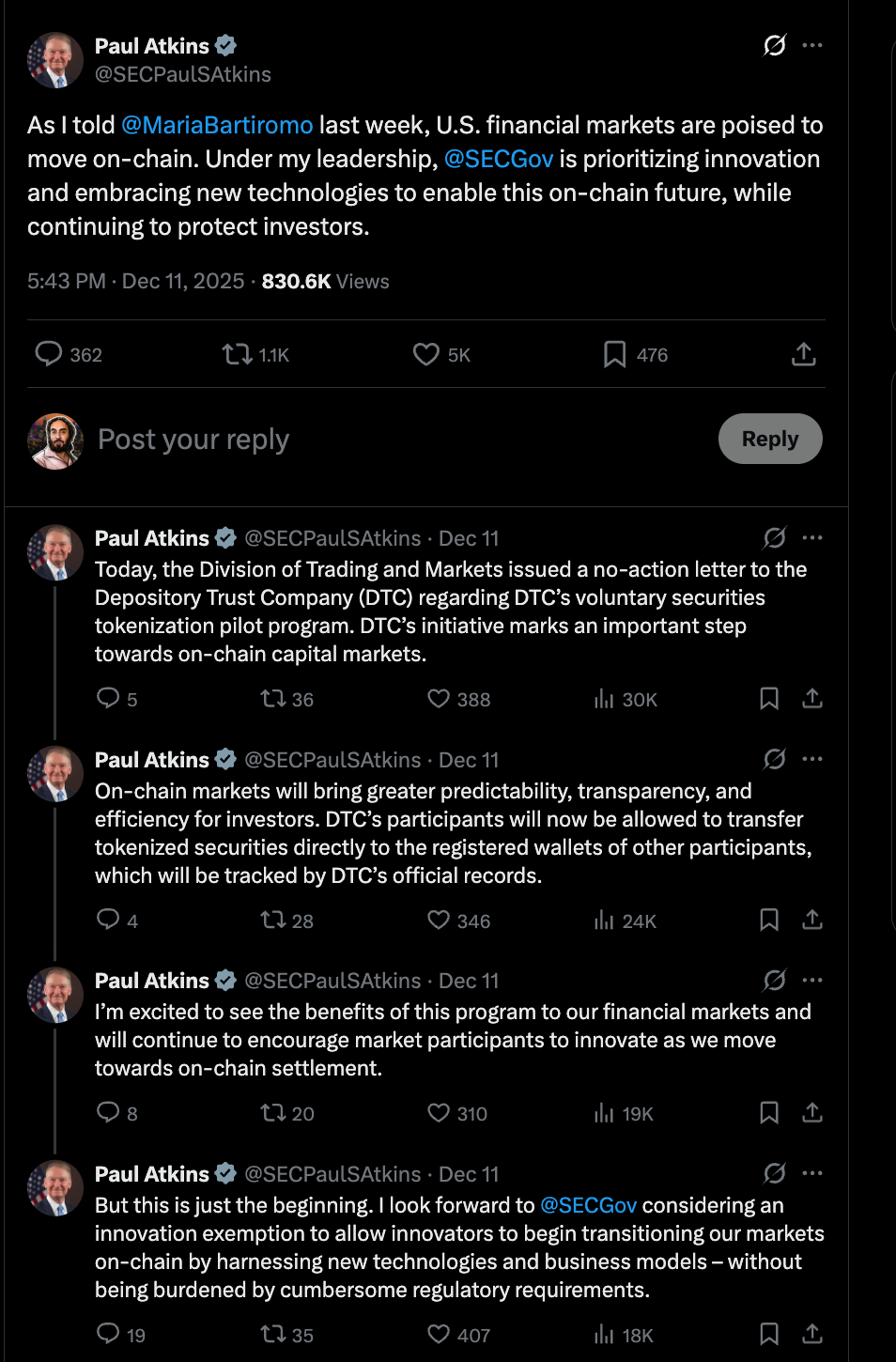
SEC regulators published the guide one day after SEC Chair Paul Atkins said that the legacy financial system is moving onchain.
On Thursday, the SEC gave the green light to the Depository Trust and Clearing Corporation (DTCC), a clearing and settlement company, to begin tokenizing financial assets, including equities, exchange-traded funds (ETFs) and government debt securities.
Magazine: Unstablecoins: Depegging, bank runs and other risks loom
Read the full article here
Fact Checker
Verify the accuracy of this article using AI-powered analysis and real-time sources.