

 Freedom Index
Listen to the article
The Kissinger Tapes: Inside His Secretly Recorded Phone Conversations, edited by Tom Wells, Oxford University Press, 640 pages, $34.99
Some consider Henry Kissinger a master statesman who advanced American interests by deftly navigating complex international affairs. Others argue that his achievements were exaggerated, preferring to highlight his violations of international law and his complicity in war crimes. Tom Wells’ The Kissinger Tapes: Inside His Secretly Recorded Phone Conversations will not resolve this debate, because those who view him as savvy and adept will find ways to construe these transcripts as evidence for their position. Reading them reveals Kissinger’s skills as a power broker who strategically maneuvers his way through the political system to achieve his goals. But there is plenty of ammunition here for those of us who view him as a villain.
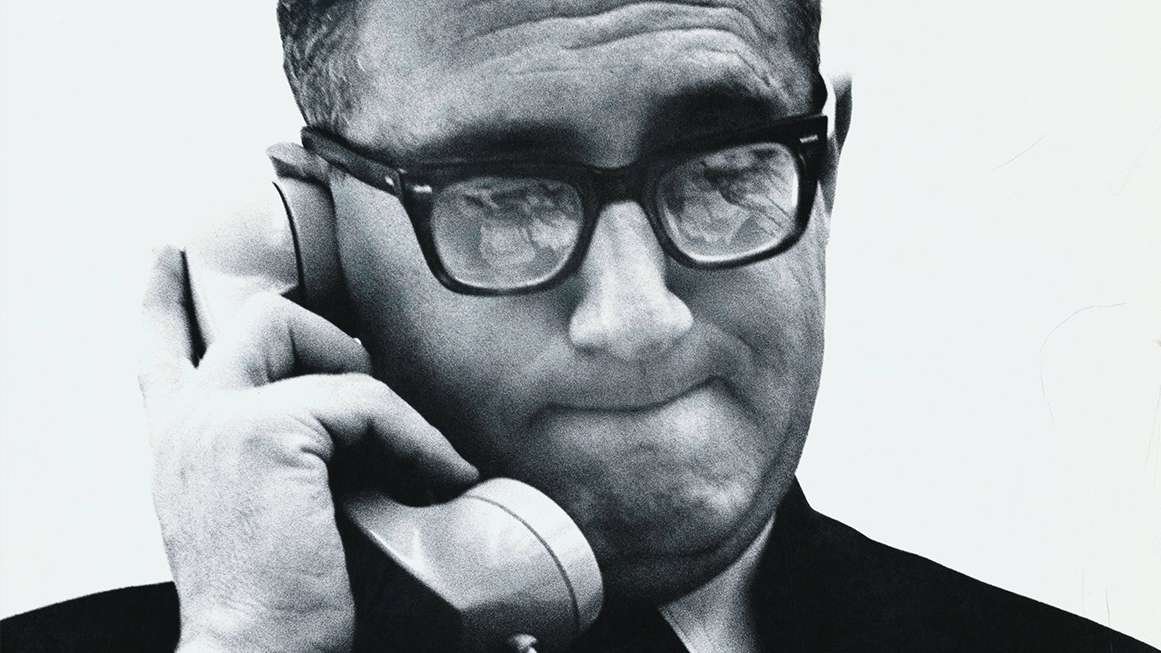
The book is a collection of selections from more than 15,000 of Kissinger’s secretly recorded telephone conversations from his time as President Richard Nixon’s national security adviser (1969–1974) and secretary of state (1973–1974). Kissinger intended the recordings for his private use (including in writing his memoirs) and, if necessary, for potential leverage over his domestic political rivals.
Reviewing collections of transcripts is tricky. There is no core argument or systematic evidence to evaluate. The purpose of the project is to present the subject in his own words. The value lies in a better understanding of the subject and the context in which he acted. Since Kissinger did not intend his transcripts to be public, the collection is a window both into him as a person and into the operations of the U.S. national security state. Four themes stand out.
The first is the sheer prevalence of systematic deception. For Kissinger, lies weren’t a strategic tool limited to selective uses in international statecraft. They appear to have been part of his personal makeup. Wells notes that he was “a habitual and easy liar.” Throughout the transcripts, he deceives his foreign counterparts, his colleagues, and the media.
During the clandestine bombings of Cambodia in 1969 and Laos in 1970, for example, Kissinger and Nixon implemented a false-reporting system to hide the strikes from both the State Department and the public. Kissinger claimed to Secretary of State William P. Rogers that he was unaware of the Pentagon Papers, the classified government study, leaked in 1971, that revealed the U.S. government had systematically deceived the public about the Vietnam War; in fact, he knew of the study from the outset. Kissinger repeatedly denied knowledge of wiretaps on officials and journalists, but the FBI later noted that he instituted much of the surveillance himself. He lied to obtain strategic advantage; he lied to shift blame; he lied to protect his reputation and status.
A second theme is Kissinger’s view of the American press. On one hand, he viewed journalists as an annoyance and even as his enemy—”jackals,” “bastard traitors,” a “lynch atmosphere.” At the same time, he saw the media as tools for furthering his goals. As Wells notes, Kissinger expertly “seduced and manipulated reporters” who were “grateful for the access he gave them and for seemingly taking them into his confidence.” He used the media to plant stories, to present himself and Nixon in a favorable light, and to distance himself from failures.
The transcripts also reveal Kissinger’s contempt for those government institutions that he viewed as hindering his ability to achieve his preferred policies. In one conversation with Defense Secretary Elliot Richardson, Kissinger criticized the Washington Special Actions Group (WSAG), a task force established in 1969 to coordinate various authorities during a crisis. “These WSAG meetings are getting intolerable,” Kissinger said. “It’s like a reform school. I sit there giving the president’s views and the whole goddamn bureaucracy, they’re shooting at it.”
Kissinger seems to have harbored particular contempt for Rogers, whom he called “that maniac” and a “snake” while repeatedly excluding him from meetings and negotiations. In one conversation, Nixon and Kissinger strategized about how to tell Rogers and the Strategic Arms Limitation Talks negotiator, Gerard Smith, about negotiations conducted behind their backs.
The final theme is Kissinger’s callousness toward human life. Nixon and Kissinger’s realpolitik led them to regard casualties as just another political variable and measure of military success. One conversation reveals Kissinger lying to a journalist about bombings in North Vietnam, stating, “I don’t doubt that some civilian targets were hit” but “every target that was approved was a clear, well-defined military target.” In fact, Wells informs us, only 12 percent of the targets were strictly military. In 1971, the military dictatorship of General Yahya Khan in Pakistan, which the Nixon administration supported, committed atrocities in East Pakistan (now Bangladesh), killing hundreds of thousands of people—maybe millions. After U.S. Consul General Archer Blood expressed horror and encouraged the White House to condemn the slaughter, Kissinger dismissed him as “one of these pansies.”
For Kissinger, issues of human rights and self-determination were secondary at best. Even when he expressed concern about potential civilian casualties, it was for optics and not out of concern for the deaths of innocent people. Take his response when Nixon, discussing air raids in North Vietnam, declared that he’s “not so goddamned concerned about the civilian population.” Kissinger’s pushback didn’t focus on the indiscriminate loss of life per se; it was that “it would give them a lot of pictures they could use.”
Beyond the insight they offer into Kissinger himself, these conversations offer the opportunity for reflection on the broader U.S. national security state, which was central to his ability to implement his policies. Those agencies give a group of largely lawless and illiberal officials vast discretionary power to impose their vision on millions of people, domestically as well as abroad. It is often arrogant, cruel, deceptive, and propagandistic. It disdains democratic processes and institutional checks on power, even as it justifies its actions by saying it is defending those very things.
In Diplomacy, Kissinger wrote that a “country that demands moral perfection in its foreign policy will achieve neither perfection nor security.” Reading these conversations, one can’t help but wonder whether a country that abandons its morals for potential security will preserve neither its morals nor its security, while strengthening the greatest threat to both: the state’s unchecked power.
This article originally appeared in print under the headline “Kissinger on Tape.”
Read the full article here
Fact Checker
Verify the accuracy of this article using AI-powered analysis and real-time sources.