

 Freedom Index
Listen to the article
After spending the better half of last year touring the country to “fight oligarchy,” Sen. Bernie Sanders (I–Vt.) has introduced legislation to confiscate billionaires’ property.
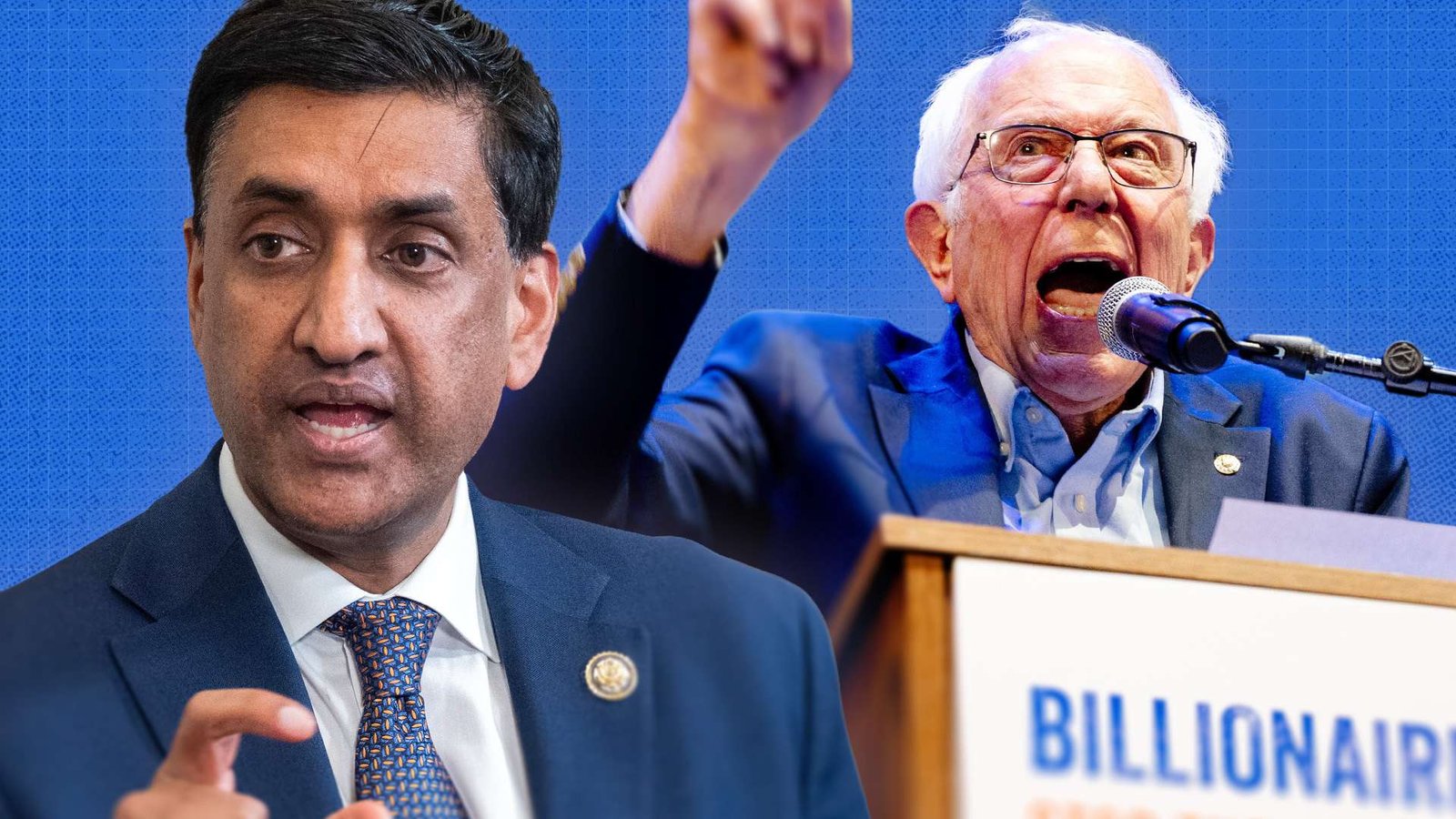
On Monday, Sanders introduced the Make Billionaires Pay Their Fair Share Act. The bill, which was also introduced by Rep. Ro Khanna (D–Calif.) in the House, would impose a 5 percent annual wealth tax on 938 American billionaires to raise an estimated $4.4 trillion over the next decade. Instead of reducing the $1.9 trillion deficit projected for this year, the money raised from this tax would go to expanding Medicare and Medicaid (which already receive $1.7 trillion in combined federal spending), giving public schoolteachers a raise, and providing a one-time “$3,000 direct payment to every man, woman and child in a household making $150,000 or less.”
In a press release, Sanders said all this money will be collected from billionaires who are “collectively worth $8.2 trillion.” The problem with this framing is that billionaires are not greedy dragons, sleeping atop piles of hoarded gold.
Two-thirds of billionaire wealth is held in the form of equity, affording private and publicly traded companies the capital required to improve their products, increase their headcount, and generate returns for their shareholders, many of whom are middle-class Americans with 401(k) plans and individual retirement accounts. (About 31 percent of billionaire wealth is held in liquid assets, such as bank deposits, much of which is also invested.)
Just like the proposed 5 percent billionaire wealth tax in California, forcing large shareholders to prematurely liquidate their stocks would distort markets, decrease the amount of capital available to these companies to invest and hire workers, and lower the rate of return to shareholders.
Regardless, Sanders says that “we can no longer tolerate a corrupt tax code that enables billionaires to pay a lower tax rate than the average worker.” This is likely in reference to the difference between the federal income tax rate, which is capped at 37 percent on income over $626,351 for single taxpayers, and the capital gains tax rate, which maxes out at 20 percent on income over $533,400 for such filers.
Americans for Tax Fairness, a nonprofit that advocates for a more progressive tax system, explains that, because most billionaires’ wealth derives from assets instead of income, a lower capital gains tax rates contributes to “the 400 richest billionaires [paying] an effective federal income-tax rate of just 8.2% in recent years, nearly half of the 14.9% that the average middle-class family pays.” In the past, Sanders has proposed equalizing these tax rates not just for billionaires, but also for those making over $250,000. (Doing so would subject invested post-tax income to yet another income tax.)
The argument for Sanders’ tax hinges on the claim that “over the past 50 years, $79 trillion in wealth in our country has been redistributed from the bottom 90% to the top 1%.” This statement assumes that the people who constitute the 1 percent are constant over time, and that there is a fixed amount of wealth that exists in the past, present, and future.
Neither assumption is true.
Over the past 50 years, the average American has gotten richer. In 1974, the median household income was $72,339 in 2024 dollars. In 2024, median household income was $83,730—an increase in real annual income of over $11,000. Moreover, money isn’t being redistributed to the 1 percent, but from them: The top 1 percent of income earners paid 40 percent of federal income taxes in 2022, and the top 10 percent were responsible for 72 percent of this revenue.
The U.S. already has an incredibly progressive tax system. Hiking taxes on billionaires is regressive in the long run, as it will impoverish Americans by reducing investment and economic growth.
Read the full article here
Fact Checker
Verify the accuracy of this article using AI-powered analysis and real-time sources.