Close Menu
FSNN | Free Speech News NetworkFSNN | Free Speech News Network
  • Home
  • News
    • Politics
    • Legal & Courts
    • Tech & Big Tech
    • Campus & Education
    • Media & Culture
    • Global Free Speech
  • Opinions
    • Debates
  • Video/Live
  • Community
  • Freedom Index
  • About
    • Mission
    • Contact
    • Support
Trending

Trump Issues Meaningless Executive Order To Try And Protect Larry Ellison’s CBS (And The Army Navy Game) From Competition

4 minutes ago

Today in Supreme Court History: March 26, 2012

6 minutes ago

Bitcoin (BTC) sales by MARA Holdings (MARA) fuels rise in stock price

23 minutes ago
Facebook X (Twitter) Instagram
Facebook X (Twitter) Discord Telegram
FSNN | Free Speech News NetworkFSNN | Free Speech News Network
Market Data Newsletter
Thursday, March 26
  • Home
  • News
    • Politics
    • Legal & Courts
    • Tech & Big Tech
    • Campus & Education
    • Media & Culture
    • Global Free Speech
  • Opinions
    • Debates
  • Video/Live
  • Community
  • Freedom Index
  • About
    • Mission
    • Contact
    • Support
FSNN | Free Speech News NetworkFSNN | Free Speech News Network
Home»News»Media & Culture»The New Forever War in Iran Keeps the Dog Wagging
Media & Culture

The New Forever War in Iran Keeps the Dog Wagging

News RoomBy News Room2 hours agoNo Comments5 Mins Read928 Views
Share Facebook Twitter Pinterest Copy Link LinkedIn Tumblr Email VKontakte Telegram
The New Forever War in Iran Keeps the Dog Wagging
Share
Facebook Twitter Pinterest Email Copy Link

Listen to the article

0:00
0:00

Key Takeaways

Playback Speed

Select a Voice

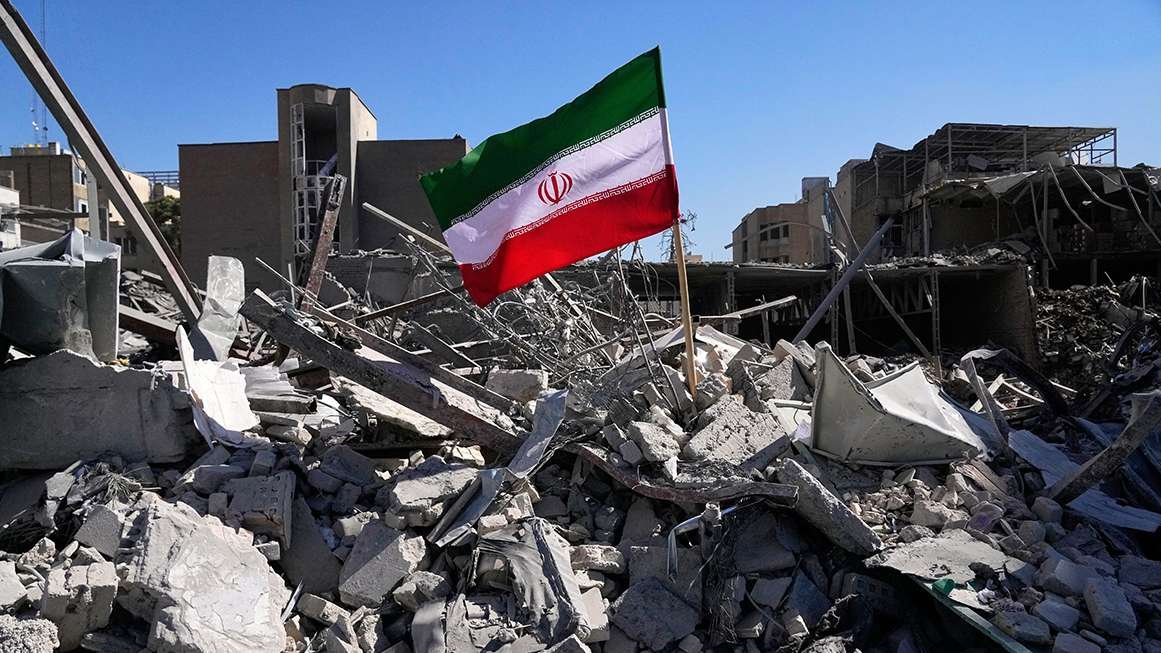
At press time, the U.S. is engaged in a war with Iran—or at least very warlike behavior, including taking out much of a sitting government, killing Iran’s supreme leader Ayatollah Ali Khamenei and several top military commanders, dropping 2,000-pound bombs from B-2 stealth bombers on missile and nuclear facilities, and launching Tomahawk cruise missiles and drones at hundreds of targets across the country.

Why? That depends on whom you ask and on which day. Perhaps there was an imminent threat—maybe even a nuclear threat?—to the United States. Or perhaps the Iranian regime is a sponsor of terror, on which we have already declared war. Or perhaps we need to support our allies in the region. Or perhaps just because Khamenei was just a world-historically murderous bastard, even in a region famed for its murderous bastards.

Here’s a good rule of thumb, both for understanding foreign policy and also for life in general: When someone offers a bunch of rapid-fire and mutually irreconcilable justifications for a controversial decision, they’re not telling you the whole story.

William Shakespeare might have invoked letting slip the dogs of war to describe the unleashing of violence, but these days we just “wag the dog.” Popularized by Our American Cousin—the play being performed at Ford’s Theatre when President Abraham Lincoln was shot—the phrase took on an explicitly political meaning after the ripped-from-the-headlines 1997 film Wag the Dog. In that otherwise pretty awful movie, a fabricated military conflict was used to distract voters from a presidential sex scandal. Since then, the term has become shorthand for the idea that leaders sometimes use military action to divert attention from problems at home.

A wag-the-dog allegation need not mean the reasons for war are made up from whole cloth. Real geopolitical tensions, real strategic dilemmas, and real threats obviously exist. But the utility of a foreign conflict as a tool for domestic political positioning—especially when electoral outcomes are looking shaky—is a recurring theme in American history.

Trump’s approval ratings are notably terrible. National polling aggregates suggest his job approval stands somewhere near 40 percent. A president facing a highly competitive election year and significant scrutiny on issues ranging from the economy to the ongoing incredulity and disappointment about the release of the Epstein files might well cast about for a distraction.

The war also doesn’t necessarily have to be popular to accomplish some doggish goals. Though reporting suggests that President Donald Trump believed Americans in general, and his MAGA supporters more specifically, would rally around the war, a Reuters/Ipsos survey shows only about 27 percent of the country approving of the strikes on Iran, while 43 percent disapprove and many are uncertain. A larger poll conducted by the University of Maryland before the attacks suggested that even fewer Americans support a U.S. attack on Iran under current circumstances, as low as around 21 percent.

The two Trump terms have dramatically shortened the public’s attention span. After a strike on Iran in June, which the administration declared a total success in eliminating Iran’s nuclear capability, the president might have hoped for a polling bump, some “strange new respect” from the more hawkish Republicans on the Hill, or at least a few more days of coverage. But that episode quickly faded from view (and didn’t resolve any of the underlying problems in the region). But Americans didn’t seem to hate it either. So the temptation emerged to try again.

Even when wars are unpopular or divisive, they command attention and can reframe political discourse away from domestic grievances and toward questions of national security. A war does not need majority support to serve this function. It needs only to be salient enough to shift the conversation.

Even days of online dunking and pushback on Trump’s inconsistencies on war with Iran can have a kind of invigorating effect. And at least the topic has some gravitas, unlike the slow-moving Epstein disaster or the dismal economic data constantly trickling out.

Trump ran as an opponent of “forever wars,” and he won over at least some voters with that emphasis. Those voters—and perhaps more importantly, increasingly fractious GOP influencers such as Tucker Carlson and Megyn Kelly—are justifiably angry. Democratic politicians and voters are, of course, more than happy to pick holes in the confused and confusing justifications for a war launched without respect for Congress or the opinions of the American people.

Too little, too late, Congress has creaked into slow action to hint at protecting its privileges to wage war. Once military action begins, it becomes easier for leaders to justify extensions, surges, and escalations without ever obtaining the degree of popular backing that a war with clear goals—or a thoughtful peace—might command.

The current conflict with Iran, unlike the fictional war in Wag the Dog, is rooted in decades of geopolitical friction, sanctions, proxy battles, and strategic competition. Many Iranians, at least in these early days, have reacted with joy to American bombings. But it remains true that when foreign policy is conducted in the service of domestic politics, wars become tempting as tools of distraction, puffery, and electoral signaling.

Perhaps the many competing explanations offered for this war each capture some part of the truth. But when the list grows long and the emphasis keeps shifting, that often means the conflict is doing more than one job. And wars that do multiple jobs for the people waging them—military, diplomatic, electoral—are the ones most likely to stick around forever.

This article originally appeared in print under the headline “A Tail Wagging a Dog, Forever.”

Read the full article here

Fact Checker

Verify the accuracy of this article using AI-powered analysis and real-time sources.

Get Your Fact Check Report

Enter your email to receive detailed fact-checking analysis

5 free reports remaining

Continue with Full Access

You've used your 5 free reports. Sign up for unlimited access!

Already have an account? Sign in here

#Democracy #MediaAndPolitics #MediaEthics #PoliticalCoverage #PoliticalNews
Share. Facebook Twitter Pinterest LinkedIn Tumblr Email Telegram Copy Link
News Room
  • Website
  • Facebook
  • X (Twitter)
  • Instagram
  • LinkedIn

The FSNN News Room is the voice of our in-house journalists, editors, and researchers. We deliver timely, unbiased reporting at the crossroads of finance, cryptocurrency, and global politics, providing clear, fact-driven analysis free from agendas.

Related Articles

Media & Culture

Trump Issues Meaningless Executive Order To Try And Protect Larry Ellison’s CBS (And The Army Navy Game) From Competition

4 minutes ago
Media & Culture

Today in Supreme Court History: March 26, 2012

6 minutes ago
Cryptocurrency & Free Speech Finance

Coinbase, Fannie Mae to Enable Crypto-Backed Mortgages

29 minutes ago
Media & Culture

Unanimous Supreme Court Says Internet Service Provider Not Liable for Internet Users’ Illegal Downloads

1 hour ago
Cryptocurrency & Free Speech Finance

Bitcoin Slips Under $70K as Pentagon Prepares ‘Final Blow’ in Iran

2 hours ago
Media & Culture

Don’t Legislate Morality: Most Americans Can’t Agree on What’s Immoral

3 hours ago
Add A Comment
Leave A Reply Cancel Reply

Editors Picks

Today in Supreme Court History: March 26, 2012

6 minutes ago

Bitcoin (BTC) sales by MARA Holdings (MARA) fuels rise in stock price

23 minutes ago

Circle’s CRCL Stock Hints at 25% Gains as Market Overreacts to CLARITY Act

26 minutes ago

Coinbase, Fannie Mae to Enable Crypto-Backed Mortgages

29 minutes ago
Latest Posts

Unanimous Supreme Court Says Internet Service Provider Not Liable for Internet Users’ Illegal Downloads

1 hour ago

Coinbase, Fannie Mae bring crypto-backed mortgages to home buyers

1 hour ago

Circle Leads Tazapay Extension as Total Series B Reaches $36M

1 hour ago

Subscribe to News

Get the latest news and updates directly to your inbox.

At FSNN – Free Speech News Network, we deliver unfiltered reporting and in-depth analysis on the stories that matter most. From breaking headlines to global perspectives, our mission is to keep you informed, empowered, and connected.

FSNN.net is owned and operated by GlobalBoost Media
, an independent media organization dedicated to advancing transparency, free expression, and factual journalism across the digital landscape.

Facebook X (Twitter) Discord Telegram
Latest News

Trump Issues Meaningless Executive Order To Try And Protect Larry Ellison’s CBS (And The Army Navy Game) From Competition

4 minutes ago

Today in Supreme Court History: March 26, 2012

6 minutes ago

Bitcoin (BTC) sales by MARA Holdings (MARA) fuels rise in stock price

23 minutes ago

Subscribe to Updates

Get the latest news and updates directly to your inbox.

© 2026 GlobalBoost Media. All Rights Reserved.
  • Privacy Policy
  • Terms of Service
  • Our Authors
  • Contact

Type above and press Enter to search. Press Esc to cancel.

🍪

Cookies

We and our selected partners wish to use cookies to collect information about you for functional purposes and statistical marketing. You may not give us your consent for certain purposes by selecting an option and you can withdraw your consent at any time via the cookie icon.

Cookie Preferences

Manage Cookies

Cookies are small text that can be used by websites to make the user experience more efficient. The law states that we may store cookies on your device if they are strictly necessary for the operation of this site. For all other types of cookies, we need your permission. This site uses various types of cookies. Some cookies are placed by third party services that appear on our pages.

Your permission applies to the following domains:

  • https://fsnn.net
Necessary
Necessary cookies help make a website usable by enabling basic functions like page navigation and access to secure areas of the website. The website cannot function properly without these cookies.
Statistic
Statistic cookies help website owners to understand how visitors interact with websites by collecting and reporting information anonymously.
Preferences
Preference cookies enable a website to remember information that changes the way the website behaves or looks, like your preferred language or the region that you are in.
Marketing
Marketing cookies are used to track visitors across websites. The intention is to display ads that are relevant and engaging for the individual user and thereby more valuable for publishers and third party advertisers.