

 Freedom Index
Listen to the article
The Department of Homeland Security (DHS) is reviewing body camera footage of the encounter that culminated in Minneapolis protester Alex Pretti’s death on Saturday. That footage could help clarify the circumstances in which a Border Patrol agent and a Customs and Border Protection (CBP) officer fatally shot Pretti.
When Immigration and Customs Enforcement (ICE) agent Jonathan Ross killed Minneapolis protester Renee Good on January 7, by contrast, he used his cellphone rather than a body camera to record the encounter. Although Vice President J.D. Vance claimed the resulting video confirmed that Ross shot Good in self-defense, it does not actually show what was happening when Ross fired his gun. It is not clear whether other ICE agents at the scene were wearing body cameras, but it seems unlikely, since the local ICE office does not have any.
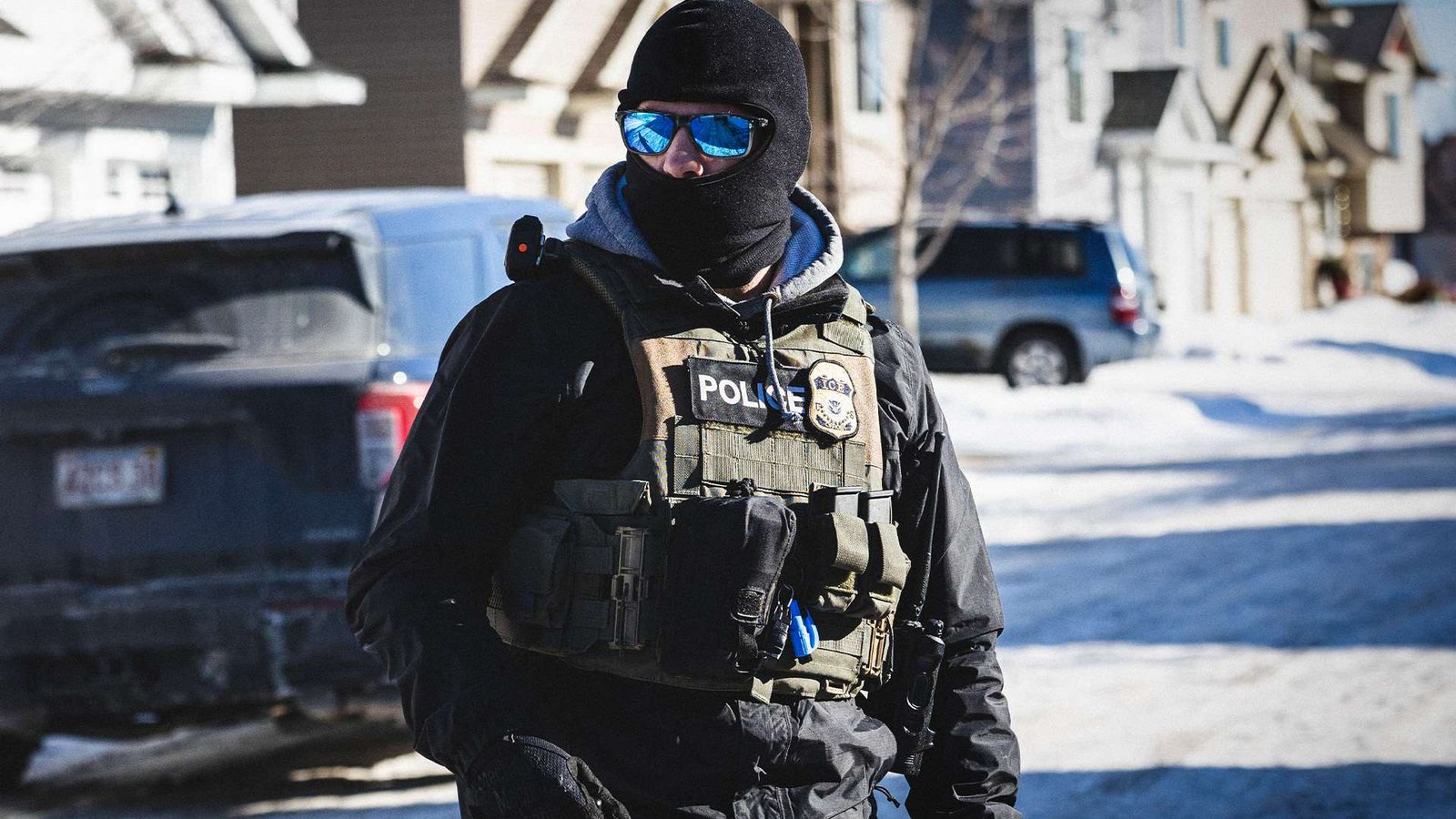
Both incidents underline the importance of body cameras in resolving questions about the use of force by law enforcement officers. But although body cameras have been widely adopted by state and local law enforcement agencies, their use by DHS personnel is spotty and inconsistent. That could change as a result of negotiations between the Trump administration and Democratic legislators, who are demanding several reforms, including a body camera mandate for all immigration agents, as a condition of approving DHS funding.
So far, the only publicly available video record of the Good and Pretti shootings consists of cellphone footage. In both cases, that evidence discredited the Trump administration’s initial justifications, which portrayed Good and Pretti as would-be murderers. The videos suggest that Good, contrary to what President Donald Trump and other officials said, did not deliberately try to run Ross over with her SUV. And they show that Pretti, who had a carry permit, never drew his pistol or “attacked those officers,” contrary to what DHS Secretary Kristi Noem claimed.
The cellphone videos nevertheless leave several questions unanswered. Some of those questions are legal: Did the officers reasonably believe, given “the totality of the circumstances,” that the use of deadly force was necessary to protect themselves, their colleagues, or the general public? But there are also policy questions: What sort of rules or training would help prevent outcomes like these?
Body camera footage could help answer those questions by providing a more complete record of the events preceding the shootings and by showing what the officers were seeing, hearing, and saying. Consider the account of the Pretti shooting that CBP’s Office of Professional Responsibility (OPR) offered in a report to Congress on Tuesday.
After “CBP personnel attempted to take Pretti into custody,” the OPR report says, “Pretti resisted CBP personnel’s efforts and a struggle ensued. During the struggle, a [Border Patrol agent] yelled, ‘He’s got a gun!’ multiple times. Approximately five seconds later, a [Border Patrol agent] discharged his CBP-issued Glock 19 and a [CBP officer] also discharged his CBP-issued Glock 47 at Pretti. After the shooting, a [Border Patrol agent] advised he had possession of Pretti’s firearm. The [Border Patrol agent] subsequently cleared and secured Pretti’s firearm in his vehicle.”
That account omits some crucial details that are already clear from bystander videos. It does not mention that the Border Patrol agent who “secured Pretti’s firearm” had disarmed him by the time the shooting started or that Pretti was restrained, with both of his arms pinned down, at that point. It does not mention that the agent who first opened fire shot Pretti four times in the back at close range, which suggests he faced no immediate threat. It does not mention that, after Pretti collapsed on the pavement, that agent and the CBP officer fired six more rounds into his prone, motionless body from a distance.
“There is body camera footage from multiple angles which investigators are currently reviewing,” an unnamed DHS official told NPR after the shooting. That evidence could be crucial in illuminating why the Border Control agent opened fire. Exactly what threat did he perceive at that point? Did he ever actually see the gun, and did he realize it had already been removed? Did he understand that Pretti was restrained in a way that would have made it impossible for him to draw the gun even if it was still in its holster?
The final six rounds are even harder to understand, let alone justify. But the body camera footage, including the audio, could help clarify what the Border Patrol agent and the CBP officer were seeing and thinking at that point.
If we had “body camera footage from multiple angles” of the ICE encounter with Good, it could confirm that her car made contact with him as she began to drive away and clarify the seriousness of any injury he suffered. It might show how fast the car was moving and whether Ross was still in its path when he fired the first round, which entered the car through the lower left corner of the windshield. It could clarify his position when he fired the second and third rounds, which entered the car through the side window next to Good. And it might shed light on whether Ross acted out of fear, as Noem has said, or out of anger, as suggested by his “fucking bitch” comment after he killed Good.
In both cases, body camera footage could shed light on why the encounters escalated so quickly. The evidence so far suggests that both situations could have been resolved peacefully if the officers had taken a less aggressive approach. But additional video and audio evidence might clarify why the ICE officer who ordered Good to “get out of the fucking car” decided to forcibly remove her, which was the threat that seems to have motivated her attempted flight. It likewise might clarify why “CBP personnel attempted to take Pretti into custody,” which led to the struggle that ended in lethal gunfire.
The advantages of body cameras, which can both document police abuses and exonerate officers wrongly accused of them, have persuaded state and local law enforcement agencies across the country to adopt them. By 2016, nearly half of “general-purpose law enforcement agencies in the United States,” including 80 percent of large police departments, had begun using body cameras. “As of 2020,” the police technology company Axon reports, “all U.S. police departments serving at least one million residents reported using body cameras, and 79 percent of police officers nationwide reported working in departments with [body camera] programs.” But the federal government has been slow to follow that trend, and DHS in particular has not settled on a uniform policy.
In 2022, President Joe Biden issued an executive order requiring federal law enforcement agencies to implement body camera programs. The following year, the DHS noted that CBP already had provided 7,000 body cameras to its personnel and said ICE likewise would start using them, building on a pilot program that Congress had established in 2021. According to a 2024 DHS report, “full implementation” of body cameras across ICE was expected by last September.
Things did not quite work out that way. On the first day of his second term, Trump rescinded Biden’s body camera order, and his administration has not been keen on expanding use of the devices.
In a January 19 declaration submitted during litigation over the immigration crackdown in Minneapolis, Samuel J. Olson, director of enforcement and removal operations (ERO) at ICE’s field office in St. Paul, said his office “is not scheduled or funded for [body camera] deployment.” He added that ICE personnel working out of that office “are not properly prepared, trained, or equipped for an immediate deployment” of body cameras. To equip all of them, he said, would require about 2,000 cameras, and at that point the office had none.
“If all ICE law enforcement personnel deployed to or operating out of Minnesota were required to use [body cameras], ICE would need approximately 180 days to evaluate and complete the required improvements to the network; ship, install, and test the necessary equipment; and train hundreds of law enforcement personnel on proper usage, maintenance, and storage,” Olson said. “If the number of officers and agents in the ERO St. Paul Office exceeds the number of physical devices currently in the agency’s possession, ICE would need to procure additional devices, the process [for] which must comport with federal law. In such an instance, the minimum estimated 180-day timeline would no longer be feasible.”
CBP officers, by contrast, are supposed to be using body cameras in Minnesota. CBP, which includes the Border Patrol, says body cameras “will be used to record official law enforcement encounters, except when doing so may jeopardize agents and officers or public safety.” But according to a Border Patrol official in Minneapolis quoted in the same NPR story, that policy applies to “CBP personnel who are equipped with and trained in” body cameras, which suggests use of the devices is less than comprehensive within that agency.
As of last June, The Washington Post reports, “ICE had 4,400 cameras, though its workforce has since swelled to 22,000, while CBP had 13,400 cameras for a workforce of at least 45,000 armed officers.” Depending on what happens with the DHS spending bill that Congress is considering, that situation might improve. Under a Senate deal that Trump endorsed on Thursday, the DHS will be temporarily funded for two weeks, allowing time to negotiate a bill that could include new body camera requirements.
Read the full article here
Fact Checker
Verify the accuracy of this article using AI-powered analysis and real-time sources.