

 Freedom Index
Listen to the article
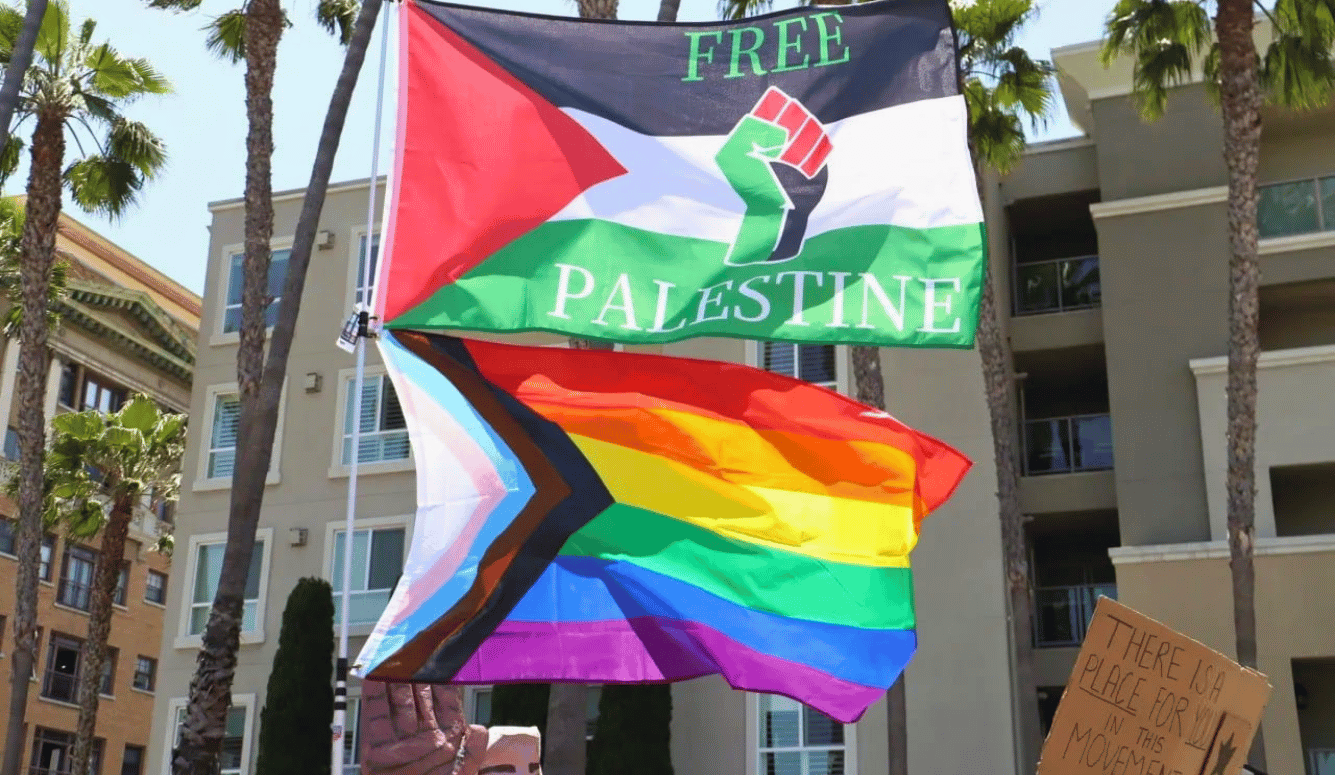
On 28 March, around 50,000 people, according to figures provided by the police, marched through central London against what they called “the rise of the Right.” The immediate target was Nigel Farage’s party Reform UK, which now leads in national parliamentary polling and has become the largest vehicle for right-wing populism in Britain. Alongside the anti-Reform placards were a sea of Iranian-regime flags, communist banners, transgender and other Pride flags, as well as the now-ubiquitous Palestinian flags.
The march ended in Whitehall in a carnivalesque mood, after passing through Trafalgar Square, where Zack Polanski and the newly elected Green MP Hannah Spencer danced onstage in front of the crowd, alongside an array of people in BDSM fetish gear, while mediocre house music played. The square had taken on the atmosphere of a rave—though not a real rave, but a stage-managed pseudo-transgressive fake rave, for political purposes. It was a simulation of hedonism designed for social media consumption, complete with some of the most embarrassing dad dancing I’ve ever seen.
I’m absolutely consistent. I’m against Muslims praying in Trafalgar Square, and I’m against whatever the f*** this is.pic.twitter.com/QtuJQiX18G
— Nick Dixon (@NickDixon) March 29, 2026
It was also a demonstration of the moral alignment of the contemporary Left. In that world, opposition to the right-wing policies of Farage sits astride a wider set of causes and loyalties organised around anti-Western sentiment and the politics of an amorphous so-called “resistance.”
Two weeks earlier, the Metropolitan Police had taken the unusual step of obtaining Home Secretary approval to ban the 2026 Al Quds march and any associated counter-marches. Assistant Commissioner Ade Adelekan said the march was “uniquely contentious,” noting that in London it was organised by the Islamic Human Rights Commission, “an organisation supportive of the Iranian regime.” He added that the force judged the risks this year to be exceptional, given the likelihood of large numbers of protesters and counter-protesters, “extreme tensions between different factions,” the volatile regional situation, and recent Iranian attacks on British allies and military bases overseas. The Met stressed that the threshold for banning a protest is high and that this was the first time it has used the power since 2012.
Read the full article here
Fact Checker
Verify the accuracy of this article using AI-powered analysis and real-time sources.