

 Freedom Index
Listen to the article
President Donald Trump’s tariffs may now be challenged in the House following the death of House Resolution 1042 on Tuesday night. The resolution included a procedural measure that would have prevented the House from voting until August to terminate the national emergencies that Trump has used to impose “reciprocal tariffs.” Now, the House will likely vote on Wednesday on House Joint (H.J.) Resolution 72, which, like its companion measure in the Senate that passed last April, seeks to end the national emergency Trump declared last February and roll back the tariffs subsequently imposed on Canadian goods.
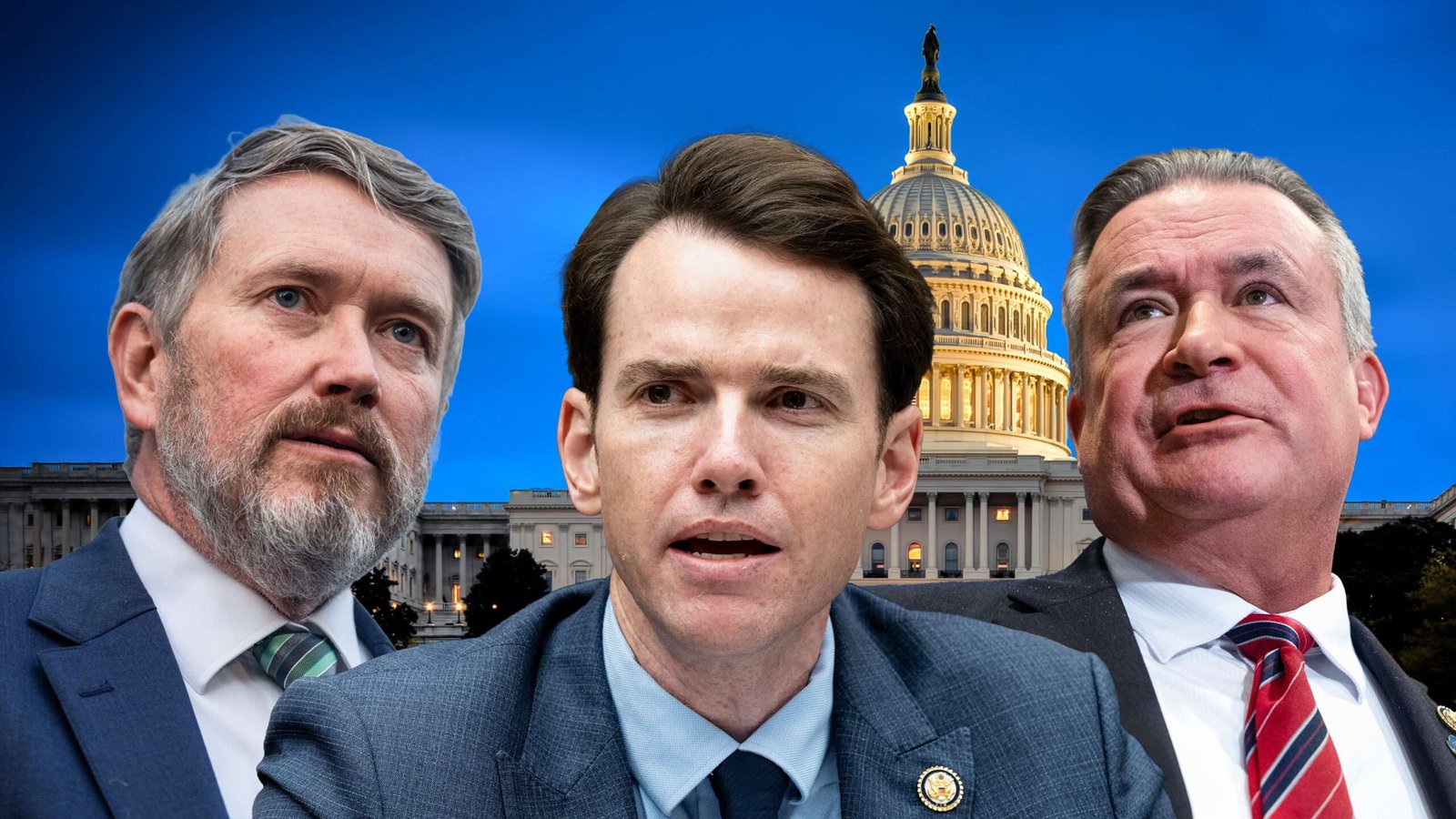
The vote on H.R. 1042, originally scheduled for 1:30 p.m. on Tuesday, was pushed back to 8:30 p.m. due to a combination of wariness and opposition from Reps. Tom McClintock (R–Calif.), Victoria Spartz (R–Ind.), Kevin Kiley (R–Calif.), Don Bacon (R–Neb.), and Thomas Massie (R–Ky.). Spartz, Kiley, and Massie all voted against a similar resolution in September. McClintock, while initially part of their coalition at that time, ultimately voted for that resolution. He caved this time, too.
McClintock said he remains “a tariff skeptic,” but voted to pass Tuesday’s resolution, defending his decision by saying “it would be unwise to alter the status quo until we know the full scope and implications of the decision.” While Spartz told The Hill earlier on Tuesday that “we need to stop waiting for the Supreme Court,” Speaker of the House Mike Johnson (R–La.) apparently persuaded her to join McClintock in voting for the resolution.
But Republican leaders could not persuade Kiley, Bacon, and Massie to vote “yes.” Massie defended his decision to break from party ranks as “defend[ing] the Constitution,” which vests “taxing authority…in the House of Representatives, not the Executive.” Similarly, Bacon said he must “answer to Article I,” which grants Congress exclusive power to regulate international commerce and impose taxes.
Beginning in February 2025 with his tariffs against Canada and Mexico, Trump has invoked the International Emergency Economic Powers Act (IEEPA) to authorize his unilateral modification of the Harmonized Tariff Schedule. Trump used IEEPA in April, and again last summer, to impose his not-so-reciprocal tariffs on imports from all around the world, the burden of which has been almost entirely borne by Americans.
Unsurprisingly, to use the International Emergency Economic Powers Act, Trump had to declare a national emergency. Such emergencies are subject to congressional review.
The National Emergencies Act, which Trump invoked alongside IEEPA in his executive order imposing tariffs on Canadian imports, requires that Congress shall convene to determine whether the emergency shall continue “no later than six months after a national emergency is declared and for every six-month period the emergency remains active thereafter,” explains the Congressional Research Service. Accordingly, IEEPA provides that its authorities “may not continue to be exercised…if the national emergency is terminated by the Congress.”
Republicans avoided complying with this unambiguous requirement by redefining what qualifies as a “day” in the congressional calendar.
In March 2025, House Republicans passed House Resolution 211, which declared that “each day…shall not constitute a calendar day for purposes of…the National Emergencies Act.” This allowed Trump’s February 2025 tariffs to remain in place until January 3 of this year. In April 2025, Republicans inserted nearly identical language in House Resolution 313 to prevent a vote through September on the “Liberation Day” emergency that Trump used to impose “reciprocal” tariffs. Then, in September, Republicans repeated the procedural gimmick by passing House Resolution 707 to stall a vote on that national emergency until January 31.
Nearly two weeks since the end of the Republicans’ National Emergencies Act loophole, Trump’s updated “reciprocal” tariff rates should be exposed to congressional scrutiny. Now they are, thanks to the Republicans who ended their colleagues’ cowardly bid to save themselves from painful votes.
But Tuesday’s vote was only half of the battle. Now, if Congress wants to put an end to Trump’s national emergency and accompanying tariffs on Canadian goods, the House will need to pass H.J. 72, and then both chambers will have to assemble supermajorities to overturn Trump’s inevitable veto of their joint resolutions.
Read the full article here
Fact Checker
Verify the accuracy of this article using AI-powered analysis and real-time sources.