Close Menu
FSNN | Free Speech News NetworkFSNN | Free Speech News Network
  • Home
  • News
    • Politics
    • Legal & Courts
    • Tech & Big Tech
    • Campus & Education
    • Media & Culture
    • Global Free Speech
  • Opinions
    • Debates
  • Video/Live
  • Community
  • Freedom Index
  • About
    • Mission
    • Contact
    • Support
Trending

Crypto Needs Privacy To Scale in Payments: Binance Co-Founder CZ

28 minutes ago

Wall Street giant Apollo follows BlackRock in DeFi push with Morpho token deal

1 hour ago

OpenClaw Creator Gets Big Offers to Acquire AI Sensation—Will It Stay Open Source?

3 hours ago
Facebook X (Twitter) Instagram
Facebook X (Twitter) Discord Telegram
FSNN | Free Speech News NetworkFSNN | Free Speech News Network
Market Data Newsletter
Sunday, February 15
  • Home
  • News
    • Politics
    • Legal & Courts
    • Tech & Big Tech
    • Campus & Education
    • Media & Culture
    • Global Free Speech
  • Opinions
    • Debates
  • Video/Live
  • Community
  • Freedom Index
  • About
    • Mission
    • Contact
    • Support
FSNN | Free Speech News NetworkFSNN | Free Speech News Network
Home»News»Media & Culture»The E.U. Wants ‘Deforestation-Free’ Products. Consumers May Pay the Cost.
Media & Culture

The E.U. Wants ‘Deforestation-Free’ Products. Consumers May Pay the Cost.

News RoomBy News Room8 hours agoNo Comments4 Mins Read169 Views
Share Facebook Twitter Pinterest Copy Link LinkedIn Tumblr Email VKontakte Telegram
The E.U. Wants ‘Deforestation-Free’ Products. Consumers May Pay the Cost.
Share
Facebook Twitter Pinterest Email Copy Link

Listen to the article

0:00
0:00

Key Takeaways

Playback Speed

Select a Voice

Are the products you’re buying BPA-free? Nut-free? How about GMO-free? If the European Union (E.U.) has its way, we’ll soon be adding a new label to our shopping list vocabulary: “deforestation-free.”

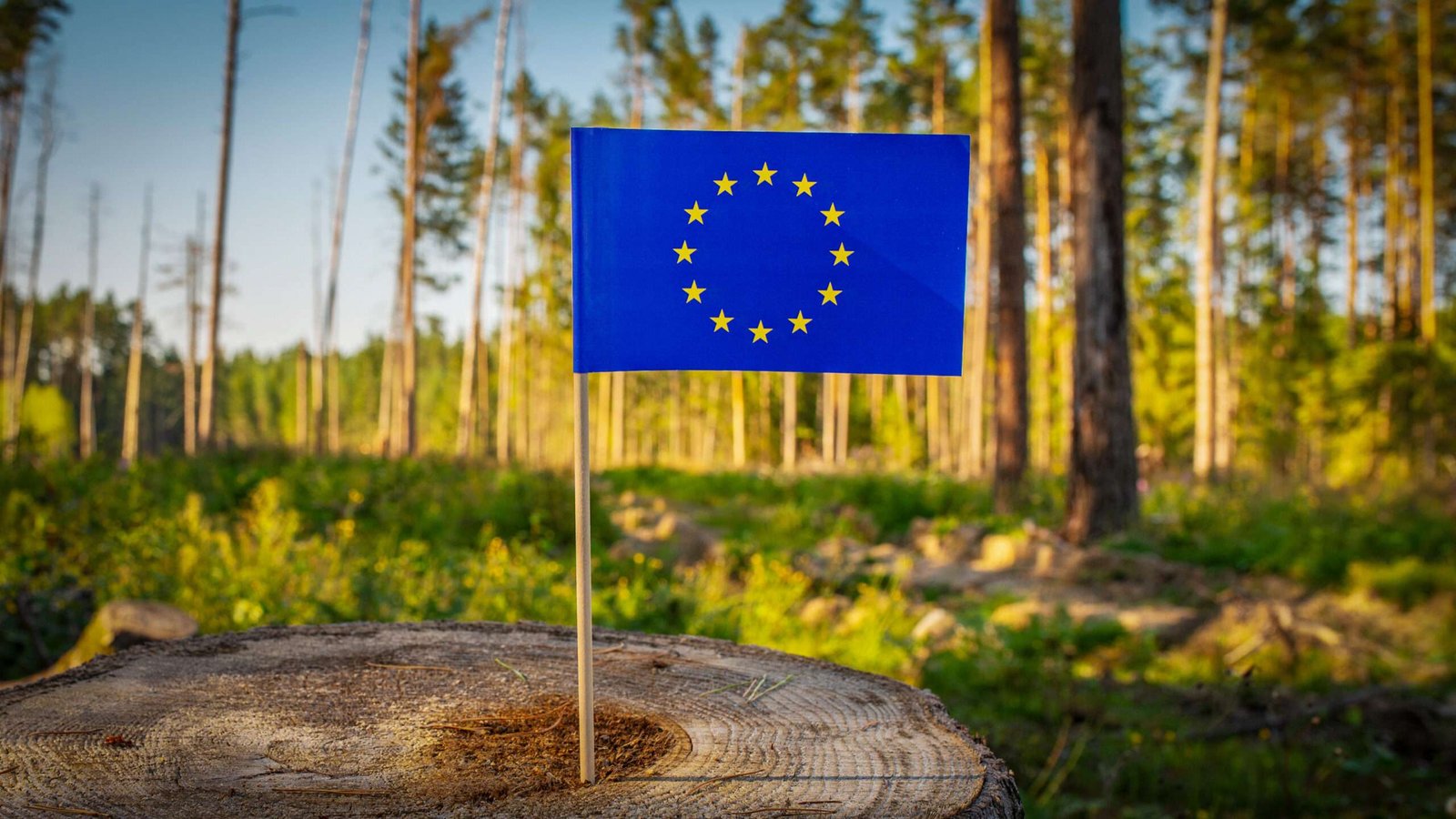
Far from being another joke at the expense of Europe and its regulatory self-sabotage, this is precisely the aim of the E.U.’s 2023 Deforestation Regulation (EUDR), which began applying to large companies last December, and will extend to small and medium-sized firms in June. 

As with many regulations out of Brussels, the intention sounds noble: To stop the cutting down of forests elsewhere in the world, the new rule forces companies selling products in E.U. member states to certify that they didn’t source materials from lands classified as forests before 2020. 

In practice, this means everything from paper products to furniture and even beef will be more expensive for consumers. More hurdles and fewer options for manufacturers necessitate higher prices.

Take IKEA’s best-selling KALLAX shelf unit—a particleboard bookcase made from wood-derived materials covered by the EUDR, which currently retails for around $80. With only 15 percent of what IKEA sells in the U.S. actually made domestically, this means that many IKEA products imported from Europe (including the KALLAX) must comply with expensive E.U. sourcing rules. Stack deforestation paperwork on top of tariffs, and the affordable furniture Americans count on starts looking a lot less affordable.

Compliance isn’t limited to European producers, but American ones too. Companies exporting to Europe must prove through a granular process of geolocation tracking and paperwork that their products weren’t sourced from deforested land. If European consumers want to buy or access any product, they need legal assurances that no forests were touched in the process.

For a trading partner like the U.S., which exported nearly $400 billion in goods to Europe in 2024, the burden will be significant. U.S. Trade Representative Jamieson L. Greer flagged EUDR as a significant foreign trade barrier in April 2025, giving President Donald Trump’s trade negotiation team yet another bone to pick with Europe. 

The E.U. acknowledged in last year’s U.S.-E.U. trade framework that it would have to “address the concerns of U.S. producers and exporters” to avoid “undue impact on U.S.-EU trade.” But nothing has yet changed.

All this comes even though the U.S. poses a negligible risk to global deforestation thanks to robust forest management that has sustained our country for decades and is only improving.

Yet American producers are still facing a regulatory regime that treats responsibly managed U.S. forests the same as high-risk tropical supply chains in developing nations. The geolocation and data-sharing requirements—which demand latitude and longitude coordinates to six decimal places for every single plot—are completely disconnected from how U.S. forest product value chains actually operate. 

For harvests larger than four hectares, or about 10 acres, the mandate to provide precise digital polygons essentially forces foresters to act as amateur cartographers before a single log can move. 

Consumers from IKEA weekend shoppers to Costco bargain hunters will pay more for the added labor required to document each log that goes into a TV stand or the legs of a chair. 

The absurdity of the rule becomes clearer when looking at some of Europe’s own energy choices. Since ridding its territory of emission-free nuclear energy, Germany now relies on burning mostly wood-based biomass for nearly eight percent of its total electricity production. Wood accounts for nearly 55 percent of Germany’s “renewable” energy generation, and U.S. exports are one of the key providers. 

So while European nations continue to use wood to heat their homes and industries, they plan to coerce American timber producers into complex track-and-trace programs and sustainability paperwork. Critics argue they are doing this for the same reason social media firms are being shaken down for billions in fees and penalties: to have Americans subsidize their lifestyles and strained government budgets. 

If the goal is truly to reduce risk rather than punish low-risk producers, a compromise must be found that works for both sides of the Atlantic.

The E.U. could allow low-risk countries like the U.S. to designate a single government agency, such as the U.S. Forest Service, to produce forest data and issue a single due diligence statement that complies with European regulations—simple, practical, and honest about where the actual risks lie. 

It would place less burden on consumers whose main concern is affordability. American families are already facing high prices on everyday goods thanks to a global trend toward protectionism. 

Free trade is the foundation of prosperity for consumers everywhere. Congress, the administration, and U.S. trade negotiators should be pushing back—hard—before this becomes the new normal.

Read the full article here

Fact Checker

Verify the accuracy of this article using AI-powered analysis and real-time sources.

Get Your Fact Check Report

Enter your email to receive detailed fact-checking analysis

5 free reports remaining

Continue with Full Access

You've used your 5 free reports. Sign up for unlimited access!

Already have an account? Sign in here

#IndependentMedia #MediaAndPolitics #MediaBias #NewsAnalysis #PoliticalCoverage
Share. Facebook Twitter Pinterest LinkedIn Tumblr Email Telegram Copy Link
News Room
  • Website
  • Facebook
  • X (Twitter)
  • Instagram
  • LinkedIn

The FSNN News Room is the voice of our in-house journalists, editors, and researchers. We deliver timely, unbiased reporting at the crossroads of finance, cryptocurrency, and global politics, providing clear, fact-driven analysis free from agendas.

Related Articles

Cryptocurrency & Free Speech Finance

OpenClaw Creator Gets Big Offers to Acquire AI Sensation—Will It Stay Open Source?

3 hours ago
Cryptocurrency & Free Speech Finance

Her Divorce Was Ugly. Crypto Became a Lifeline

5 hours ago
Cryptocurrency & Free Speech Finance

Bitcoin Takes Step Towards Quantum Fix as Experts Diverge on Urgency of Threat

6 hours ago
Media & Culture

Today in Supreme Court History: February 15, 1790

10 hours ago
Debates

Japan’s Conquest Shattered European Rule in Southeast Asia

21 hours ago
Debates

Why Capitalism’s Beneficiaries Have Turned Against It

23 hours ago
Add A Comment
Leave A Reply Cancel Reply

Editors Picks

Wall Street giant Apollo follows BlackRock in DeFi push with Morpho token deal

1 hour ago

OpenClaw Creator Gets Big Offers to Acquire AI Sensation—Will It Stay Open Source?

3 hours ago

Hong Kong is trying to build up its crypto regulations: State of Crypto

4 hours ago

Saylor Signals Week 12 of Consecutive Bitcoin Buys From Strategy

4 hours ago
Latest Posts

Founders admit blockchain transparency is the only defense

5 hours ago

Her Divorce Was Ugly. Crypto Became a Lifeline

5 hours ago

Bitcoin Takes Step Towards Quantum Fix as Experts Diverge on Urgency of Threat

6 hours ago

Subscribe to News

Get the latest news and updates directly to your inbox.

At FSNN – Free Speech News Network, we deliver unfiltered reporting and in-depth analysis on the stories that matter most. From breaking headlines to global perspectives, our mission is to keep you informed, empowered, and connected.

FSNN.net is owned and operated by GlobalBoost Media
, an independent media organization dedicated to advancing transparency, free expression, and factual journalism across the digital landscape.

Facebook X (Twitter) Discord Telegram
Latest News

Crypto Needs Privacy To Scale in Payments: Binance Co-Founder CZ

28 minutes ago

Wall Street giant Apollo follows BlackRock in DeFi push with Morpho token deal

1 hour ago

OpenClaw Creator Gets Big Offers to Acquire AI Sensation—Will It Stay Open Source?

3 hours ago

Subscribe to Updates

Get the latest news and updates directly to your inbox.

© 2026 GlobalBoost Media. All Rights Reserved.
  • Privacy Policy
  • Terms of Service
  • Our Authors
  • Contact

Type above and press Enter to search. Press Esc to cancel.

🍪

Cookies

We and our selected partners wish to use cookies to collect information about you for functional purposes and statistical marketing. You may not give us your consent for certain purposes by selecting an option and you can withdraw your consent at any time via the cookie icon.

Cookie Preferences

Manage Cookies

Cookies are small text that can be used by websites to make the user experience more efficient. The law states that we may store cookies on your device if they are strictly necessary for the operation of this site. For all other types of cookies, we need your permission. This site uses various types of cookies. Some cookies are placed by third party services that appear on our pages.

Your permission applies to the following domains:

  • https://fsnn.net
Necessary
Necessary cookies help make a website usable by enabling basic functions like page navigation and access to secure areas of the website. The website cannot function properly without these cookies.
Statistic
Statistic cookies help website owners to understand how visitors interact with websites by collecting and reporting information anonymously.
Preferences
Preference cookies enable a website to remember information that changes the way the website behaves or looks, like your preferred language or the region that you are in.
Marketing
Marketing cookies are used to track visitors across websites. The intention is to display ads that are relevant and engaging for the individual user and thereby more valuable for publishers and third party advertisers.