

 Freedom Index

Listen to the article
Overregulation of the crypto industry would negatively impact markets and gut decentralized finance (DeFi), according to Michaël van de Poppe.
The failure of the CLARITY crypto market structure bill to advance in the United States Congress is positive for crypto markets and the industry, according to market analyst Michaël van de Poppe.
Van De Poppe cited crypto exchange Coinbase withdrawing support for the bill on Wednesday and Coinbase CEO Brian Armstrong’s X post listing several concerns with the most recent version of the bill.
The issues included a “de facto ban” on tokenized stocks, government access to user records on decentralized finance (DeFi) platforms and prohibiting yield-bearing stablecoins, Armstrong said. Van De Poppe said:
“I think if the bill were approved in its current form, it would have had a very bad impact on the markets in general. So, now, all the parties are aligned to continue the discussion. It reminds me a lot of the Markets in Crypto Assets (MiCA) regulations in Europe.”
MiCA, a comprehensive crypto regulatory framework for the European Union (EU), also took several rounds of negotiations and revisions before the final version was passed into law, according to Van De Poppe.
Passing a crypto market structure framework in the US is a major policy objective of the crypto industry and its Congressional allies, who are pushing for clear rules of the road for onchain finance.
Related: Crypto industry split over CLARITY Act after Coinbase breaks ranks
Coinbase CEO denies rumors of tension with White House and says CLARITY negotiations are ongoing
The White House threatened to drop support for the CLARITY Act in response to Coinbase withdrawing its support for the legislation, independent crypto reporter Eleanor Terrett reported on Saturday.
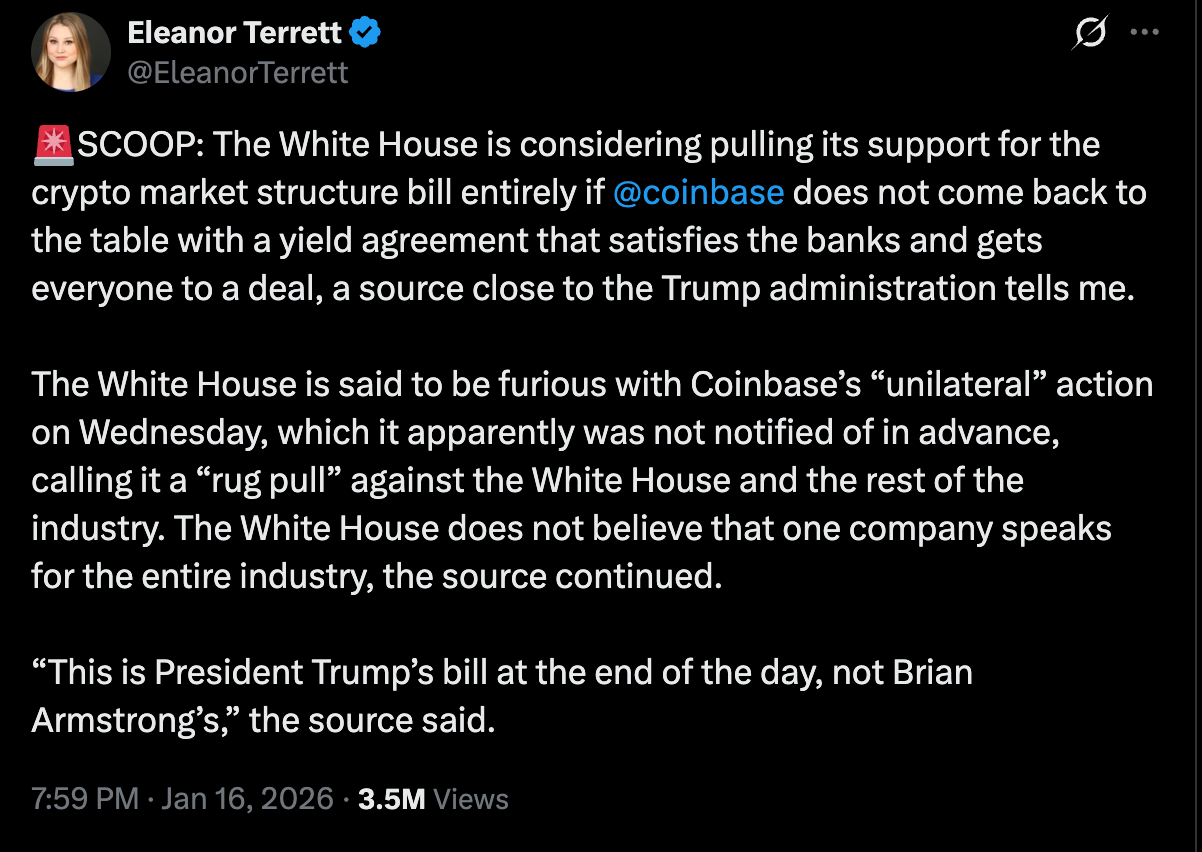
Armstrong denied the report and said negotiations to draft a version of the bill that would satisfy the crypto industry and community banks are ongoing.
The White House has been “super constructive,” during the process, Armstrong said. His post drew a flurry of responses that were critical of the banking sector and the prohibition on yield-bearing stablecoins.
“Don’t let them kill stablecoin yield. That would set back stables for a generation. Hold the line,” venture capitalist Nic Carter said.
Magazine: How crypto laws changed in 2025 — and how they’ll change in 2026
Read the full article here
Fact Checker
Verify the accuracy of this article using AI-powered analysis and real-time sources.