

 Freedom Index
Listen to the article
I don’t think I’ve ever seen as big of a disconnect between the scale of a crisis and the scale of media coverage in my life… And that is both because the scale of the suffering in Sudan is so high and because the [media] coverage is abominably low. —Tom Perriello, the Biden administration’s special envoy to Sudan.
A student interrupted one of my lectures to deliver a passionate speech on what she called “digital apartheid” as practised by Israel. The lecture—at Princeton’s School of Public and International Affairs—was about how the use of smart data for city planning might negatively impact low-income people of colour in America. While the company providing the data I used was American, it had begun as an Israeli startup and many of the employees mentioned in the class readings had Jewish-sounding names.
I allowed interested students to have their say about this issue then tried to steer discussion back to the assigned readings, noting that those who wished to discuss digital apartheid could do so at any number of school events on Israel and Palestine. But some students were adamant that anyone unwilling to use lecture time to discuss the topic was complicit in Israeli apartheid, genocide, and other crimes. The atmosphere grew awkward. Most students remained prudently silent.
Eventually, a black student intervened. She had come to class to discuss the assigned readings, she told us. If these students had the moral right to commandeer the class to discuss Israel, she added, why didn’t she have the right to demand a discussion of oppression in Africa? It was a good question.
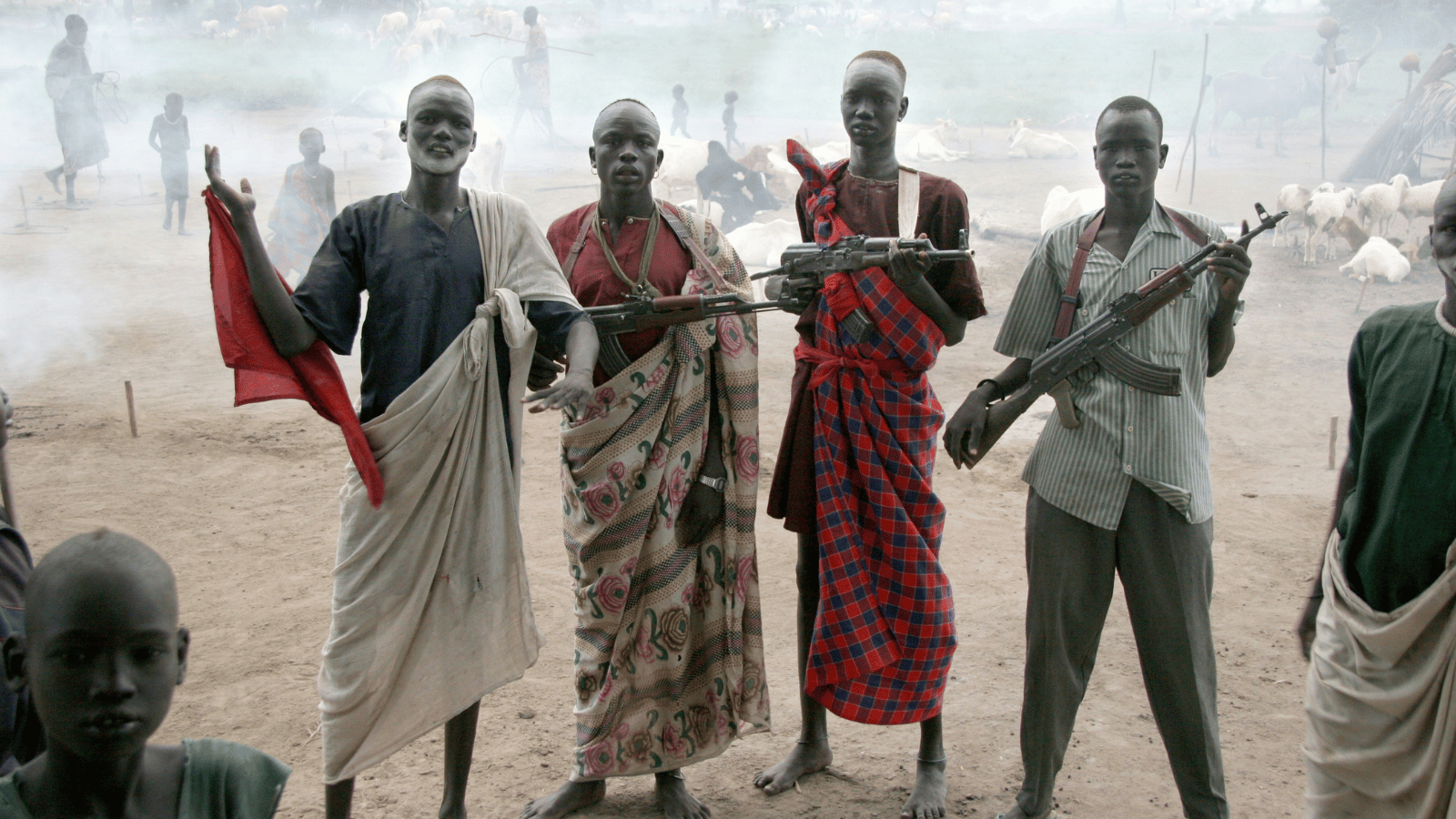
The war in Sudan has produced what the United Nations has called the world’s worst humanitarian crisis. The Rapid Support Forces (RSF)—a violent Arab supremacist group funded and armed by the United Arab Emirates (UAE)—have been accused of ethnic cleansing and genocide against the local black population, according to an organisation—Human Rights Watch—that has made similar accusations against Israel in Gaza. Members of Congress like Ilhan Omar and Rashida Tlaib, who have accused Israel of genocide, have also accused the RSF of genocide in Sudan and demanded the United States cease arms sales to the UAE.
By some estimates, as many as 400,000 Sudanese have been killed since April 2023; and twelve million have been displaced in the largest displacement crisis on Earth. (Additionally, the RSF has been accused of large-scale sexual violence.) These figures dwarf the corresponding numbers for Gaza, even if you trust the figures provided by Hamas and their backers, who claim that over 70,000 Palestinians have been killed since October 2023 and 1.9 million displaced.
The Trucial States, which became the UAE in 1971, were still importing black Africans, including Sudanese, as slaves into the 1950s. Slavery wasn’t formally abolished in the country until 1963 and some reports indicate that it persisted—despite its nominal illegality—until the 1980s. Today the UAE’s kafala system binds migrant workers to their employers under conditions that human rights organisations routinely describe as modern slavery. Yet there have been no major protests about the UAE’s involvement in Sudan at any major American university campus.
In May 2024, students who wanted Trinity College, Dublin to break ties with Israeli institutions erected an encampment blocking access to the Old Library, which houses the famous Book of Kells. After five days, Trinity’s leadership capitulated. By June 2025, Trinity’s governing body had voted to sever all institutional links with Israeli organisations—meaning no more research agreements or exchange programmes with Israel, no Israeli suppliers or investments. Ireland’s Jewish population is approximately 2,700—and it isn’t even clear how many of them are supporters of Israel. Trinity’s student population is 22,000.
Yet Trinity students have mounted no comparable protests about the UAE’s role in the Sudanese genocide. We often hear that, given that Ireland was England’s first colony, the Irish have an instinctive sympathy for Palestinians suffering under what they see as colonial oppression. This sympathy, however, does not extend to the Sudanese, who were also de facto colonial subjects of the British. In fact, the UK controlled Sudan until 1956—and also helped create the UAE in 1971.
The Al Maktoum Foundation (bankrolled by one of the UAE’s ruling families) funded an academic centre at Trinity: The Al Maktoum Centre for Middle Eastern Studies. The foundation has also endowed four professorships. When asked whether Trinity had misgivings about accepting money from a regime criticised by Human Rights Watch for its “sustained assault” on freedom of expression, Professor Brian Lucey replied: “It would be lovely if we could get money from the Dalai Lama but the reality is the money has to come from somewhere. In the hierarchy of people from whom we would accept money, the ruling classes of Dubai are not the worst.”
Sudan Between Two Middle Easts
Between the jihad of the “Hamas of Africa” and the new order of the Abraham Accords, the choice in Sudan should be clear.
The UAE’s sovereign wealth funds hold an estimated US$1.5–2 trillion in assets. A representative of one such fund sits on the Board of Trustees of New York University. NYU operates a full campus in the UAE, heavily subsidised by the Emirati government. At NYU, there have been many demands for the university to sever ties with Israel—but almost no one has expressed concern about its relationship with the UAE.
At the Sorbonne’s UAE branch, lecturer Nasser bin Ghaith was sentenced to prison for life for his pro-democracy commentaries. This passed without arousing attention on the Sorbonne campus, which witnessed vast protests in solidarity with Gaza.
One explanation often given is that Gaza protests are about the Western funding of Israel. But neither Australia, Britain, nor Ireland sends funds to the Jewish state. Yet this same pattern—outrage at Gaza; silence about Sudan—is repeated at the London School of Economics, Oxford, Cambridge, the University of Sydney, the University of Melbourne, and across Western academia.
Ninety percent of the UAE’s population are migrant workers with no path to citizenship, no political rights, and few legal recourses under the semi-feudal kafala system. The country ranks a miserable 152nd on the Democracy Index, where it is listed as “authoritarian.” It is run by a kleptocratic hereditary dictatorship that imprisons pro-democracy college lecturers, and where even the daughters of rulers are not safe from being disappeared. Criticising Israel from a Western campus—or for that matter, from a campus in Israel—requires approximately the same moral bravery as whinging about the weather. Criticising the UAE from inside that country requires extraordinary bravery.
This is particularly true if you are a black person in the UAE. The UN Special Rapporteur on racism found patterns in the UAE, Qatar, and other Arab states consistent with a “de facto caste system based on national origin” with black Africans at the bottom. In 2021, UAE police targeted black African migrant workers in mass arrests, detaining them under degrading conditions and deporting them without due process. The kafala labour system helps perpetuate the country’s structural racism.
Yet black African lives don’t generate the same moral urgency as Palestinian lives. As analyst Kholood Khair has put it, “There is this, quite frankly, quite tired and racist idea that Sudan and Africa in general is this place where war is not only inevitable, but perpetual.”
Money from the UAE flows copiously into university endowments, branch campuses, named professorships, and trustee pockets. The UAE is also a major investor in many employers who may provide graduates with lucrative job opportunities in private equity, management consulting, or investment banking. In addition, many elite universities have a disproportionately large number of students from Arab countries, but relatively few from Africa—and almost none from Sudan.
In this context, it seems unsurprising that, in the spring of 2026, Princeton University will offer courses on “Gaza, History, the Question of Palestine” and “Gender, Reproduction, and Genocide [in Gaza],” while it will not offer any courses on genocide and war crimes by Arab supremacists in the Sudan or the UAE’s role in the slaughter. Anti-black racism, performative bravery married to prudential cowardice, a dash of greed, narrative dissonance, a soupçon of antisemitism, and the student-as-consumer model—together, they render Sudan’s tragedy conveniently invisible to university administrators and to the campus Left.
If students and faculty at elite universities wish to be taken seriously as moral voices, they need to start applying their principles consistently: blockade the Book of Kells until Trinity renames the Al Maktoum Centre and cuts ties with the UAE; demand that NYU sever its relationship with Abu Dhabi as aggressively as it has been pressed to sever ties with Israel; teach courses on the UAE’s role in the Sudan. If Western universities are going to operate lucrative campuses in the UAE, demand that Western standards of free speech be upheld—or shut the campuses down. Sadly, it seems unlikely that any of these things will happen.
Read the full article here
Fact Checker
Verify the accuracy of this article using AI-powered analysis and real-time sources.